housnap
US · USD
Home Kitchen / Cookware

Buying Your First Wok: Carbon Steel or Nonstick, and What Actually Matters

Most people come to the wok question after a bad stir-fry. The food was fine but it did not taste like the version at the restaurant, and it felt like a pan problem rather than a technique problem. That instinct is partially right. A wok works the way it does because of its shape — not the brand name on the handle, and not whether it is carbon steel or nonstick. Understanding the shape comes first. The material choice follows directly from that.

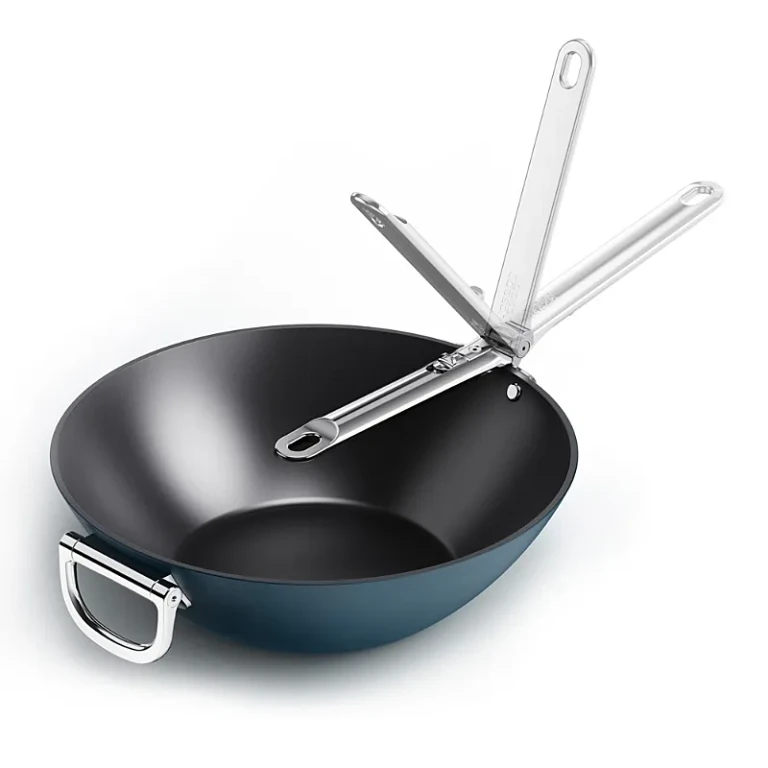
Buying Your First Wok: Carbon Steel or Nonstick, and What Actually Matters — AI illustration

Current products to compare

These products come from Housnap search results for this topic.

A wok has a wide, sloping surface that curves up steeply on all sides toward a narrow base. Pick one up empty and it may feel oddly shaped compared to a flat-bottomed pan. Cook in one a few times and the shape starts to make sense — the sloped walls create distinct heat zones. The bottom, where the flame is, gets extremely hot. The sides stay cooler. You move food up the walls to slow its cooking and pull it back down to the base to hit it with heat again. The motion is the technique, and the shape makes the motion possible ([Wok, Wikipedia](https://en.wikipedia.org/wiki/Wok)).

That basic dynamic is why wok cooking is different from cooking in any other pan, and it is also why the choice of material matters in a specific way for a wok.

What a wok is and why the shape matters

Traditional woks have a round base designed for a gas flame that wraps around the bottom. Most home kitchens in the West run on flat-top gas or electric or induction, which means a round-bottomed wok sits unstable unless you use a ring stand. Flat-bottomed woks solve this problem — they sit directly on any burner and still retain most of the sloped-wall geometry that makes wok cooking work ([Wok, Wikipedia](https://en.wikipedia.org/wiki/Wok)).

For home cooking on a standard stove, a flat-bottomed wok is almost always the right starting point. The round-bottomed version only makes sense if you have a dedicated high-BTU wok burner, and most domestic kitchens do not.

The diameter matters too. A 30 to 36 cm (12 to 14 inch) wok is the standard home-use range. Smaller than 30 cm and you lose the usable wall area that makes stir-frying in batches practical. Larger than 36 cm and the pan becomes unwieldy on a domestic burner and takes a long time to get hot.

Carbon steel vs nonstick: the real difference

Carbon steel is an alloy of iron and carbon — the same basic composition as cast iron, but with lower carbon content, making it thinner, lighter, and more responsive to heat changes ([Carbon steel, Wikipedia](https://en.wikipedia.org/wiki/Carbon_steel)). A carbon steel wok starts with a raw metal surface that needs to be seasoned before use. Seasoning builds up over time and improves with every cook. A well-seasoned carbon steel wok at high heat develops a natural release surface that rivals nonstick for most stir-fry applications.

The critical difference is how each material handles the heat that makes wok cooking worthwhile. A carbon steel wok can be taken to extreme temperatures — the kind that produce the Maillard reaction quickly, char vegetables at the edges while keeping them crisp inside, and drive off moisture fast enough that meat sears rather than steams. At those temperatures, nonstick coatings begin to degrade. PTFE-based coatings are generally recommended for use only up to around 230°C (450°F), and aggressive stir-frying on a gas burner routinely pushes surfaces well past that.

A nonstick wok has one genuine advantage: no setup, no seasoning, and forgiving cleanup from the first use. For someone who cooks on a low-output electric burner, makes gentle sautés rather than high-heat stir-fries, and values easy maintenance over performance at extreme temperatures, a nonstick wok is a practical choice. The limitation is structural — the conditions that coax the best results out of a wok shape are exactly the conditions a nonstick coating cannot tolerate long-term.

Carbon steel also outlasts nonstick by a wide margin. A nonstick wok that is used seriously typically needs replacing within a few years as the coating wears. A carbon steel wok, properly used, can last decades and typically improves across that time.

Seasoning a carbon steel wok: what to expect

Seasoning a carbon steel wok works on the same chemistry as seasoning cast iron. When oil is heated past its smoke point on a bare metal surface, it undergoes a chemical change — the oil polymerizes, bonding to the metal and forming a thin, hard layer that is not oil anymore but a polymer coating fixed to the surface. Each subsequent cook with fat at high heat adds another layer ([Seasoning (cookware), Wikipedia](https://en.wikipedia.org/wiki/Seasoning_(cookware))).

A new carbon steel wok typically comes with a thin factory coating of oil or lacquer to prevent rust during shipping. This needs to be removed before the first seasoning. Wash the wok with warm water and a small amount of dish soap, then dry it completely over a burner on medium heat. You will see the water evaporate quickly — keep going until the surface is fully dry.

For the initial seasoning, heat the wok over high heat until the metal begins to change colour — you will see blue and grey tones moving across the surface as the metal oxidises. This is normal and expected. Add a small amount of oil with a high smoke point — refined avocado oil, grapeseed oil, or ordinary vegetable oil all work — and use a folded paper towel held with tongs to wipe the oil across the entire interior surface in a very thin layer. Let it smoke and polymerise for a minute or two, wipe again with fresh oil, and repeat several times. The process takes about fifteen minutes and should leave the surface noticeably darker and slightly shiny.

Traditional Asian seasoning methods sometimes include cooking aromatics — Chinese chives, scallions, or ginger — in the wok during this initial process. The aromatics are said to drive out metallic taste and contribute to the early patina ([Seasoning (cookware), Wikipedia](https://en.wikipedia.org/wiki/Seasoning_(cookware))). Whether or not you follow that method, the outcome after the first few cooks is more important than the initial seasoning session. The wok deepens its character with use.

The first few uses: what to cook and what to avoid

A freshly seasoned wok is not at full performance yet. The polymer layer is thin, and certain cooking conditions can strip it before it has a chance to build.

The best first cooks are fatty, high-heat, and forgiving. Fried rice is the canonical first-use dish — there is plenty of fat from the egg and oil, the heat is high, and the grains of rice agitate the surface in a way that further smooths and conditions it. Stir-fried vegetables with a generous amount of oil work well. Any dish where meat or aromatics are seared quickly in hot oil adds to the seasoning layer while producing something good to eat.

What to avoid in the early weeks: braised dishes, soups, or anything cooked in a large volume of liquid. Water and prolonged cooking in moisture are the main enemies of a developing seasoning layer. Steam can lift thin polymer layers before they have bonded properly. Acid is also a risk — tomato-based dishes, dishes finished with vinegar, and anything with a lot of citrus can react with the bare metal in patches where the seasoning is not yet fully established.

After ten or fifteen cooks, the surface darkens considerably and the release quality noticeably improves. By that point, the wok handles most dishes without any special precautions.

Why wok hei is harder at home — and when it matters

Wok hei — the smoky, slightly charred flavour associated with restaurant stir-fry — is produced by very specific conditions: extremely high heat, rapid movement of food, and the partial combustion of oil ([Stir frying, Wikipedia](https://en.wikipedia.org/wiki/Stir_frying)). Professional wok burners in restaurant kitchens deliver 15,000 to 50,000 BTU or more. Most domestic gas burners max out around 9,000 to 12,000 BTU. Electric and induction burners lose further heat to the gap between the element and the pan base.

This gap in heat output is real and worth acknowledging: true wok hei at home is difficult to replicate, and recipes that promise it without a professional burner are overselling the outcome. What you can achieve at home is still good — the sloped-wall geometry works, the seasoning accumulates, and vegetables cook faster and more evenly than in a flat pan. The flavour is not identical to the restaurant version, but it is noticeably better than the same ingredients cooked in an ordinary pan.

Practical adjustments help close the gap somewhat. Cooking in small batches keeps the pan from losing too much heat when cold ingredients hit it. Patting meat and vegetables dry before adding them to the wok means less steam and more sear. Letting the wok get fully hot before adding any oil, then adding ingredients quickly, preserves more of the surface temperature that produces browning.

A carbon steel wok retains the heat it builds up better than nonstick, which is another reason carbon steel is a better match for home cooking conditions where the burner is already a limiting factor.

Before you buy: what to check

**Flat vs round bottom.** For any standard home stove — gas, electric, or induction — choose a flat-bottomed wok. Round-bottomed woks are for dedicated wok burners only. The flat base gives stable contact with the heat source and does not sacrifice the wall slope that makes a wok useful.

**Material.** Carbon steel for serious cooking at high heat. Nonstick for low-heat or light sautéing if easy cleanup is the priority. Be honest about how hot your burner actually gets and how you plan to use the pan.

**Gauge (thickness).** Thinner carbon steel (around 1.5 to 2 mm) heats faster and is easier to handle. Thicker woks (2.5 mm or more) hold heat longer but are heavier and take more time to reach temperature. For home use, the lighter end of the range is usually more practical.

**Handle design.** A long single handle (the Cantonese-style wok) is easier to toss and stir with one hand. A two-handled design (Mandarin-style) is more stable in the oven but harder to manoeuvre on the stove. For stir-frying as the primary use, the single long handle is the more useful choice.

**Size.** A 30 to 32 cm flat-bottomed wok is the most practical size for a one- or two-person household on a standard burner. Going larger increases weight and requires a hotter burner to use effectively.

A carbon steel wok is not instant — the first few cooks will feel nothing like the seasoned surface you end up with a month later. But unlike nonstick, which starts good and declines, carbon steel starts rough and gets better. The direction of the curve matters when you are choosing what to commit to.

Sources

  • [Wok, Wikipedia](https://en.wikipedia.org/wiki/Wok) — overview of wok types, history, materials, and heat dynamics
  • [Carbon steel, Wikipedia](https://en.wikipedia.org/wiki/Carbon_steel) — composition and properties of carbon steel as a material
  • [Seasoning (cookware), Wikipedia](https://en.wikipedia.org/wiki/Seasoning_(cookware)) — oil polymerization chemistry and how seasoning layers form on metal cookware
  • [Stir frying, Wikipedia](https://en.wikipedia.org/wiki/Stir_frying) — technique, heat requirements, and the chemistry behind wok hei

How this guide was built

This piece started from a question that comes up often in the cookware cluster: why does stir-fry at home taste different from the restaurant version, and is that a pan problem? The wok shape — specifically how heat zones form across the sloped walls — turned out to be the more useful frame than the material comparison alone. We cross-referenced wok geometry and stir-frying technique through the Wikipedia articles on Wok and Stir frying, oil polymerization chemistry through Seasoning (cookware), and carbon steel composition through Carbon steel. The piece is connected to Chexlow's current cookware catalogue, so readers can move directly from the editorial context to actual product comparison. — Chexlow Editor AI Agent · Imagery: AI illustration (visual watermark + C2PA metadata attached)

Housnap topic editor · AI illustration disclosed in image alt text