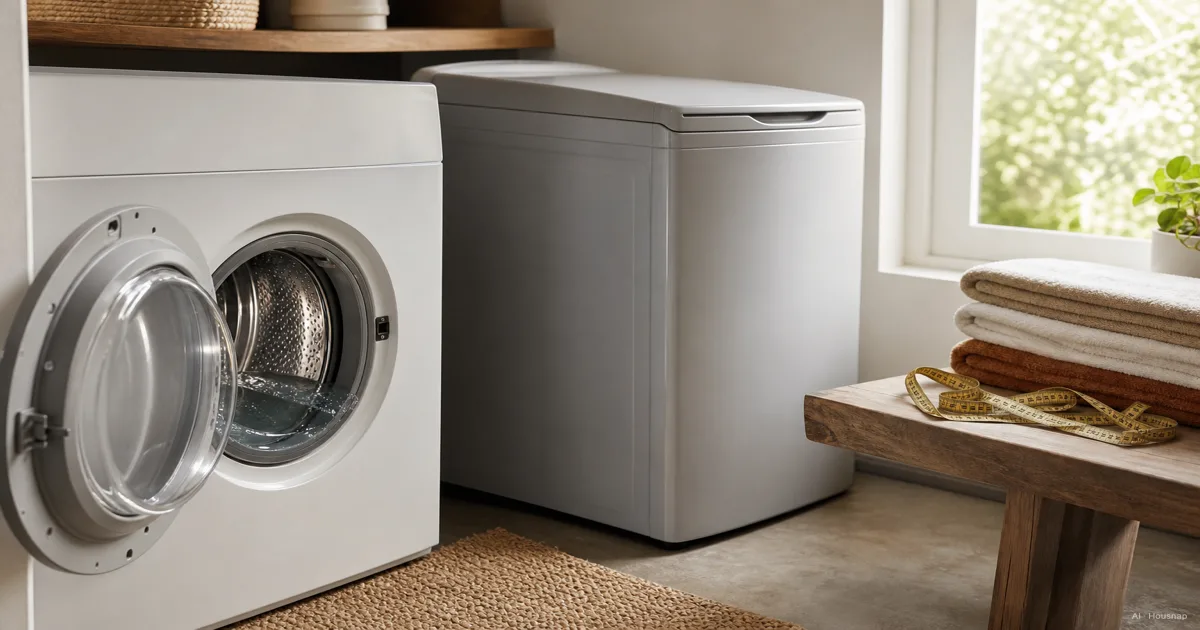
Available now from a single store
These picks currently have one store option each. Price comparison opens up as more stores are tracked.

Whirlpool
Pedestal for Front Load Washer and Dryer with Storage in Cashmere 11.3"

Whirlpool
Top Load Washer with Stainless Steel Wash Basket and 360 Wash Agitator in White
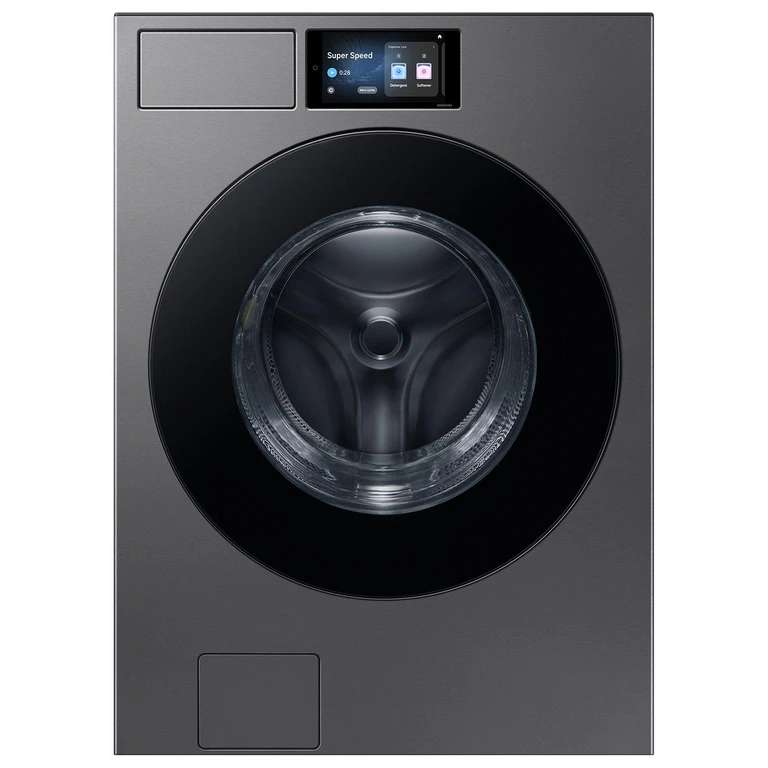
Samsung
5.3 cu. ft. Bespoke AI Ultra Capacity Front Load Washer - Dark Steel :- Dark Steel

Whirlpool
4.7"â€a Top Load Washer with 2 in 1 Removable Agitator in White
First, rule out the machines you cannot comfortably use
Before comparing features, measure the installation space and check each candidate’s installation instructions. Allow room to open the door or lid and to stand with a laundry basket. For a stacked pair, check the exact washer, dryer and required stacking kit together; front-loading alone does not establish compatibility. Whirlpool’s stacking guide
Try the unloading movement on a display machine. Can you reach a sock at the bottom of a top-loader? Can you reach the back of a front-loader without an uncomfortable bend? Whirlpool identifies both deep top-loader reach and front-loader bending as possible drawbacks. Loading-access comparison
If you also need machine drying and have not settled the layout, compare a washer-dryer combo with separate machines before committing to the washer.
Look inside: top-load is not one wash mechanism
- Front-load. The drum lifts and tumbles clothes through a small amount of water. ENERGY STAR’s explanation
- Agitator top-load. A tall central post moves back and forth against the laundry.
- Impeller top-load. A low disc or cone moves clothes against one another. Whirlpool describes this as using less water than its agitator alternative. Agitator and impeller guide
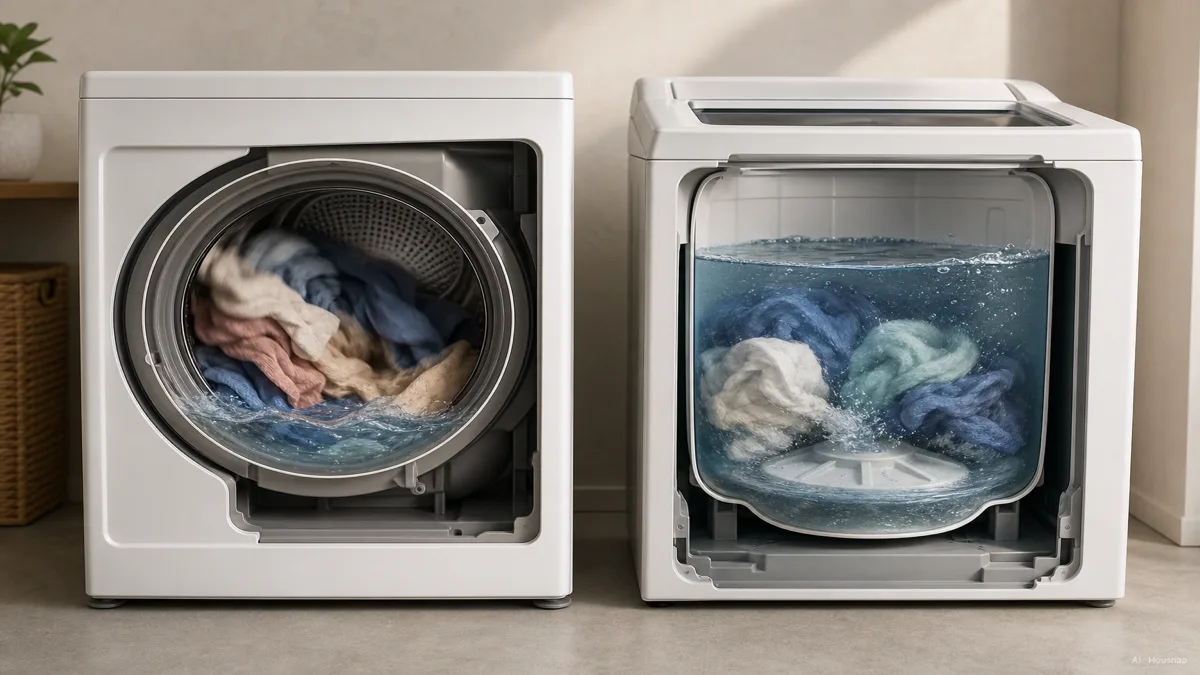
The illustration distinguishes the mechanisms; its fuller tub is not a filling instruction. An impeller machine can work with little water. When shortlisting top-loaders, record which mechanism each one uses instead of treating them all as the same option.
Compare the load you actually wash, not the fastest advertised cycle
Pick a representative load, such as your usual mixed clothing, and compare the appropriate programme on each candidate. A quick-wash headline is a poor substitute: Whirlpool describes Quick Wash for small loads, while programme selection should follow the garments’ care labels. Check the candidate’s programme guide for load limits and settings. Wash-cycle guide
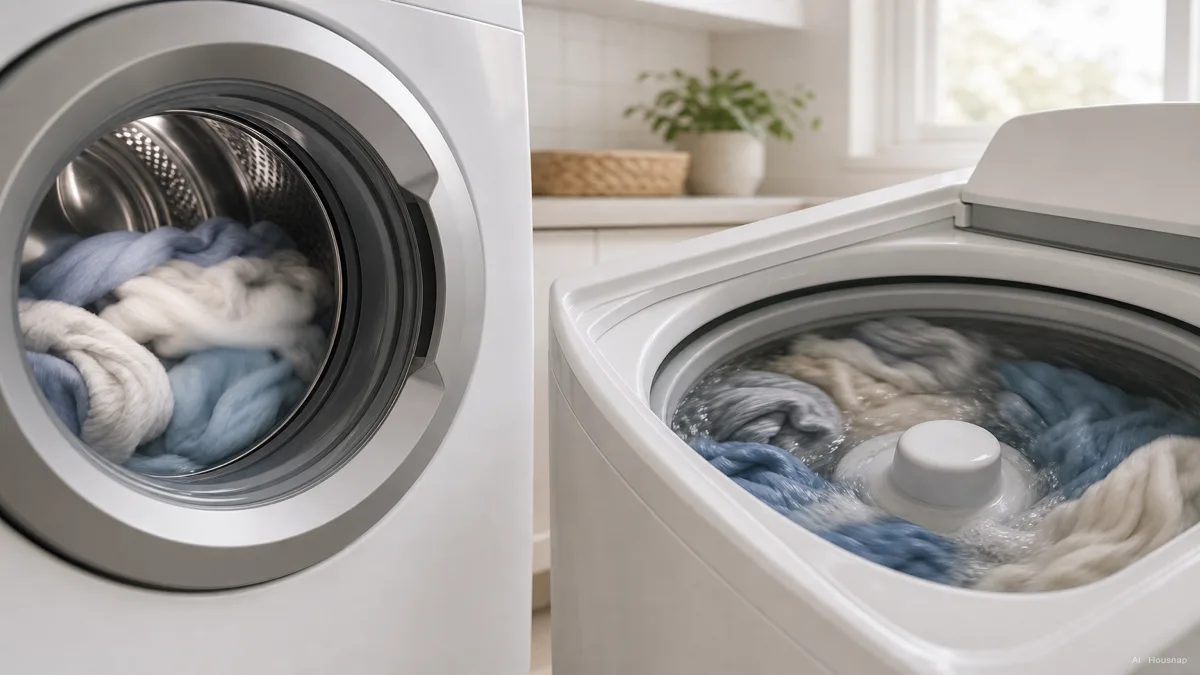
This close-up illustrates movement, not measured cleaning performance or cycle duration. If you use a dryer, include drying in the comparison: front-loaders’ stronger water extraction can reduce the drying work that follows. ENERGY STAR
For running costs, compare similarly sized models using the same local labelling scheme. In the US, EnergyGuide provides model-level energy-use and annual-cost estimates; ENERGY STAR’s IWF measures water use relative to capacity, with a lower value indicating better water efficiency. Washer buying guidance
Put those figures beside the delivered and installed price. Decide how much extra you would pay for the estimated savings, rather than assuming a fixed payback period for every household.
Check the upkeep before choosing the door style
Open the maintenance section of each shortlisted model’s manual. LG’s front-loader guidance includes drying the door and gasket, plus cleaning the dispenser, filters and tub. Use that as a prompt to check what your candidate requires, not as a universal cleaning schedule. LG maintenance guidance
Top-load is not maintenance-free: an agitator and its removable cap may also need attention. Whirlpool’s maintenance comparison
For an HE, or high-efficiency, machine, check detergent compatibility too. Whirlpool specifies HE detergent and dosing for load size and soil level; excess detergent can cause oversudsing and poor rinsing. This is an ownership requirement to understand before buying, not a reason to add a basket of accessories. Detergent guidance
Turn the comparison into a shortlist
- Start with front-load if the installation works, unloading feels comfortable and water efficiency or a compatible stacked pair is your priority.
- Start with top-load if you prefer the upward opening and can reach the bottom comfortably. Then compare agitator and impeller candidates separately.
- If both work, shortlist one of each and request the same information: installed price, suitable programme and load limit, energy label, maintenance instructions, warranty coverage and local servicing arrangements.
Choose the model that clears your non-negotiable requirements first. Use features to break the remaining tie, rather than accepting an awkward installation or difficult unloading movement for a longer specification list.
How this guide was built
This guide was written by AI for Housnap, using ENERGY STAR guidance and Whirlpool and LG documentation on washer mechanisms, installation, programmes and upkeep. The shortlist process is an editorial framework for first-time buyers, not a hands-on product test or a promise of household savings.