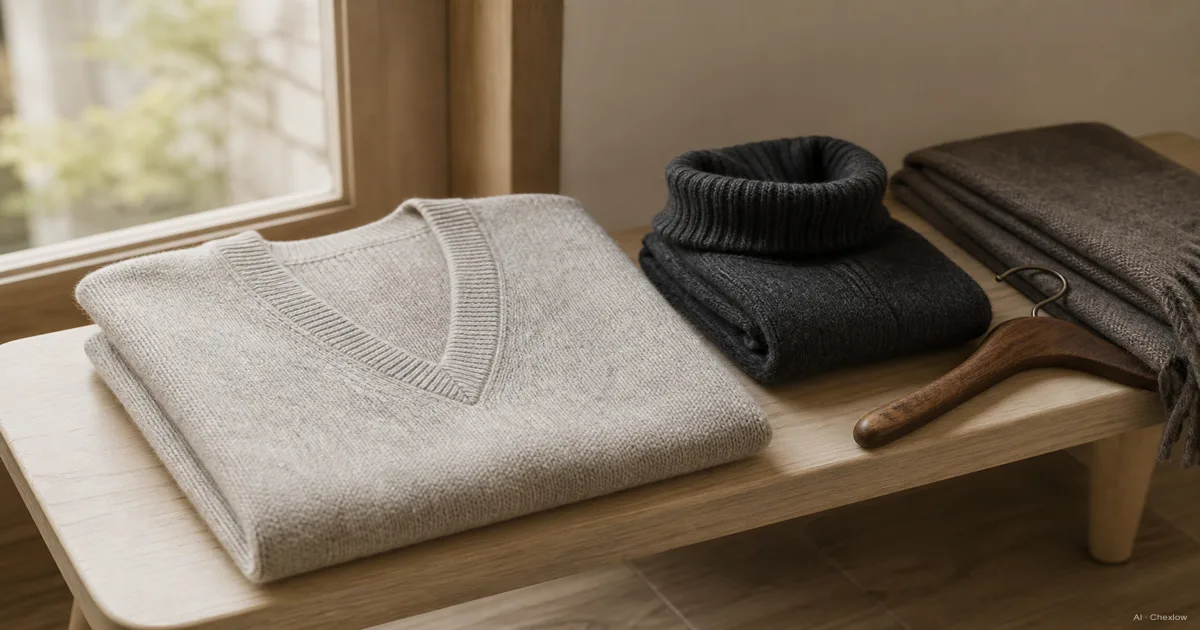
Available now from a single store
These picks currently have one store option each. Price comparison opens up as more stores are tracked.
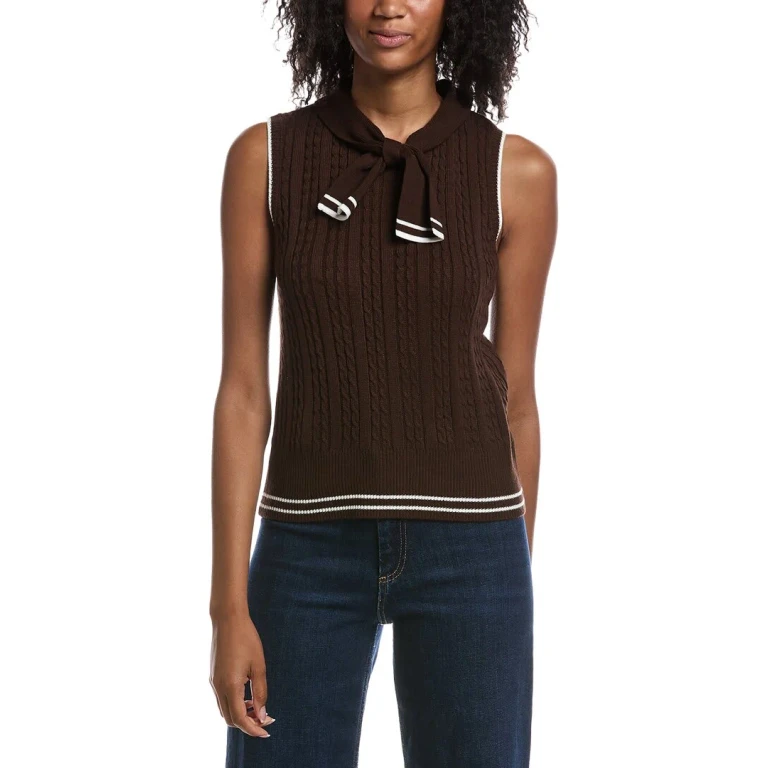
Choose the outfit before the vest
Pick one outfit you already wear regularly and use it for the fitting. That gives you something concrete to judge: how much shirt should show, where the hem should sit and whether a jacket still closes comfortably.
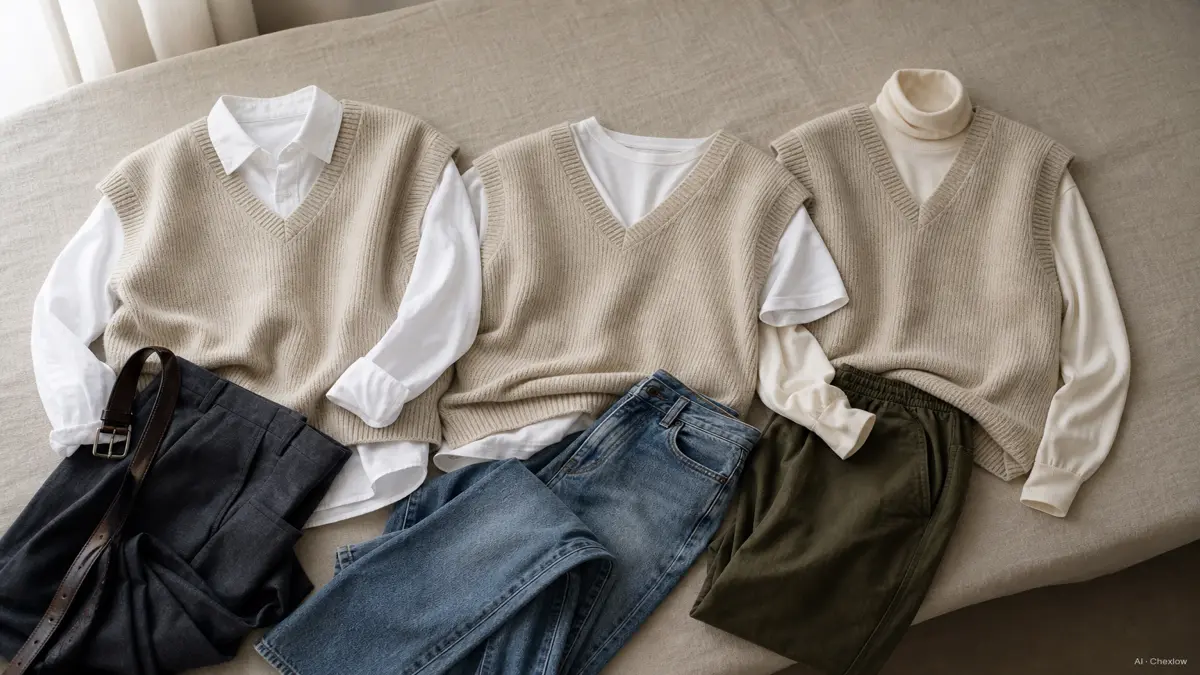
- Over a collared shirt. Try a V-neck if you want to show the collar and shirt front. Check that the neckline does not push the collar up or expose more of the shirt than you intended.
- Over a tee. Start with your usual tee, including its sleeve width. Choose a closer or roomier vest by how the two sit together, rather than automatically going up a size.
- Over a turtleneck. Bring the actual knit you plan to use. Judge the combined thickness, especially if a coat or jacket must fit over both.
For a first purchase, a useful filter is whether the vest works with two outfits you already own. A plain color can simplify the trial; if you prefer argyle, pick out one of its colors in the shirt or trousers. These are styling starting points, not rules about which bodies or trouser shapes can wear a vest.
If you need sleeves or want a front you can open throughout the day, compare a cardigan with a pullover before committing to a sleeveless knit.
Separate knit thickness from the fiber label
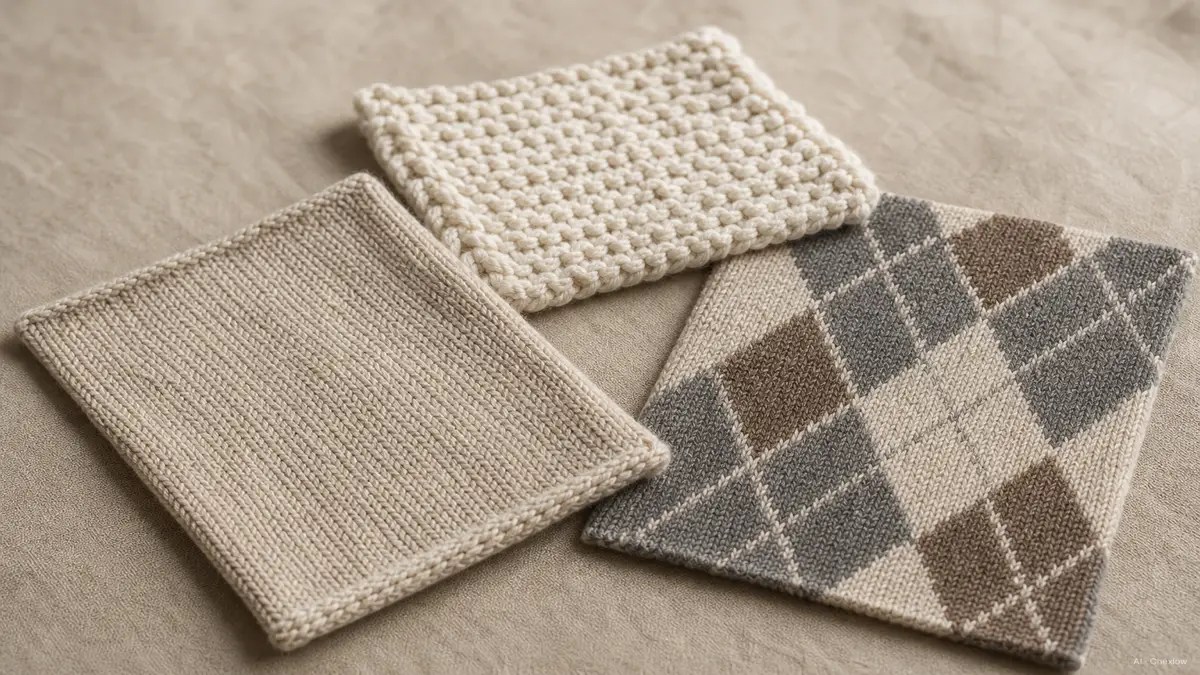
The illustration separates texture from pattern: do not read its three examples as fixed material categories. When shopping, inspect the close-up of the actual garment as well as its composition.
Gauge describes knitting-machine needle spacing: higher numbers indicate finer knitting. John Smedley explains the terminology. Start by comparing smooth, thin knits for a jacket outfit and more pronounced textures for a vest worn on top, then check the actual thickness.
Ply counts strands twisted into the yarn. Knitting tension also matters independently of gauge, so neither number alone settles how substantial a vest will feel. See Permanent Style’s construction guide.
- Considering merino. Woolmark identifies natural odor resistance as one of its properties. That makes it worth considering for repeated wear, but still check your own comfort and the garment’s care label. Woolmark’s wool-care overview.
- Prefer to avoid wool. Look for a cotton option and check the full composition, including any other fibers. Do not treat “cotton” in the product name as proof that the whole garment is cotton or that your usual wash cycle is suitable.
- Considering cashmere or a blend. Compare the feel, fit and care demands of the actual candidates before paying more. A fiber name does not resolve a tight armhole or an unsuitable neckline.
If the animal-fiber options are still hard to separate, continue with merino, lambswool and cashmere compared.
Try the neckline, armholes and hem together
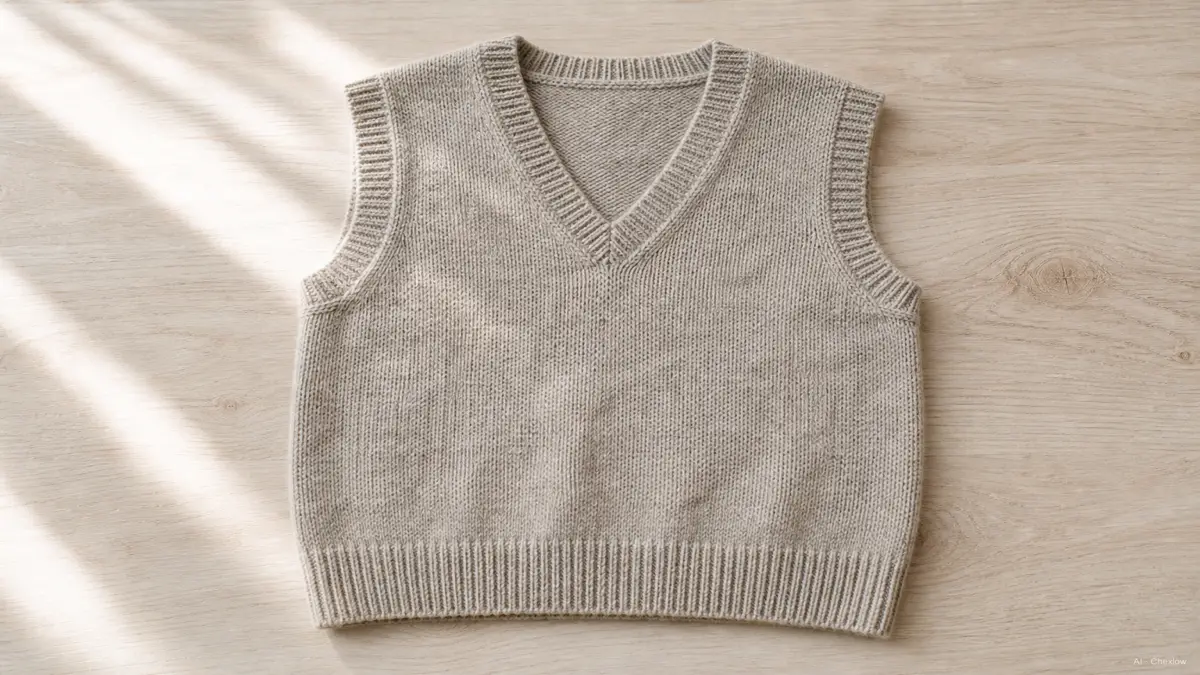
A flat product photo helps you see the openings, but try the vest over your intended underlayer. Use these checks before deciding whether to change size or change cut.
- Neckline. Lean forward and sit down. Check the amount of shirt or skin visible and whether the neck edge stays where you want it.
- Armholes. Reach forward and lift your arms. If the opening digs in, the shirt bunches or the body pulls across your chest, compare a roomier cut. If it gapes more than you want, compare a narrower opening instead of assuming that every measurement needs to shrink.
- Hem. Try it with the waistband of your actual trousers or skirt. Check whether it catches, rides up or leaves the intended amount of shirt showing. Cropped and longer vests can both work; there is no universal hip-length cutoff.
- Outer layer. Put on and close the jacket you plan to wear. If the combination feels crowded, try a thinner vest before simply sizing up the jacket.
Buying online? Compare the seller’s garment measurements with a knit that already fits over the same underlayer. Check whether chest measurements are flat widths or circumferences, and ask for missing length or armhole measurements rather than guessing from the size letter.
For pale, fine knits, also check how much of the underlayer shows through. John Smedley specifically notes some transparency in pale colors of its 30-gauge knit; that is a reason to inspect the candidate, not a verdict on every fine knit. Fit and gauge guide.
Make care a buying condition
Before paying, read the washing and drying instructions. If you only want machine-washable clothes, make that a requirement when narrowing the options. Woolmark bases washing permission on the garment’s label. How to wash wool.
A wool label does not automatically mean hand washing: UNIQLO’s cited merino vest specifies 100% wool and machine washing. That permission belongs to that garment, not to every merino vest.
For washable wool knitwear, plan space to dry it flat. Hanging it wet can stretch it; tumble drying needs explicit label permission. Woolmark’s drying guidance.
Keep the candidate only if all three decisions are settled: you have an outfit for it, it fits comfortably over the intended layer, and you can follow its care instructions. If one fails, change that feature of the shortlist rather than buying extra clothes to make the vest work.
Sources
How this guide was built
This guide was written by AI for Housnap, using John Smedley’s gauge guidance, Permanent Style’s construction explanations, Woolmark’s care advice and a UNIQLO garment specification. The outfit and fitting checks are editorial suggestions for choosing a first sweater vest, not results of product testing.