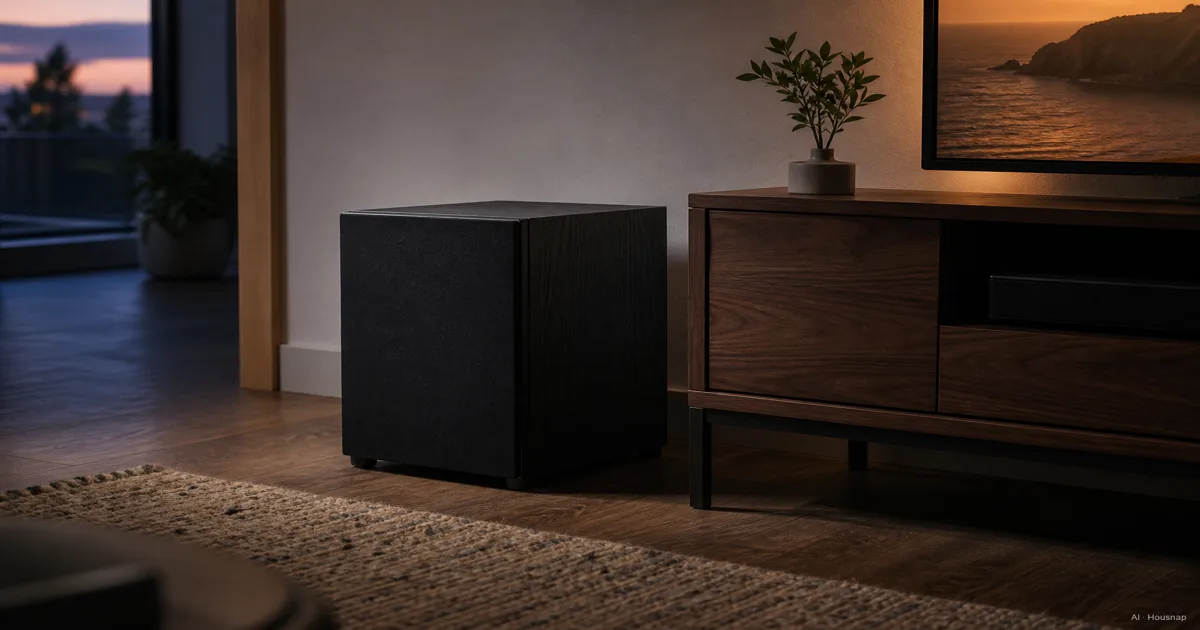
Available now from a single store
These picks currently have one store option each. Price comparison opens up as more stores are tracked.

Definitive Technology
Dymension DM80 Bipolar Floor-Standing Speaker with Built-In 12" Powered Subwoofer (Each)

Kicker
51HS12 12" Hideaway Compact Powered Subwoofer
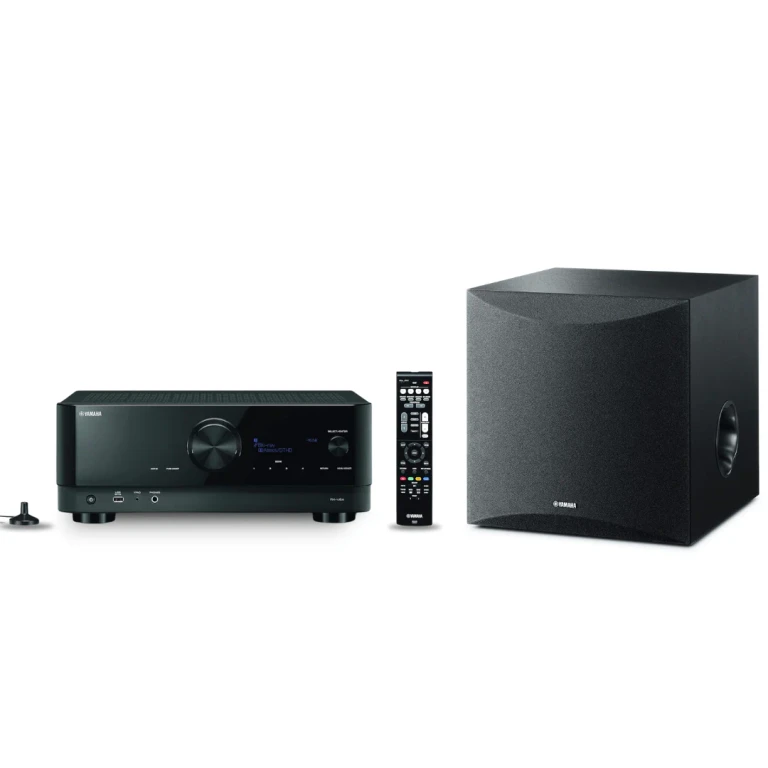
Yamaha
RX-V6A 7.2-Channel AV Receiver with MusicCast & 10" 100W Powered Subwoofer Bundle - Enhance Your Home Theater Experience

Polk Audio
Polk Monitor XT12 12" Powered Subwoofer
Check what your system can connect to
A powered subwoofer includes its amplifier and needs a power outlet; a passive one needs external amplification. For this first-buy guide, powered is the simpler starting point. Klipsch explains the distinction.
Before comparing sizes, photograph your system's rear panel and check its manual.
- RCA SUB OUT available. Look for a compatible low-level input on the subwoofer. This is the receiver connection shown by Axiom Audio.
- Only speaker terminals available. Ask the manufacturers to confirm a suitable high-level connection or converter. Never wire speaker outputs directly into RCA inputs; SVS explains the voltage and amplifier-wiring issues.
- Soundbar or wireless system. Check the exact supported subwoofer models. Wireless does not mean universal pairing: Sonos documents product and app restrictions.
Still choosing the whole system? Start with bookshelf speakers versus a soundbar. Building passive surround speakers into a system? Use the AV receiver buying guide before buying the sub separately.
Describe the room before choosing a diameter
Note the room's length, width and ceiling height, including adjoining spaces that stay open. Also write down whether you want moderate everyday bass or loud movie effects; SVS's sizing guidance considers volume and listening level together.
Send that description with your speaker model when requesting a recommendation. An 8-, 12- or 15-inch label alone is not a room-fit verdict. Measure the actual cabinet and leave the clearances its manual requires.
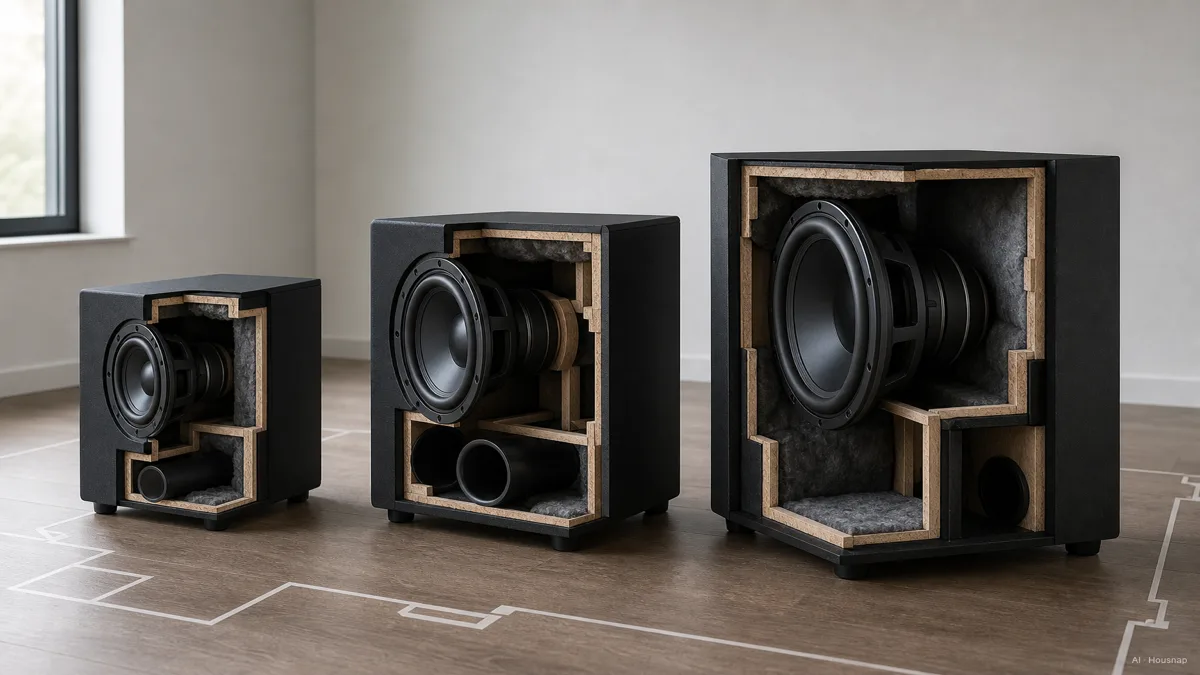
The illustration compares physical scale, not fixed room-size categories.
Choose between a smaller cabinet and more deep-bass output
- Limited floor space. Start your shortlist with sealed models, which generally have smaller cabinets.
- Strong deep-bass effects are the priority. Compare ported models and the larger cabinets they commonly require.
These are trade-offs, not genre rules. SVS's comparison explains that both designs can suit music and movies. Keep a candidate only if its dimensions and claimed performance fit your brief.
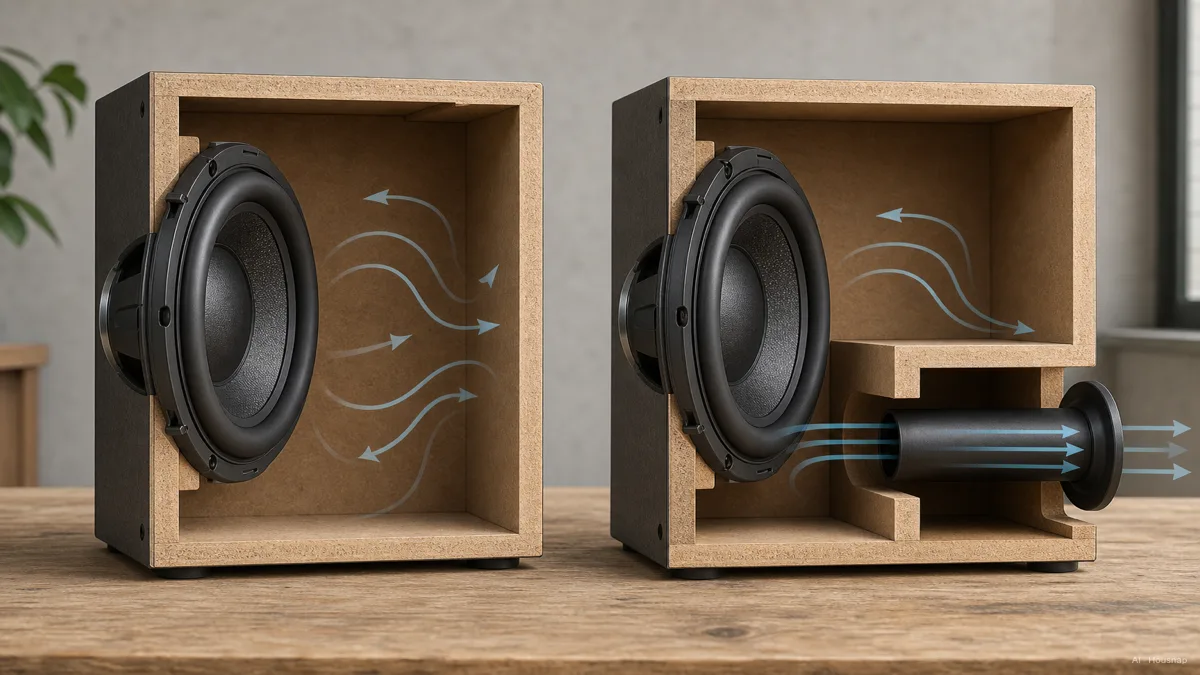
The port shown here is part of the acoustic design. Its presence alone does not tell you whether a subwoofer will sound boomy in your room.
Spend on the requirement you can name
Compare two or three candidates against the same checklist before deciding how far to stretch your budget.
- Fits and connects. Record cabinet dimensions, required clearance, input type and the cable or approved adapter you would need.
- Meets the listening brief. Ask what supports the model's suitability for your room and desired volume. A larger price tag is not that explanation.
- Can be adjusted. Check the manual for level, low-pass and phase controls. Level changes volume; low-pass controls the upper frequencies the sub reproduces, as Klipsch's control guide explains.
- Can be evaluated at home. Read the seller's return conditions and costs before paying. Plan which familiar music and film passages you will compare.
Choose the extra capability you expect to use. Reserve part of the budget for any confirmed connection requirement rather than buying accessories speculatively.
Try positions before finalizing the cable route
A front corner is a candidate, not a guaranteed best or worst position. For a placement trial, put the sub at or near your seat, compare possible locations at knee height, then move it to the most balanced-sounding spot. SVS describes this subwoofer crawl.
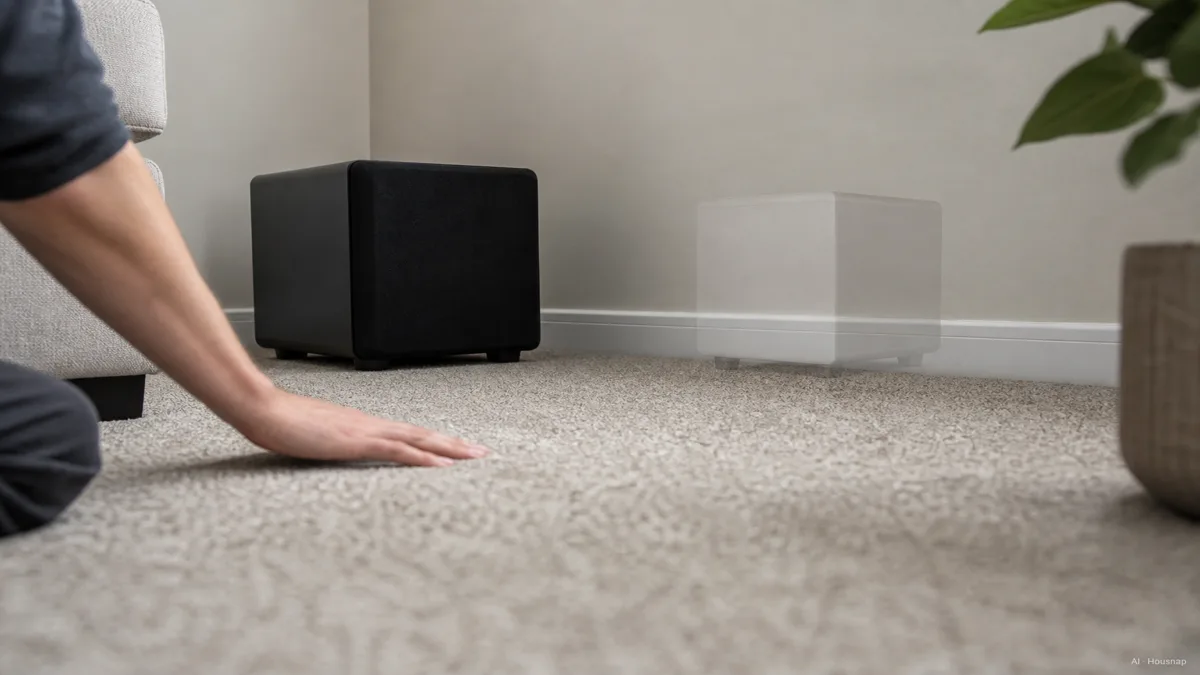
The alternative position in the illustration is something to test, not a promise that the middle of a wall will sound better.
For the RCA connection confirmed earlier, measure a route that reaches your candidate positions and choose an RCA subwoofer cable only if you need one. Switch both devices off before connecting, following Axiom's instructions. Recheck the result from your normal seat.
Blend the subwoofer with your speakers
With an AV receiver managing bass: follow its setup routine. SVS advises starting with phase at zero and the sub's low-pass disabled or at maximum before automatic calibration. Without bass management: adjust the sub's low-pass and level to blend with the main speakers. SVS separates these two setups.
Crossover is the transition region between speakers and subwoofer. 80 Hz is a reference, not a rule for every speaker; compact speakers may need a higher setting. Use the speaker guidance and calibration results, then listen for a smooth transition. SVS's crossover guide explains the distinction.
Keep a note of the starting settings and change one control at a time. If some bass notes dominate while others disappear, revisit position and seating before deciding that you bought too small a sub.
How this guide was built
This article was written by AI for Housnap, using manufacturer guidance from SVS, Klipsch, Axiom Audio and Sonos. It organizes connection checks, selection trade-offs and initial setup for a first standalone subwoofer purchase; it is not a product listening test.