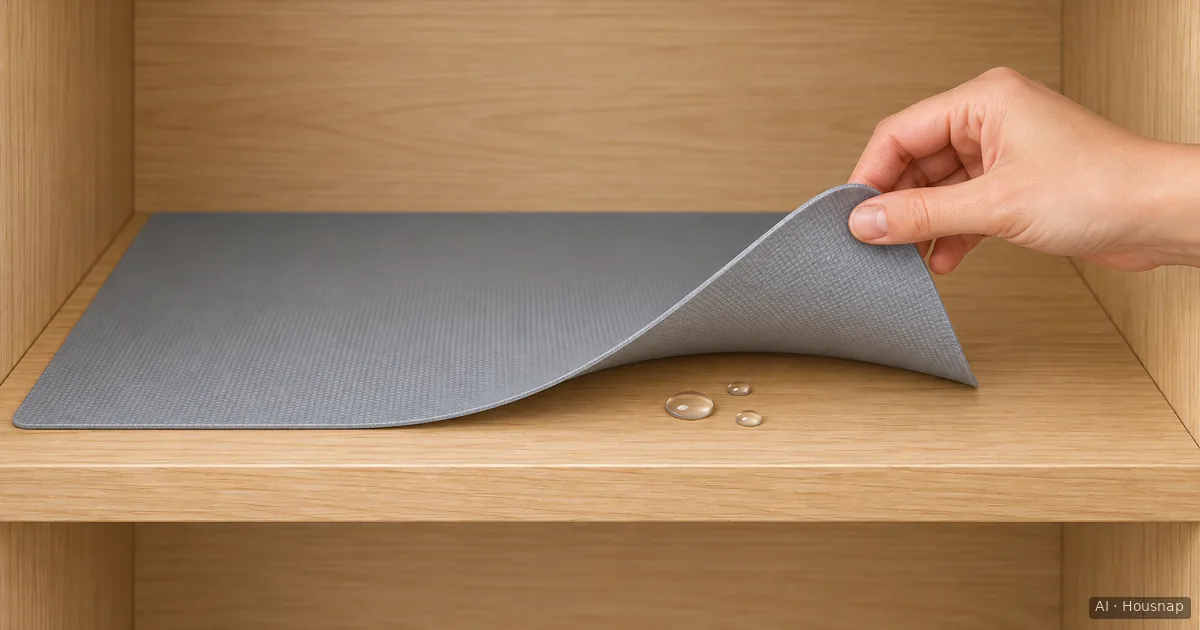
Check what will touch the shelf
Before choosing a pattern, identify the shelf surface from its product information or the cabinet maker: painted or clear-coated wood, a laminated panel, metal or glass. A wood-grain appearance does not tell you which finish is on top.
Then check the liner’s underside, material and removal method. Ask both manufacturers a specific question: “Can this liner remain in contact with this shelf finish under the items I plan to store?” Include the liner model and the cabinet or finish name. If either maker excludes that combination, choose another option; if the finish is unknown, leave the shelf unlined until you can confirm it.
For example, Con-Tact’s Premium liner is described as non-adhesive PVC with a textured, slip-resistant surface. That identifies its construction, but does not establish permission for every painted or varnished shelf. A material name or an easy-removal claim is not enough to make that decision.
Choose the upper surface for the actual job
Do you want objects to slide out easily, stay in place, or sit over gaps in a wire shelf? These are different requirements. Duck’s EasyLiner guide distinguishes them:
- Select Grip has grip on both faces, for holding items in place.
- Smooth Top has a smooth upper surface for sliding objects and a grip underside.
- Solid Grip has a solid upper surface intended to keep small objects and crumbs from falling through wire shelving.
Use these as examples of features to check, not as approval for your shelf finish. For wire shelving, check that the exact liner is intended to bridge those gaps; Con-Tact’s Premium page also describes that use.
If your real problem is separating utensils or small items into groups, choose a drawer organizer that fits your belongings. A liner’s surface does not answer the compartment-layout question.
Fit it so you can remove and dry it
Measure the usable shelf area before buying. Follow the liner’s cutting instructions, and check the fit without adding tape or glue. Plan how you will empty the shelf and lift the sheet out again; a liner that is awkward to remove is also awkward to inspect underneath.
Treat the shelf and liner as two separate cleaning jobs. KraftMaid’s cabinet-care guidance calls for avoiding excessive moisture, drying surfaces immediately after cleaning and wiping up spills as they occur. Follow your own cabinet maker’s cleaning method rather than borrowing a cleaner from another product’s instructions.
The liner needs its own care directions too. Smooth Top Gray specifies cold-water machine washing and flat drying. That permission does not apply to every plastic liner.
Before replacing a cleaned liner, check that both faces and the shelf are dry. If you find water underneath, remove it and address where the water is coming from before covering the shelf again. A spill-protection claim is not a reason to leave moisture hidden underneath.
Lift and inspect during cleaning
Con-Tact’s general reminder recommends periodically removing liners during household cleaning and warns that long-term pressure can cause issues. It does not give a universal inspection interval, so build the check into your normal cleaning and check after a spill reaches the liner’s edges.
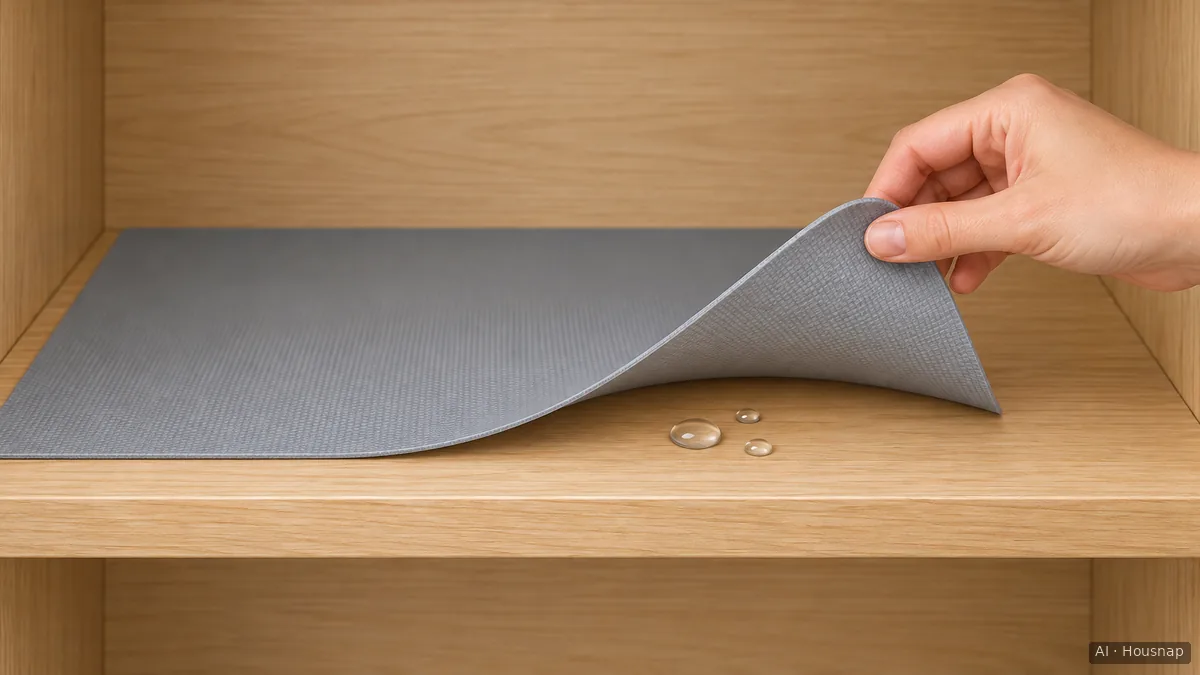
Empty the shelf, lift an accessible edge gently and look at the underside and exposed shelf. Check for moisture, transferred color, surface marks or unexpected sticking. If the liner resists lifting or the finish starts to come away, stop and ask the cabinet or finish manufacturer how to proceed; do not turn this check into scraping or solvent treatment.
Buy only when the contact-material and finish questions are resolved, the upper surface suits your task, and the cleaning method is practical. Leaving the shelf unlined is a valid choice while any of those answers is missing.
How this guide was built
Written by AI for Housnap using Duck, Con-Tact and KraftMaid manufacturer guidance. The compatibility questions and inspection sequence are editorial guidance; this article does not report hands-on testing or certify any liner-and-finish combination.