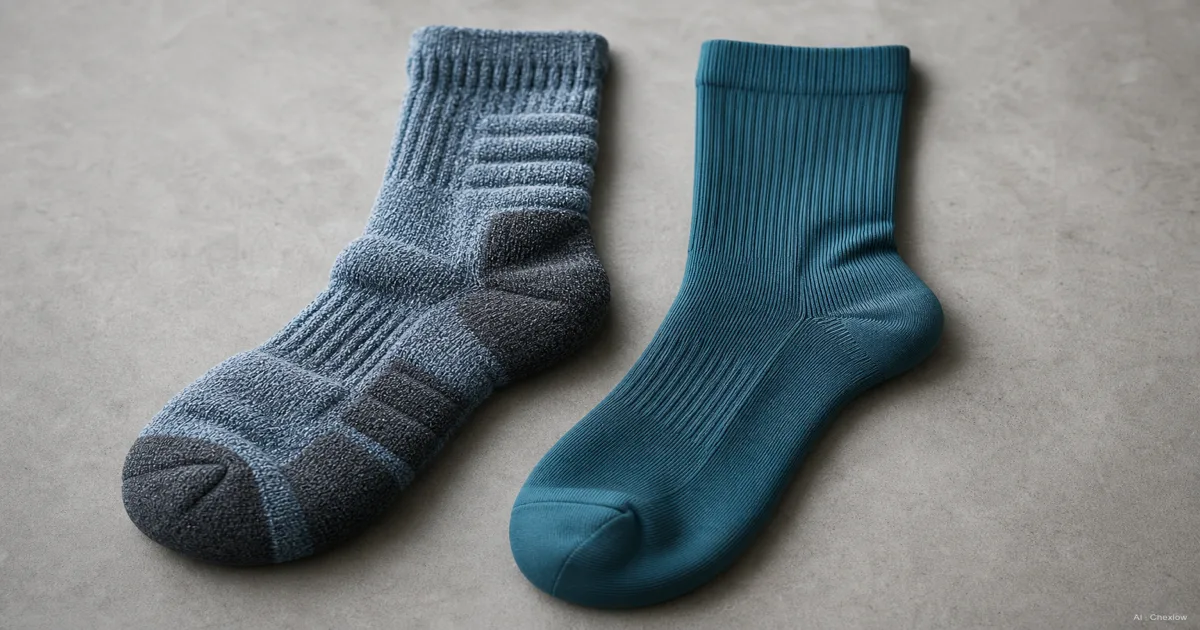
Choose the problem you want the socks to solve
Start with your next run, not the longest list of features.
- Your feet feel cramped, damp or rubbed. Make sock fit, fabric and padding your first buying checks.
- Your running socks already feel comfortable, but compression interests you. Check the evidence and sizing requirements before spending more.
- Nothing needs changing. You do not need to buy both categories to complete a running kit.
Cushioning and compression can coexist. For example, CEP Core Run Tall socks combine compression with padded zones and moisture-wicking fabric. That is a construction example, not proof of faster running or recovery. Compare the actual features rather than assuming a compression sock cannot also be your running sock.
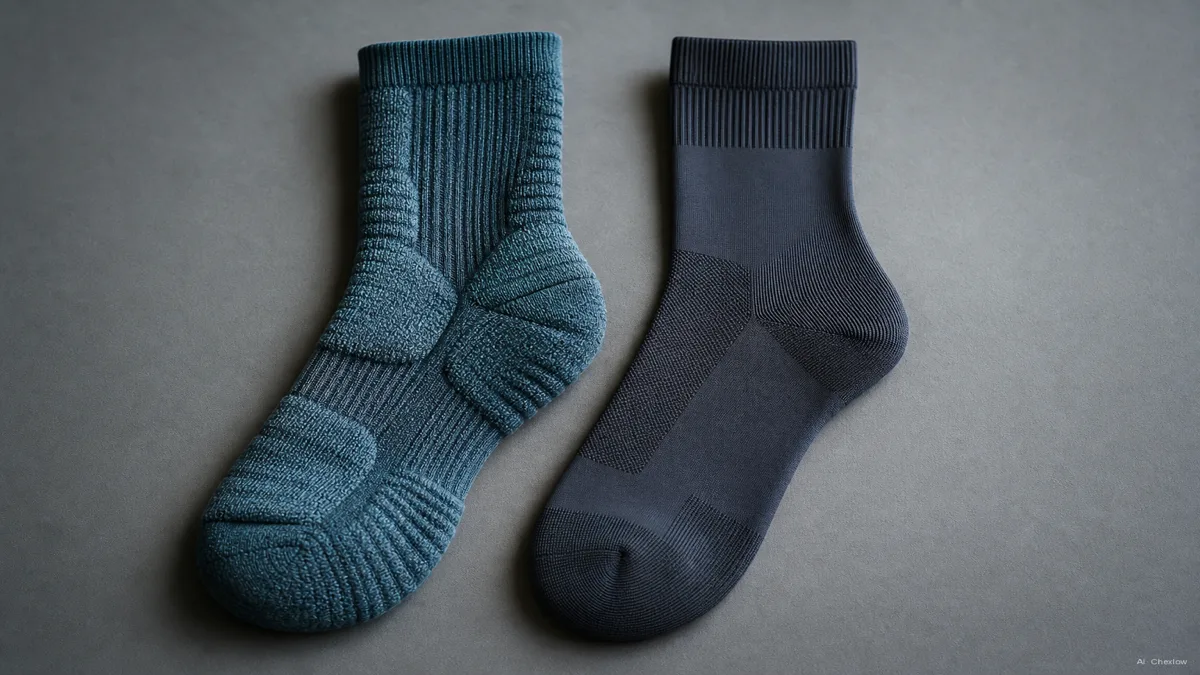
Choose padding inside the shoe, not in your hand
Try the socks with your running shoes. If padding crowds your toes, try less; if fabric bunches, revisit the size. REI's fitting guidance makes shoe space the deciding constraint.
Two labels deserve separate attention. Darn Tough distinguishes yarn weight, the thickness of the knitting yarn, from cushioning, which its socks create with terry loops. A lightweight label alone does not tell you how much padding sits underfoot. Check the cushioning description too. Darn Tough sock FAQ
For fabric, shortlist moisture-wicking synthetic or merino blends and check the toe seams. These are practical construction features highlighted by Runners Need, rather than a guarantee against blisters.
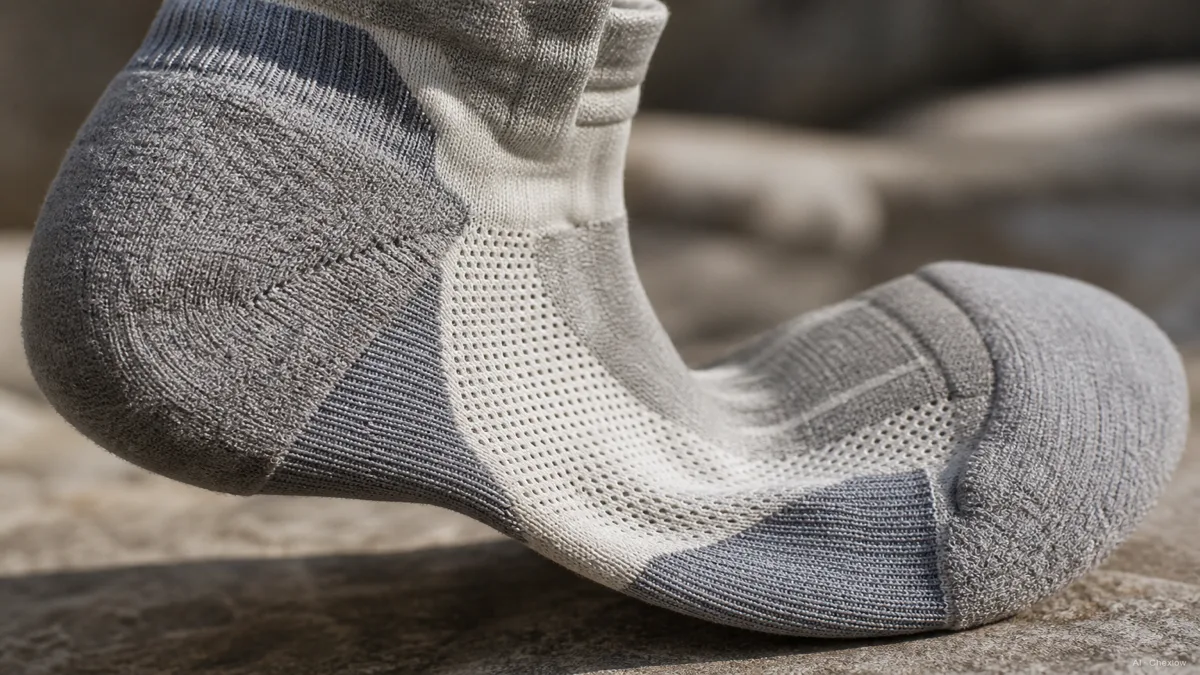
If rubbing starts, stop and check for debris or displaced fabric instead of pushing through; Darn Tough's blister guidance also stresses shoe fit. Still choosing the shoes themselves? Continue with cushioning versus stability in a first running shoe, then try the shoes and socks together.
Decide whether compression offers enough for your goal
A review of 21 studies found exercise-performance improvements in only a small number of studies, while identifying possible benefits for muscle function and perceived soreness during recovery. Feeling less sore and running faster are different outcomes.
For a first purchase, that makes compression an optional experiment for a specific goal, not a reliable shortcut to better times. If your current socks are uncomfortable, resolve that before buying another pair mainly for its recovery promise. If they already work, you can judge compression separately without replacing them automatically.
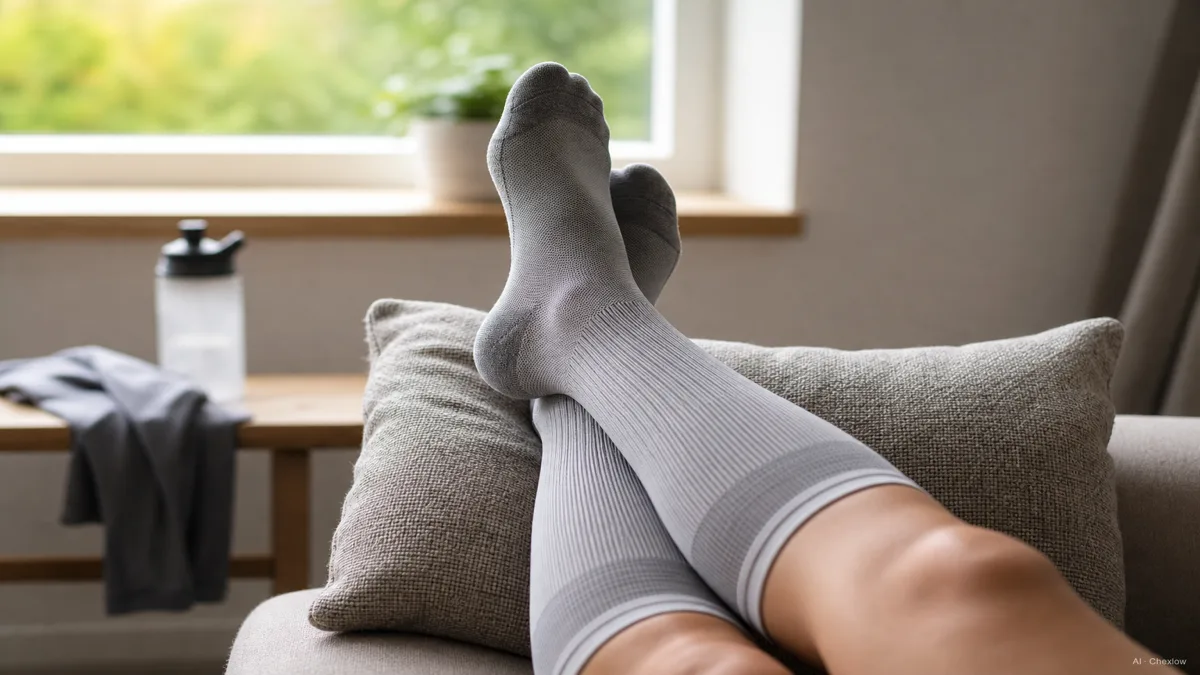
Want a hands-on massage option instead of something to wear? Compare a foam roller with a massage gun before adding another recovery purchase.
Check pressure, measurements and wearing instructions
Graduated compression is firmer at the ankle than farther up the leg. Use a flexible measuring tape and the product's chart, checking ankle and calf measurements where required. Known arterial disease, uncontrolled heart failure or persistent swelling warrant medical advice before buying. Sigvaris compression guidance
- Read the pressure label. mmHg means millimeters of mercury, a pressure unit. Sigvaris recommends professional guidance for 20–30 mmHg or higher; a larger number is not a performance ranking.
- Check the wearing schedule. Do not make overnight wear your default. Sigvaris advises against sleeping in compression socks unless prescribed. Sigvaris FAQ
- Respond to altered sensation. Remove the socks and seek professional advice if numbness or pins and needles develop. Kent Community Health NHS guidance
Use a tape you already own if suitable. If the chart leaves you between incompatible measurements, ask the manufacturer or a qualified fitter instead of choosing a smaller size for extra pressure.
Sources
- REI, sock fit and padding
- Darn Tough, yarn weight and cushioning
- Runners Need, running-sock construction
- Darn Tough, rubbing and blister prevention
- CEP, a compression sock with cushioning
- Mota and colleagues, compression-stocking review abstract
- Sigvaris, compression and fitting considerations
- Sigvaris, pressure and overnight-use FAQ
- Kent Community Health NHS, compression-stocking precautions
How this guide was built
AI wrote this guide for Housnap using manufacturer construction information, published fitting guidance, NHS precautions and the cited research abstract. The first-buy recommendation is an editorial judgment about comfort, fit and the limits of compression evidence. No product wear testing or new human review is claimed.