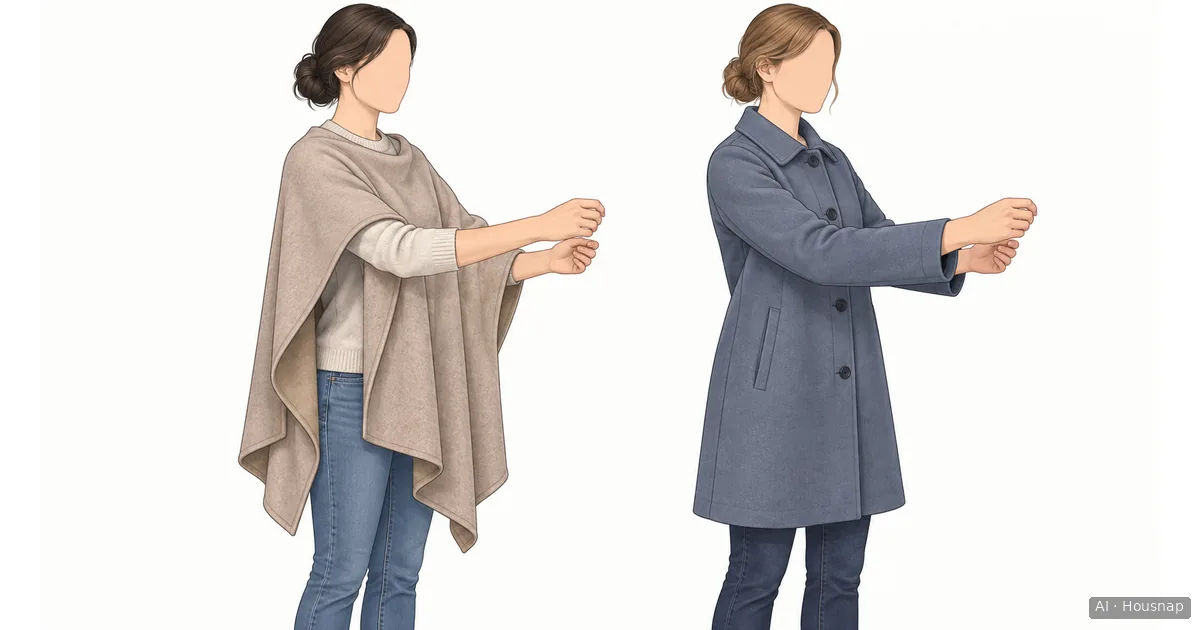
Available now from a single store
These picks currently have one store option each. Price comparison opens up as more stores are tracked.
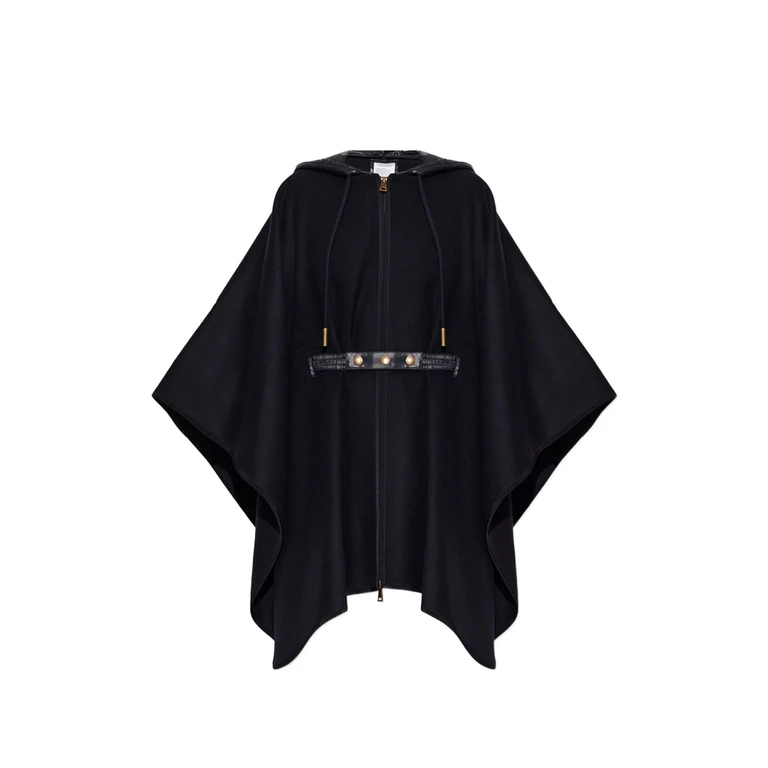

Check where your arms actually come out
A wide outline is not enough to judge freedom of movement. Look for open sides, separate arm slits or actual sleeves, then check which fastenings you would use while wearing the garment.
For example, the Herno Resort poncho documented here has short sleeves and side buttons. That is a particular construction, not a definition of every poncho. Ask for a side view with the arms raised if the listing only shows a model standing still.
Dimensions need the same care. Samaya's size guide distinguishes a poncho's 48-by-48-inch overall dimensions from its 28-inch back-neck-to-hem measurement. Its trench-coat chart separately lists chest, arm hole, shoulder and length. Compare measurements taken between the same points; a broad fabric width cannot substitute for a sleeve or arm-opening measurement.
Reach before adding the bag
Wear the sweater or other layer you expect to use underneath. The North Face's fitting guide recommends allowing for those layers and trying a hug movement with the coat zipped up. If you can reach forward but still feel restricted at the shoulders or elbows, it suggests trying the next size.
For this comparison, try both garments fastened as you intend to wear them:
- Reach forward with both hands. Notice pressure at the upper arms, shoulders and elbows.
- Lift your arms overhead. Watch what happens to the front hem and the coverage at your sides.
- Lower your arms again. Check whether you need to rearrange the garment before continuing.
The North Face also advises checking that a short coat does not ride above the stomach when you raise your arms, while treating deliberately cropped jackets separately. Decide how much exposure you accept rather than treating every rising hem as a sizing fault.
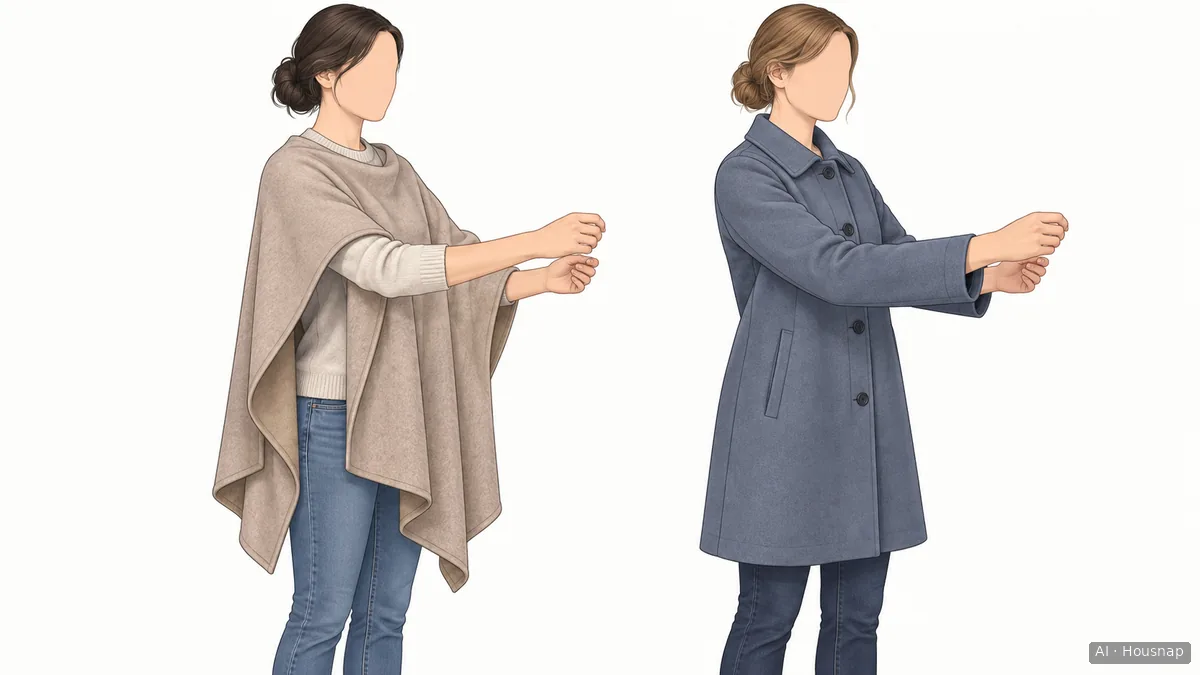
The illustration compares two generic arm arrangements, not specific products or measured movement ranges. On the poncho, follow the edge beside the raised arm; on the coat, follow the sleeve. Repeat the movement in the actual candidates and judge the resulting coverage yourself.
Carry and open the bag you already use
Now add your bag with its ordinary contents. This is a practical comparison we suggest, not a manufacturer-tested claim that one garment works with every bag.
- Bag outside the garment. Put the strap where you normally wear it. Reach forward again, then open the bag and retrieve your phone. Check whether the strap catches or holds down fabric you need to move.
- Bag underneath a poncho. If this is how you plan to carry it, try that arrangement too. Can your hand reach the opening without lifting more of the front or side than you want?
- Backpack. Put on both straps and repeat the reach. Check the actual combination; a roomy front view does not establish room around a loaded pack.
Keep the same contents and strap adjustment when comparing the two garments. If one only works after you take the bag off, decide whether that interruption suits your daily routine. There is no need to buy a different bag merely to make the preferred coat pass.
Choose the combination that works, then check the weather brief
Keep the poncho if its openings, moving coverage and bag access all work for you. Keep the sleeved coat if you can reach comfortably and use the bag without repeatedly rearranging your clothes. If neither passes, compare another cut rather than assuming extra width will solve every restriction.
For an online order, ask whether the chart describes your body or the finished garment. The North Face's linked guide asks readers to measure their bodies; Samaya's linked guide supplies garment dimensions. Do not compare those numbers as though they mean the same thing.
Check the lining and any insulation separately. The Herno example above is explicitly unlined, so even a wool poncho should not be assessed from its broad silhouette alone. Ask for the exact garment's weather specifications if protection is part of the purchase.
If sustained rain is the main reason you need outerwear, continue with the rain-jacket buying guide before committing to either shape. A loose cape outline is not evidence of waterproofing.
How this guide was built
Written by AI for Housnap, using manufacturer construction and sizing information from Herno and Samaya Merino and fitting guidance from The North Face. The bag-access comparison and selection priorities are editorial suggestions, not hands-on product-test results.