Available now from a single store
These picks currently have one store option each. Price comparison opens up as more stores are tracked.


Choose the whole glove, not just the outer material
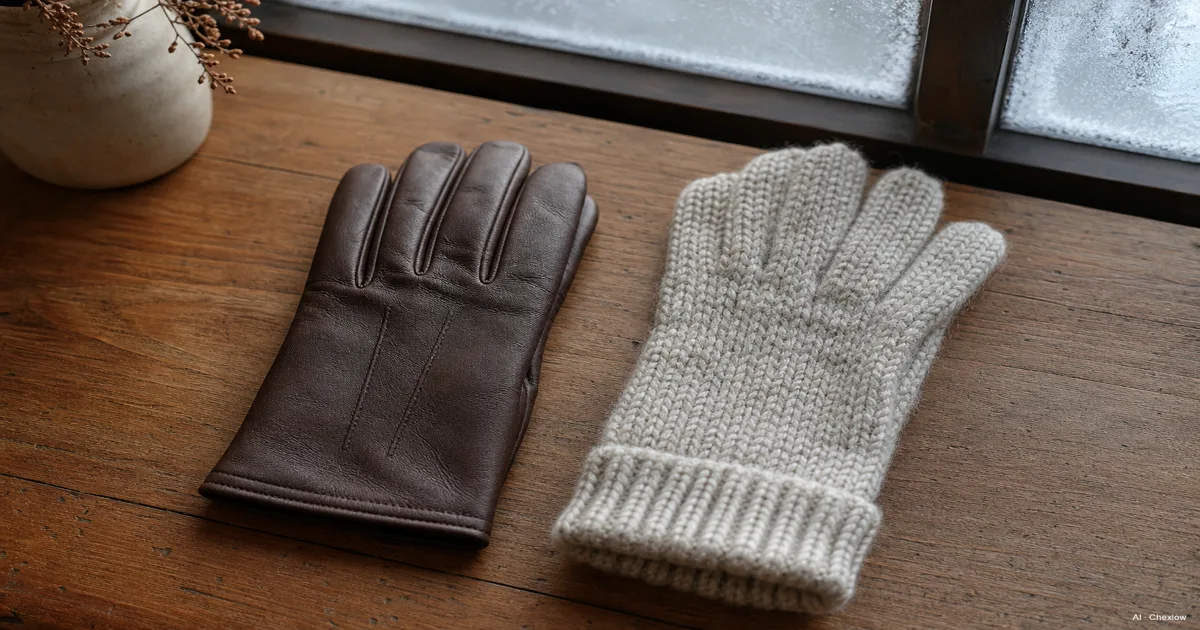
For a first pair, narrow the choice to two actual products: a wool knit glove and a lined leather glove. Comparing a thick knit with an unlined driving glove tells you little about other gloves made from those materials.
Wool’s natural crimp helps hold insulating air, but that does not establish a warmth ranking for finished gloves. Look at the knit’s thickness and whether it has another layer inside. Woolmark explains the fibre’s insulating structure.
Leather and wool are not mutually exclusive. Check the outer material and lining separately; Dents’ buying guide distinguishes leather types from linings such as cashmere. A leather label alone does not tell you what sits against your hand.
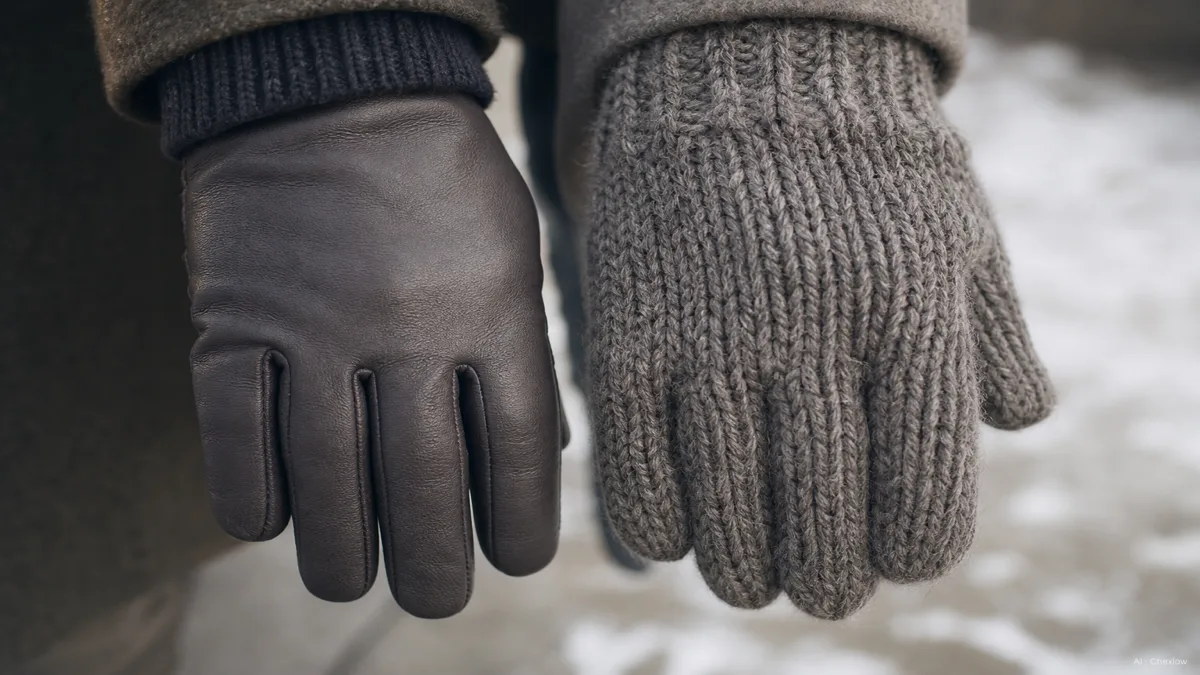
- Start with wool knit if you want a knitted glove for mostly sheltered, dry outings. Compare thickness, cuff coverage and how the yarn feels against your fingers.
- Start with lined leather if you prefer a tailored shape. Check the lining before treating it as a winter option.
- Pause the material choice if rain or wet snow is routine. Weather protection becomes the first filter.
These are starting points for shopping, not temperature ratings. The illustration shows texture, not tested warmth or wind resistance.
Make rain and exposure your next filter
Do not read “treated leather” as “waterproof glove.” Hestra says its impregnated leather resists light moisture but can absorb water during prolonged exposure; its waterproof models use a separate waterproof-breathable membrane. Hestra’s explanation makes that distinction explicit.
- Mostly dry trips. Keep both materials on the shortlist and compare the finished gloves.
- An exposed, windy route. Look for an explicit wind-protection claim. Do not infer it from a photograph or the word “leather.”
- Frequent rain or handling wet snow. Require a whole-glove waterproof specification. An ordinary knit or a leather-care treatment is not enough evidence.
If your whole body feels cold, check your clothing layers too. REI includes keeping the core warm in its hand-warmth guidance. For that separate purchase, compare merino and synthetic base layers.
Try the movements you need before choosing a size
Bring your coat and try both shortlisted pairs with its sleeves. Make a fist, straighten your fingers and pick up a key. Reject a pair that pulls painfully at the fingertips or bunches so much in the palm that it interferes with the task.
For its dress gloves, Hestra recommends measuring around the widest part of the dominant hand, excluding the thumb, and choosing a close but unrestricted fit. That advice is specific to dress gloves; use the size instructions for the pair you are buying. Hestra’s fit guide.
Thicker insulation can mean more bulk, and touchscreen operation is a separate feature. REI’s buying guide covers both. If phone use matters, check compatibility and try it; neither “wool” nor “leather” promises it.
For car use, check grip and controls while parked. This everyday-glove comparison does not establish suitability for motorcycling or protective work.
Check the care label before paying
Treat cleaning instructions as part of the purchase. If you need machine washing, require the exact pair’s label to allow it rather than assuming all wool blends qualify.
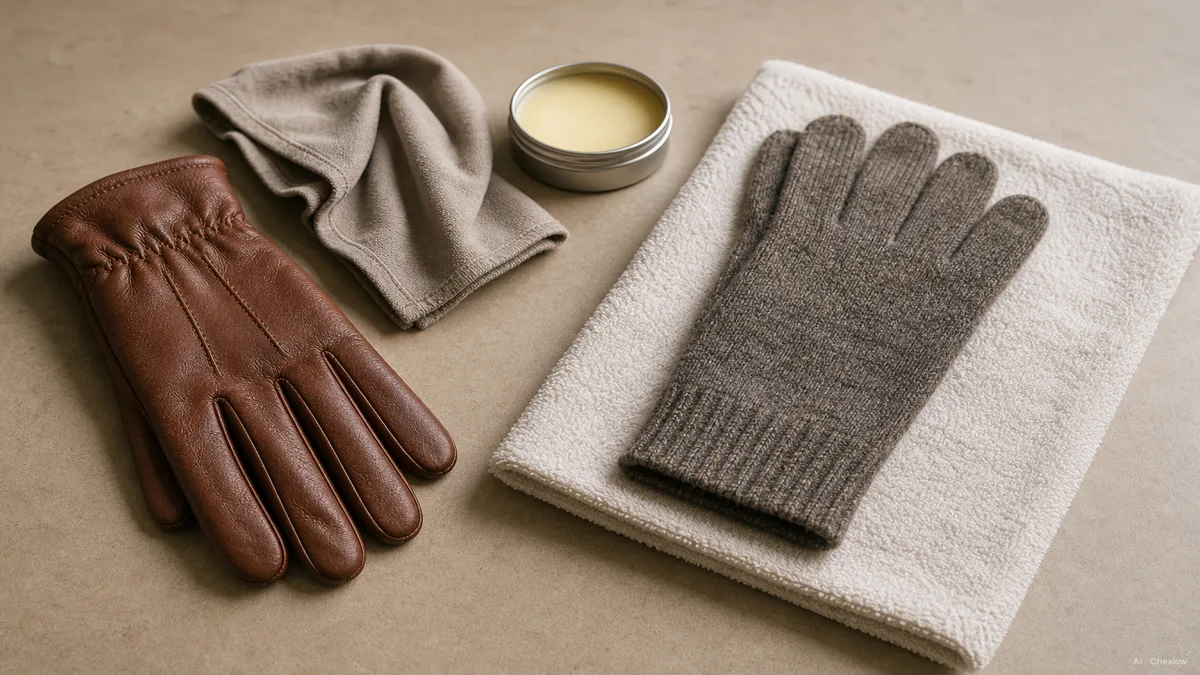
For light dirt on suitable leather gloves, Dents recommends patch testing a damp cloth; heavy soiling goes to a specialist. Dry naturally away from direct heat. Follow the glove maker’s instructions before cleaning. Dents’ care guide.
The conditioner tin in the illustration is not a universal shopping recommendation. Hestra warns that balm or conditioner can leave thin, porous dress-glove leather blotchy. Buy a treatment only after the manufacturer confirms compatibility. Hestra’s care guidance.
For washable wool gloves, a mild, neutral wool detergent is the useful extra if you do not already own one; avoid enzyme or bleach detergents. Woolmark’s detergent guidance. Reshape and dry knitwear flat unless its label allows another method. Woolmark’s drying guide.
Before checkout, you should be able to name the lining, the weather protection you need, the size that lets you move and the care method you can follow. If both pairs pass, choose the feel and appearance you prefer.
How this guide was built
This guide was written by AI for Housnap, using Dents and Hestra documentation, Woolmark care guidance and REI’s glove-buying advice. It compares everyday winter-glove choices and separates manufacturer instructions from editorial shopping suggestions; it does not report hands-on product testing.