Available now from a single store
These picks currently have one store option each. Price comparison opens up as more stores are tracked.

Relaxus Beauty
Straighten Out Ultra Slim 1" Digital Ceramic Hair Straightener

Relaxus Beauty
Curl2Go 19mm Mini Travel Ceramic Curling Iron

Relaxus Beauty
Straighten Out Sleek & Slim 1" Digital Ceramic Hair Straightener

Relaxus Beauty
Straighten Out 1" Ultra Slim Ceramic Hair Straightener
Choose the look you will actually wear
- Mostly straight. Start your shortlist with flat irons.
- Mostly curls. Start with curling irons or wands.
- Both. Consider a straightener whose manufacturer demonstrates curling. It is a technique to learn, not a reason to buy two tools immediately.
A straightener is not limited to faint waves: ghd demonstrates soft and structured curls made by turning and gliding the tool. Look for a demonstration of the finish you want before counting that versatility as a buying advantage.
Separate hair type from the shape you need
Fine strands, a lot of hair and a strong curl pattern describe different things. T3 distinguishes strand thickness from density and curl pattern. So “fine hair means curling iron” is not a useful buying rule. Write down your desired finish separately from your hair's characteristics.
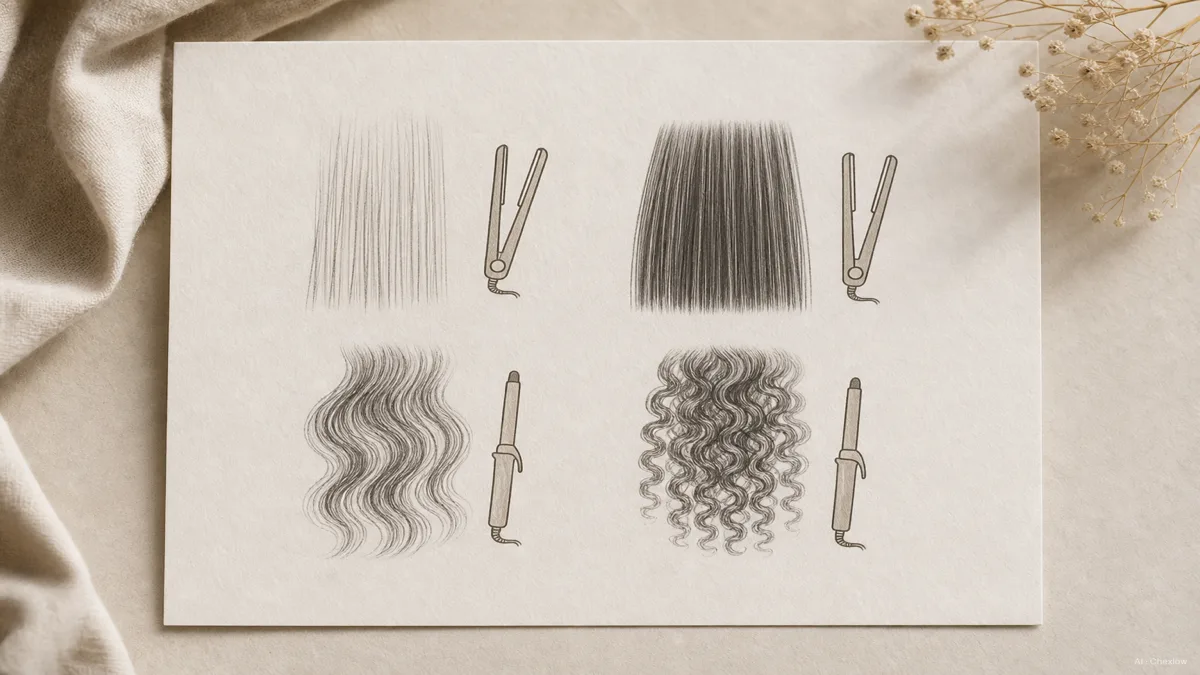
The illustration is a starting point for describing hair, not a prescription for which tool to buy.
For a curler, compare the barrel shape and the grip: a tong has a clamp; a wand leaves you to wrap the hair. ghd's range illustrates slimmer barrels for defined curls and larger ones for looser waves. Choose by a comparable finished style, not by assuming the biggest barrel is best.
For short sections or bangs, include narrow plates in your straightener shortlist; Remington's narrow model is designed for that job. Check the actual dimensions and how the tool is handled.
Compare controls before paying for a coating
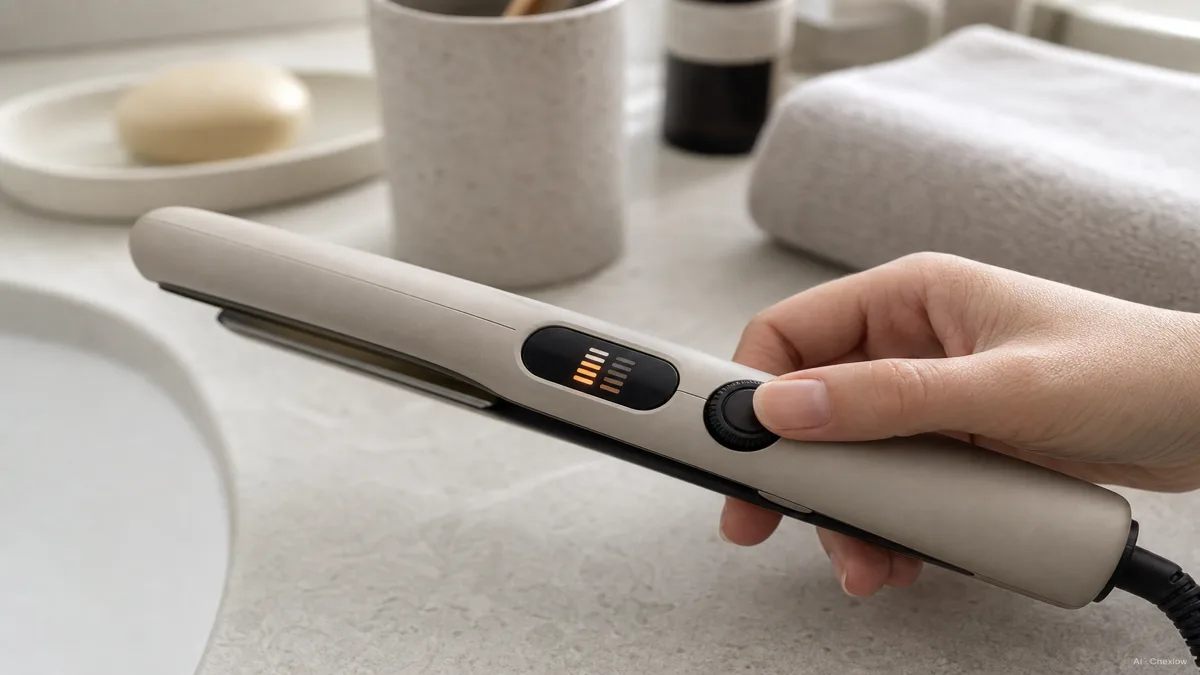
Ceramic, titanium and tourmaline labels are not a safety ranking. Read the construction description: the Remington example combines ceramic plates with a titanium coating. Our buying priority is clear temperature controls and a suitable shape, rather than a material premium alone.
Compare the lowest setting, adjustment steps and whether temperature is fixed. “Setting 4” is not a shared temperature: T3's numbered guidance names particular models. Use the manual for the exact tool you are considering.
Plan preparation before the first session
The American Academy of Dermatology advises dry hair and low or medium heat for straightening; excessive heat can damage any hair type. Do not treat a protectant as permission to turn up the heat.
Choose a heat protectant explicitly intended for your styling step, and follow its application directions. ghd separates preparation products from post-styling finishes. An oil or serum name alone is not enough to identify its role. If that is your remaining purchase, see how to choose a heat protectant.
Keep the tool away from water, unplug it after use and let it cool before storing, as the Conair instructions specify.
Buy one tool with a clear job
Before checkout, make a short note: the finish you want, the shape you chose, the temperature controls and the preparation product. If you cannot name what a second tool would add, leave it for later.
Check the exact model's voltage and plug requirements if you plan to travel. Conair's manual, for example, specifies both its operating voltage and the need for a suitable plug adapter; that specification does not transfer to other irons.
If your real priority is drying and styling in one routine, reconsider the category before buying either iron. The Airwrap and FlexStyle comparison addresses that different purchase.
How this guide was built
AI wrote this Housnap guide using manufacturer tutorials, product specifications and instructions, alongside American Academy of Dermatology guidance. It compares first-purchase decisions rather than reporting hands-on product testing; the buying priorities are editorial judgments.