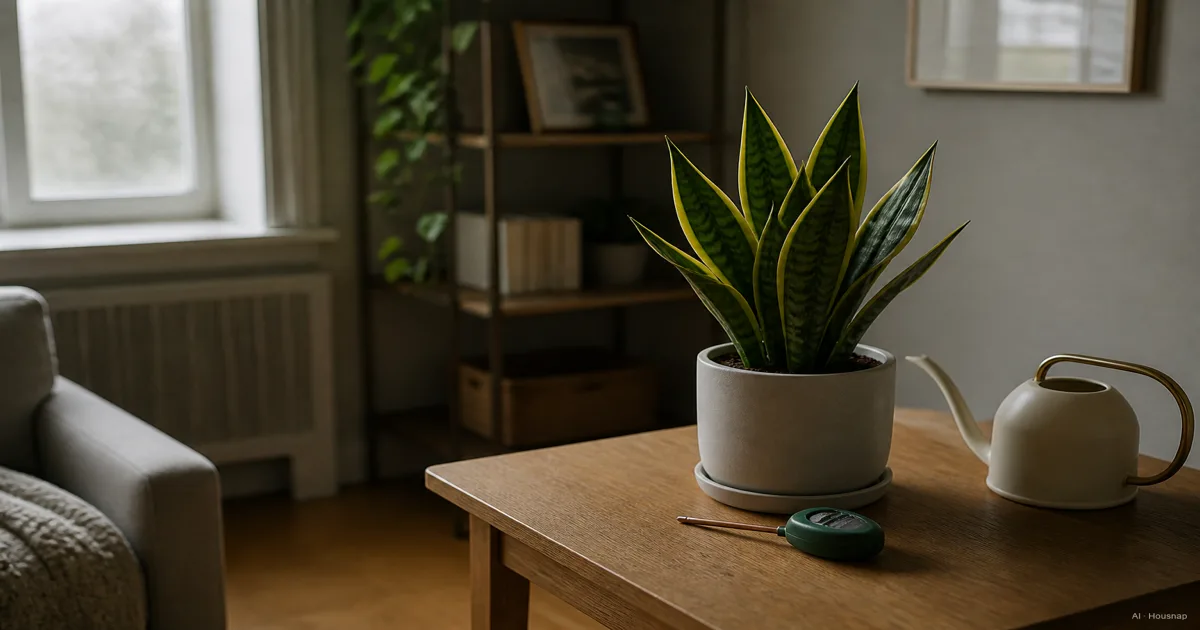
Check the spot before choosing the plant
Stand where the pot will sit during daylight. The RHS book-reading check is a useful first impression: can you read there without a lamp? Treat it as a rough guide, not a guarantee.
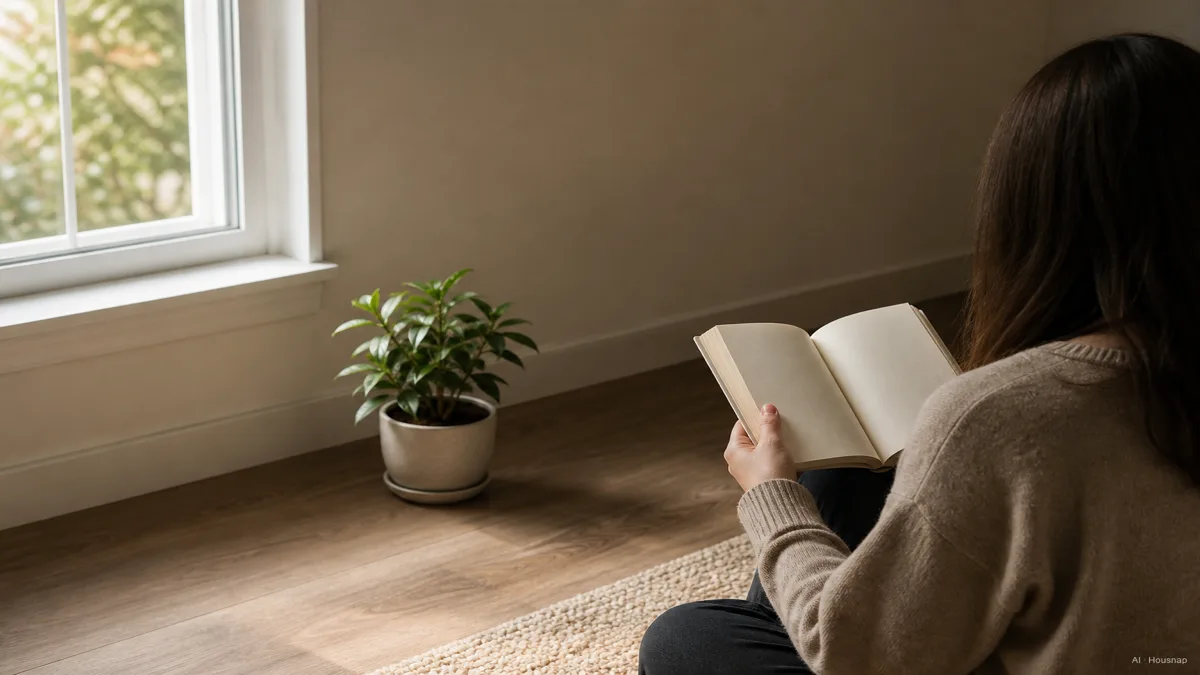
Check at different daytime hours. No usable daylight? Move the plant to a brighter spot or arrange lighting before buying. Low-light tolerance does not remove a plant's need for light.
A grow light helps when daylight is insufficient. Match its output and placement to the plant, rather than assuming one wattage or distance suits everything. RHS lighting guidance explains why the setup matters. If the spot needs supplemental light, read how to choose your first grow light before choosing a fixture.
Let pets narrow the shortlist
If a cat or dog can reach and chew the plant, skip pothos, snake plant and ZZ for this first purchase: all three are toxic to them.
- A shaded spot with daylight: consider cast iron plant, Aspidistra elatior. It tolerates shade, and ASPCA lists it as non-toxic to cats and dogs.
- A brighter spot out of direct sun: consider spider plant, Chlorophytum comosum, also listed as non-toxic. Minnesota Extension places it in its medium-light group, so don't buy it for the darkest corner.
Those light requirements are covered by the RHS and Minnesota Extension. “Non-toxic” is not an invitation to chew: any plant material can upset a pet's stomach. Keep plants away from young children too; an animal-safety listing is not a child-safety assessment. Suspected toxic ingestion by a pet calls for prompt veterinary advice.
Choose the shape and watering habit you can live with
If chewing is not a concern, use these differences to choose one plant.
- Pothos for a shelf: its vines trail or climb. Bright indirect light suits it best; low light can reduce leaf variegation, the contrasting patches of colour. Don't choose it mainly for pale markings in a dim spot. NC State's pothos profile.
- Snake plant for upright leaves: it tolerates low light, but the soil needs to dry between waterings. Choose it if you can leave a still-damp pot alone. NC State's snake plant profile.
- ZZ for glossy foliage and slow growth: it tolerates dry periods and low light, although brighter indirect light suits it better. Pick it if slow changes won't disappoint you. Iowa State's ZZ guide.
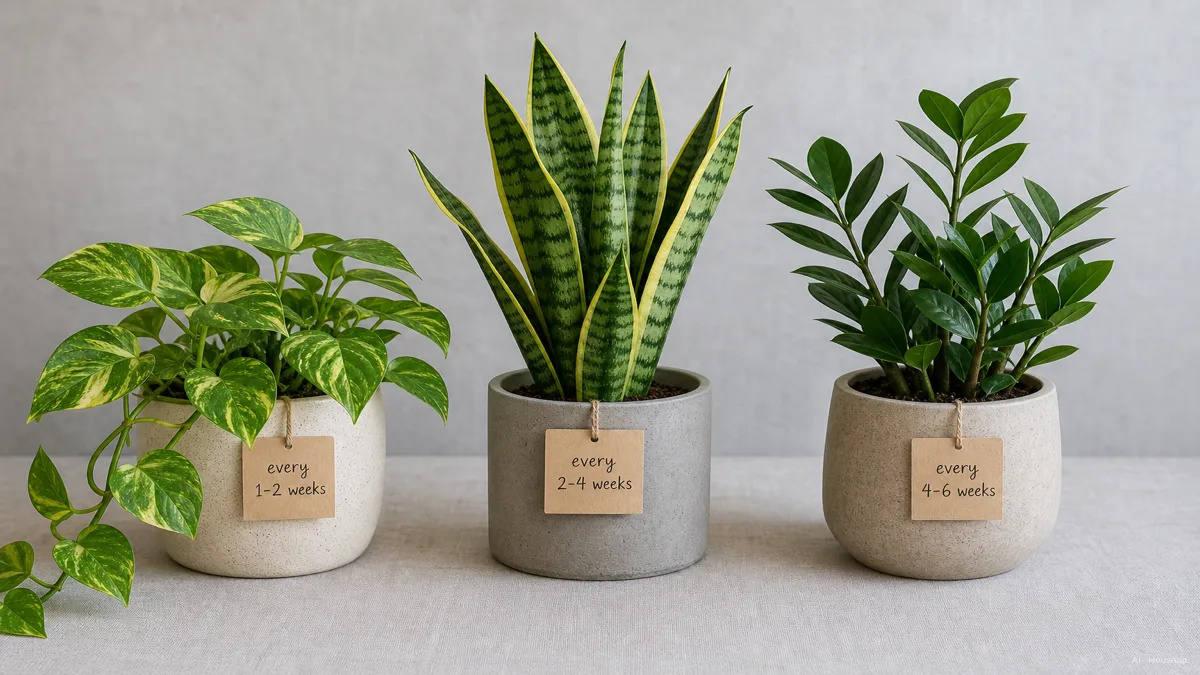
Use the illustration to compare shapes, not to set a watering calendar. Pothos needs moderate drying; snake plant and ZZ need the mix to dry between waterings. Iowa State and NC State describe those differences.
Buy a healthy plant and give water a way out
Before paying, check under leaves and where leaves join stems for pests. Pass over plants with extensive yellowing, spots or wilting. Maryland Extension's buying checks.
Check the pot too. For this beginner setup, choose a pot with drainage holes and an easy-to-empty saucer. A suitable nursery pot already does the job; buy another only if needed. Water thoroughly when the plant needs it, let it drain, then empty collected water. Maryland's watering guide.
At home, feel below the surface and compare the pot's weight before watering. Low light slows water use; don't water just because a week has passed. Wilting alone is not proof of thirst. Minnesota; Maryland.
Skip the moisture meter as a default purchase. A finger check, or a wooden skewer where access is awkward, is a practical starting point. Maryland's advice questions meter accuracy but explicitly does not report experimental testing. An automatic-watering pot is also not the starting recommendation here: first learn how your chosen plant's mix dries.
How this guide was built
Written by AI for Housnap, using RHS guidance, university extension plant profiles and ASPCA toxicity listings. The scope is choosing a first plant for a dim room and setting up its initial care; the shortlist and optional-tool choices are editorial judgments, not product tests.