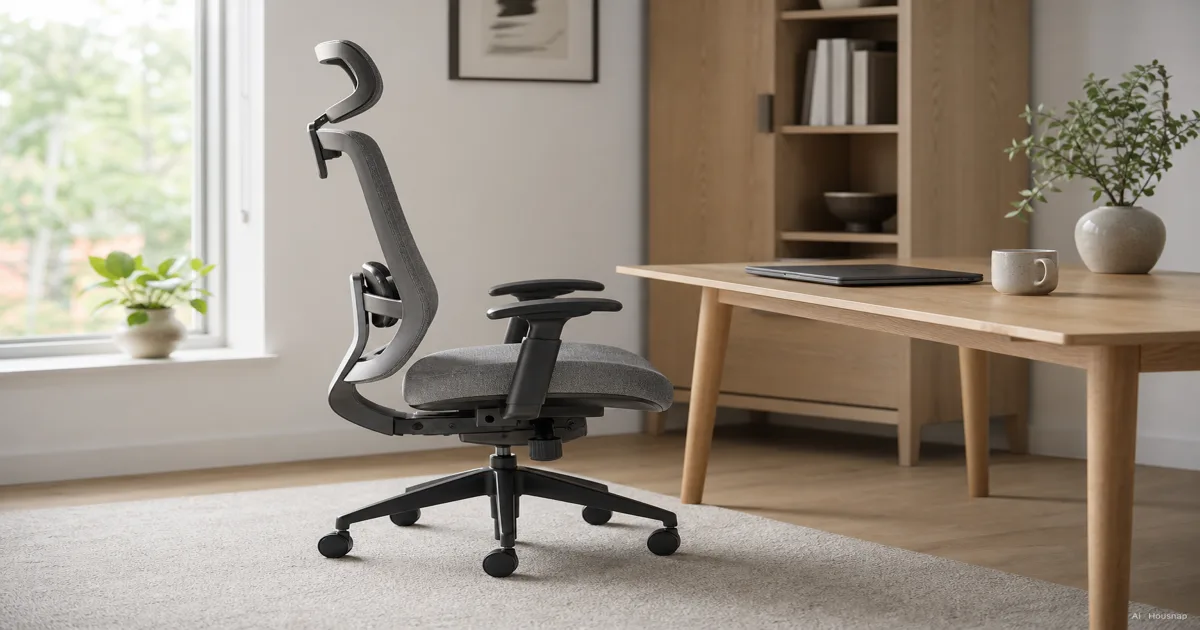
Rule out chairs that cannot fit you
An “ergonomic” label does not guarantee a match for your body, desk or work. CCOHS explains why individual fit matters.
Before shopping, note your desk height and leg clearance. Ask for the candidate's seat-height range, usable seat width and depth, armrest range and stated user-weight limit. Overall chair dimensions are not seat dimensions.
During a trial, check feet supported, back against the backrest and no seat-edge pressure behind the knees. If you cannot achieve these together, try another size before adding accessories. For example, Aeron comes in three sizes; a familiar model name alone is not a size choice.
Try the controls in your working position
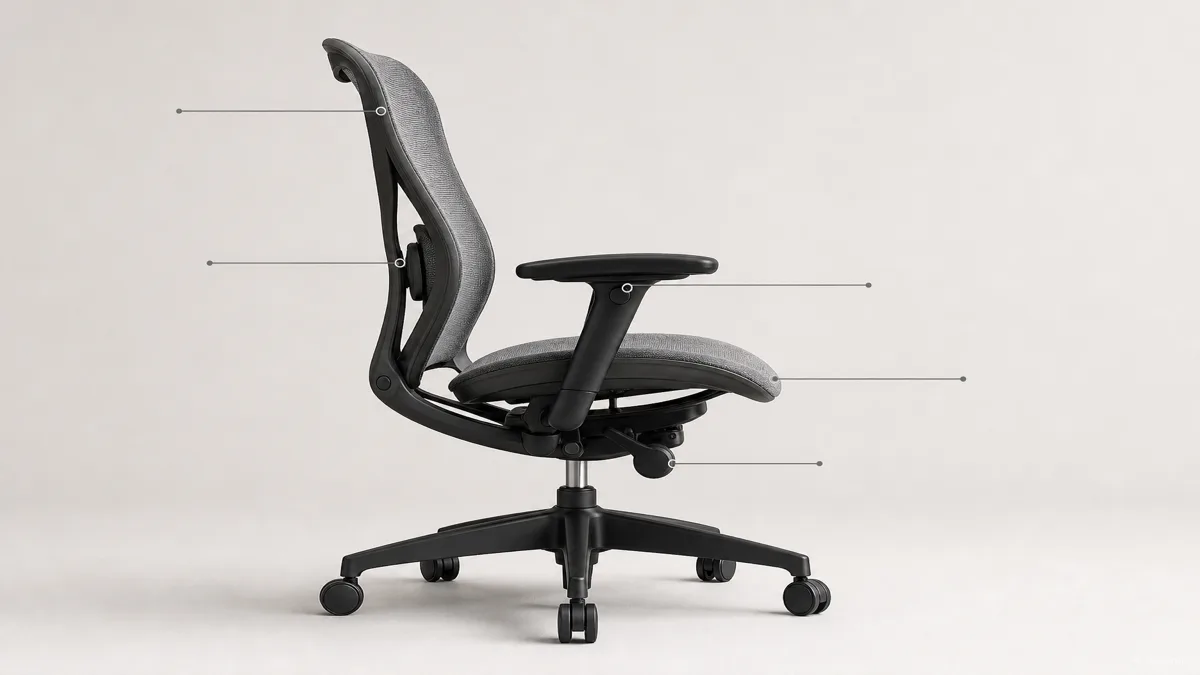
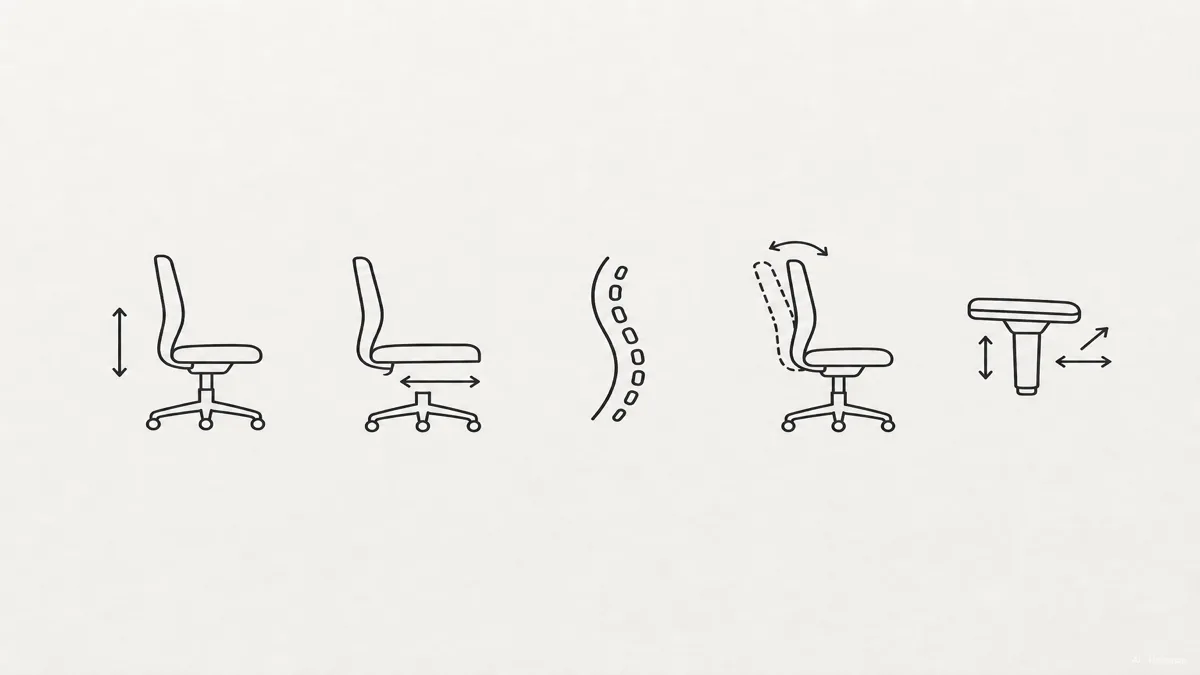
Use the five pictured areas as a trial checklist, not a certificate that every chair must have five independent knobs.
- Seat height and depth. Set the height first, then check the depth. A sliding seat is one solution; a backrest that moves horizontally can also change usable depth. OSHA purchasing guidance.
- Lower back and recline. Check where the support meets you, then lean back. Look for a lock or tension adjustment that supports the movement. OSHA chair guidance.
- Armrests. Type and reach for your mouse. Keep shoulders relaxed and elbows close; reject a setup that makes you reach around the arms. OSHA chair guidance.
Ask the seller to demonstrate any unclear control, then operate it yourself. Record what you could actually adjust rather than scoring the chair by feature count.
If the chair now fits but you are still choosing a mouse shape, compare ergonomic and standard mice for your grip.
Compare the seat, not just the mesh back
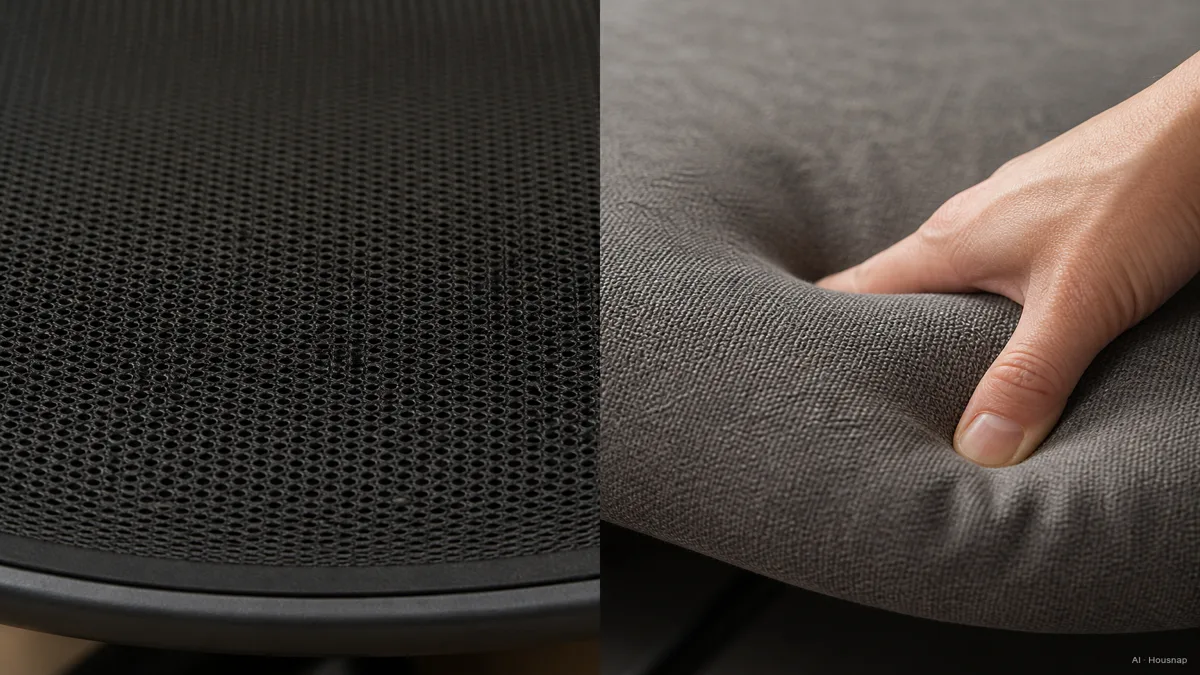
Check seat and back materials separately. A mesh back can come with a foam seat, as the Steelcase Series 1 specification shows.
Try both seat constructions after setting a similar working height. For a suspended mesh seat, check contact with the surrounding frame as you shift. For a padded seat, sit fully back and check the cushioning under your weight; pressing it with your hand is not the purchase test.
If warmth is your concern, make it a specific question during the trial. If cushioning matters more, compare that directly. Choose the seat you can use comfortably rather than assuming all mesh feels alike or all foam stays comfortable longer.
Resolve the desk-height conflict
At a high fixed desk, raising the chair to work-surface height may leave your feet unsupported. An adjustable footrest supporting both feet can help; insufficient space under a low desk instead calls for changing the workstation. CCOHS adjustment guidance.
Buy a footrest only for that demonstrated height mismatch. Check its required height and footprint with the chair in place. It is not the answer to a seat that remains too deep.
Spend on a better fit and a workable exit
Keep the candidates that passed your trial, then compare the delivered cost. Pay extra for a useful adjustment range, a seat you prefer or better service terms you can identify. A higher price alone is not a reason to abandon the cheaper chair; CCOHS includes maintenance and repair in the purchase decision.
- Return terms. Ask whether an assembled, tried chair is eligible, when the deadline starts, who pays collection and whether packaging is required. The Herman Miller US store policy illustrates why “returns accepted” needs closer reading; use the terms for your actual seller and country.
- Warranty and repairs. Ask which parts, labor and transport are covered, who handles a claim and whether replacement parts can be supplied.
- Testing claims. Request the model-specific conformance statement with the standard and revision year. BIFMA membership alone is not product conformance. BIFMA's requirements.
Keep a candidate on hold if dimensions or return costs remain unclear. Choose once the fit works and the remaining purchase conditions are acceptable to you.
How this guide was built
Written by Housnap's AI editor using OSHA and CCOHS workstation guidance, BIFMA conformance requirements and manufacturer documentation. The guide turns those sources into a first-purchase checklist; it does not report hands-on product testing or new human review.