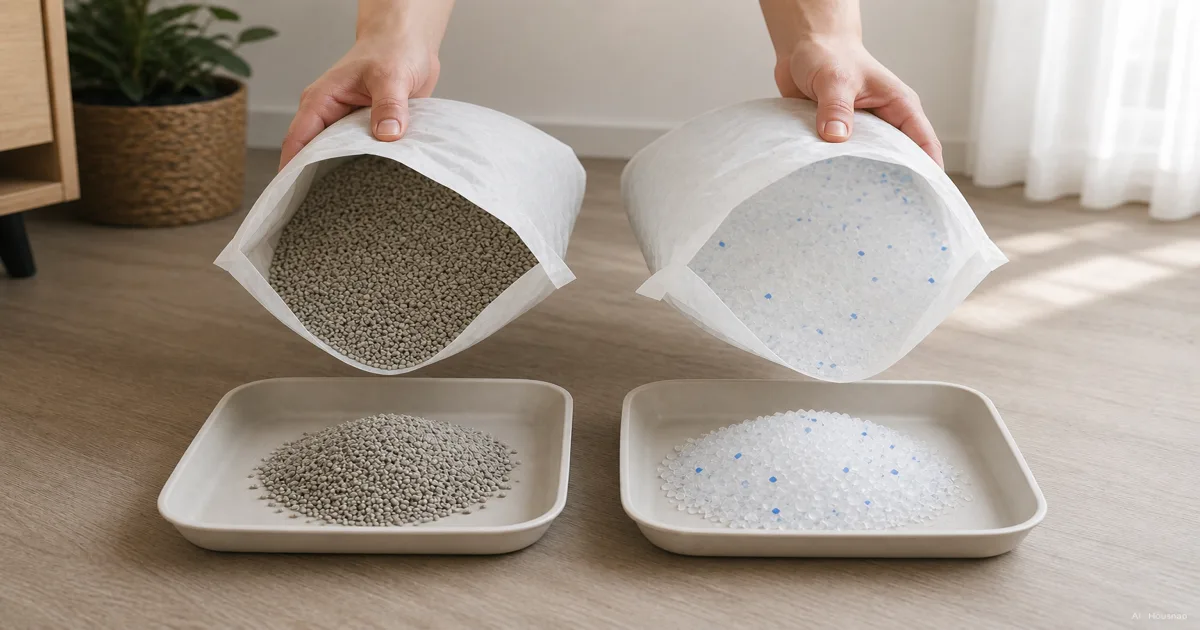
Check your cat and litter box before choosing
Ask the previous carer which litter the cat uses. Familiarity can matter more than a new bag's promises, and many cats prefer a fine, sand-like texture. Cats Protection explains those preferences.
Young kittens need a separate decision: Cats Protection recommends non-clumping litter. Ask the rescue or vet which product suits yours rather than treating clumping clay as the kitten default. Kitten guidance.
Here, the comparison is clumping bentonite clay versus non-clumping silica gel. “Clumping” describes what litter does, not one exclusive material. For example, Purina identifies sodium bentonite in its clay formula. Check both the material and the clumping/non-clumping label.
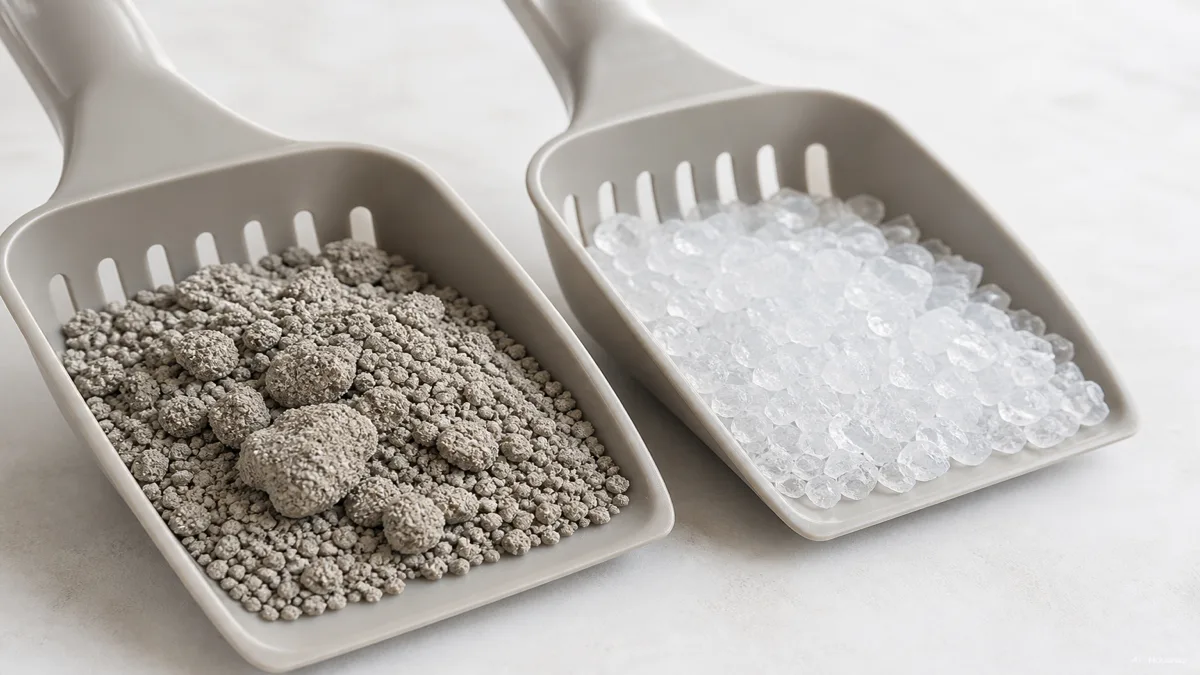
Already own an automatic box? Read its instructions first. ScoopFree Crystal Plus specifies its own Premium Crystal litter; a bag labelled “crystal” is not automatically an approved substitute.
Choose the daily job you can keep doing
- Choose clumping clay if you want to remove urine with the scoop. Remove the clumps and stools, then replenish the bed to the package's specified depth. Fresh Step's clay instructions describe that routine.
- Consider non-clumping crystals if you accept leaving absorbed urine in the bed until replacement. You still remove stools. Fresh Step also directs users to stir its crystals; “no urine clumps” does not mean “nothing to do.” Crystal instructions.
That is the useful fork when comparing bags. Pick the routine first, then compare products within it.
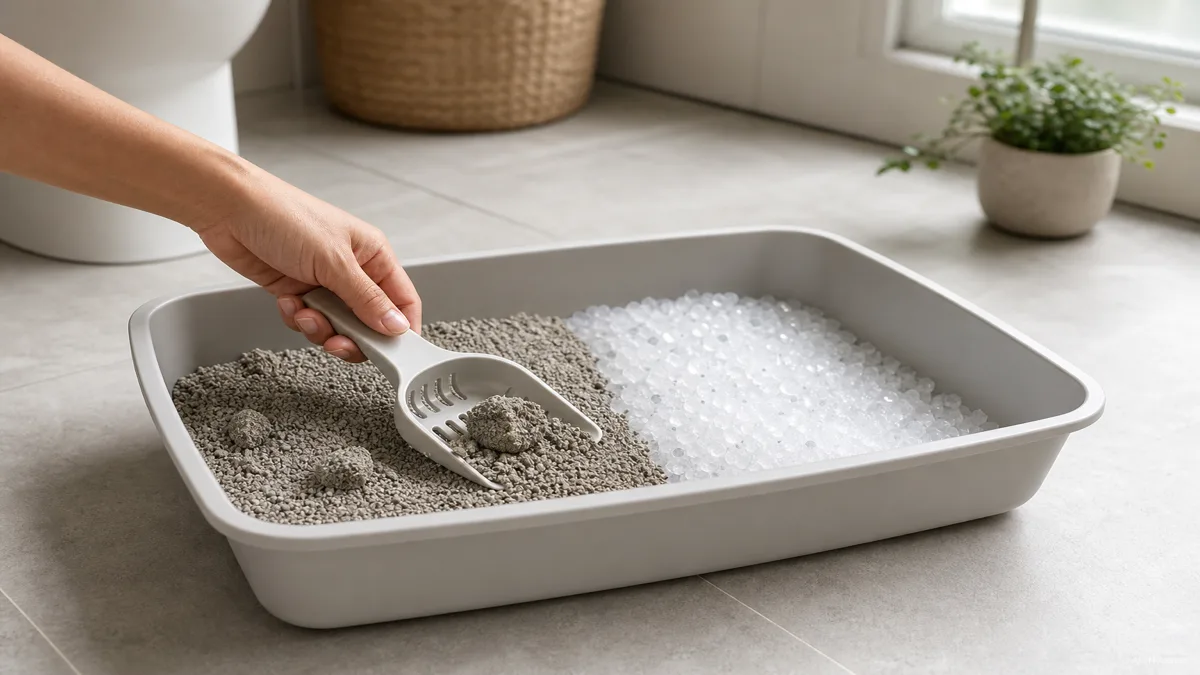
The split box illustrates the two materials; it is not a mixing instruction. Follow the chosen product's cleaning and replacement directions. For Fresh Step Crystals, those directions include discoloration of most crystals as a replacement cue. That is product-specific guidance, not a universal color test for every crystal litter. Replacement guidance.
Check dust, scent and the room itself
Choose an unscented option when possible; strong fragrances can discourage tray use. Cats Protection's toileting advice favors avoiding scented litter. Compare dust claims product by product, and get veterinary advice for a cat with a respiratory condition. Low-dust guidance.
During a trial, note dust when pouring, granules outside the tray and how easily waste comes out. These observations are more useful for your next purchase than assuming all crystals track less or all clay is dusty.
If odor persists, check the waste and the bed before buying a stronger scent. Room conditions matter too: PetSafe warns that humidity can shorten crystal-tray life. Review the location first. If the room itself stays damp and you are already considering an appliance, compare desiccant and compressor dehumidifiers for that separate problem.
Try a small supply and calculate the real cost
Buy enough for a proper fill at the specified depth, without committing to a bulk order. Offer the new litter in a separate tray while keeping familiar litter available, an approach described by Cats Protection.
Record the start date, top-ups and full changes. For a rough 30-day comparison, calculate the cost of litter actually used ÷ the number of days observed × 30. Include litter discarded during full changes; a half-used bag is not a whole bag's consumption. This is a budgeting method, not a replacement schedule.
Reorder only if the cat uses the tray comfortably, the routine is manageable and the measured consumption fits your budget. If your cat suddenly starts toileting outside the tray, seek veterinary advice rather than repeatedly switching bags. When to consult a vet.
Sources
- Cats Protection: choosing litter, for cat preferences, kitten needs and switching.
- Fresh Step FAQ, for its crystal-litter instructions.
How this guide was built
Written by Housnap's AI editorial team using Cats Protection's welfare guidance and Fresh Step, Purina and PetSafe product documentation. The comparison focuses on choosing a litter and a workable routine; the trial and cost calculation are editorial decision aids, not hands-on product test results.