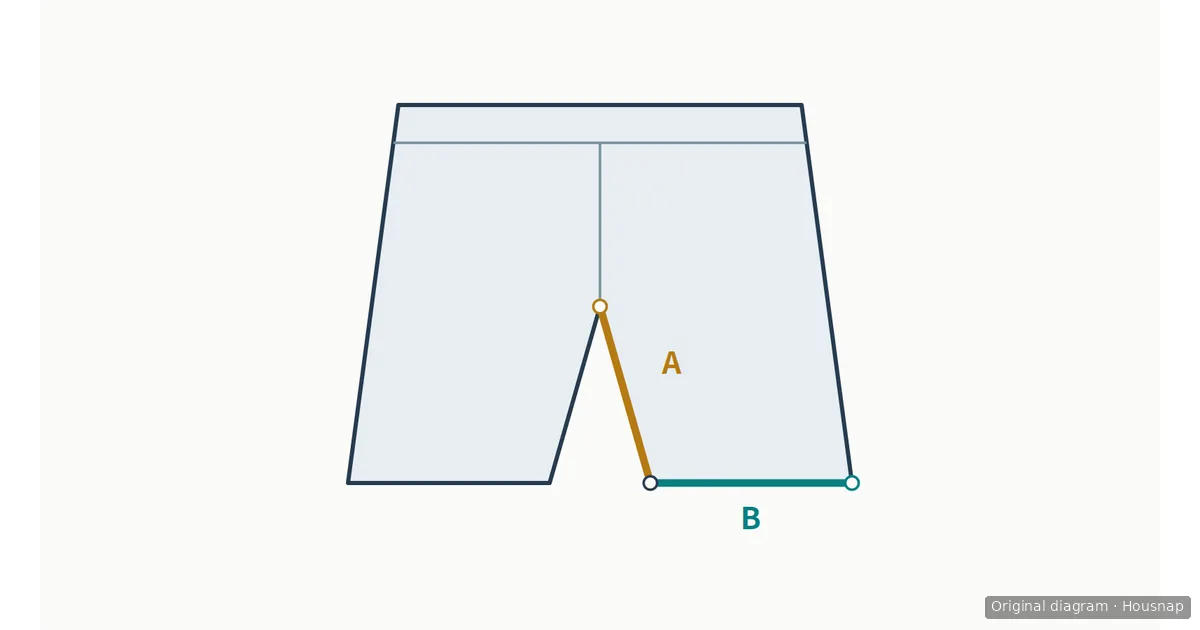
Available now from a single store
These picks currently have one store option each. Price comparison opens up as more stores are tracked.
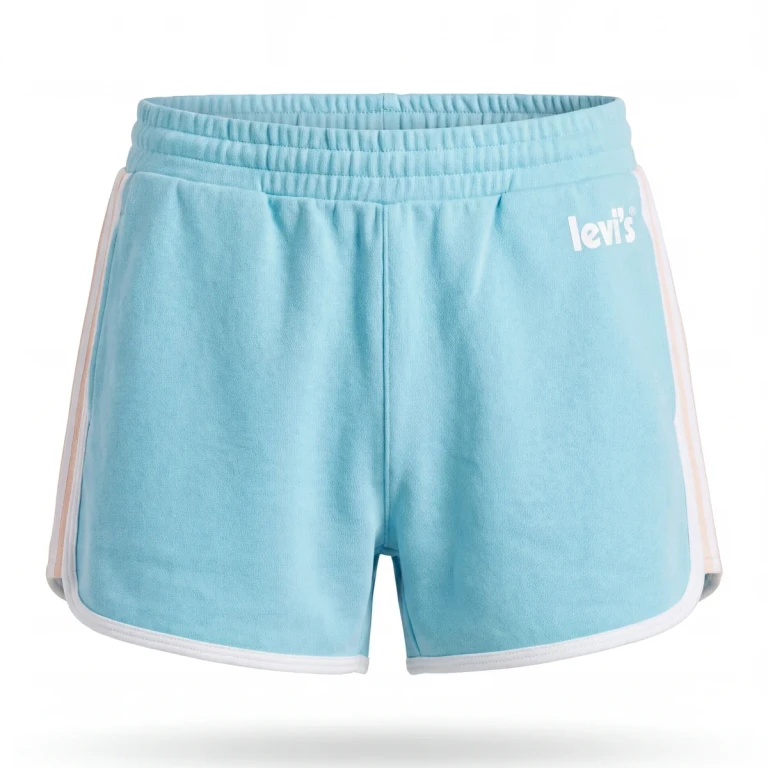


Measure a pair you like wearing
Pick shorts whose coverage you like when sitting, not just when standing in front of a mirror. Put them on first and note what you would keep or change: the hem position, room around the thighs or how much leg shows through the openings.
Then lay them flat and smooth out the folds. Use a flexible measuring tape you already own. The inseam runs from the crotch seam junction down the inside leg to the hem, as On’s shorts measuring guide explains. It does not start at the waistband.
Record the inseam and the width straight across one flattened leg opening. Proper Cloth’s garment measurement guide distinguishes that hem width from length measurements. Label your note “flat hem width” so you do not later compare it with a measurement around the opening.
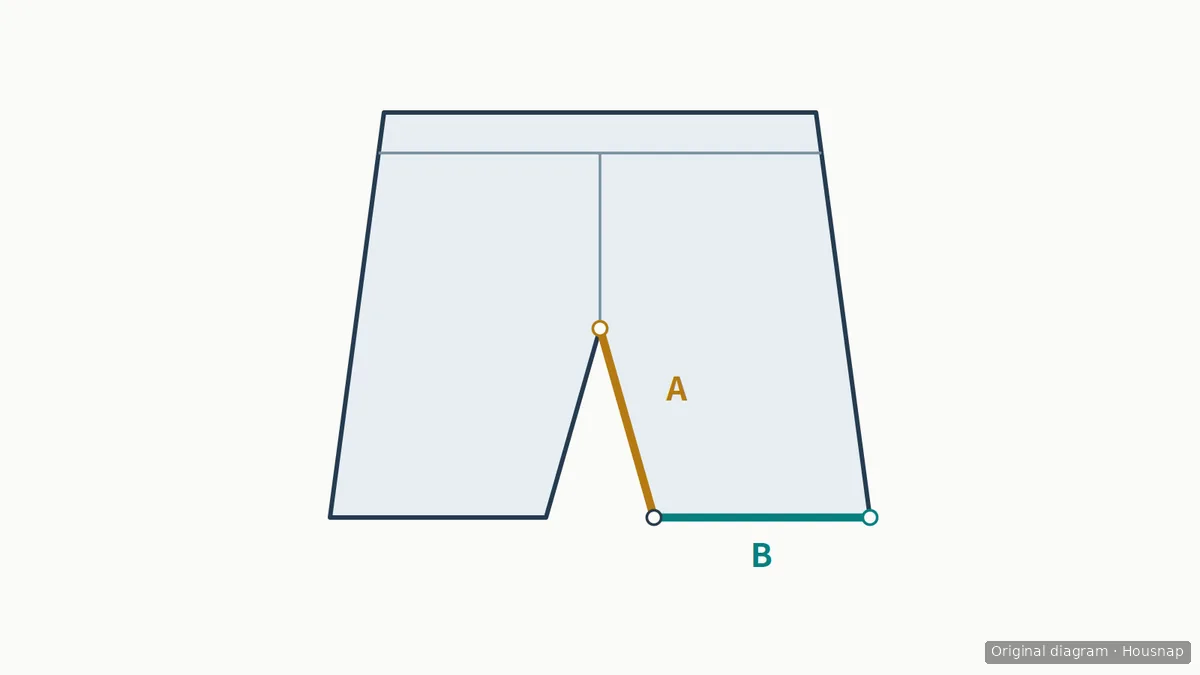
A marks the inseam; B marks the flat width of one leg opening. The drawing explains where to measure, not recommended proportions, a size chart or how much coverage a particular wearer will have.
Read the measurements for the size you will buy
Use the model photo to inspect the shape, then look for measurements of your intended size. If the chart is unclear, ask whether its numbers describe the body or the finished garment, and how the seller measures them.
Keep these entries separate:
- Inseam: the inside-leg length you can compare with your reference shorts.
- Total length: the distance from the waistband top to the hem along the side seam.
- Leg opening: check whether the listing gives a flat width or a circumference before comparing it with your note.
An identical inseam does not settle where the hem will sit. Proper Cloth’s fit guide explains that changing the rise can change total length without changing inseam. Rise is the waistband-to-crotch dimension; it deserves a separate entry rather than being folded into “shorts length.”
For a first shortlist, keep the inseam close to your reference if you already like its coverage. If you want more length, compare a longer inseam while still checking the opening and overall cut. These are ways to choose what to try, not promises of a particular fit.
Sit down before deciding the length works
Fasten the shorts at their intended wearing height. Sit normally, stand again and take a few steps without repeatedly pulling the hems into place. Check both the front and side views in a mirror.
Notice two things separately: whether the thighs feel restricted and whether the openings show more than you want. Proper Cloth notes that thigh fit can feel tighter when seated and that fabrics differ, so a comfortable standing fit is only part of the comparison.
- The hem exposes more leg than you want: try a longer candidate, then repeat the seated check.
- The opening reveals more than you want: compare a different opening or cut; do not assume a wider leg automatically gives better coverage.
- The thighs pull or bind: compare room through the thigh and the fabric, rather than changing inseam alone.
If the waistband seems right but the crotch or seat pulls, continue with checking rise and waistband position. That is a separate fit question from choosing how far down the leg the shorts should reach.
Buy the pair that passes your actual use check
Keep a candidate when its length and openings give you the coverage you want, you can sit comfortably, and the waistband stays at the intended height. Do not accept a failed seated check just because the standing silhouette resembles the product photo.
Buying online without trying it on? Ask for the intended size’s inseam and flat leg-opening width, plus total length or rise when those remain unclear. If the seller cannot supply them, decide whether the return conditions make that uncertainty acceptable; the photograph cannot supply the missing measurements.
This guide’s measuring and try-on sequence is an editorial buying method. It does not assign one ideal inseam to every height or body shape. If you also need the shorts for workouts and the unresolved issue is an attached inner layer, use the lined versus unlined gym shorts guide for that separate decision.
How this guide was built
Written by Housnap’s AI editor using On’s shorts measuring instructions and Proper Cloth’s garment measurement and fit guidance. The everyday-wear comparison and seated checks are editorial recommendations; no original wear testing or individual fit assessment was performed.