Skip to content
Housnap AI
Baby Kids / Baby Feeding

Electric vs Manual Breast Pumps, How to Choose Your First Pump

Somewhere between the baby registry and week two of actual feeding, breast pumps stop being one item and become a small research project. Electric or manual. Open system or closed. Insurance covered or out of pocket. That is a lot of terminology for something you mostly just want to work quietly at 3 a.m. without waking anyone up. Here is the short version before the long one. The real difference between electric and manual is not safety, both are safe when used and cleaned correctly. It is how much physical effort and time each one asks of you every single session. Electric does the work automatically and usually pumps both sides at once. Manual asks your hand to power a lever, one side at a time. Frequency is the hinge everything else turns on. A pump you reach for twice a week feels completely different from a pump you reach for six times a day, and the right first purchase depends far more on that number than on brand or price alone. So this guide walks through what actually separates the two pump types, why the open-system and closed-system split matters for hygiene, who genuinely does not need to spend more than $40, and where insurance and hospital-grade rentals fit into a first-time budget.

Electric vs Manual Breast Pumps, How to Choose Your First Pump — AI illustration

Current products to compare

These products come from Housnap search results for this topic.

Electric vs Manual, How the Two Pump Types Actually Work

Start with the mechanism, because everything else about your first pump follows from it.

An electric pump uses a small motor to create suction automatically. You set the strength and the cycle speed, the pump does the rest, and most models let you attach flanges to both breasts at once. That is the single biggest functional gap between the two types. Manual pumps work one breast at a time, powered entirely by your own hand on a lever, while electric pumps default to double pumping and adjustable, hands-off suction.

That difference sounds small until you are three weeks into parenthood and pumping five or six times a day. A manual pump asks your hand to do the work every single time. An electric pump asks a motor to do it, which is exactly why it shows up so often in the daily-pumper's bag and so rarely in the occasional user's.

Price tells the rest of the story. A manual pump typically runs $25 to $40. An electric pump, even a modest one, is usually $100 or more, and a double electric with a few suction settings climbs from there. So the first real fork in the road is not which is safer or which is better, it is how often this thing will actually leave the drawer.

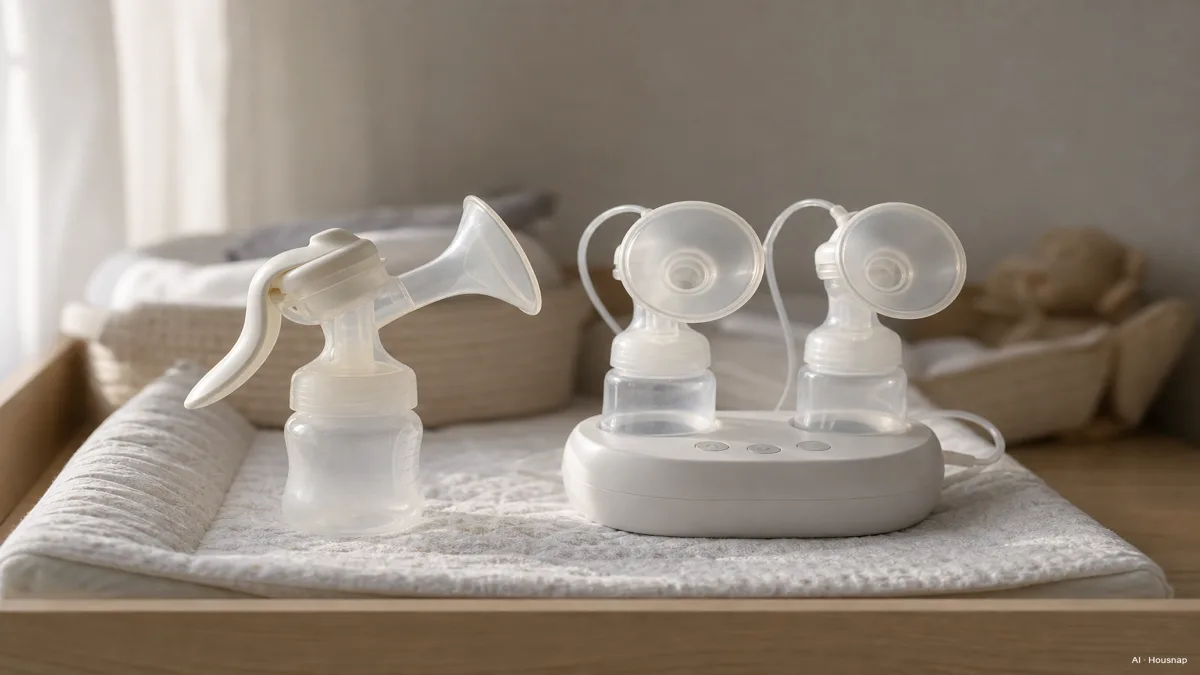
Image: a manual hand-lever breast pump and a double electric breast pump with two flanges sitting side by side on a soft-lit changing table, no branding visible — AI illustration

Open System vs Closed System, Why Hygiene Design Matters

This is the part almost nobody explains before you are standing in front of a shelf of unfamiliar model names, and it matters more than motor strength does.

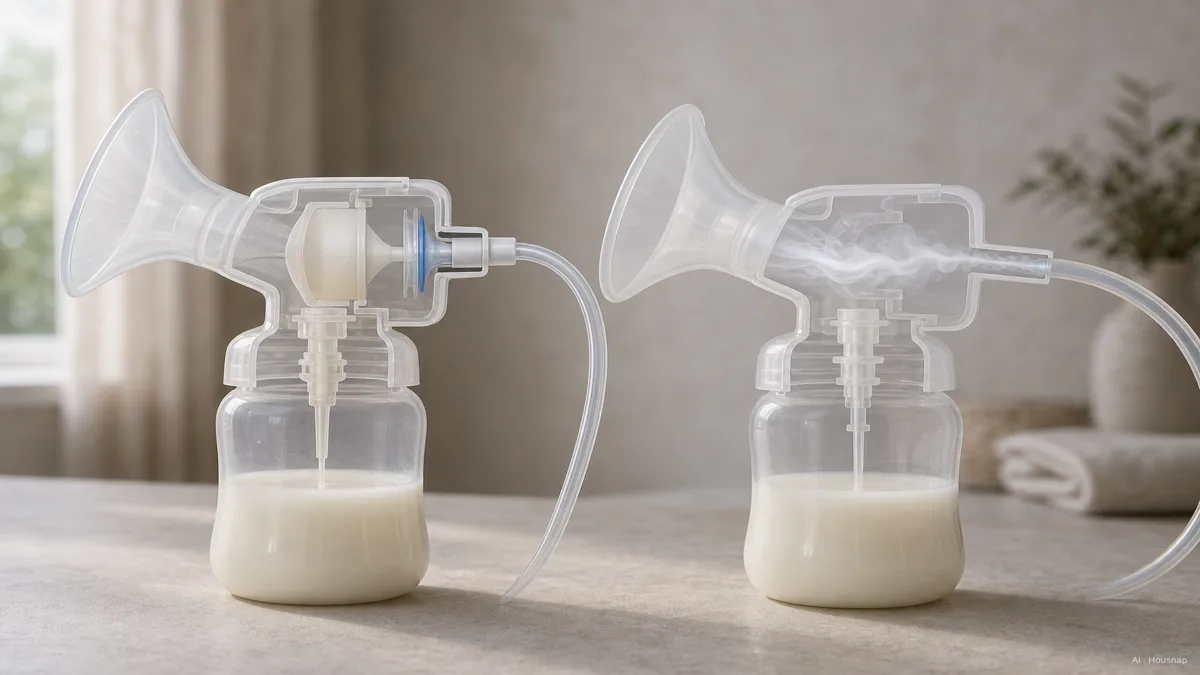
Every pump moves milk through tubing on its way to the bottle, and the question is what stands between that tubing and the motor. A closed-system pump has a physical barrier, usually a valve or a membrane, sealing the milk pathway off from the motor entirely. Milk simply cannot reach the motor, so the internal mechanism never touches anything that goes near your baby. An open-system pump skips that barrier, so there is a real path for milk to backflow into the tubing and, in some designs, toward the motor housing, which raises both a contamination risk and a cleaning burden that never quite ends.

The practical upshot, closed-system pumps are easier to keep genuinely clean, because there is less internal surface for milk to ever reach. That is also why a closed system is the one to want if a pump will ever be shared, handed down, or used by more than one household, which brings up a rule worth knowing before you shop secondhand.

Breast pumps sold for personal use are FDA-regulated Class II medical devices, and the FDA specifically warns against sharing or renting a personal-use pump, because residual milk inside the mechanism can carry infection risk between users. Hospital-grade pumps are built and cleared for multiple users precisely because their design keeps milk fully out of the shared internals. Your everyday electric or manual pump was not built for that, so treat one pump, one user as the safety default, and follow the manufacturer's cleaning instructions between sessions rather than whatever routine feels close enough.

Image: a cutaway illustration comparing a closed-system pump with a sealed valve barrier against an open-system pump where milk vapor drifts toward the tubing, clean and diagrammatic, no branding visible — AI illustration

Who Should Buy Manual (and Who Shouldn't)

Manual makes sense for a narrower set of situations than the low price tag suggests, so it is worth being honest about who it actually fits.

A manual pump earns its keep for occasional relief, easing engorgement between feeds, catching letdown from the opposite breast while nursing, or covering the rare afternoon you are away from your baby. It is quiet, needs no outlet or charging, and travels in a bag pocket, which is exactly why it is the pump most parents keep even after buying an electric one.

Where manual falls short is frequency. If you are pumping at work five days a week, pumping exclusively because your baby cannot latch, or building a freezer stash on any kind of schedule, hand-powered suction turns into a genuine physical strain, and one breast at a time doubles your session length every time. That is not a knock on manual pumps, it is just a mismatch between the tool and the job. If your pumping routine looks occasional rather than daily, manual is a legitimately complete answer, not a starter tier you will outgrow in a month.

When Double Electric Pumping Is Worth the Cost

For anyone pumping several times a day, the case for spending more tips fairly quickly in electric's favor.

Pumping both breasts at once roughly halves total session time compared with pumping one side and then the other, which matters twice over during a 3 a.m. session. Double pumping also tends to stimulate and maintain milk supply better for frequent or exclusive pumpers, since both breasts are being emptied on the same schedule your baby would set naturally. For anyone exclusively pumping, working full days away from a baby, or pumping several times daily on any kind of clock, that time and supply advantage is usually worth the higher price.

A newer subcategory worth knowing about is the wearable, hands-free electric pump, built to sit inside your bra rather than hang off a countertop. Consumer Reports ran a 2026 testing panel of 40 lactating parents comparing traditional double electric pumps against wired portables and wearables, and the pattern that came out of it was consistent. Wearables win on discretion and mobility, quiet enough for some to wear through a meeting, but how much milk any one person actually gets out of them varies far more from person to person than it does with a traditional double electric. If output consistency matters more to you than discretion, a traditional double electric is still the safer bet for a first purchase.

Insurance Coverage and Hospital-Grade Rental Options

Before you spend anything, it is worth checking what you do not have to.

Under the US Affordable Care Act, most insurance marketplace and employer-sponsored plans are required to cover a breast pump at no out-of-pocket cost, as a preventive health benefit, and the pump provided is usually electric and double. That covered pump is a reasonable default for daily use, and plenty of parents then buy a manual pump separately, out of pocket, purely as a backup for the odd session the covered pump is not around for.

At the far end of the power scale sits the hospital-grade pump, the strongest category on the market, generally reserved for situations that actually need it, a premature infant, low milk supply, or another medical breastfeeding difficulty. These are almost always rented rather than bought outright, both because of the cost and because their closed, multi-user design is what makes sharing them safe in the first place.

Put together, the decision tree is short. Check your coverage first, since it may hand you an electric double pump for free. Add a manual pump if your routine includes occasional separations rather than daily pumping. Reach for hospital-grade rental only if a lactation consultant or pediatrician has actually flagged a supply or feeding issue. From there, the useful next step is comparing electric and manual models side by side, closed-system against open-system, across the stores that carry them, so the choice lines up with your actual pumping frequency rather than the specs on the box.

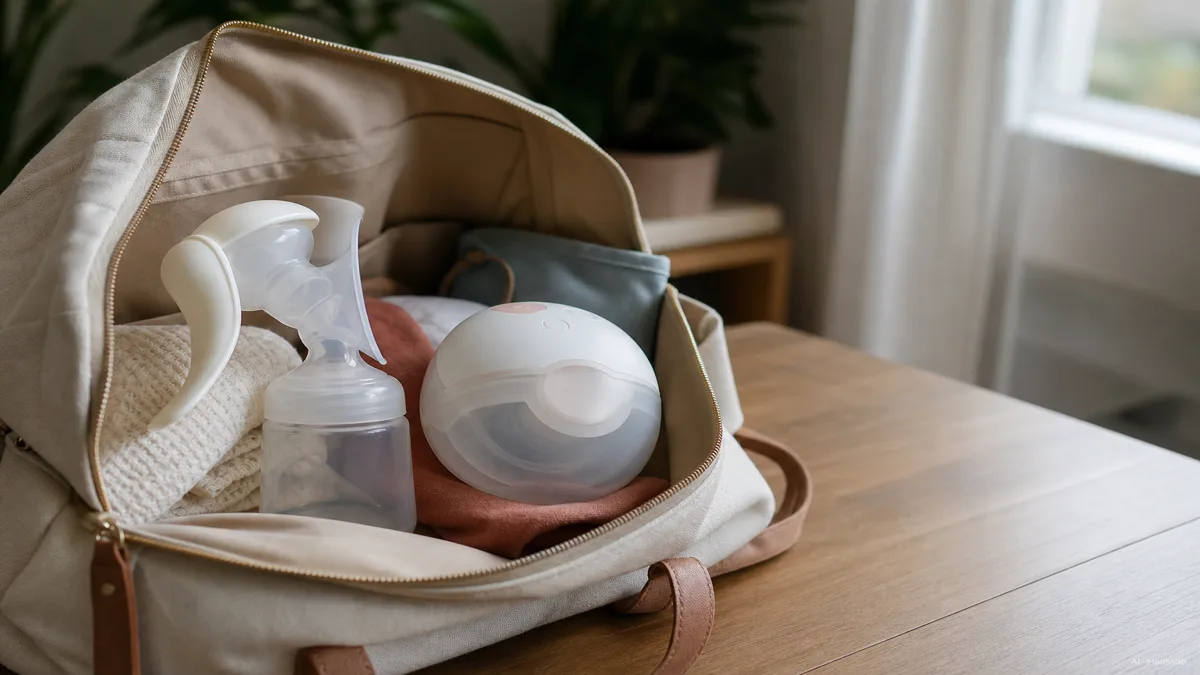
Image: a parent's diaper bag open on a table holding a compact manual pump and a wearable electric pump pod, calm daylight, no branding visible — AI illustration

Sources

How this guide was built

This piece started from a question that new parents run into almost immediately once a pump enters the picture: electric or manual, and which one actually earns its place in a first-time budget. The editorial spine, that the real difference is not safety but how much time and physical effort each type asks of you per session, is anchored on Dr. Brown's own manual-versus-electric comparison. The closed-system and open-system hygiene distinction came from Medela and Hygeia Health, cross-checked against the FDA's consumer guidance on Class II device regulation and the warning against sharing personal-use pumps. The insurance coverage section draws on Georgetown's Center for Children and Families summary of ACA requirements, and the wearable-pump testing pattern is pulled from Consumer Reports' 2026 panel of 40 lactating parents. Pump selection maps to Housnap's baby-feeding pool, where electric and manual pumps from brands like Medela, Spectra, and Momcozy appear across stores.

Edited by the Housnap team · Images are AI-generated illustrations