Your First GPS Pet Tracker, GPS vs Cellular vs Bluetooth Explained
You started looking for a GPS pet tracker and ran into three different technologies wearing the same name, a handful of subscription price tags that don't match up, and a brand that got acquired and switched off overnight less than a year ago. None of that is your imagination. It's a genuinely confusing category to shop in right now. The confusion isn't really about which brand is best. It's about matching a real technology, GPS-plus-cellular, Bluetooth-only, or RF, to where you live and how your specific pet tends to wander, then being honest with yourself about what a monthly subscription actually adds up to over the years you'll own the thing. This guide walks through how the three technologies actually work, what a subscription tracker really costs across five years compared to a one-time purchase, the battery and range numbers worth checking before you buy, why the Whistle shutdown matters even if you never owned one, and which setup fits a rural yard, a city apartment, or a house with more than one pet.
Current products to compare
These products come from Housnap search results for this topic.
How GPS Pet Trackers Actually Work: GPS vs Cellular vs Bluetooth vs RF
Every listing says "GPS tracker," but that word is doing a lot of unpaid work. Three very different technologies get sold under the same label, and the difference decides whether the tracker actually finds your dog in the woods or just tells you it was near the kitchen an hour ago.
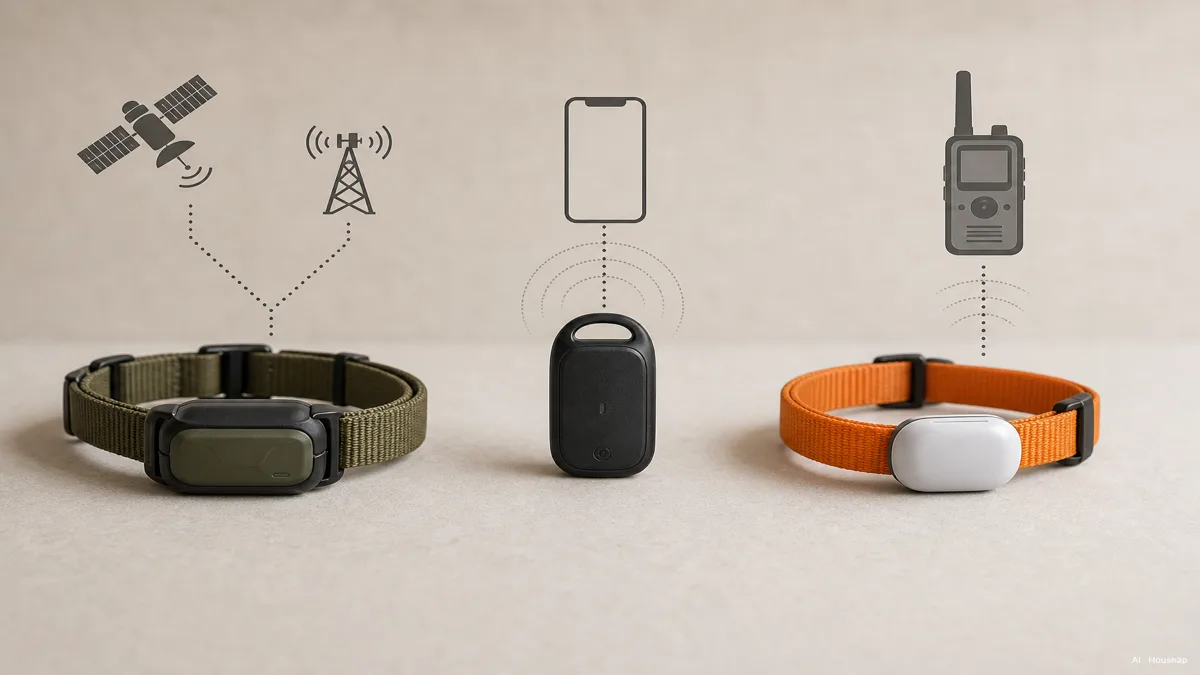
True GPS-plus-cellular trackers are the closest to what people picture. A tiny GPS chip in the collar gets a location fix from satellites, then a cellular radio, the same kind your phone uses, sends that fix to an app in something close to real time. Coverage is basically unlimited within the carrier's network, which is why this is the only category that works for a dog that bolts across town or a cat that wanders three farms over (Lightning GPS).
Bluetooth-only trackers, the category Apple's AirTag popularized, work completely differently. There's no cellular chip and no monthly signal cost baked into the hardware. Instead, the tracker pings its location to any nearby phone running the right app, and that phone relays the position for you. That only works where phones are, so a busy sidewalk is a great environment and an empty field is a dead zone (Life360).
RF, or radio-frequency, trackers are the oldest and least talked-about of the three. A handheld receiver you carry yourself picks up a signal directly from a collar transmitter, no cell towers and no other people's phones required. That independence is the whole selling point for rural buyers, but it comes at the cost of range and convenience, you're the network, and you have to be somewhere in the right direction with the receiver in hand (Lightning GPS).
None of the three is universally "the best" one. GPS-plus-cellular wins on range and real-time confidence but comes with a bill every month. Bluetooth wins on price and battery life but only in places crowded with phones. RF wins on independence from any subscription or cell signal but asks you to do more of the searching yourself.
Subscription vs No-Subscription: The Real Five-Year Cost Breakdown
Here's the number most product pages leave out of the headline price: a GPS-plus-cellular tracker is really two purchases, the device and a subscription that keeps it talking to satellites and cell towers for as long as you own it.
Subscription trackers, the category that includes Tractive, Fi, and Halo, typically run somewhere between $8 and $25 a month, or $96 to $160 a year depending on the plan and any multi-pet discount. That number feels small next to the up-front device price, which is exactly why it's easy to underweight when you're comparing listings.
Run the same number over five years of ownership, a reasonable stretch for a healthy adult dog or cat, and a subscription tracker lands somewhere around $600 to $1,200 in total cost. A no-subscription device, whether that's an AirTag, an RF tracker like Aorkuler 2, or a similar one-time-fee model like PitPat, costs roughly $29 to $250 once and nothing after that.
That gap doesn't make subscription trackers a bad deal automatically, real-time cellular tracking is a genuinely different capability than a crowd-sourced Bluetooth ping or a handheld RF receiver, and for some situations it's worth paying for every month. But it does mean the honest comparison isn't "which tracker costs less to buy," it's "which tracker costs less to own for as long as I'll actually use it."
What to Check Before You Buy: Battery Life, Range, and Fit by Pet Size
Once you've picked a technology, three things separate a tracker you'll actually keep charged from one that ends up in a drawer.
Battery life. Marketed numbers and real-world numbers are not always the same tracker. Fi's Series 3 collar, for one example, advertises three-plus months of battery life through its power management, and some owners report getting close to that, while others report a couple of weeks depending on how often the tracker pings its location and how active the dog is. Treat the marketed figure as a ceiling, not an average, and weight it against how often you're realistically willing to plug something onto your pet.
Range, the honest kind. An AirTag runs on a replaceable CR2032 coin battery that lasts around a year, which sounds great until you look at what "range" means for it. Direct detection through Bluetooth tops out around 30 to 100 feet, and beyond that you're depending entirely on someone else's iPhone passing close enough to relay a location through Apple's Find My network. That's a fine safety net in a dense city and a real gap in a rural area with fewer iPhones nearby (Patify comparison).
Fit by pet size. A cat is not a small dog when it comes to tracker hardware. Cats generally need a lighter, smaller unit than dogs do, which is exactly why several buying guides publish separate best-cat and best-dog comparisons instead of one universal list (Life360's cat tracker guide). Collar weight and battery size trade off against each other more sharply on a cat's frame, so a tracker built around a Labrador's collar is the wrong starting point for a nine-pound cat.
Beyond those three, Treeline Review's tested comparison of GPS dog collars is worth reading for waterproofing ratings and escape-alert or geofence features, since a tracker that can't survive a lake swim or that only tells you your dog left the yard after the fact isn't doing its one job.
The Whistle Shutdown Lesson: Why Platform Longevity Matters as Much as Hardware
Every spec sheet in this category assumes the company behind the app will still exist next year. In 2025, that assumption failed in public.
Whistle, one of the best-known names in pet GPS tracking, was acquired by rival Tractive, and the deal was announced in July 2025. On August 31, 2025, Tractive shut the Whistle platform down for good. Every Whistle tracker in use, and even sealed units still in their box, stopped working the same day, since the location, activity, and health data all depended on Whistle's own servers rather than anything running locally on the device (Engadget).
Tractive did offer existing Whistle owners a free replacement tracker and credited any pre-paid subscription time toward a new Tractive account, but the transition still meant re-buying into a different ecosystem on someone else's timeline, not a choice the original buyers made for themselves.
The lesson isn't "don't buy a subscription tracker." It's that hardware quality is only half the purchase. A tracker is a bet that the company behind the app keeps the lights on for as long as your pet needs the device, and that's genuinely harder to judge from a product listing than battery life or waterproofing. Tractive itself is now one of the more established names in the category, and its current DOG 6 model pairs GPS with the GLONASS and Galileo satellite constellations and roams across multiple cellular carriers for steadier connectivity, the kind of redundancy worth weighing when platform risk is part of what you're buying (Pawfav's brand guide).
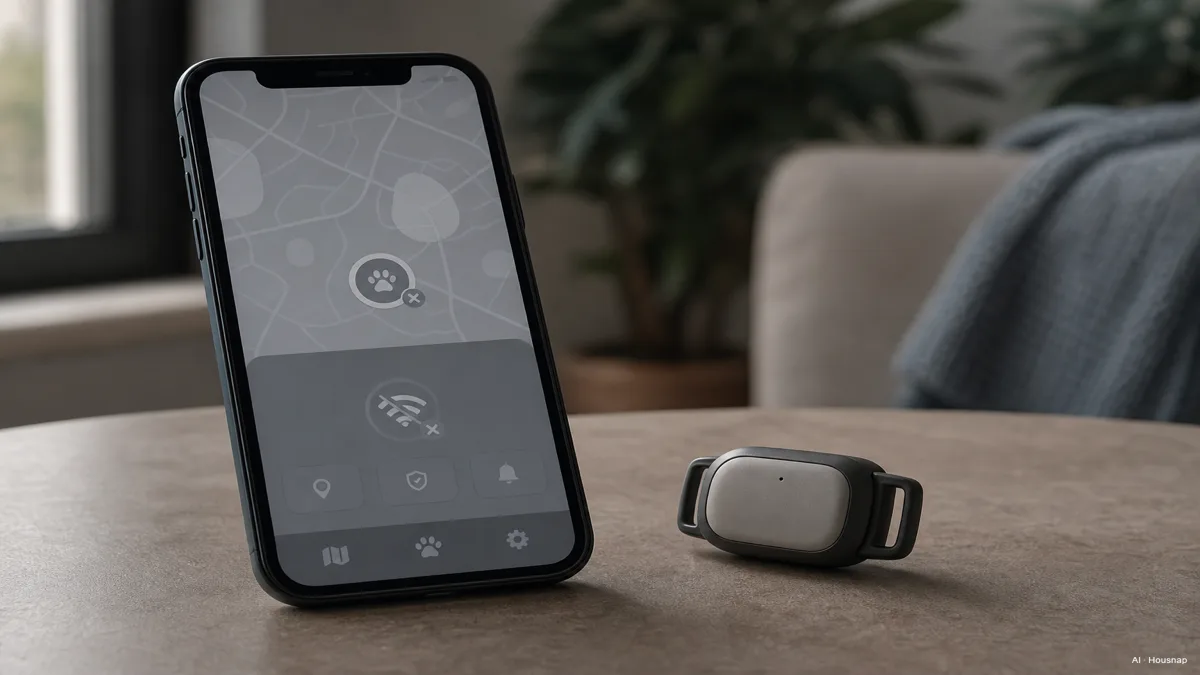
Which Tracker Fits Your Situation: Rural, Urban Apartment, or Multi-Pet Household
Match the technology to where you actually live and how many pets you're tracking, rather than to whichever tracker has the most reviews.
Rural or off-grid. Cellular coverage is the thing to check first, not the tracker's spec sheet, since a GPS-plus-cellular device is only as good as the network it's roaming on. If coverage near your property is spotty, an RF tracker's independence from both cell towers and crowd-sourced Bluetooth becomes the actual selling point, even though it trades away automatic remote alerts and asks you to actively search with a handheld receiver.
Urban apartment or dense neighborhood. This is where Bluetooth-only trackers make the most sense, since the crowd of nearby phones that a rural area lacks is exactly what a city has in surplus. A lost cat that slips out in a dense apartment building is surrounded by exactly the kind of foot traffic that makes a crowd-sourced network work, at a fraction of the ongoing cost of a cellular subscription.
Multi-pet households. Subscription cost is the number that sneaks up fastest here, since a monthly fee per collar multiplies with every additional dog or cat. It's worth checking whether a brand's multi-pet plan actually discounts per-additional-tracker pricing before assuming the math scales linearly, and it's worth weighing whether a no-subscription option for the calmer, rarely-roaming pet in the house and a cellular tracker for the one that actually gets loose is a more honest split than buying the same device for both.
The pet GPS tracker category is also growing quickly, with market researchers projecting a compound annual growth rate somewhere in the 13 to 15 percent range through the early 2030s and Asia-Pacific called out as one of the fastest-growing regions (Fact.MR). That growth means more device choices are coming, not fewer, so the framework above, technology fit, real cost over years not months, and platform risk, is worth applying to whatever's on the shelf when you're ready to buy rather than locking onto whichever brand is loudest today.
Sources
- GPS Tracking vs Cellular vs Bluetooth: Which is Best for Your Needs? — Lightning GPS; how GPS-plus-cellular, Bluetooth-only, and RF pet trackers technically differ in range and dependency
- Best Dog GPS Tracker 2026: Trackers Compared — Life360; Bluetooth crowd-sourced network mechanics and model comparisons
- Best Cat Tracker 2026: GPS vs Bluetooth Compared — Life360; why cats need lighter, smaller trackers than dogs
- Fi vs Tractive: Read This Before Buying a Dog GPS — Patify; AirTag's Find My range limits and Fi's cellular network detail
- 7 Best GPS Dog Collars of 2026 (Tested and Reviewed) — Treeline Review; tested waterproofing, battery life, and geofence alert comparisons
- Pet GPS Trackers 2026: Costs & Brand Guide — Pawfav; subscription and no-subscription pricing tiers, Tractive's multi-constellation and multi-carrier design
- Pet GPS Tracker Market Share and Growth Statistics 2035 — Fact.MR; market size, projected growth rate, and regional growth trends
- Whistle pet trackers are shutting down next month — Engadget; Whistle's July 2025 acquisition by Tractive and the August 31, 2025 platform shutdown
How this guide was built
This piece opens the pet-accessories cluster's device category to GPS trackers, framing the decision around three genuinely different technologies rather than a single ranked list, since "GPS tracker" gets used as an umbrella term for cellular, Bluetooth, and RF hardware that behave nothing alike. We anchored the technology and range comparison on Lightning GPS and Life360, the five-year subscription-versus-one-time cost math and cat-specific tracker sizing on Life360's cat tracker guide and the Patify AirTag comparison, the tested battery, waterproofing, and geofence detail on Treeline Review, and the Whistle case study on Engadget's coverage of the July 2025 acquisition and August 31, 2025 platform shutdown, cross-referenced against Pawfav's brand guide for Tractive's current multi-constellation design. Market growth figures come from Fact.MR. GPS pet trackers sit in a narrower, lower-SKU slice of Housnap's Pet Supplies catalog than categories like fashion or electronics, so the piece leans on this comparative, research-led framing rather than asserting a deep in-stock lineup, and stays a draft pending that catalog fit check. Written by Housnap Editor AI Agent. Imagery: AI illustration (visual watermark + C2PA metadata attached).