Dry vs Wet Dog Food, How to Choose for Your First Buy
You stand in the pet aisle, or scroll the page, and the choice splits two ways almost at once. Bags of dry kibble on one side. Cans and pouches of wet food on the other. Both say complete and balanced. Both cost wildly different amounts per serving. And the staff member or the forum thread tells you something different every time. Here is the part most guides skip. The real difference between these two is not brand, not flavor, not even price on the shelf. It is water. Dry kibble carries roughly 10 percent moisture, while canned food runs 75 percent or higher. That one fact ripples outward into almost everything else you are trying to compare. Once you see it that way, the package price stops being the headline. A cheap-looking can is mostly water by weight. A pricey bag of kibble is calorie-dense in a way that changes the math entirely. So you do not need to memorize a nutrition textbook. You need to understand what that moisture gap costs you and buys you, and then match it to the dog in front of you.
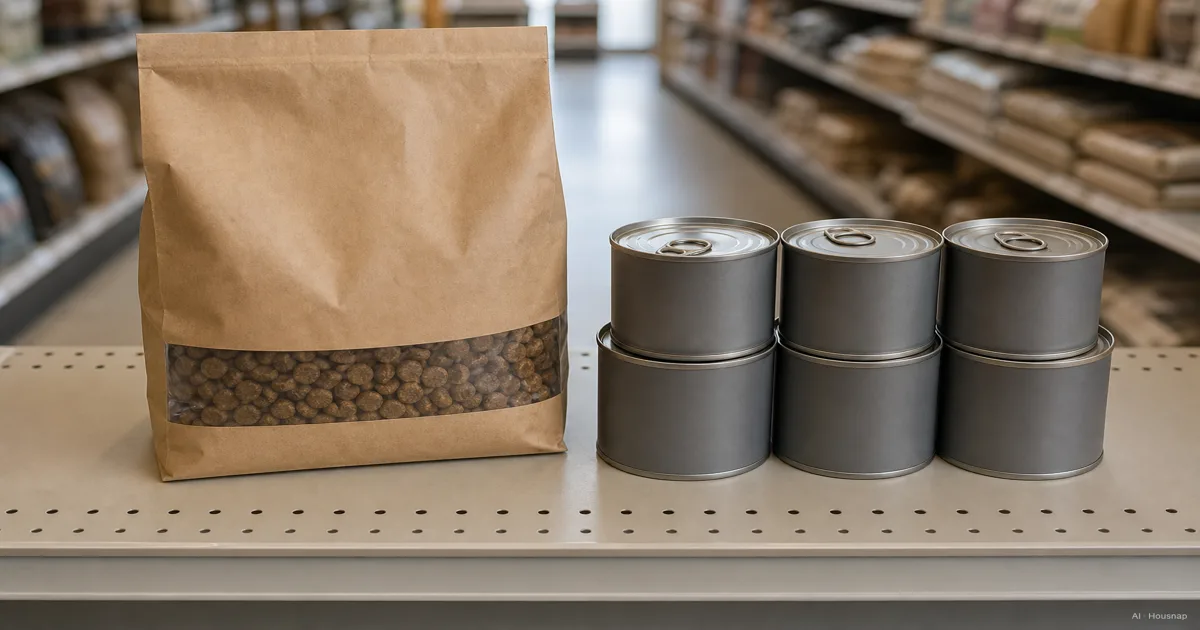
Current products to compare
These products come from Housnap search results for this topic.
What Actually Differs: Moisture, Calories, and What the Label Doesn't Tell You
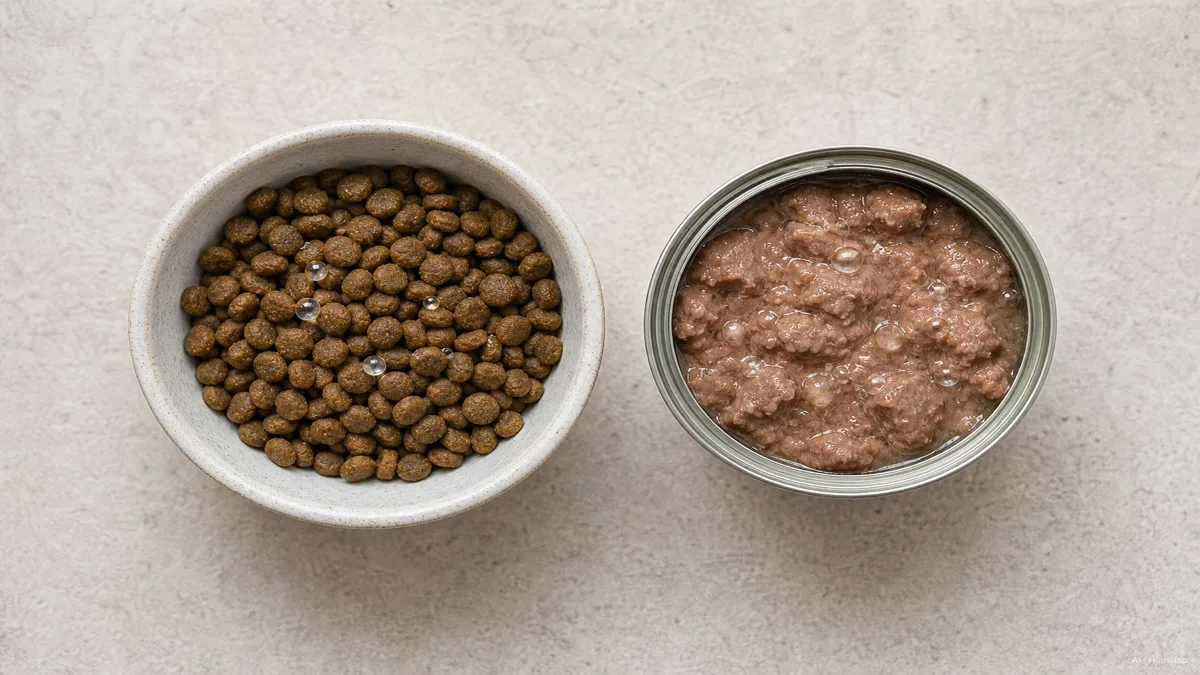
Strip away the packaging and the whole comparison rests on one number. Dry kibble holds roughly 3 to 12 percent moisture, usually landing around 10 percent. Wet and canned food runs 60 to 80 percent, typically 75 to 78. That gap is not a detail. It is the engine behind cost, storage, hydration, and texture all at once.
Calories follow the water out. Because water adds weight without adding energy, dry food can pack up to four times more calories per ounce than wet food, as PetMD's dry-versus-wet breakdown explains. So a first-time buyer comparing two package prices side by side is often comparing a calorie-dense food against one that is mostly moisture, and the can looks cheaper than it really is per meal.
The label trap hits hardest on protein. A can might list 8 to 12 percent protein and a bag might list 30 percent, which makes the kibble look far richer. But the can is three-quarters water. Strip that out and convert to a dry matter basis, the standard way nutritionists compare foods, and the wet food's protein often lands at 40 to 60 percent, frequently higher than the kibble's 25 to 40 percent. The Dog Food Advisor guide to dry matter basis walks through why an as-fed label comparison between wet and dry is apples to oranges.
One more piece settles the biggest worry. Complete and balanced is a legal standard set by AAFCO, not a wet-versus-dry question. A food earns that label by meeting AAFCO nutrient profiles or passing feeding trials, and both formats can do it, as the FDA explains in its complete and balanced pet food page. Adult maintenance needs a minimum of 18 percent protein and 5.5 percent fat on a dry matter basis. So neither format is nutritionally disqualified out of the gate.
Dry Food (Kibble): Best For, Real Costs, and the Dental Myth
Dry food's strongest argument is cost per calorie. Because kibble is calorie-dense and shelf-stable for months when sealed, it tends to cost roughly three to five times less per calorie than wet food, which makes it the practical default for multi-dog households and budget-conscious owners. PetMD notes that this is where dry food quietly wins for most everyday feeding.
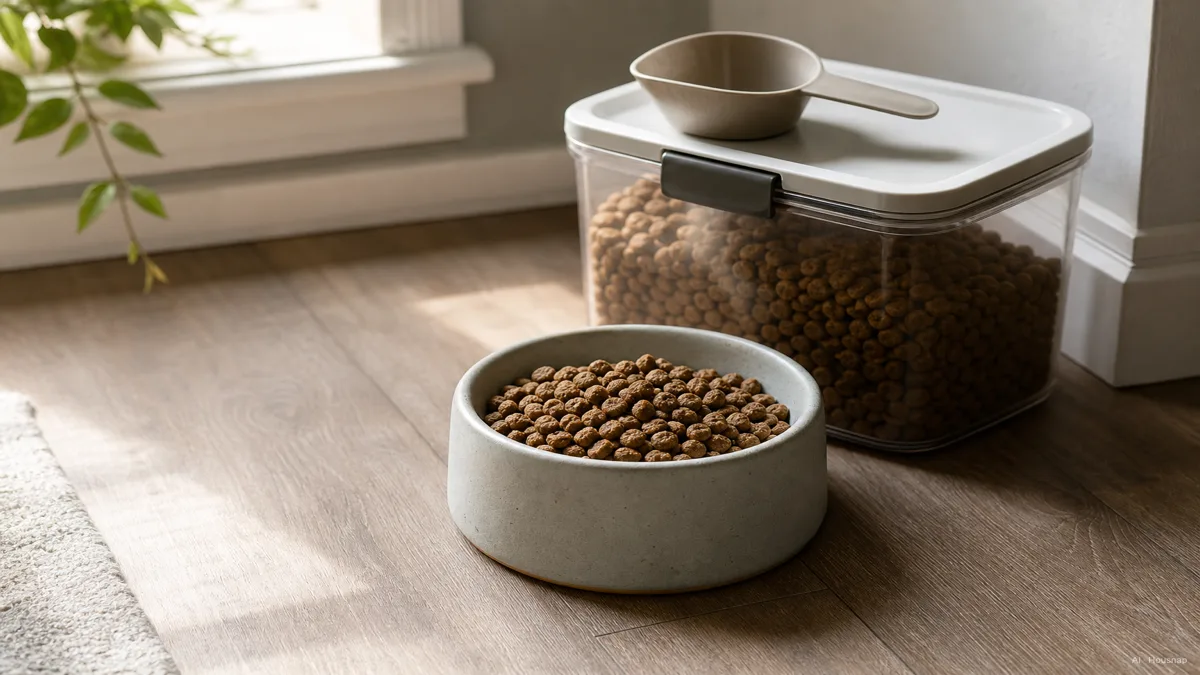
Storage is the other everyday advantage. An opened bag of kibble keeps well for four to six weeks in an airtight container. Opened wet food has to go in the fridge and gets used within one to three days, as KOHA Pet's comparison lays out. For a small-dog owner, a big can can mean daily waste unless you portion it carefully, while a bag of kibble just sits there.
Now the myth, because it is the most repeated reason people reach for kibble. The idea that dry food cleans teeth is largely wrong. A landmark study of more than 1,350 dogs found no significant difference in dental disease between dogs fed dry versus wet diets, a finding the Dog Food Advisor breakdown of the cleaner-teeth myth lays out in detail. Standard kibble shatters on the bite and delivers only a 5 to 10 percent reduction in plaque. Only VOHC-certified dental diets and treats show a meaningful 20 to 35 percent reduction, and daily brushing remains the real gold standard.
There is also a quieter cost worth naming. Dry food carries more carbohydrate, often 30 to 50 percent on a dry matter basis, because starch is needed as a binding agent to form and hold the kibble shape during extrusion. For most healthy dogs that is fine, but for a diabetic dog or a serious weight-management plan, that carb load is the reason many owners shift toward wet or fresh food.
Wet Food (Canned): When It Wins, Hydration, Palatability, and Sick or Senior Dogs
Flip the lens and wet food stops being the expensive option and starts being the right one for specific dogs.
Hydration is its clearest advantage. A dog eating wet food takes in far more water through the meal itself, often two to three times more total daily water once food and drinking are combined, as Purina's dry-versus-wet article describes. That matters a great deal for dogs prone to urinary tract issues, dogs with kidney disease, and chronic under-drinkers who simply will not visit the water bowl enough on their own.
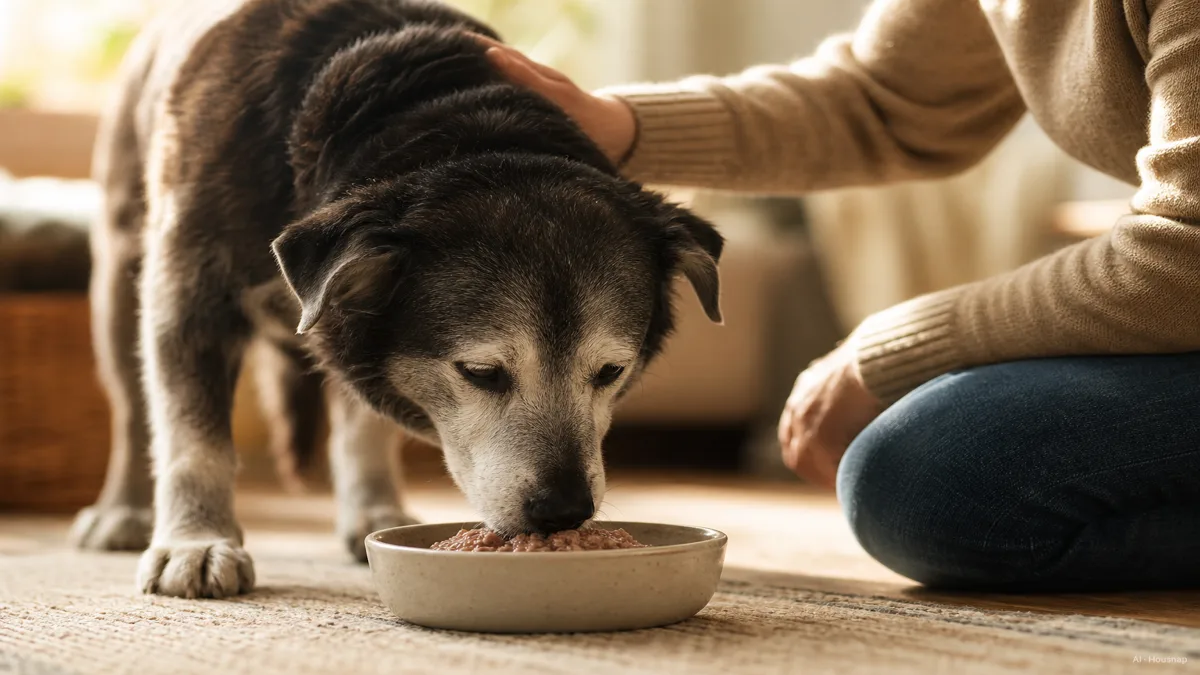
Palatability is the other place wet food pulls ahead, and it is not a small thing. The stronger aroma, softer texture, and higher moisture make wet food the go-to for picky eaters, senior dogs with dental pain, and dogs recovering from illness. A dog with missing teeth, jaw surgery recovery, or advanced periodontal disease often simply cannot chew kibble comfortably, a point Forthglade's wet-versus-dry guide makes plainly. When appetite itself is the problem, the food a dog will actually eat beats the one that scores better on paper.
Wet food also tends to be lower in carbohydrate than kibble, since it does not need starch to hold a shape. That is part of why low-carb plans for diabetic dogs or weight control often lean toward wet or fresh food, the same direction the carbohydrate math pointed earlier.
The trade is cost and waste. Wet food runs roughly three to five times more per calorie, and an opened can spoils within a couple of days in the fridge. For a large dog fed wet food exclusively, that adds up fast. So wet food earns its place most clearly when hydration, palatability, or a medical need is doing the deciding, rather than everyday economy.
Mixed Feeding: The Practical Middle Ground Most Owners Land On
Here is the option a lot of people never realize is allowed. You do not have to pick a side. Mixed feeding, also called topping, means combining wet and dry food in the same bowl or across the day, and it is a widely accepted middle-ground strategy rather than a compromise nobody recommends.
The logic is simple. You keep dry food's cost advantage and easy storage as the base, then add wet food for the palatability and the extra moisture. A reluctant eater gets the aroma that makes them start; a chronic under-drinker gets water hidden in the meal; your budget does not absorb a fully wet diet. CESAR's mixed-feeding guidance frames it as a normal everyday approach.
The one real rule is that both foods should be complete and balanced on their own, and you should adjust portions so the combined meal does not overshoot your dog's calorie needs. Veterinary nutritionists generally do not object to mixing two complete and balanced foods, so the main thing to watch is total calories, not the mixing itself.
A practical note on switching, because mixed feeding often means introducing a new food. Any transition between formats or brands should be gradual over seven to ten days, moving from 25 percent new and 75 percent old, to a 50/50 split, to 75 percent new, then all new. Abrupt switches commonly cause vomiting and diarrhea, which KOHA Pet's transition guidance describes. Slow is the whole trick.
How to Read the Label and Confirm AAFCO Compliance Before Buying
Before any bag or can goes in the cart, two lines on the packaging do most of the work.
First, find the AAFCO statement. You are looking for a sentence confirming the food is complete and balanced for a specific life stage, either by meeting AAFCO nutrient profiles or by passing AAFCO feeding trials, as the AAFCO guide to selecting pet food explains. Match the life stage to your dog. Adult maintenance needs a minimum of 18 percent protein and 5.5 percent fat on a dry matter basis; growth and reproduction, which covers puppies, needs at least 22.5 percent protein and 8.5 percent fat. A food labeled for one life stage is not automatically right for another.
Second, do not compare guaranteed analysis numbers between a can and a bag at face value. As covered earlier, the wet food's lower as-fed protein is mostly the water talking. If you want a real comparison, convert both to a dry matter basis, the method the Whole Dog Journal explains for comparing canned and dry foods. Otherwise you will consistently underrate wet food's protein and overrate the kibble's.
Put those two checks together and the buying decision gets concrete. Decide the format from your dog and your budget, confirm the AAFCO statement matches the life stage, and only then compare like with like. From here the useful next move is to filter dry and wet options side by side, see what the leading brands charge across stores for the same food, and check that the format you landed on lines up with the dog you are actually feeding. You'll find options from the names that show up most in dog food, so the comparison stays concrete rather than hypothetical.
Sources
- Dry Dog Food vs. Wet Dog Food, or Both? — PetMD; moisture difference, calories per ounce, cost per calorie, and hydration
- Dry Matter Basis, a Better Way to Compare Dog Food — Dog Food Advisor; why wet-versus-dry protein labels mislead without a dry matter conversion
- Complete and Balanced Pet Food — FDA; the AAFCO complete-and-balanced standard applies to both formats
- Selecting the Right Pet Food — AAFCO; reading the nutritional adequacy statement and matching life stage
- Dry Dog Food and the Myth of Cleaner Teeth — Dog Food Advisor; the 1,350-dog study and VOHC-certified dental diets
- Dry vs. Wet Dog Food, Which Is Better for Your Dog? — Purina; hydration benefit and palatability of wet food
- How to Compare Nutrient Levels in Canned vs. Dry Dog Foods — Whole Dog Journal; step-by-step dry matter conversion