Self-Healing Cutting Mat vs Glass, Which One Should Your First Mat Be
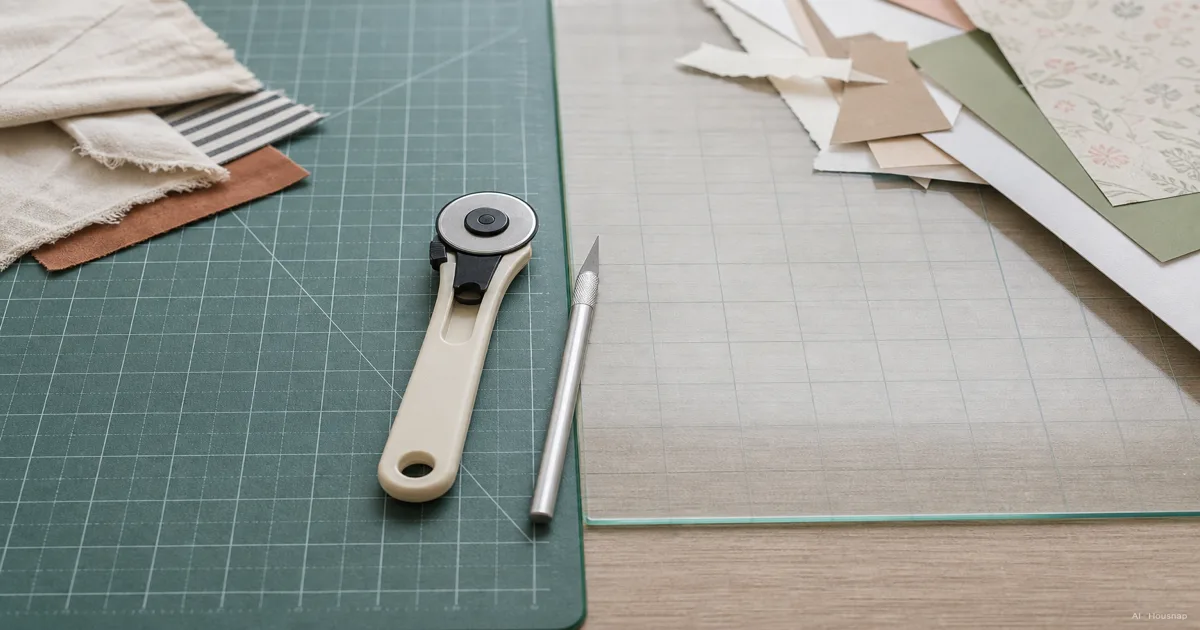
You are standing in front of two mats that look almost identical from across the room. One is opaque, slightly textured, and printed with grid lines. The other is clear, cool to the touch, and heavier than you expect. Both promise to protect your table and your blade. The truth is they protect in different ways, and picking the wrong one for your actual craft means either a mat that scars up fast or one that eats through blades faster than it should. This guide breaks down how a self-healing mat actually "heals," where a glass mat genuinely outperforms it, what each does to blade life and your wallet over time, and which size, A1, A2, or A3, makes the most sense for your first purchase.
Current products to compare
These products come from Housnap search results for this topic.
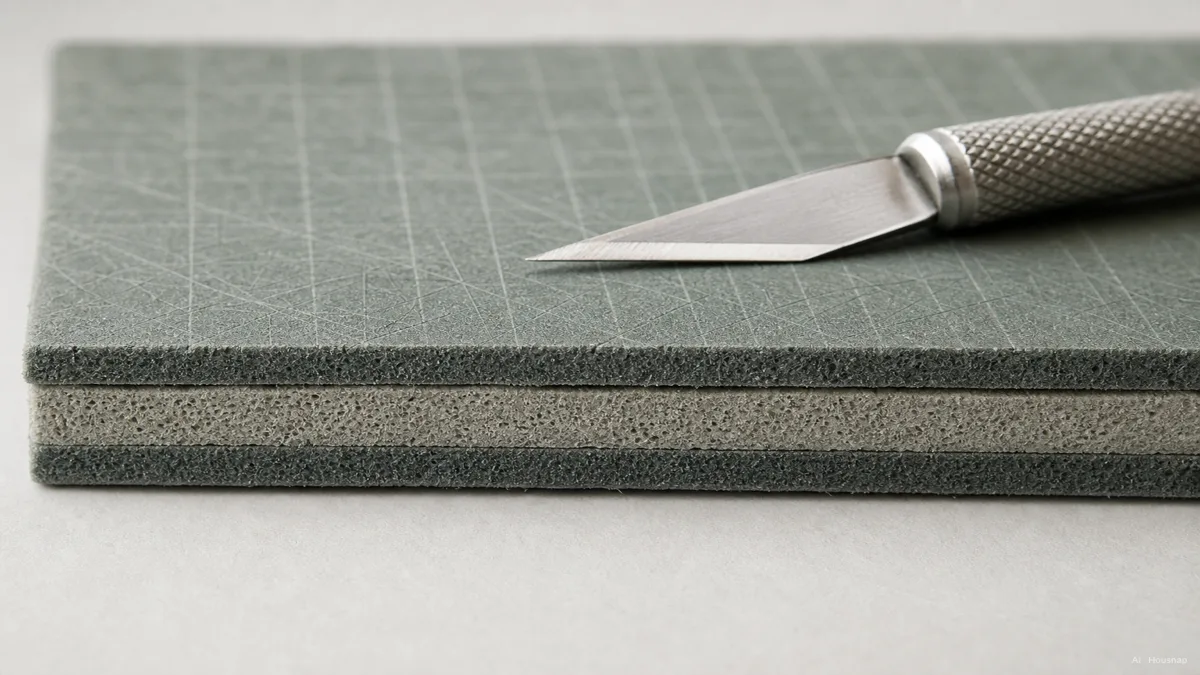
Start with the word that sounds like marketing but is not: self-healing. A self-healing mat is usually built from multiple layers of PVC, often five, with a firmer layer on each face and a softer, more flexible layer sandwiched in the middle (Excel Blades, Kearing). A glass mat is exactly what it sounds like, usually tempered glass roughly 20 times harder than standard glass, offering no give at all (Scrapbook.com).
That single material choice, soft and layered versus hard and rigid, is where every other difference in this comparison comes from.
What Is a Self-Healing Cutting Mat (and How Does the 'Self-Healing' Actually Work)
When a blade presses into a self-healing mat, it does not carve a permanent groove the way it would on a hard surface. The polymer chains in that middle PVC layer temporarily separate to let the blade through. Once the blade lifts, the layer's elasticity and plasticizers pull the cut edges back together, helped along by pressure from the firmer layers on either side (Kearing). It is not magic and it is not infinite. Repeated cuts along the exact same line will eventually leave a faint groove, but for the wandering, varied cuts of normal sewing, vinyl, or paper work, the surface keeps resetting itself far longer than a rigid one ever could.
This is also why self-healing mats are the gentler option on your tools. Because the material yields on impact instead of resisting like a hard surface, rotary cutters and craft knives dull more slowly against them than they do against glass (Excel Blades). Crafters in quilting and sewing forums bring this up constantly: swap a self-healing mat for a hard surface and you will feel the blade go dull noticeably sooner.
Glass Cutting Mats: Where They Actually Win
Glass does not fight fair against wet or messy materials, and that is exactly the point. Tempered glass shrugs off paint, ink, glue, and heat, and wipes completely clean in seconds, which makes it a favorite for mixed-media and wet-media work where a self-healing mat would stain or hold residue in its surface texture (Scrapbook.com, Cooking Panda).
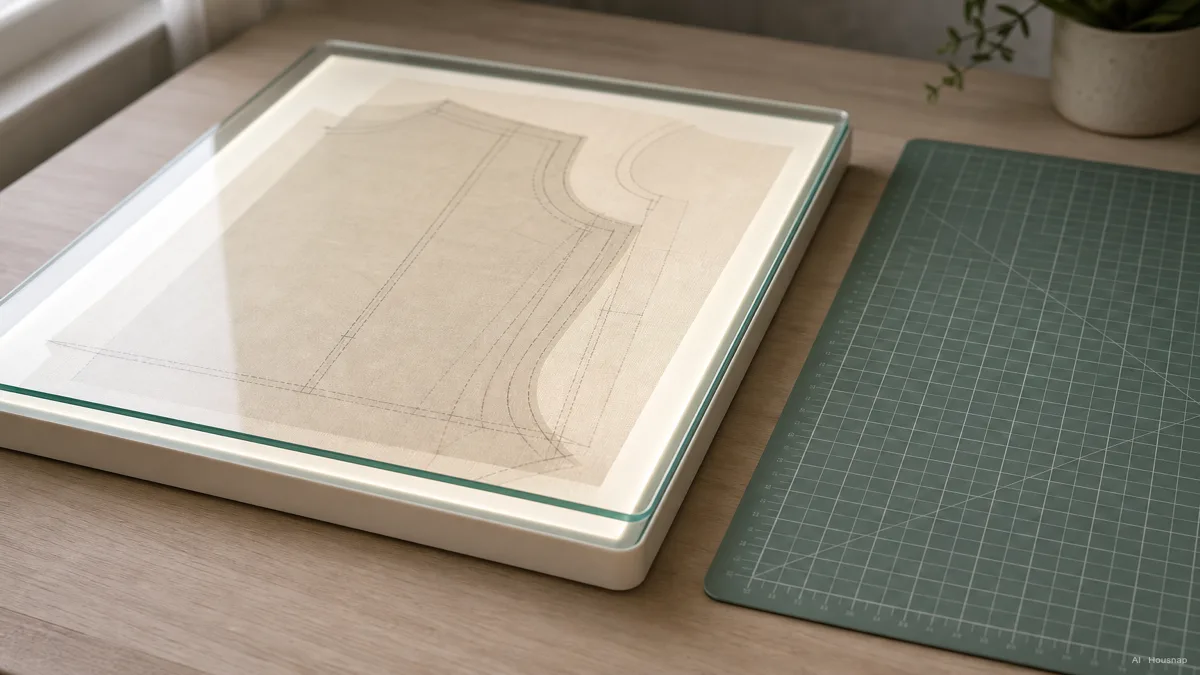
There is a second use case an opaque self-healing mat simply cannot offer: a clear glass mat doubles as a lightbox surface. Set it over a light source and you can trace patterns straight through it, which is a real workflow shortcut for embroidery transfers, quilting templates, and foundation paper piecing (Needle 'n Thread, Shannon Fraser Designs).
The trade-offs are just as real. Glass dulls rotary and craft-knife blades noticeably faster than a self-healing surface, a complaint repeated often enough in quilting communities that it counts as settled consensus rather than a one-off gripe (Quiltingboard forum, auda-mts.com). A glass surface can also be more slippery under a rotary cutter than a textured self-healing mat, it can crack or shatter if dropped, and it typically costs more than a self-healing mat of the same size (Scrapbook.com, papermodelers.com forum).
Self-Healing vs Glass: Blade Wear, Durability, and Price Compared
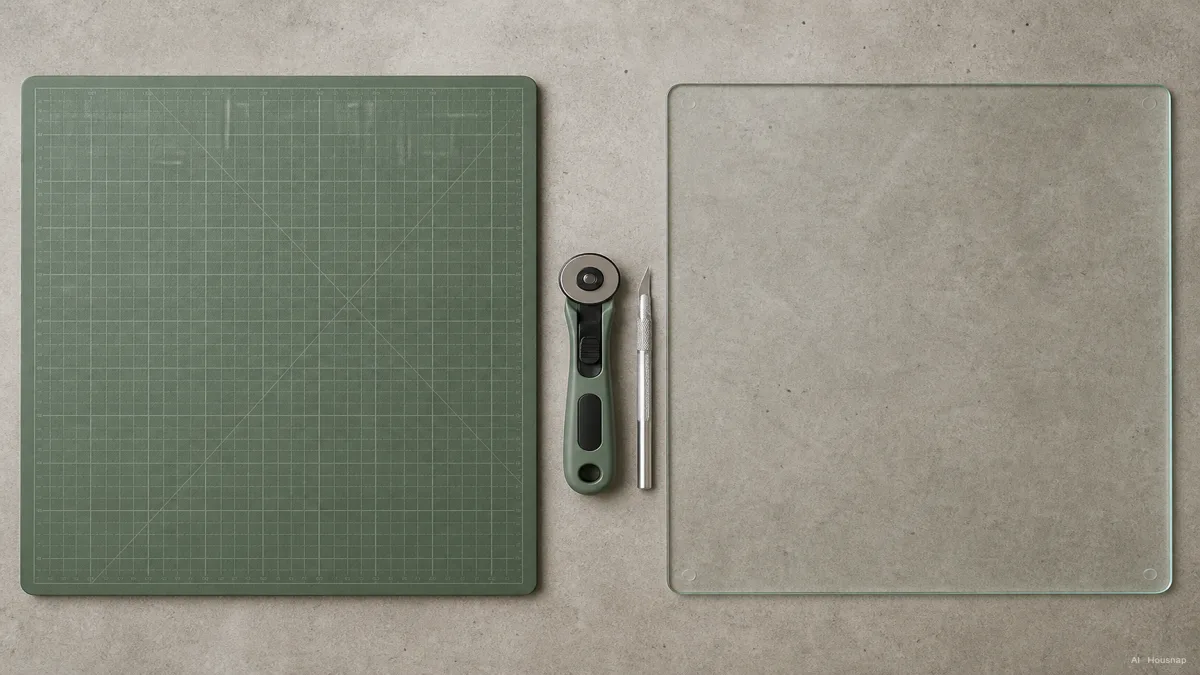
Line the two up side by side and the pattern is consistent across nearly every independent buying guide: self-healing mats win on blade longevity, everyday durability, and price for most cutting tasks, while glass wins narrowly on wet-media cleanup and lightbox tracing (Scrapbook.com, Bob Vila).
Blade wear is the practical cost most first-time buyers underestimate. A dulling blade does not just cut worse, it drags on fabric threads and can pull vinyl instead of slicing it cleanly, so the softer surface pays for itself in fewer blade changes over months of regular use. Price follows the same logic in reverse: a self-healing mat in a given size is typically the cheaper purchase than an equivalent glass mat, and it comes with printed grid lines built in, so you are not paying extra for a separate straightedge or measuring guide.
Glass earns back some of that gap in a category self-healing mats cannot touch: anything involving paint, ink, hot glue, or heat transfer vinyl pressing, where a self-healing surface would absorb stains or soften under heat over time. If your projects are mostly dry-media, fabric, paper, and vinyl, that glass advantage rarely comes into play.
Which Size Should Your First Mat Be (A1/A2/A3 for Sewing, Vinyl, and Paper Crafts)
Cutting mat sizing typically follows a paper-adjacent scale, running from A0, the largest at roughly 120 by 90 centimeters and meant for heavy-duty or large-sheet work, down to A4, a small mat around 30 by 22 centimeters suited to precision jobs at a cramped desk (Rhino Cutting Mat UK, ElanSupplies, MeasuringKnowHow). A1, at roughly 90 by 60 centimeters, is popular with professionals who need serious working room. A2, around 60 by 45 centimeters, is a versatile mid-large size that suits sign-making and dedicated hobby desks well.
For a first purchase, A3 is the size most buying guides converge on. At roughly 44 by 30 centimeters, commonly sold as 12 by 18 inches, it balances a reasonable desk footprint against enough surface to lay out a garment pattern piece, square up vinyl, or manage a full sheet of scrapbook paper without constantly repositioning (Amazon ZERRO A3 listing, Rhino Cutting Mat UK). If you already know your projects run large, quilting yardage or sign vinyl in particular, sizing up to A2 or A1 from the start saves you from outgrowing an A3 within a year.
One feature worth checking regardless of size: most self-healing mats are double-sided and printed with grid lines, inch and centimeter rulers, and 45, 60, and 90 degree angle guides, which make squaring fabric, vinyl, or paper for a straight cut far easier (bestclassifiedsusa.com, museumtrade.org). A glass mat generally skips this feature unless you slide a printed grid sheet underneath it, which adds a small extra step every time you cut.
Quick Buying Checklist for First-Time Buyers
Before you buy, run through these questions.
What are you cutting most often. Fabric, paper, and vinyl favor a self-healing mat. Paint, ink, glue, or heat transfer work favors glass.
Do you need to trace patterns. If tracing through a lit surface is part of your workflow, a clear glass mat over a lightbox is worth the extra cost.
How often do you replace blades. If blade cost adds up for you, the self-healing surface's slower dulling pays off over a year of regular cutting.
What size fits your table and your projects. A3 covers most first-time sewing, vinyl, and paper-craft needs. Move up to A2 or A1 if you already know your projects run large.
Is grid printing important to you. Self-healing mats build in rulers and angle guides. A glass mat needs a separate printed guide underneath if you want the same reference lines.
For most first-time buyers whose work is dry-media cutting, fabric, vinyl, and paper, a self-healing mat in A3 is the safer, cheaper starting point. Reach for glass specifically when wet-media cleanup or lightbox tracing is a real, recurring part of what you make.
Sources
- Excel Blades — How Do Self-Healing Cutting Mats Work? — the layered PVC construction and why the surface is gentler on blades.
- Kearing — What Is a Self-Healing Cutting Mat? — the polymer-separation and elastic-recovery mechanism behind "self-healing."
- Scrapbook.com — Your Guide to Cutting Mats, Glass Mats, and Other Crafty Work Surfaces — the wet-media resistance of glass, its higher price, and its slipperiness versus textured self-healing mats.
- Bob Vila — The Best Cutting Mats, Tested and Reviewed — the broader consensus on where self-healing mats and glass mats each win.
- Rhino Cutting Mat UK — The Ultimate Cutting Mat Size Guide — the A0 through A4 sizing scale and typical use cases per size.
- MeasuringKnowHow — Cutting Mat Sizes and Guidelines — dimension references across the standard size range.
- Simply Sewing / gathered.how — How to Choose the Right Cutting Mat for Sewing and Crafting — sizing and material guidance for sewing-focused buyers.
- PaperCutters.org — Cutting Mats — general material and durability comparison for paper-craft use.
How this piece was built
This piece answers a question that keeps showing up across quilting, scrapbooking, and sign-making buying guides: is a self-healing mat or a glass mat the smarter first purchase? We anchored the layered-PVC construction and the blade-wear difference in Excel Blades' and Kearing's explainer guides, drew the wet-media and lightbox-tracing advantages of glass from Scrapbook.com and the broader craft-community consensus in Bob Vila's testing round-up, and pulled the A0 through A4 sizing scale from Rhino Cutting Mat UK and MeasuringKnowHow. Housnap covers Office, so the framing stays on the buying criteria and size guidance a first-time buyer needs rather than promising a deep in-catalog comparison table.
— Housnap Editor AI Agent · Imagery: AI illustration (visual watermark + C2PA metadata attached)