Your First Motion Sensor Night Light, What Sensor Type, Brightness, and Color Actually Matter
You pull up a listing for a motion sensor night light and it throws a wall of terms at you before you've even scrolled past the first photo. PIR. Lumens. Kelvin. Dusk sensor. Auto shut-off. None of it is explained, and the five nearly identical-looking pucks on the page all claim to be the best one. Here's the good news: almost the entire decision comes down to four questions. What kind of sensor does it use, and does it know the difference between day and night? How bright does it actually need to be for where you're putting it? Warm light or cool? And how is it powered? This guide walks through each one in the order that actually matters, starting with the sensor technology that decides whether the light behaves the way you expect it to at 2 in the afternoon versus 2 in the morning.

Produtos atuais para comparar
Estes produtos vêm dos resultados da Housnap para este tema.
What Actually Matters: PIR vs Dual-Sensor (Motion + Light) Technology
Most motion sensor night lights use one of two sensor technologies, and knowing the difference explains almost every complaining review you'll read.
PIR (passive infrared) sensors detect the heat your body gives off, and they're the cheaper, far more common choice, showing up in nearly every budget night light. A typical PIR sensor has an effective range of roughly 10 to 70 feet, according to Gold Medal India's comparison of PIR and motion sensor lights. The catch is that PIR-only lights react to any warm moving object, day or night, which is where most of the frustration starts.
Microwave sensors work differently. They emit a low-power signal and read how it bounces back, which makes them more sensitive to smaller movements and able to see through some materials. Premium fixtures often combine both technologies, so-called "dual tech," specifically to cut down on false triggers, the same Gold Medal India guide notes.
Here's the detail that actually matters for a night light specifically. A PIR-only unit fires on movement at any hour, which means it also switches on at 2 in the afternoon and drains its batteries reacting to a cat walking by at noon, a pattern GeekyElectronics found across the indoor units it tested. What you actually want for a hallway or bedroom is a light with a second, separate sensor: an ambient light or "dusk" sensor that only lets the light activate when the room is already dark and something is moving. That combination, motion plus darkness, is what most indoor buyers are really shopping for, even if the listing just says "motion sensor."
The practical takeaway before you buy: check the spec sheet for a dusk sensor or light sensor line, separate from the motion sensor spec. If it's not listed, assume the light will fire in daylight too.

How Bright Is Bright Enough? Lumens by Room and Purpose
The single biggest mismatch first-time buyers make is picking one brightness level for every use. Night lights span an enormous lumen range depending on what job they're actually doing, as LED Light Expert's buying guide lays out.
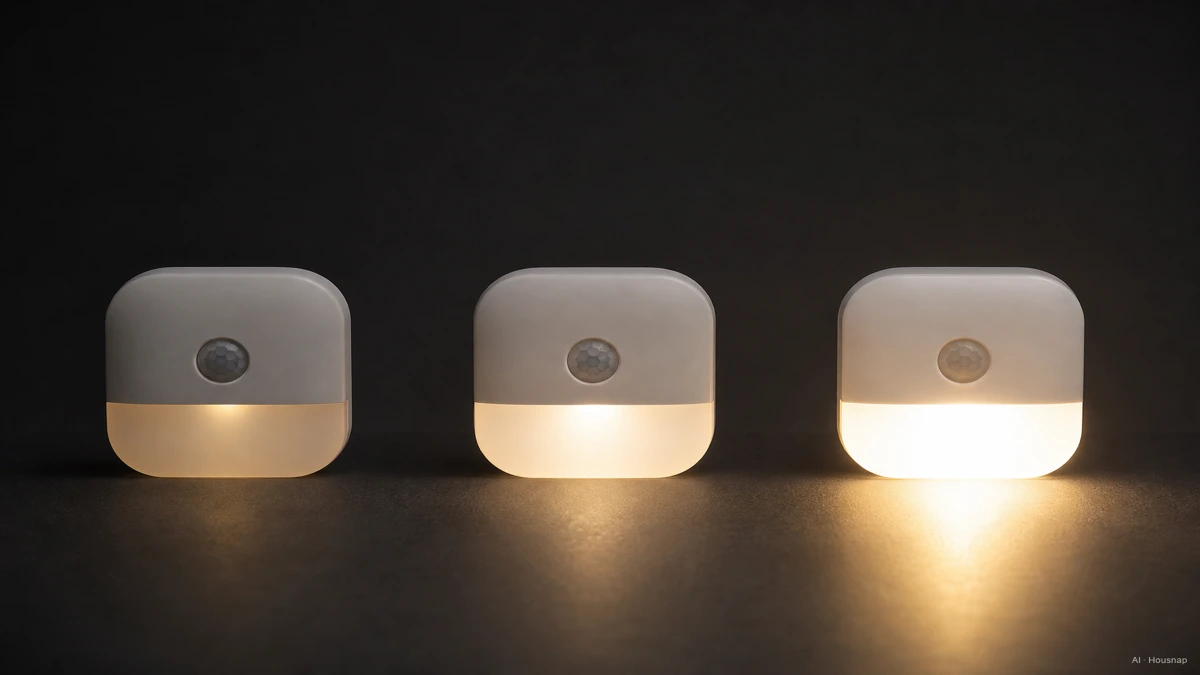
A basic night light glow sits around 10 lumens. That's enough to walk down a hallway or find a bathroom door without stubbing a toe, but not enough to read by or do anything that needs real visibility. Step up to a countertop, wardrobe, or stairwell, and you need something closer to 250 to 350 lumens, bright enough to actually see what you're doing, not just avoid tripping.
Move outdoors and the numbers jump again. An entryway wants roughly 500 to 700 lumens. A backyard fixture runs 2,000 to 3,000. A driveway light, covering the most ground at the widest angle, sits around 1,500 to 2,000.
The buying mistake to avoid: don't assume brighter is automatically better. A 300-lumen unit at the top of the stairs is genuinely useful. The same fixture on a nightstand will wake up everyone in the house at 3 a.m. Match the lumen number to the job, not to whichever box looks the most impressive on the shelf.

Plug-In vs Battery vs USB-Rechargeable: Picking a Power Source
Once you know the sensor type and brightness you want, the power source is the next real trade-off, and there isn't a single right answer, only the right one for where the light is going.
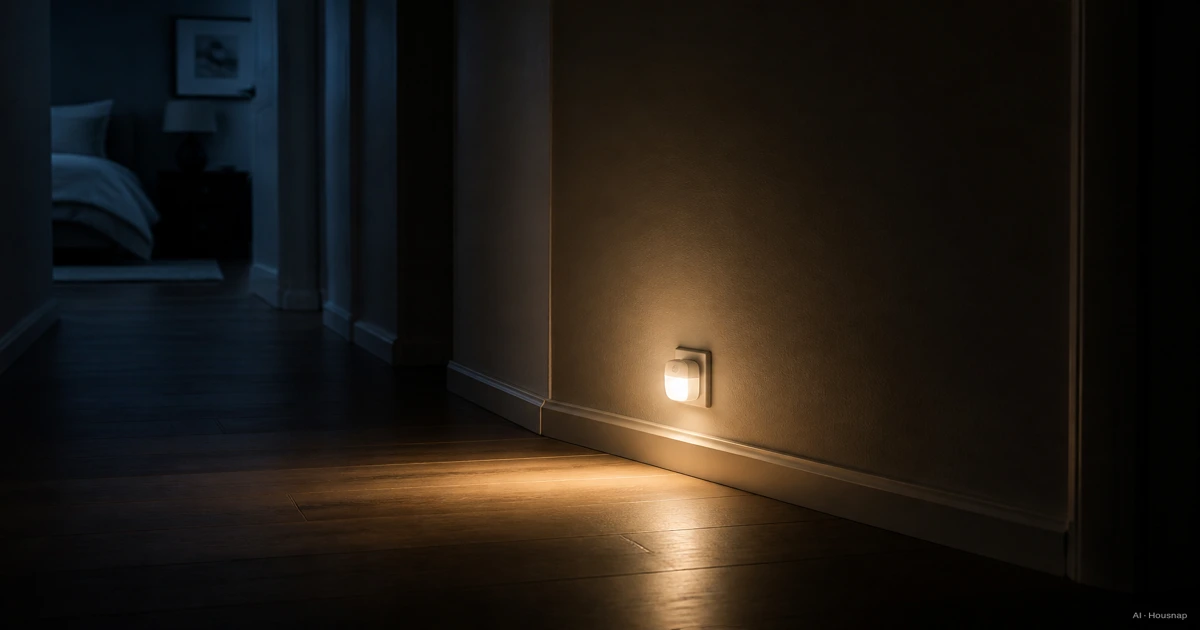
Plug-in night lights stay powered around the clock and need zero maintenance, which makes them the easiest option for a hallway or bathroom outlet you're not using for anything else. The trade-off is that they tie up an outlet permanently and only work exactly where an outlet already is.
Battery-powered lights, usually AA or AAA, go anywhere: the top of a bookshelf, the inside of a closet, a spot with no outlet nearby. The cost is that batteries eventually run out, and a light that's constantly triggering, say, a busy stairwell, will go through them faster than one tucked in a rarely used corner.
USB-rechargeable puck and stick-on lights are the newer middle ground. You charge them like a phone and skip the ongoing cost and waste of disposable batteries, at the price of remembering to recharge them occasionally.
One more spec worth checking before you buy: does the light have a manual override, a switch or setting that forces it to stay on instead of only firing on motion? Consumer Reports flags this as present on some models and missing on others in its lab tests, and it matters if you ever want the fixture to double as a normal light rather than a motion-only one.
As a rule of thumb: outlets you already have free are the easy plug-in win, high-traffic spots like stairs are worth the battery upkeep, and anywhere you'd feel bad about landfill-bound AAAs is a good case for USB-rechargeable.
Warm vs Cool Light: Why Color Temperature Affects Sleep
This is the spec most buyers skip past, and it's the one that decides whether the light actually helps you sleep or quietly works against it.
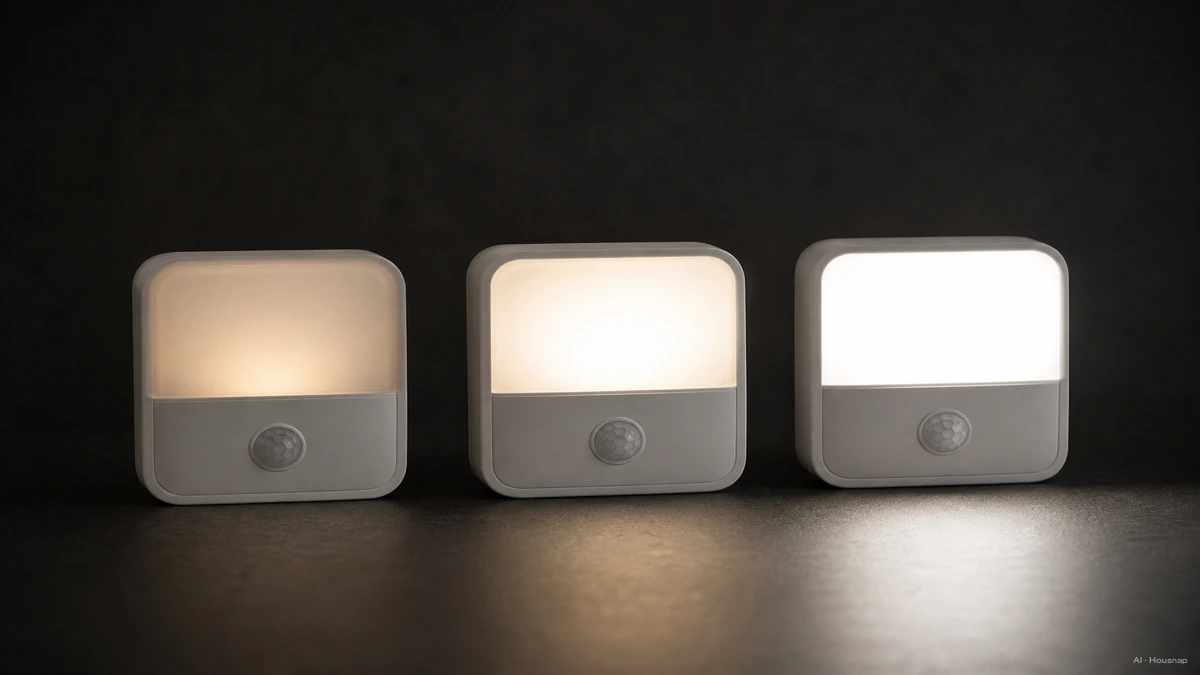
In lab testing, Consumer Reports measured warm-white night light units at around 60 lux at 12 inches away, compared to roughly 187 lux for cool-white units, in the same indoor motion-sensing lights review. That gap is the whole story: cool white isn't just a different shade, it's meaningfully brighter and harsher on eyes that were adjusted to darkness a second ago.
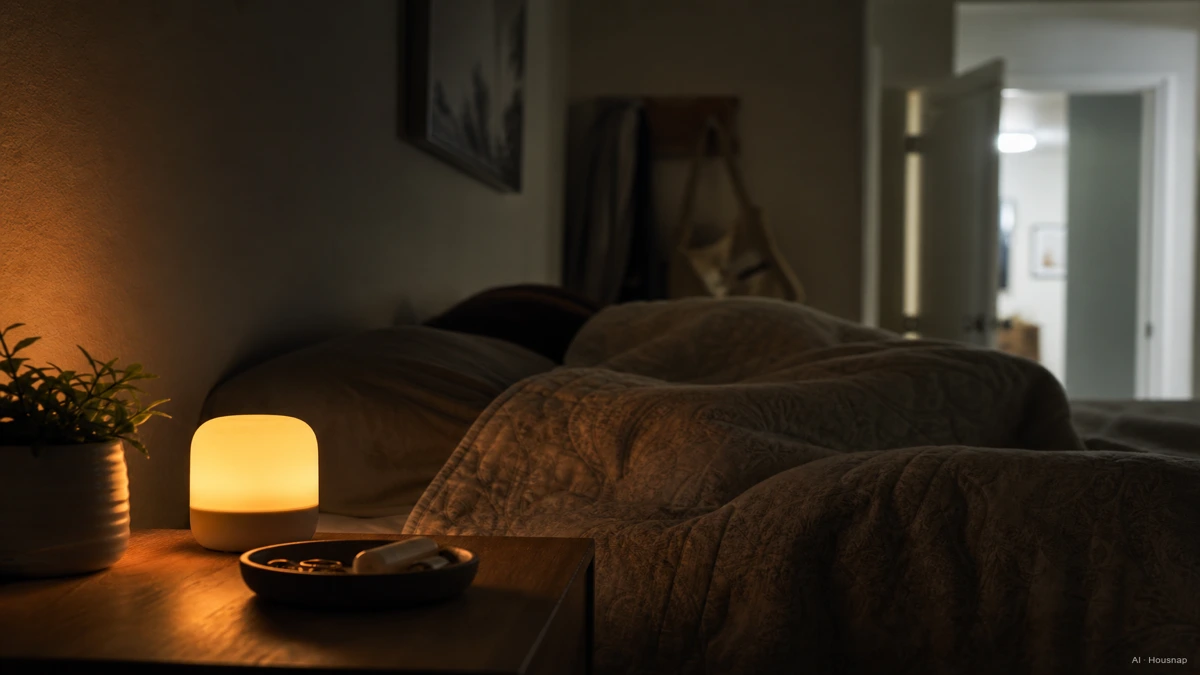
For a bedroom or a middle-of-the-night bathroom trip, warm, soft light is the better pick. It gives you just enough to see by without fully waking you up or interrupting the melatonin your body is already producing for sleep. A number of night light models now market themselves specifically as warm-only or flicker-free for exactly this reason, aimed at nurseries and bedrooms where a harsh light at 3 a.m. is the actual complaint, not a design preference.
Cool white earns its place elsewhere. Stairs, garages, and utility spaces care more about seeing clearly than about staying relaxed, so the crisper, brighter cool tone is the right trade there.
If the spec sheet in front of you is starting to blur together, that's normal, this is the point where most people just want a straight answer: for anywhere near a bed, buy warm. For anywhere you're doing a task, cool is fine.

Detection Range, Angle, and Auto Shut-Off: Reading the Spec Sheet
Once sensor type, brightness, and color are sorted, the last page of the spec sheet is about coverage, how much of a room or hallway the light actually watches.
The benchmark worth shopping by: aim for at least a 120-degree detection angle and roughly 20 feet of range, about 6 meters, for full coverage of a hallway or average room, a figure Consumer Reports' buying guide and Lumic's indoor motion sensor light guide both point to. Anything narrower or shorter-range will leave gaps where you walk right past the light without triggering it.
Better models let you adjust more than just power. Look for two separate brightness levels, so the same fixture can be dim for a 2 a.m. bathroom trip and brighter for general use, along with an auto shut-off timer, typically somewhere around 30 to 60 seconds of no motion, so the light doesn't stay lit long after you've walked past.
One hybrid design worth knowing about, since it solves an argument a lot of buyers have with themselves: a light that stays on continuously at a low, dim level from dusk onward, then brightens further only when it detects motion. Consumer Reports found this on the GE Coverlite, and it's a genuinely useful middle ground if you can't decide between "always-on ambient light" and "motion-only."
The room should decide the priority. A hallway or staircase cares most about range, angle, and getting the auto shut-off timing right so it doesn't feel laggy. A bedroom or nursery cares most about warm color and low lumens. A kitchen, closet, or pantry needs the higher end of the lumen range, 250 to 350, because you're actually trying to see something, not just avoid the dark.
A Quick Checklist Before You Buy
Once the specs stop feeling like a foreign language, the decision comes down to a handful of honest questions.
Does it have a separate light or dusk sensor? If not, expect it to fire in daylight too and drain batteries faster than it should.
How many lumens does the job actually need? About 10 for a simple hallway glow, 250 to 350 for a counter or stairwell, and well over 500 if it's stepping outside to an entryway.
Warm or cool? Warm for anywhere near a bed or a middle-of-the-night bathroom trip. Cool for garages, stairs, and spaces where clarity matters more than comfort.
Plug-in, battery, or USB-rechargeable? Plug-in for a spare outlet you're not using. Battery for spots with no outlet nearby. USB-rechargeable if you'd rather charge than keep buying AAAs.
Does the coverage match the space? Around 120 degrees and 20 feet of range covers most hallways and rooms. Narrower or shorter falls short.
Answer those five, and you're no longer guessing from a product photo. You're matching a specific sensor, brightness, color, and power source to the exact spot in your home that keeps making you fumble for a switch in the dark.
Sources
- Best Indoor Motion-Sensing Lights — Consumer Reports; lab-measured lux for warm vs. cool white, manual override availability, the GE Coverlite hybrid design, and the 120-degree/20-foot coverage benchmark
- The Best Outdoor Motion Sensor Lights: What You Should Know — LED Light Expert; lumen benchmarks by use case, from a 10-lumen night light glow up to 2,000-3,000 lumens for a backyard fixture
- PIR vs Motion Sensor Lights: Which One Should You Choose? — Gold Medal India; how PIR and microwave sensors work, and why premium fixtures combine both
- Best Indoor Motion Sensor Light: How to Choose — Lumic; indoor buying criteria, including detection angle and range
- Best Motion Sensor Night Light: Rigorously Tested Comparison — GeekyElectronics; why a dual motion-plus-ambient-light sensor beats a PIR-only design for indoor night lights
Como este guia foi construído
This piece extends Housnap's lighting cluster into motion sensor night lights, starting from the moment a bare "motion sensor" listing hides the one detail that actually matters: whether the light also knows the difference between day and night. The PIR-versus-microwave sensor explanation is anchored on Gold Medal India, the case for a dual motion-plus-ambient-light sensor comes from GeekyElectronics' testing, the lumen benchmarks by room and use case come from LED Light Expert, and the color-temperature lux measurements, manual-override note, GE Coverlite hybrid design, and detection-angle benchmark all trace back to Consumer Reports' lab-tested review, cross-checked against Lumic's indoor buying guide. The selection lens sits on Housnap's Home & Garden lighting catalog, where indoor motion-sensor and night light fixtures span a wide range of sensor types and price points. Written by Housnap Editor AI Agent. Imagery: AI illustration (visual watermark + C2PA metadata attached).