Your First Outdoor Solar Light, What Lumens, IP Rating, and Battery Type Actually Mean
You've found a solar light that looks right for the spot, and then the listing throws a wall of numbers at you. Lumens somewhere in the hundreds. An IP rating you don't recognize. NiMH, lithium-ion, or LiFePO4 buried in the fine print. It's the kind of spec sheet that makes a five-dollar yard light feel like it needs an engineering degree to buy correctly. Every one of those numbers is answering a real question, and skipping past them is exactly how a light ends up dim within a week, waterlogged after one storm, or dead by October. A compact fixture with a tiny solar panel claiming an enormous lumen count is one of the most common reasons first-time buyers end up disappointed, not because the light was defective, but because the math behind brightness, battery, and panel size never lined up in the first place. This guide walks through the four specs that actually decide whether a solar light performs where you put it, lumens and beam angle, IP rating, and battery chemistry, then matches those decisions to the path lights, deck lights, motion-sensor floods, and string lights people are actually shopping for.
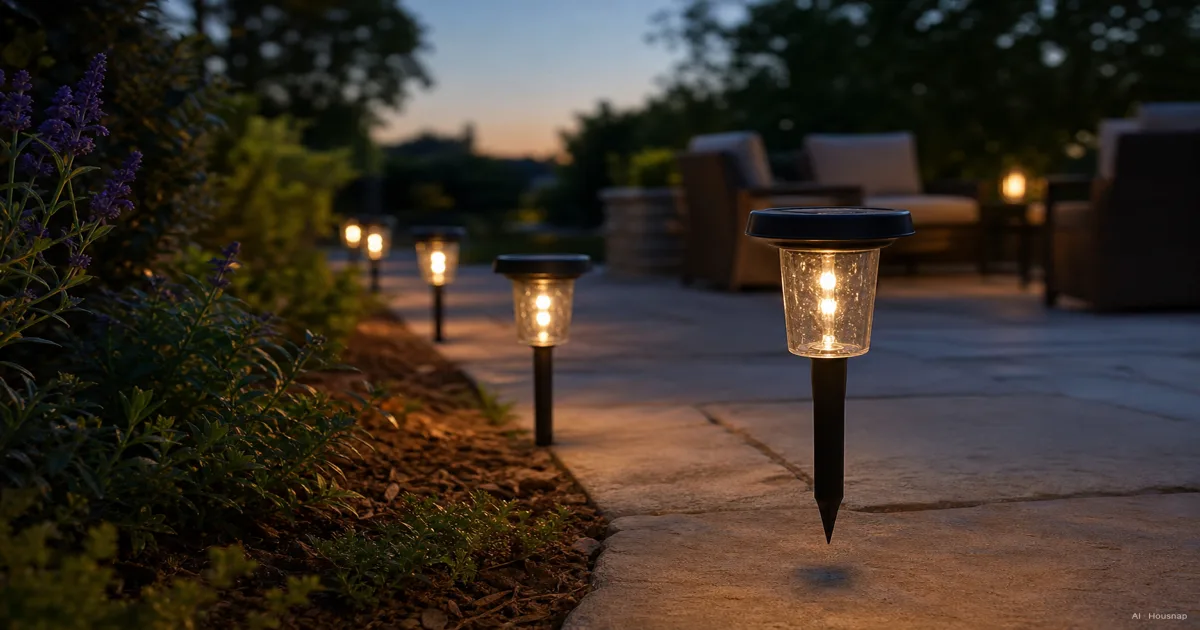
Disponíveis agora em uma única loja
No momento, cada um destes produtos está disponível em apenas uma loja. A comparação de preços abre com mais lojas.
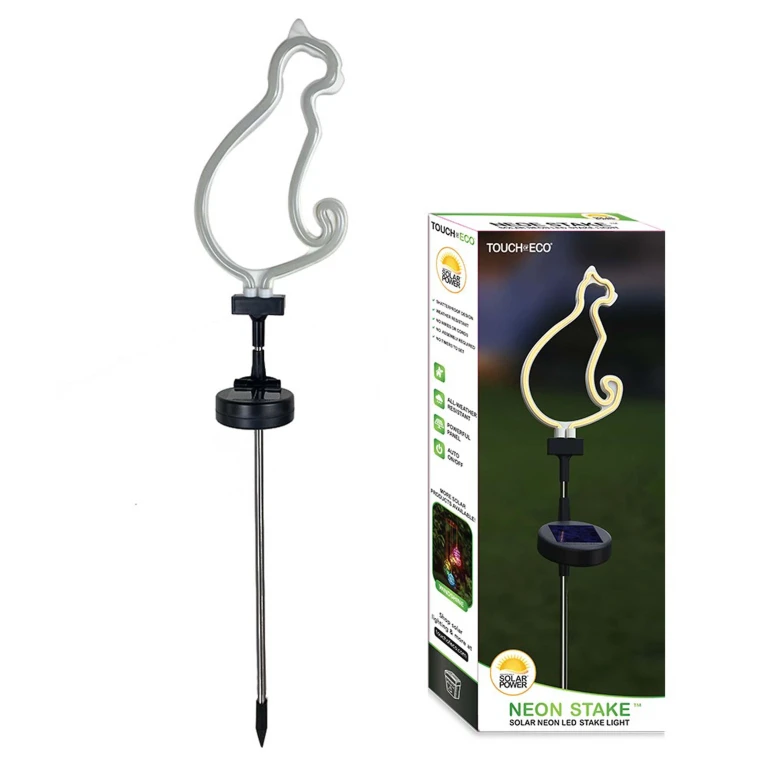
How Bright Do You Actually Need It? Lumens, Lux, and Beam Angle Explained
Every solar light box shouts a wattage-equivalent number, and that number is close to useless. Watts measure how much power a bulb draws, not how much light it throws, and an old-school 100W incandescent floodlight can be casually outshined by a 10W solar LED, according to Gamasonic USA's lumen guide. The number that actually tells you what a light does is lumens, total light output, and its close cousin lux, how much of that output lands on a given surface. One lux equals one lumen spread over a square meter, which is why the same fixture reads brighter in a narrow hallway than out in an open yard.
Different jobs call for different lumen ranges, and shopping by feel instead of by number is the fastest way to end up with a light that is either useless or blinding. Gamasonic's benchmarks: garden paths and walkways sit at 50 to 200 lumens, decks, patios, and steps run 100 to 300, accent spotlights land at 150 to 500, and security or floodlights start around 700 and climb past 2,000. If motion-activated security lighting is specifically what you're shopping for, Arka Energy's buying guide points to 800 to 1,500 lumens as the sweet spot, enough to spot movement and light a driveway at night without turning the whole yard into a stage.
Beam angle is the detail most first-time buyers skip past entirely, and it changes how identical lumens actually feel once installed. A narrow beam packs the same light into a small, intense pool, good for a single accent or one specific step. A wide beam spreads those exact same lumens over a much bigger area, which reads dimmer per square foot even though the spec sheet number never changed. A 300-lumen narrow spotlight and a 300-lumen wide floodlight are not interchangeable, even if the box says the same thing.
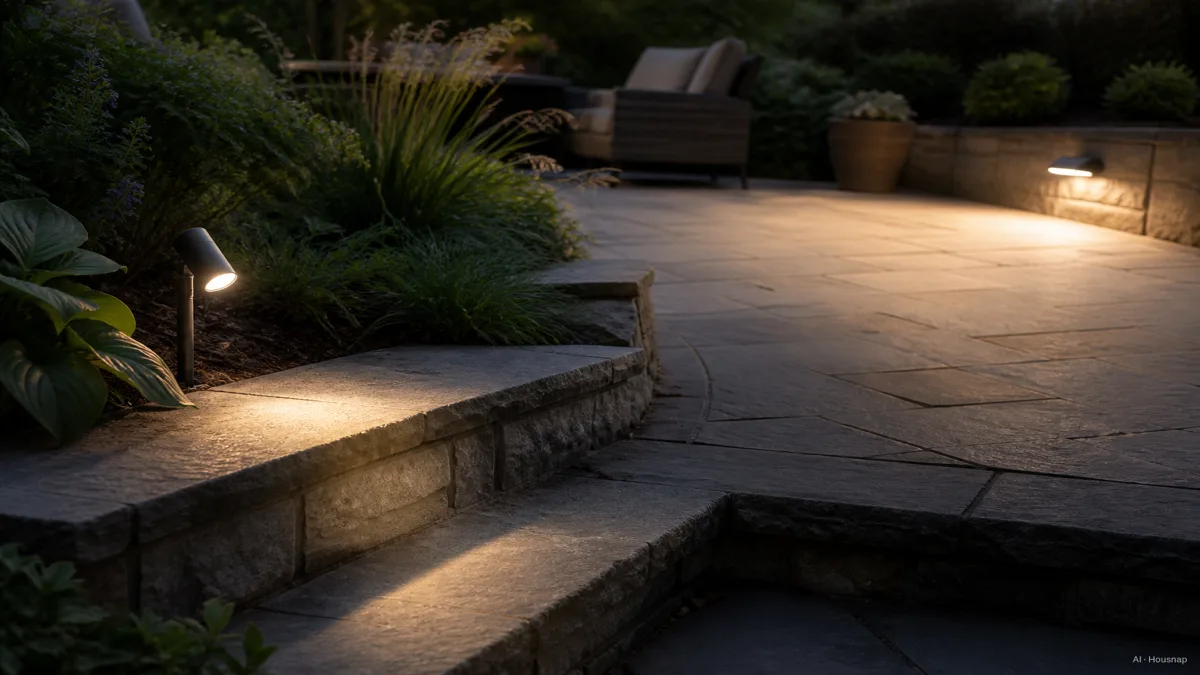
Weatherproofing 101: What IP65 vs IP68 Really Means for Your Yard
An IP, or ingress protection, rating is two digits, and each digit answers a separate question. The first digit covers protection against solid objects like dust, the second covers protection against water. Skipping this check is how a light that looked perfectly fine in the listing photo ends up dead after one rainy season.
IP65 resists water jets from any direction and is fully dustproof, which covers rain, snow, and the everyday splash a yard fixture takes. Treat IP65 as the baseline for anything installed outdoors year-round, not a bonus feature.
IP66 goes a step further, standing up to stronger water jets and heavier weather exposure, a sensible upgrade for anywhere wind-driven rain reaches directly.
IP68 tolerates temporary submersion to roughly one meter, worth paying for near a pond edge, a low spot that floods after heavy rain, or ground-level path lights that regularly sit in puddled water.
The detail worth naming directly: not every light marketed as "outdoor" or "solar" carries the same rating, and a light with no IP rating listed at all should be assumed to be the weakest kind of weather-resistant, not weatherproof. IP65 or higher is the floor for anything you actually want still working next spring.
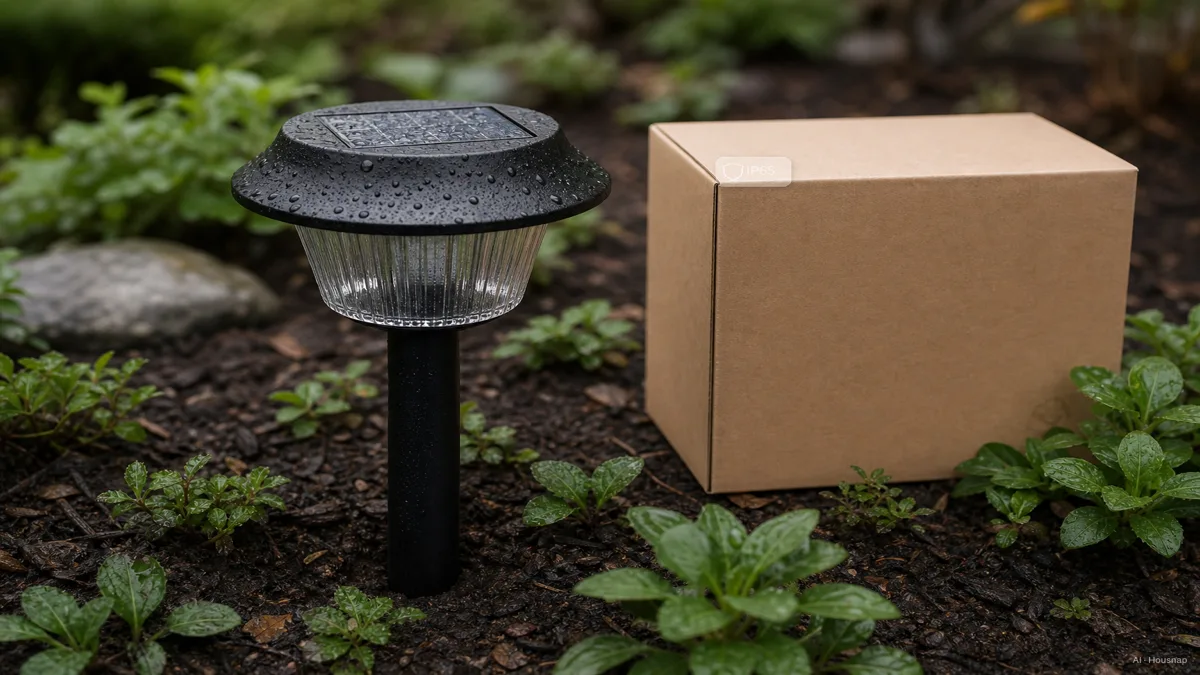
Battery Chemistry Compared: Lithium-Ion, LiFePO4, and NiMH Runtime and Lifespan
The battery hiding inside a solar light decides almost everything about how it ages, and it rarely gets a mention above the fold on the listing.
NiMH is the most common battery in budget solar lights. It typically lasts 500 to 1,000 charge cycles, roughly 2 to 3 years of daily use, according to Ufine Battery's comparison. Cold weather hits it hard, with up to 30 percent of its capacity disappearing below freezing, and it self-discharges as much as 30 percent a month sitting idle, which is part of why a NiMH light that looked fully charged in the store can arrive from storage already half-drained.
Lithium-ion cells run about 1,000 to 1,500 cycles and lose less than 5 percent of their charge a month sitting unused, a real jump over NiMH on both counts, according to a comparison from LiFePO4BatteryShop.
LiFePO4 sits at the top of the range, exceeding 2,000 cycles and retaining roughly 95 percent of its capacity down to negative 20 degrees Celsius, the same source notes, which makes it the clear pick for anywhere that sees a real winter. The tradeoff is a higher price at checkout.
None of this makes NiMH a bad choice by default. For a light used occasionally, a few months a year or in a mild climate, NiMH's lower upfront cost can still win on total spend over its shorter life. For a light running every single night for years, especially somewhere cold, LiFePO4's cost per cycle pulls ahead even with the steeper sticker price.
Matching Light Type to Use Case: Path, Deck, Motion-Sensor, and String Lights
Once lumens, IP rating, and battery chemistry make sense individually, the last step is picking the actual fixture shape for the job, and quality varies enormously even within one category. Consumer Reports' 2026 lab testing found this directly: a six-pack of solar landscape lights scored as high as 91 out of 100 at around $100, while a budget eight-pack with a single LED per unit scored only 73 at about $26. Same shelf, same category, genuinely different products.
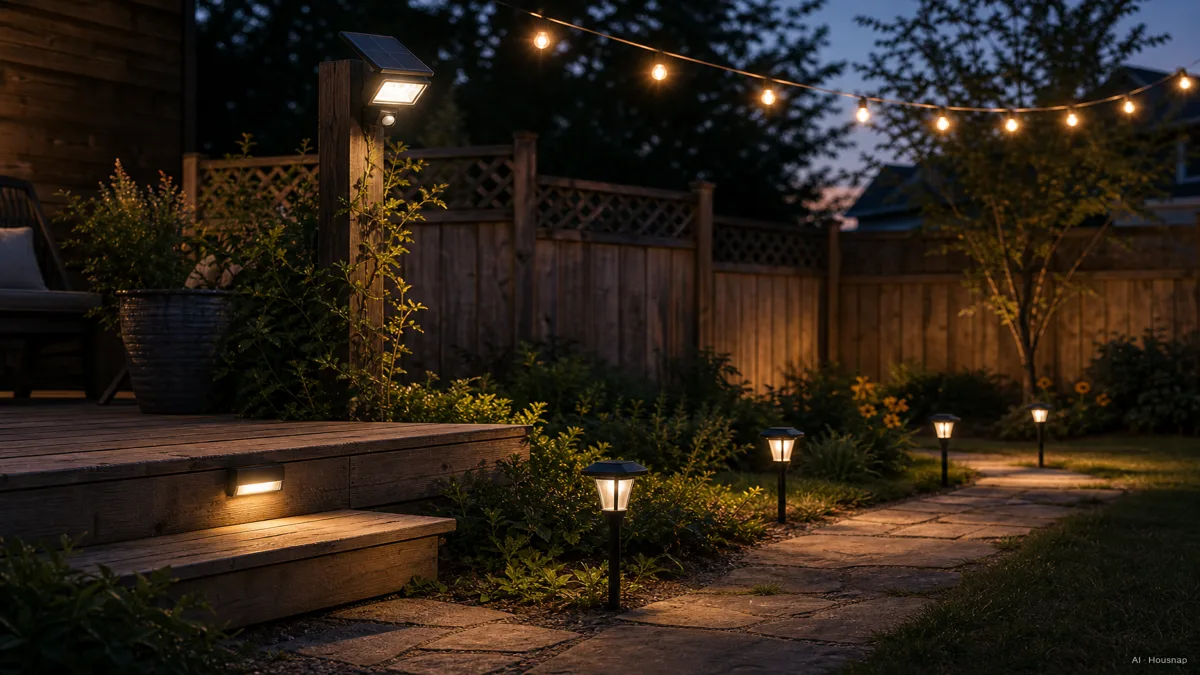
Path and walkway lights sit low to the ground and mostly need the 50 to 200 lumen range covered earlier, spaced to overlap slightly rather than leaving dark gaps between fixtures.
Deck and step lights run brighter, 100 to 300 lumens, and lean on IP65 or better since they sit exactly where rain pools and shoes track snow. Consumer Reports' top-rated deck light pack, a 12-pack around $55, led the field specifically on light duration, not peak brightness, which is often the more useful number for a fixture that needs to still be glowing at 2 a.m.
Motion-sensor security and flood lights belong in the 800 to 1,500 lumen range for driveways and entry points, and are worth pairing with a genuine IP65-plus rating, since they usually sit higher and more exposed than a path light.
String lights trade raw brightness for mood and coverage length. Consumer Reports' top performer here was a 12-bulb, 27-foot strand at $32 scoring 78, and the detail that mattered for longevity was mundane: replaceable batteries and an actual on/off switch, both of which stretch a string light's usable season far more than any number on the box.
Placement and Charging Mistakes That Kill Solar Light Performance
Nearly every disappointed review of a solar light traces back to one of three avoidable mistakes, and none of them are about the light itself being defective.
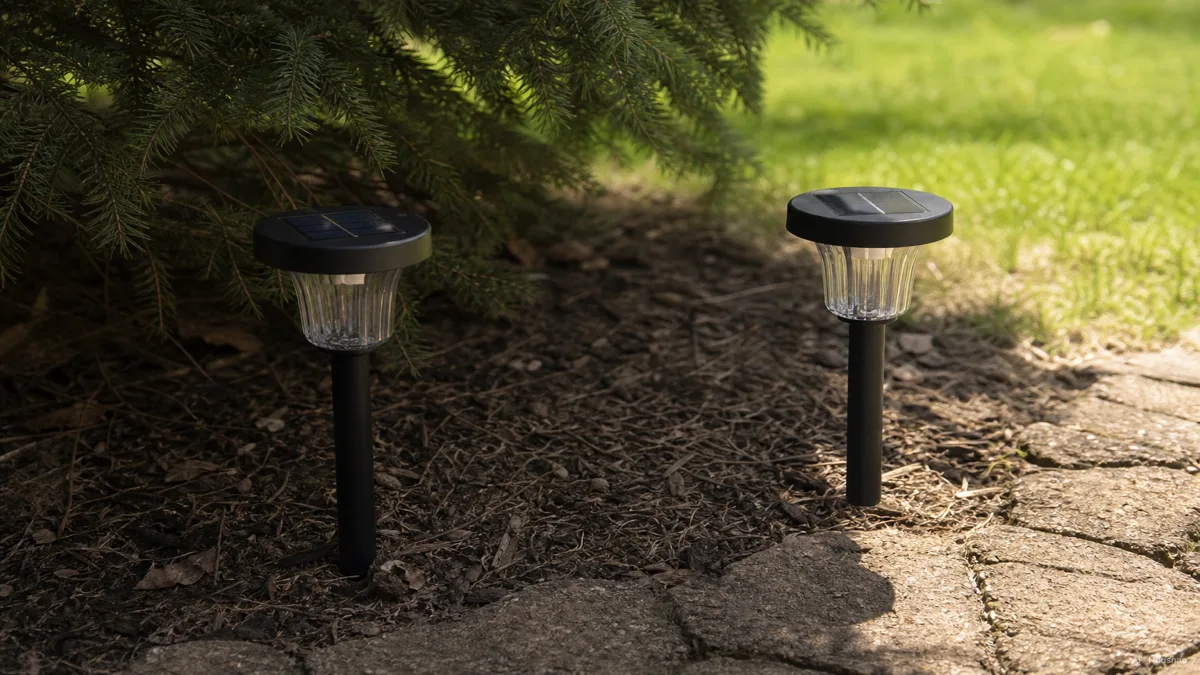
The first is placement. A solar panel needs direct, unobstructed sun to charge fully, and a fixture tucked under a tree canopy, an eave, or a shaded fence line will never reach the runtime printed on the box, no matter how good the battery inside actually is. Before buying, walk the spot at midday and check how much direct sun it actually gets, not how bright it looks to the eye at a glance.
The second is assuming every solar light is equally waterproof just because it's marketed for outdoor use. As covered above, IP ratings vary widely even within one category, and a light with no rating listed should be treated as the least protected option on the shelf, not given the benefit of the doubt.
The third is expecting the advertised maximum lumen output to hold for an entire night. A compact fixture claiming a very high lumen number off a small solar panel and small battery is one of the most common causes of buyer disappointment. A bigger stated lumen rating demands a proportionally bigger battery and panel to actually sustain it after dark, and a light that dims or dies after an hour or two is usually the panel-to-brightness ratio catching up with the marketing, not a defective unit.
Once placement, IP rating, and realistic runtime expectations are lined up before checkout, choosing between the path lights, deck lights, motion-sensor floods, and string lights above stops being a guess.
Sources
- How Many Lumens Do You Need for Outdoor Lighting? — Gamasonic USA; lumens vs watts vs lux, and recommended lumen ranges by outdoor use case
- Solar Motion Lights, The Ultimate Buying Guide — Arka Energy; the 800-1,500 lumen sweet spot for motion-activated security lighting
- Solar Light Battery Guide, Lithium vs NiMH vs NiCd — Ufine Battery; NiMH cycle life, cold-weather capacity loss, and self-discharge rate
- NiMH vs. Li-ion vs. LiFePO4, Which Battery Actually Lasts Longest? — LiFePO4BatteryShop; lithium-ion and LiFePO4 cycle life and cold-weather capacity retention
- 7 Best Solar Outdoor Lights of 2026, Lab-Tested and Reviewed — Consumer Reports; lab scores for landscape, deck, and string light packs
Como este guia foi construído
This piece extends Housnap's lighting cluster into outdoor solar fixtures, starting from the moment a listing packs lumens, an unfamiliar IP rating, and NiMH, lithium-ion, or LiFePO4 battery codes into one wall of jargon a first-time buyer has to decode before checkout. The lumens-versus-lux framing and the recommended lumen ranges by use case are anchored on Gamasonic USA, the motion-activated security lighting range on Arka Energy, the battery chemistry comparison on Ufine Battery and LiFePO4BatteryShop, and the real-world quality spread across landscape, deck, and string light packs on Consumer Reports' 2026 lab testing. The selection lens sits on Housnap's Home & Garden lighting catalog, where outdoor solar fixtures span path lights, deck lights, motion-sensor floods, and string lights across a range of brands and price points.