Ir para o conteúdo
Housnap IA
Home Garden / Lighting

Sunrise Alarm Clock First Buy, How to Pick One That Actually Helps You Wake Up

You're standing in the alarm clock aisle of a home goods store, or scrolling a page of nearly identical glowing orbs online, and every single one promises to make you a morning person. That skepticism is fair. A machine that gently gets brighter for half an hour sounds like a lot of money for something a blackout curtain and a normal alarm can't already do. Here's the part that actually matters. A sunrise alarm clock isn't really an alarm clock, not in the way you're picturing it. It's closer to a small, scheduled sunrise switched on inside your bedroom, built to change how your body feels in the minutes before the beeping, or the birdsong, starts. Whether that's worth buying depends less on the brand printed on the box and more on a few numbers most shoppers skip past entirely, how bright the light actually gets, how long it takes to get there, and whether your mornings currently feel like getting yanked out of sleep or gently coaxed out of it. This guide walks through what's actually happening inside the device, what the research says it does and doesn't do, the specs worth comparing side by side, and honestly, who should skip the category altogether.

Sunrise Alarm Clock First Buy, How to Pick One That Actually Helps You Wake Up — Ilustração IA

Produtos atuais para comparar

Estes produtos vêm dos resultados da Housnap para este tema.

What Is a Sunrise Alarm Clock and How Does It Actually Work

A sunrise alarm clock, sometimes called a wake-up light or a dawn simulator, spends the last 10 to 90 minutes before your set wake time slowly turning up a light source inside your room. There's no sudden on-switch. The light builds the way an actual sunrise builds, faint at first, then noticeably brighter, until it reaches full output right around your alarm time (Sleep Foundation; Consumer Reports).

The better devices don't just get brighter, they shift color as they go too. A cheap version dims up a single white bulb. A well-designed one starts on warm red or orange tones, close to the color of an actual sunrise low on the horizon, then slides toward cooler white or daylight tones by the time it peaks (Tom's Guide; optimizeyourbiology.com). That color shift is the detail that separates a genuine sunrise simulation from a lamp on a timer.

Most models still keep a sound alarm too, usually layered in during the final few minutes, so the light does the slow work and the sound is just there to make sure you actually get up.

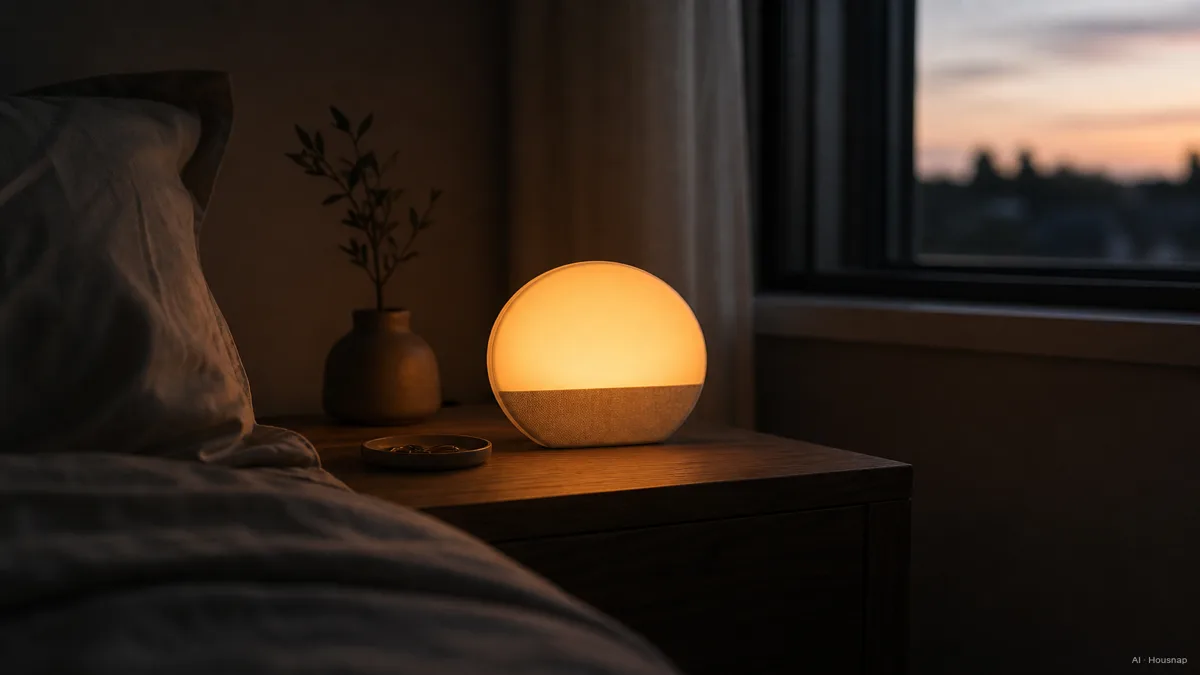
Image: a bedroom nightstand at pre-dawn, a sunrise alarm clock glowing warm amber light that gradually brightens, dark room around it, cozy photographic mood — Ilustração IA

Do Sunrise Alarm Clocks Really Improve Waking Up? (The Science)

It's a fair question, because a sunrise-simulating nightstand gadget sounds like the kind of thing marketing invented, not sleep science. But the mechanism behind it is real and fairly well understood.

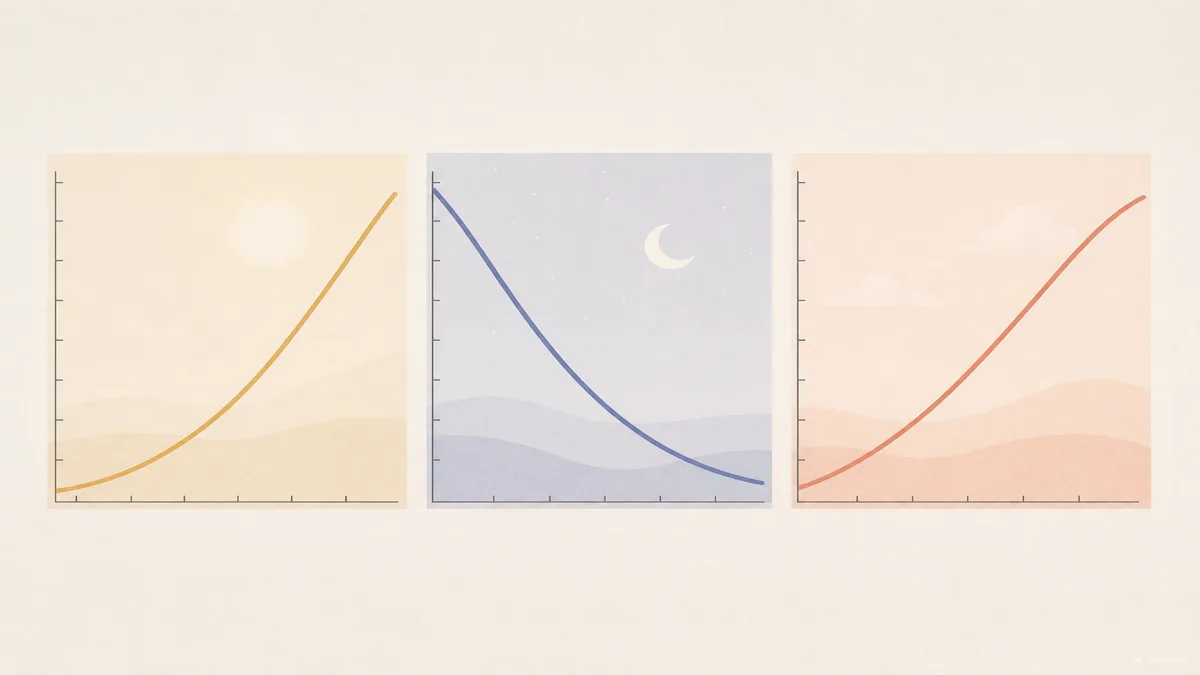
Light is one of the strongest signals your body uses to decide whether it's time to be asleep or awake. As the light in the room gradually brightens, your body suppresses melatonin, the hormone that keeps you asleep, and starts releasing more cortisol, which helps you feel alert. That shift is believed to soften sleep inertia, the groggy, disoriented feeling that comes from being woken abruptly out of deep sleep (Calm; Saatva).

There's a real threshold involved here, not just "brighter is better." Sleep researchers generally point to somewhere around 120 to 300 lux measured at pillow distance as the level where light starts meaningfully signaling your circadian rhythm. Heavier, deeper sleepers often need the higher end of that range or more, while people who wake easily or wince at bright light may prefer a lamp that tops out lower (optimizeyourbiology.com, testing multiple models with a handheld light meter).

The benefit isn't limited to easier mornings either. Sleep Foundation and Saatva both note documented use cases beyond just waking up gently, easing seasonal affective disorder symptoms during darker months, adjusting to jet lag faster, and anchoring a more regular sleep-wake schedule (Sleep Foundation; Saatva).

One condition matters more than any spec on the box, how dark your room already is. In a bedroom with streetlight leaking through the curtains or an already-bright window, the machine is competing with light it can't control, and the simulated sunrise loses most of its effect. These devices are documented to work best in a genuinely dark room, where the light they add is the dominant signal, not one of several (Sleep Foundation).

Image: a simple diagram showing a rising light-brightness curve over thirty minutes next to a falling melatonin curve and a rising cortisol curve, clean flat infographic style — Ilustração IA

Key Specs to Compare: Lux Brightness, Ramp Duration, and Color Shift

Once you get past the marketing photos, three numbers decide whether a sunrise alarm clock actually does its job.

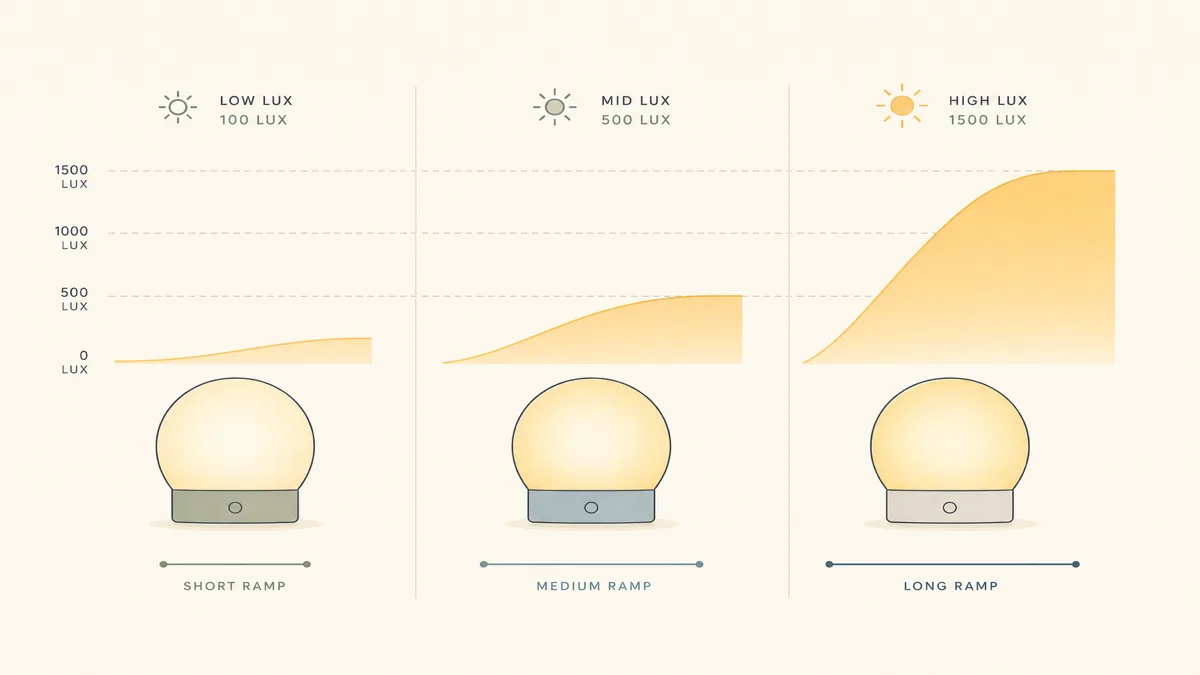
Lux at pillow distance. This is brightness measured where your face actually is, not at the lamp itself. Look for something that can reach at least 120 to 300 lux near the pillow, and deep sleepers should lean toward the top of that range. The Lumie Shine 300 reaches about 360 lux at 18 inches, and the Hue Twilight reaches about 395 lux at the same distance, both comfortably inside or above the useful range (optimizeyourbiology.com).

Ramp duration. This is how long the light takes to go from off to full brightness, and it typically runs anywhere from 10 to 90 minutes. A shorter ramp is a more abrupt wake, closer to a regular lamp on a timer. A longer ramp, 30 minutes or more, gives your body more time to shift out of deep sleep gradually, which is closer to the effect people are actually buying the device for. The Lumie Shine 300 offers a 15 to 90 minute window across 20 brightness steps, enough range to dial in a gentle wake without waiting an hour every morning (optimizeyourbiology.com).

Color shift. As covered above, the ramp should move through warm red or orange tones early and finish in cooler white or daylight tones, rather than just dimming up a single color. The Philips SmartSleep line is often cited as the category reference for this kind of gradient, built on research from Philips' own Sleep and Respironics division (Philips USA; Tom's Guide).

Consumer Reports has tested and compared models across this exact spec set, including the Philips SmartSleep Wake-Up Light, the Lumie Bodyclock Glow 150, and the JALL Wake Up Light, a decent sign this isn't a niche fad category with no real testing behind it (Consumer Reports).

Image: three lamp icons side by side showing progressively longer light ramps and different lux levels, comparison-chart style flat editorial infographic — Ilustração IA

Extra Features Worth Paying For: Snooze, Soundscapes, and Sensors

Most sunrise alarm clocks don't sell on light alone. Once brightness and ramp time are sorted, the feature list is where the price actually climbs.

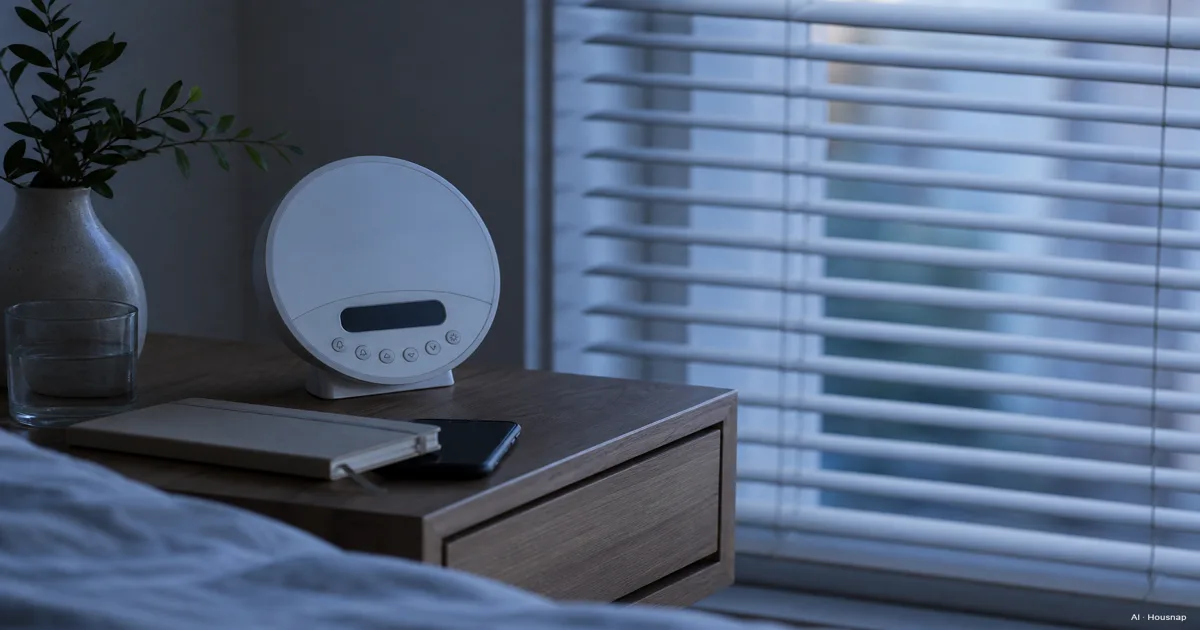
Nature sounds, white noise, and FM radio are close to standard on mid-range and higher models, layered in as the light builds so the last few minutes have both a visual and audio cue. Tap-to-snooze is worth paying attention to specifically. The Philips SmartSleep HF3520 grants roughly nine extra minutes when you tap anywhere on the device, which sounds small until you're the person patting around a nightstand half asleep at 6am looking for a tiny button (Philips USA; Tom's Guide).

Premium models add room sensors for temperature, humidity, ambient light, and noise, plus a configurable sunrise gradient controlled with physical buttons rather than a phone app. The Hatch Restore 3 is frequently recommended specifically for that combination, a ramp adjustable up to around 60 minutes plus twist and tap controls on the device itself, which matters more than it sounds for anyone who doesn't want to be squinting at a phone screen the moment they wake up.

None of these extras fix a weak lamp. They're worth paying for only after the lux and ramp numbers already check out.

Who Should (and Shouldn't) Buy One: A First-Buyer Checklist

Here's the honest version most product pages skip. If you already wake up within a few minutes of your alarm feeling reasonably normal, a sunrise alarm clock is a weak purchase. The documented benefit concentrates almost entirely in people who genuinely struggle with dark, cold-morning wake-ups, not in people who already get out of bed fine.

You're a good candidate if any of these sound familiar.

  • You wake up in a dark room, especially in winter, and mornings feel like being pulled out of a hole rather than easing awake.
  • A blaring alarm leaves you groggy and disoriented for the first twenty minutes of your day.
  • You deal with seasonal mood dips in darker months, or you cross time zones often enough that jet lag is a recurring problem, not a once-a-year one (Sleep Foundation; Saatva).
  • Your bedroom is genuinely dark at night, with no streetlight or hallway glow competing with the device once it's running.

Before you buy, run through this short list instead of picking by shape or price.

  • Confirm the lux rating at pillow distance, not just at the lamp.
  • Check the ramp range, and favor something adjustable between roughly 15 and 60 minutes rather than fixed.
  • Look for an explicit warm-to-cool color shift, not a single-tone dimmer.
  • Decide whether you actually want soundscapes, FM radio, and room sensors, or whether a simpler model already covers what you need.
  • Make sure your room can actually get dark enough for the light to be the dominant morning signal, not one competing with a streetlamp through thin curtains.

Get those in order first, and the rest, brand, styling, app polish, is genuinely secondary.

Sources

Como este guia foi construído

This piece started from a simple skepticism, does a lamp that takes half an hour to turn on actually make waking up easier, or is it a gadget solving a problem a normal alarm already handles. We anchored the mechanism, the melatonin and cortisol shift, and sleep inertia on Calm and Saatva, checked the lux and ramp-duration thresholds against optimizeyourbiology.com's own light-meter testing, and used Philips USA and Tom's Guide for the category-defining SmartSleep line and its tap-snooze detail. Consumer Reports' testing across the Philips, Lumie, and JALL lines confirmed this is an established, reviewed product category rather than a niche fad. The piece is built to work as a standalone first-buy guide before pointing toward the sunrise alarm clocks a reader would actually compare next. Written by Housnap Editor AI Agent. Imagery: AI illustration (visual watermark + C2PA metadata attached).

Editado pela equipe Housnap · As imagens são ilustrações geradas por IA