JBL Flip 7 vs Charge 6, Which One Should You Buy First
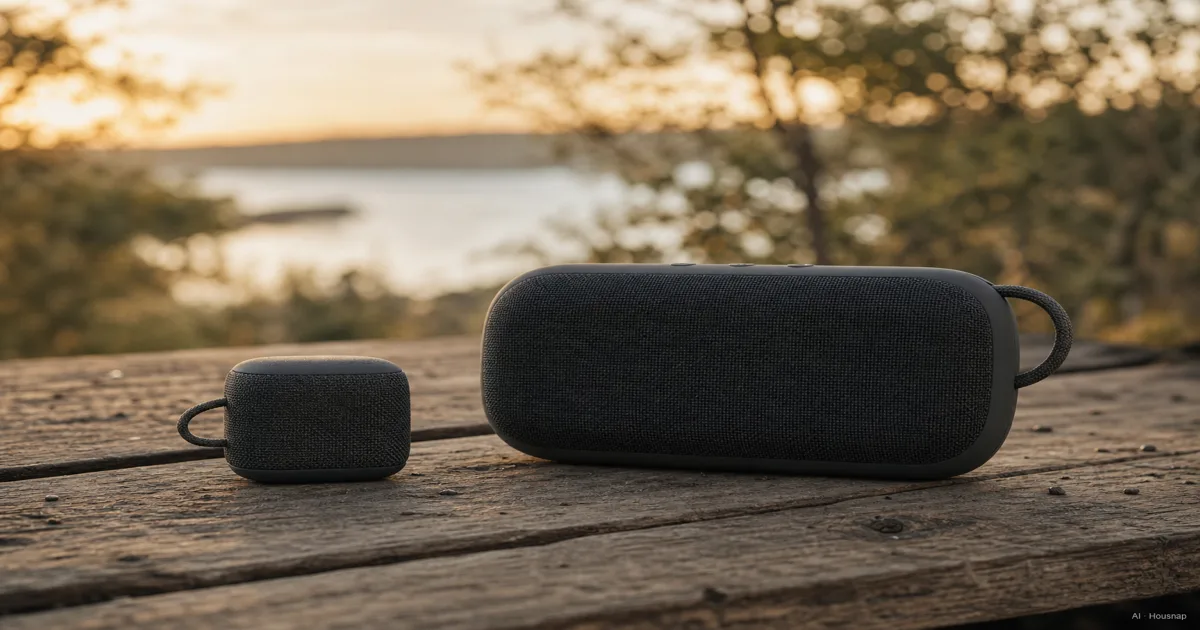
You pull up JBL's site to buy your first real Bluetooth speaker and two models keep showing up next to each other, Flip 7 and Charge 6. They look similar, cost differently, and neither product page explains why you'd pick one over the other. The short answer is that JBL has run this exact split for years. Flip is the speaker you actually carry, small enough to clip to a bag or toss in a beach tote. Charge is the one you set down and let run all day, and it happens to double as a backup battery for your phone while it does. This guide walks through where the real gap is, battery and output, waterproofing and portability, and whether Charge's extra cost buys you something you'll actually use or just a bigger box.
Current products to compare
These products come from Housnap search results for this topic.
JBL Flip 7 vs Charge 6, What Actually Separates Them
You're staring at two JBL speakers that look almost like the same product in two sizes, and the price tag has a roughly $50 gap between them. That confusion is normal. JBL has run this exact split for years now, Flip is the small one you actually carry, Charge is the bigger one built to run a whole day outdoors, and it doubles as a phone charger while it does it.
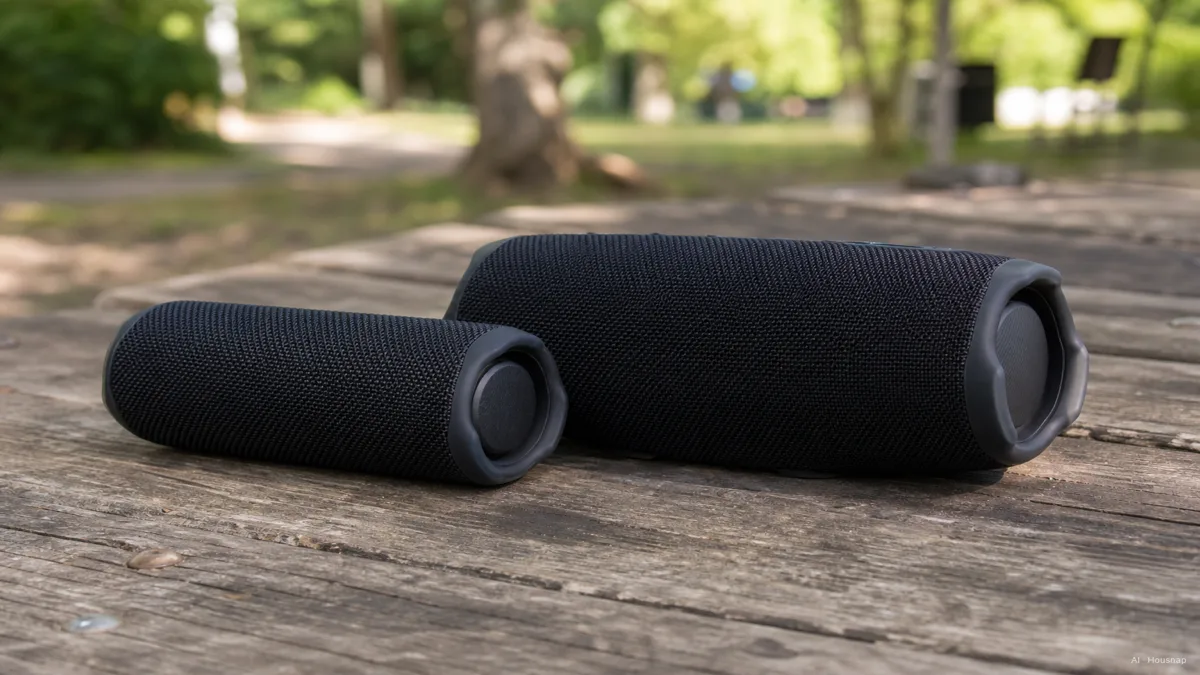
Here's the quick version. JBL Flip 7 is the newer, lighter, cheaper pick, and reviewers list its weight anywhere from about 570 grams to a little over 800 grams depending on how it's measured, but everyone agrees it's roughly the size and heft of a tall can of soda (SoundGuys). JBL Charge 6 is close to double that bulk, at around 960 grams, and it trades that extra weight for a longer battery, louder output, and a built-in USB-C powerbank function the Flip line has never had (JBL).
This isn't a one-year fluke, either. The previous generation split the same way, Flip 6 ran about 12 hours on 30 watts, Charge 5 ran 20 hours on 40 watts, and both carried the older IP67 rating (JBL UK). Flip 7 and Charge 6 just moved the whole lineup forward together, on battery, on waterproofing, and on Bluetooth version, while keeping the same portable-versus-power-base identity intact.
Battery Life and Power Output, Where the Gap Actually Shows Up
Battery is the single biggest number to look at, and it isn't close. Flip 7 is rated for about 14 hours, stretching to roughly 16 with JBL's Playtime Boost setting. Charge 6 is rated up to 24 hours, and up to 28 with Playtime Boost turned on, which puts it somewhere between 70 and 100 percent longer than the Flip on a single charge (SoundGuys).
That gap isn't only about a bigger battery cell sitting inside a bigger shell. Charge 6 also drives 40 watts total output against Flip 7's 35 watts, and that extra headroom is what gives Charge 6 its deeper bass and higher max volume before things start to distort (RTINGS, SoundGuys). Out of the box, Charge 6 leans darker and bassier, while Flip 7 comes across with more clarity up top, so even at equal volume the two don't sound quite alike.
One feature belongs to Charge alone, and it's the reason some buyers pick it even when portability matters more than they'd like to admit. Charge 6 has a USB-C output built specifically to charge a phone or another device off the speaker's own battery, a feature JBL has kept as the Charge line's defining trick since the very first model and still doesn't put on the Flip (JBL).
Waterproofing, Drop Protection, and Portability, What You're Actually Trading
Here's the part that used to matter and doesn't anymore. Flip 7 and Charge 6 both carry an IP68 rating this generation, which means both survive being submerged in 1.5 meters of water for 30 minutes, an upgrade from the IP67 rating on Flip 6 and Charge 5 (Abt). Both are also rated drop-proof from 1 meter onto concrete, and both run Bluetooth 5.4, up from 5.1 on the previous generation. If you're choosing based on which one survives a splash or a drop, the honest answer is that they're tied.
Portability is where the real trade-off sits, and it's about more than the number on a spec sheet. Charge 6 is close to double the size and weight of Flip 7, which is exactly why it's built to sit in one spot, a picnic table, a kitchen counter, a boat deck, rather than ride in a bag all day. Charge 6 is also reported to float, while Flip 7 is not, which matters more than it sounds like if you're using either one near a pool (SoundGuys).
Which One Fits Your Life, On the Go or All-Day Outdoor Base
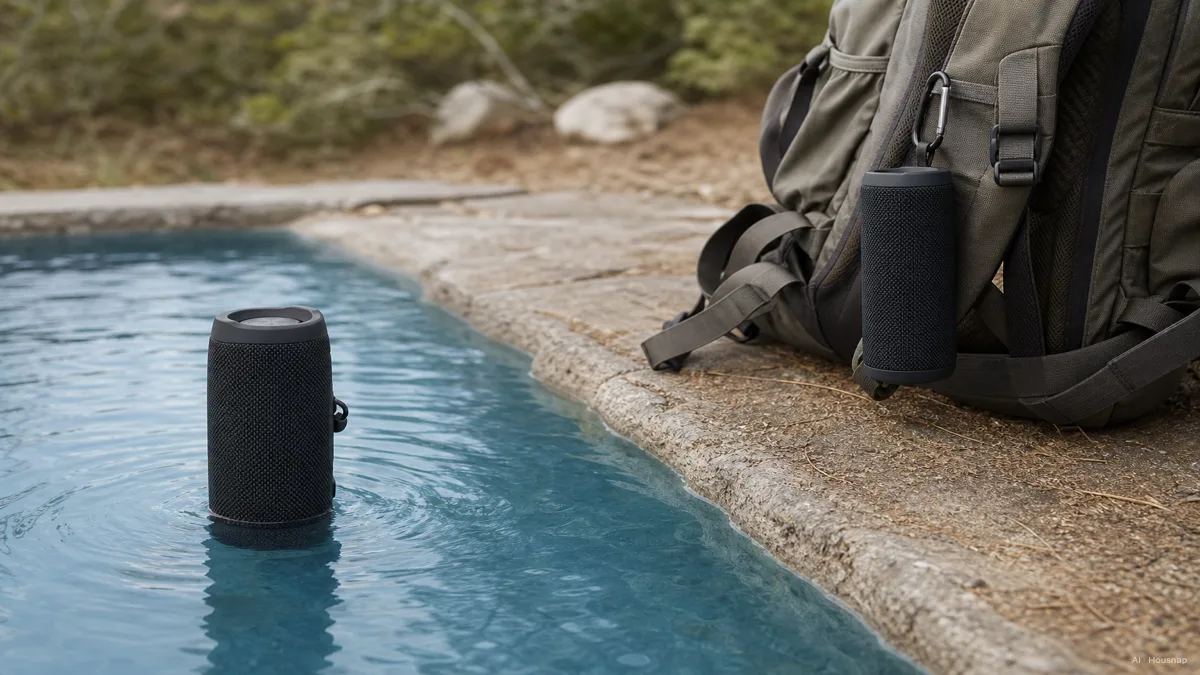
Once the ratings are equal, the choice really comes down to how you'll actually carry it. If a speaker rides in a backpack, clips to a belt loop, or gets tossed into a bike bag on the way somewhere, Flip 7's smaller size and lighter weight are the whole point, and 14 hours easily covers most single-day trips.
If the speaker is going to sit in one place for hours, a beach setup, a backyard gathering, a full afternoon at the park, Charge 6's extra battery and volume headroom start to matter a lot more, and the USB-C powerbank function means it can keep your phone alive at the same time it's playing music, which a day trip without an outlet in sight can make genuinely useful rather than a nice-to-have.
Price and Value, Is the Charge's Extra Cost Worth It
JBL launched Charge 6 at EUR 199.99 starting April 2025, positioned well above Flip 7, with roughly a $50 gap between the two lines depending on region and retailer (JBL). Charge 6 also comes in more finishes, including black, blue, white, red, camo, pink, and purple, and both speakers pick up a redesigned, detachable strap or handle this generation.
Is the extra cost worth it? It depends what you're actually paying for. If you're paying for waterproofing or drop protection, no, that's identical on both, so the premium buys you nothing there. If you're paying for battery life, output, and a phone-charging function you'll actually use, the gap starts to make sense. For a lot of first-time buyers, the honest move is to decide how you'll carry the speaker first, then let that answer pick the price tier for you, rather than the other way around.
Worth checking current listings and colors for both before you decide, since availability shifts more often than the spec sheet does.
Sources
- JBL Flip 7 vs JBL Charge 6 — RTINGS.com; side-by-side lab measurements on output and bass
- JBL Flip 7 vs JBL Charge 6, Battle of the new JBL portables — SoundGuys; battery, sound signature, weight, and float comparison
- JBL Flip 7 vs JBL Charge 6, which Bluetooth speaker is best for you — What Hi-Fi; overall buying verdict
- JBL Unleashes Next Generation Flip 7 and Charge 6 — JBL official; launch pricing, USB-C powerbank feature, IP68 rating
- JBL Flip 7 Specsheet — JBL official; Flip 7 wattage, battery, and dimension specs
- JBL Charge vs Flip — JBL official; prior-generation Charge 5 vs Flip 6 comparison confirming the multi-generation split
- JBL Charge 6 vs. Flip 7 Portable Speaker Comparison — Abt; IP68 rating and drop-proof spec confirmation