Your First Grow Light, What PAR, PPF, and PPFD Actually Mean
You bought a plant that's supposed to survive low light, put it by the brightest window you have, and it's still stretching toward the glass with pale, thin leaves. Or maybe there's no window at all in the room you want to fill with green. This is where a grow light stops being optional, and where most first-time buyers get stuck on the spec sheet. Every listing throws around watts, lumens, and vague words like full spectrum, and none of it tells you what the plant on your desk is actually receiving. Here's the short version. Lumens measure how bright a light looks to a human eye, not how much usable light a plant can photosynthesize with. The number that matters is called PPFD, and it depends on the light's output, the distance to the plant, and how long you leave it on. This guide walks through what that number means, how full spectrum compares to red and blue only LEDs, how far to hang a light and for how many hours, and a short checklist for picking one at whatever budget you're working with. By the end, you'll be able to look at a grow light's spec sheet and know whether it's actually enough light for your plant, instead of trusting the brightest-looking box.
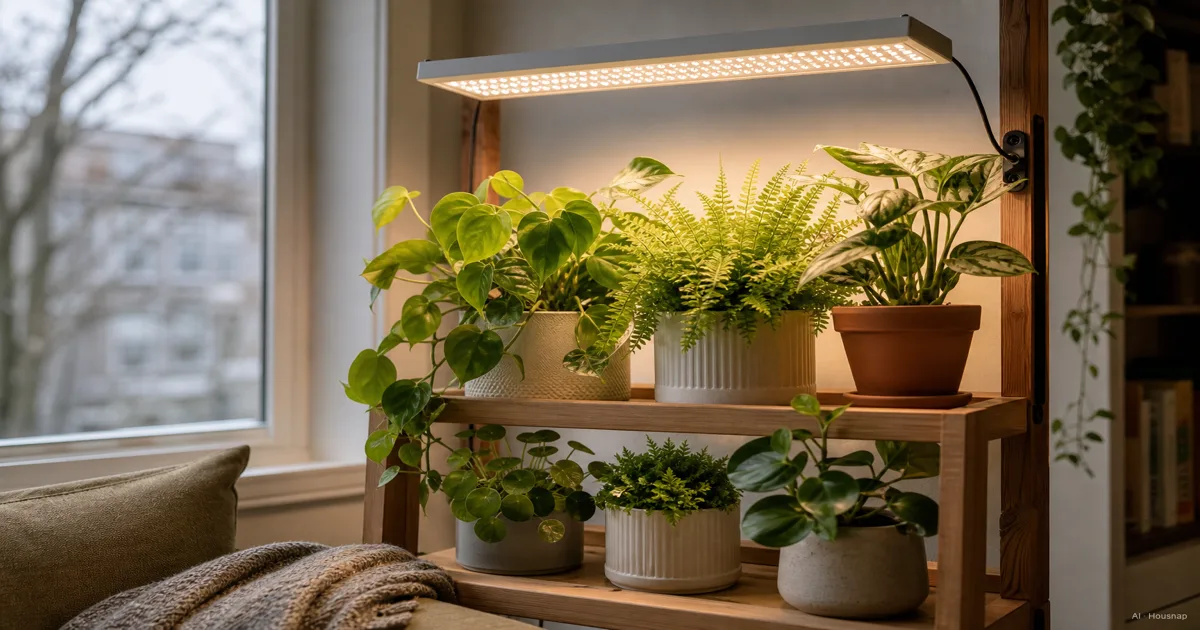
Available now from a single store
These picks currently have one store option each. Price comparison opens up as more stores are tracked.
The moment you actually need a grow light: is your window enough?
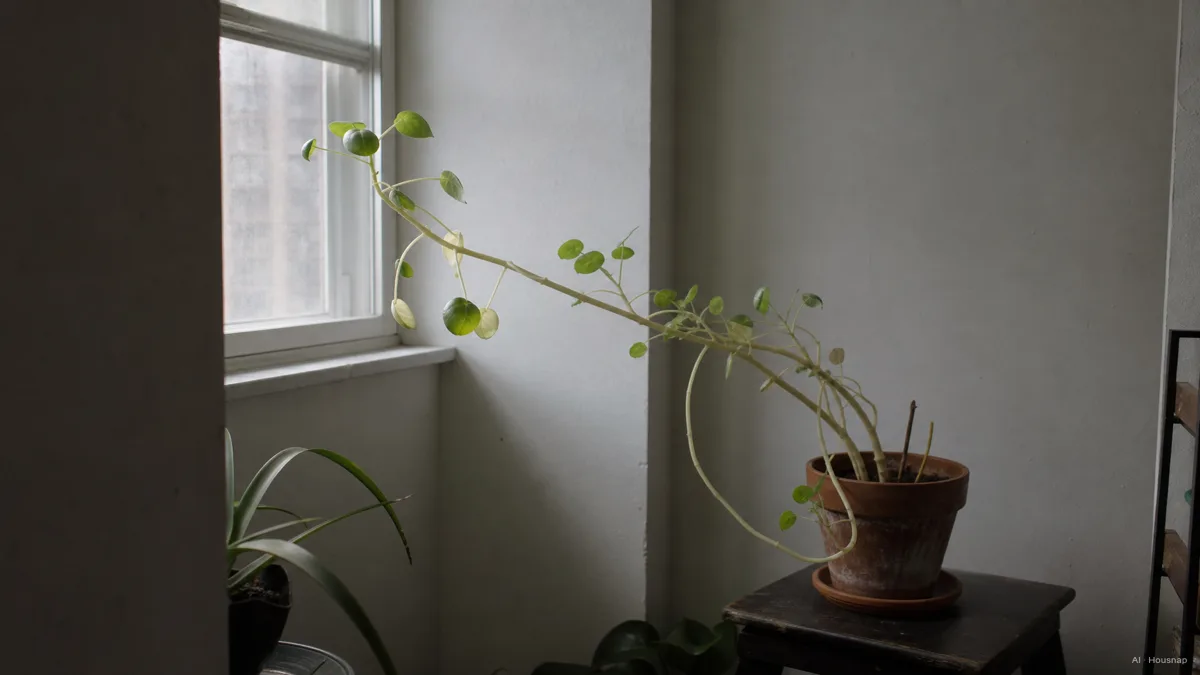
Not every plant on a dim shelf needs artificial light, but plenty do, and the tell is usually visible before you go looking for a spec sheet. Stretched, pale stems reaching toward the nearest light source, new leaves coming in smaller than the old ones, and a variegated plant fading back to plain green are all signs the room isn't delivering enough usable light, even if it looks bright enough to your eyes.
The Royal Horticultural Society points to exactly this gap in its houseplant lighting guidance: winter light levels, north-facing rooms, dark corners, and windowless spaces are the common cases where artificial lighting genuinely helps, and it singles out plants like phalaenopsis orchids and African violets as ones that respond especially well to supplemental light (RHS). If your plant fits that description, or lives somewhere that fails a basic "can I read a book here" test, a grow light isn't an upgrade, it's the thing standing between the plant surviving and slowly fading out.
PAR, PPF, and PPFD: the three letters that actually matter
Grow light listings throw three near-identical acronyms at you, and mixing them up is the single most common beginner mistake.
PAR stands for photosynthetically active radiation, and it's not a number at all. It's just the name for the slice of the light spectrum, roughly 400 to 700 nanometers, that plants can actually use to photosynthesize (Fluence). Think of it as a range, not a rating.
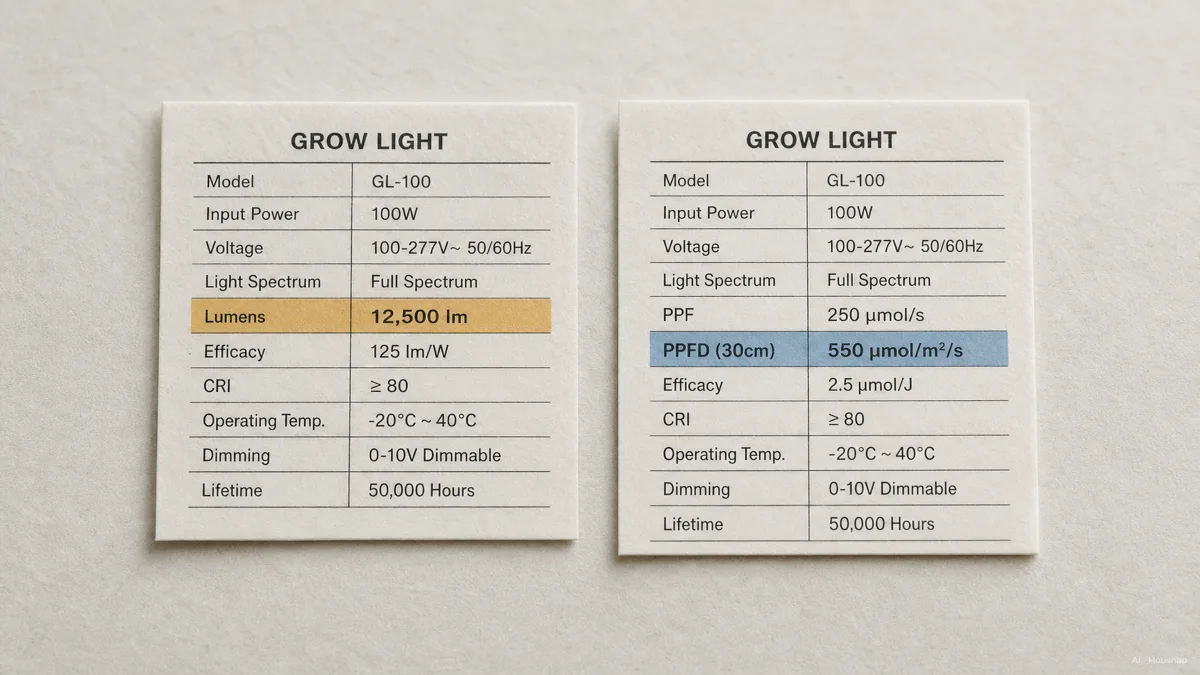
PPF (photosynthetic photon flux) is the total number of PAR photons a light fixture emits every second, measured in micromoles per second (μmol/s). It describes the fixture itself, independent of where you put it or how you angle it (Fluence).
PPFD (photosynthetic photon flux density) is the number that actually matters to your plant. It measures how many of those photons land on each square meter of your plant's canopy, in micromoles per square meter per second (μmol/m²/s) (MokoLight). The same fixture can produce a high PPFD close up and a much lower one if you move it further away, which is exactly why distance matters as much as the light itself.
As a rough target, leafy greens and herbs generally want a PPFD in the 200 to 400 μmol/m²/s range during active growth, while flowering and fruiting plants want more, typically 400 to 900 μmol/m²/s (HG Hydro). Most houseplants sit comfortably at the lower end of that range or below it.
Why lumens are the wrong number to compare
Almost every grow light box still lists lumens somewhere, and it's worth knowing why that number is close to useless for this purpose.
Lumens measure brightness the way a human eye perceives it, and human eyes are most sensitive to yellow-green light around 555 nanometers (Forever Green Indoors). Photosynthesis works differently. Plants rely most heavily on blue light (roughly 400 to 500 nm) and red light (roughly 600 to 700 nm), the two ends of the spectrum human eyes rate as comparatively dim (Cannapio). A light can measure very high in lumens while being a mediocre choice for plant growth, or the reverse, because the two scales are answering different questions entirely.
The practical takeaway: when you're comparing two grow lights, set the lumen number aside and look for PPF or PPFD instead. If a listing only advertises lumens or watts and says nothing about PAR output, treat that as a gap in the spec sheet, not a reason to assume the light is strong.
Full spectrum vs red/blue: which one should a beginner buy
Once you're past the PPFD question, the next real choice is spectrum type.
Full spectrum LEDs produce white light engineered to approximate natural sunlight across the visible range, which means they support a plant through every growth stage, seedling through flowering, without needing to swap fixtures (HG Hydro). They're also simply pleasant to have on in a living space, since the light looks natural rather than tinted.
Red/blue LEDs concentrate output at the two wavelengths plants use most efficiently, which can make them cheaper per photon and useful as supplemental or stage-specific lighting. The tradeoff is a purple-pink cast that most people don't want glowing in a living room, and a spectrum that's tuned for one growth stage rather than general-purpose use (Casyoo).
For a first purchase in a home setting, full spectrum is the more forgiving choice. It covers whatever plants end up under it, in whatever stage they're at, and it doesn't turn your shelf into a nightclub. Red/blue panels make more sense as a second, budget-focused light once you already know what you're growing and why.
Daily hours and the darkness your plant still needs
More light hours is not automatically better, and this is where a well-meaning owner can do real damage.
Most houseplants do well with 12 to 16 hours of grow light a day during active growth, and seedlings or freshly propagated cuttings sometimes benefit from a longer 16 to 18 hour stretch (Mars Hydro; HG Hydro). But every plant also needs a real block of uninterrupted darkness, generally 6 to 12 hours, to process the sugars it built during the day and to avoid photoinhibition, a stress response that shows up when a plant gets light around the clock with no break (Urban Leaf; HG Hydro). Running a light 24 hours a day is not a shortcut to faster growth for nearly any houseplant, it's closer to leaving a lamp on over someone who never gets to sleep.
A simple plug-in timer removes the guesswork entirely. Set it once for a 12 to 16 hour window that matches your plant's stage, and the light turns itself on and off at the same time every day without you remembering to flip a switch.
Distance from the plant: what wattage actually changes
The right hanging distance depends heavily on how powerful the fixture is, and getting this wrong in either direction either starves the plant of light or risks leaf burn.
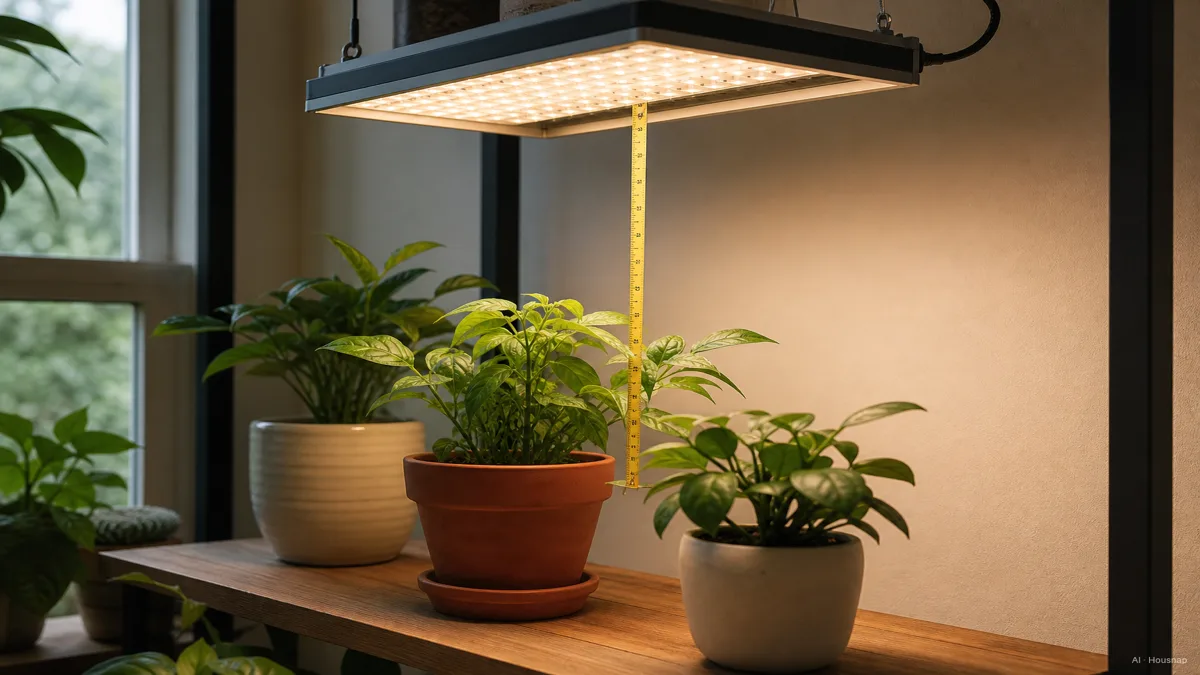
Lower-wattage fixtures, in the range of roughly 200 watts, are typically hung about 12 to 20 inches above the canopy. High-wattage fixtures at 1000 watts or more need far more clearance, generally 36 to 46 inches, since their output is concentrated enough to scorch leaves at close range (Spider Farmer). Growth stage matters too: seedlings generally want the light held further back, around 24 to 36 inches, while plants in active vegetative growth can sit closer, typically 18 to 24 inches (Urban Leaf).
If you're setting up more than one plant on a shelf, a rough area-based rule helps as a sanity check. Most home grow setups land somewhere around 20 to 40 watts per square foot of canopy, with light-sensitive plants sitting toward the lower end and typical houseplants comfortable around 20 to 30 watts (Trimleaf). None of this needs to be exact on day one. Start at the middle of the recommended range for your fixture's wattage, watch the plant for a week, and nudge the light closer if growth looks stretched or further back if leaf edges start to look scorched or bleached.
A budget-tier checklist for picking your first grow light
With the vocabulary in hand, narrowing an actual purchase comes down to a short list of questions.
Does the listing show a PPF or PPFD number, not just watts or lumens? If the only numbers on offer are watts and lumens, that's a listing that hasn't done the work of measuring what actually matters for plant growth.
Is the spectrum full or red/blue only? Full spectrum is the safer first purchase for a home setting; red/blue makes sense once you already know you want a second, stage-specific light.
Does the fixture include or support a timer? A basic plug-in timer is inexpensive on its own, and pairing one with the light from day one avoids both the overexposure and the forgetting-to-turn-it-off problem.
Is the wattage matched to your space? A single small clip light suits one shelf plant; a wider panel makes more sense for a multi-plant shelf or a windowless room you're trying to fully substitute for daylight.
What's the efficiency, if listed? Recent LED grow lights built around efficient diode boards can reach notably higher light output per watt than older, budget panels, which matters most if you're running the light many hours a day and thinking about the electricity cost over a year (Gorilla Grow Tent). It's a nice-to-know for a first purchase, not a dealbreaker if the rest of the checklist holds up.
None of this requires the most expensive panel on the shelf. It requires a light that states its PPFD, runs full spectrum for a beginner setup, sits at the right distance and duration for your plant, and turns itself off at night.
How this guide was built
This topic extends Housnap's plants-and-gardening cluster into the artificial-lighting decision, and it's built around the gap between how bright a room looks and how much usable light a plant actually receives. We anchored the PAR, PPF, and PPFD definitions in Fluence and MokoLight's horticulture lighting references, drew the lumens-versus-PAR mismatch from Forever Green Indoors and Cannapio, took the daily light and darkness requirements from Mars Hydro, HG Hydro, and Urban Leaf, and pulled the distance-by-wattage guidance from Spider Farmer and Trimleaf. The Royal Horticultural Society's houseplant lighting guidance anchors the "do I even need this" framing at the top. Housnap's Home and Garden range is still building out depth in this specific sub-category, so the checklist stays focused on spec literacy and selection criteria rather than claims about a specific in-stock lineup.