Your First Smart Bulb, Reading Color Temperature and Picking the Right White
You decide to buy your first smart bulb and the listing hits you with a number. 2700K. 4000K. 6500K. It sits there with no explanation, next to words like warm, cool, and daylight that sound like they should mean something obvious but don't quite. The number is color temperature, and it is the single most important spec on the box. It decides whether your living room feels like a cozy evening or a convenience store at midnight. The confusing part is that the scale runs backwards. Low numbers give you warm, amber light. High numbers give you cool, blue-white light. Most people guess it the other way around the first time. This guide reads the Kelvin scale for you, maps the three white zones to the rooms you actually have, sorts out whether you need color or just adjustable white, and explains why a single tunable bulb can change through the day to help you sleep.

Produtos atuais para comparar
Estes produtos vêm dos resultados da Housnap para este tema.
What Is Color Temperature? Kelvin Explained for First-Time Buyers
Color temperature describes the color of white light, and it is measured in degrees Kelvin, written with a K. The whole scale comes from physics: heat a piece of metal and it glows, first a dull red, then orange, then white, then blue-white as it gets hotter. The Kelvin number on a bulb is the temperature that metal would need to reach to glow that exact color, as the Wikipedia entry on color temperature lays out.
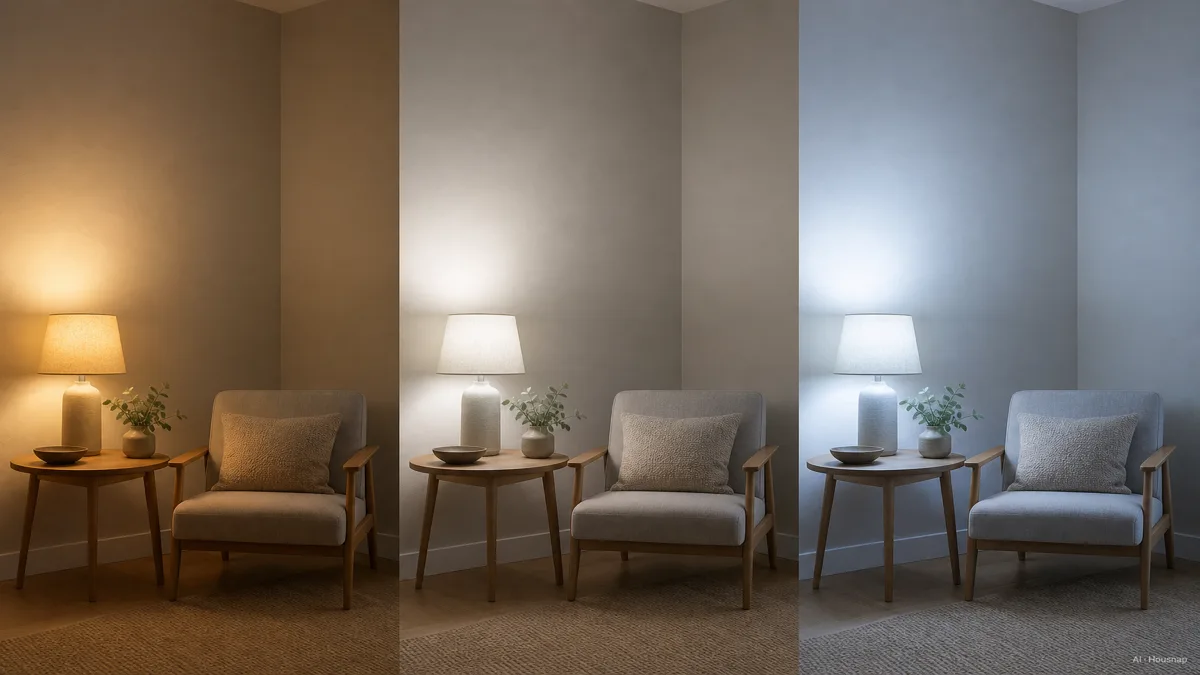
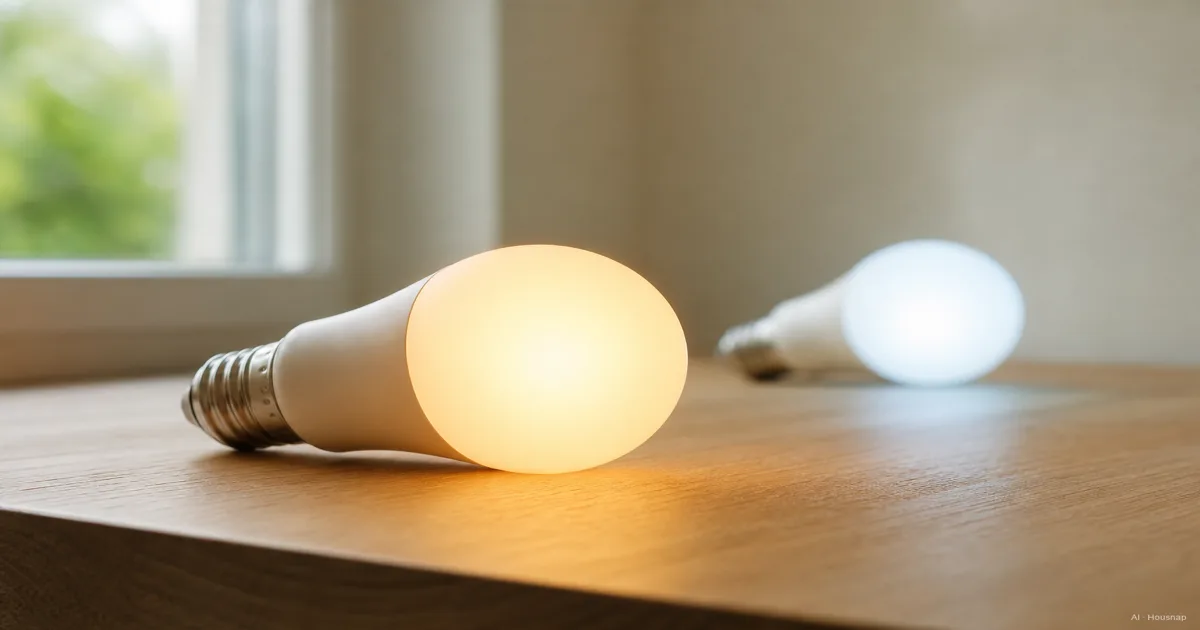
Here is the catch that trips up almost everyone the first time. Lower Kelvin numbers look warmer, and higher numbers look cooler. It feels backwards, because in everyday speech "warm" and "hot" go together. But a 2700K bulb glows amber and cozy, while a 6500K bulb is crisp and blue-white. The consumer range you'll see runs from about 2000K at the warm end to 6500K at the cool end.
Behind those labels sits an actual standard. In the U.S., ANSI C78.377, updated in 2024, defines the precise color ranges that LED products are allowed to call "warm white," "daylight," and everything between. So when two bulbs both say 3000K, that label is doing real work, not just marketing.
Once that one fact clicks, lower is warmer, the rest of the decision gets simple. You are no longer guessing from a photo of a glowing bulb. You are reading a number that means something specific.

Warm, Neutral, or Daylight: Which Color Temperature for Which Room?
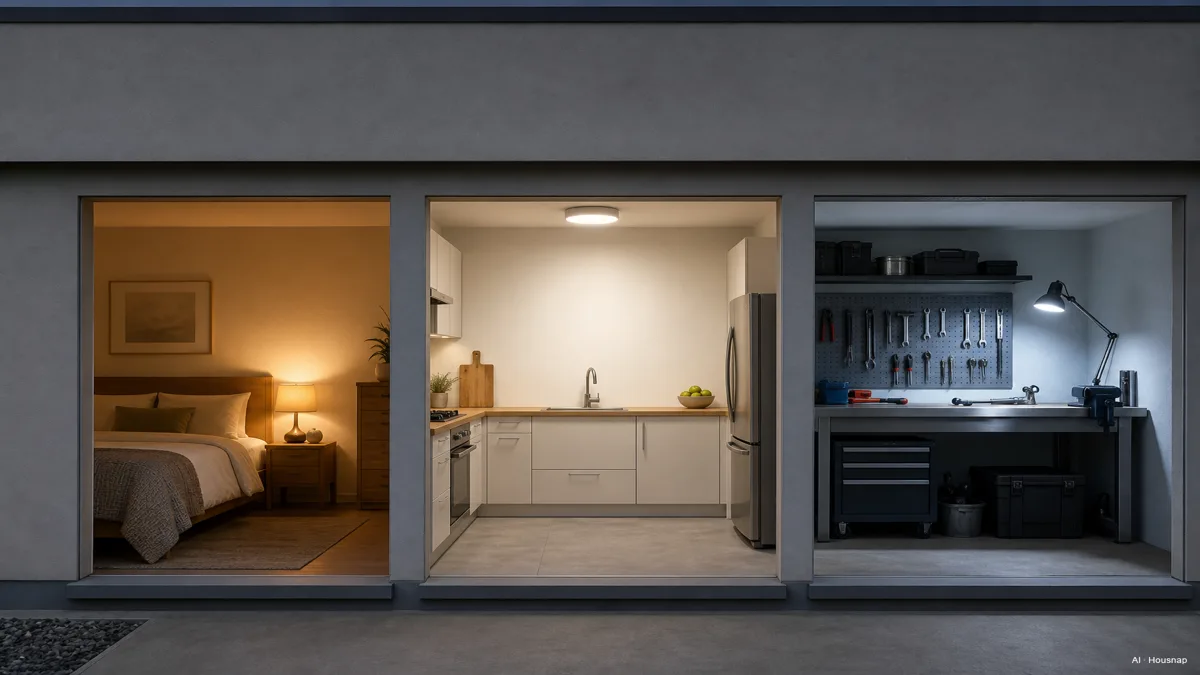
Now the fun part, because this is where the number turns into a feeling in a room. There are three rough zones, and each one belongs somewhere.
- Warm White, 2700K to 3000K. This is the glow of an old incandescent bulb, soft and amber. It is the right light for bedrooms, living rooms, and dining areas, anywhere you want to relax and wind down. Feit Electric's color guide treats this as the default for living spaces, and it is the safest first pick if you only buy one bulb.
- Neutral or Cool White, 3500K to 4500K. A clean, plain white with no amber tint and none of the harshness of full daylight. It belongs in kitchens, home offices, and bathrooms, the rooms where you need to see clearly to chop, read, or get ready, but don't want it to feel like a hospital.
- Daylight, 5000K to 6500K. This mimics bright midday sun, crisp and blue-white. It is for garages, workshops, craft rooms, and reading nooks, places where you want maximum visual sharpness over coziness. Put it in a bedroom and the room will feel awake when you want it calm.
The honest shortcut: if you are buying one bulb and overthinking it, warm white at 2700K is hard to regret in a living space. The mistakes happen at the edges, daylight in the bedroom, or warm white over a kitchen counter where you're trying to read a recipe.

Tunable White vs. Full Color: Do You Need RGB?
Smart bulbs come in two tiers, and the gap between them is where first-time buyers overspend. Knowing which one you actually need saves real money.
Tunable white bulbs adjust two things: brightness, and color temperature along that warm-to-cool Kelvin line. So a single bulb can be cozy 2700K at night and crisp 4000K in the morning, all from your phone. This tier is cheaper, and for the way most people light most rooms, it covers the whole job.
Full color, often labeled RGB or RGBW, adds the ability to set any color, red, green, deep blue, and still do tunable white on top. This is the tier that does movie-night purple and holiday red. It is genuinely fun, but it costs more, and outside of an accent lamp or a kid's room, the color sits unused most of the time.
The plain truth, which even a beginner's guide from TechRadar is candid about, is that for everyday rooms, tunable white alone covers what you'll actually use. Buy color where color earns its place, a living room accent, a play space, a setup you genuinely want to change with your mood, and save the money on every ceiling fixture where a clean adjustable white is all anyone notices.
Circadian Lighting: How Smart Bulbs Support Sleep and Energy
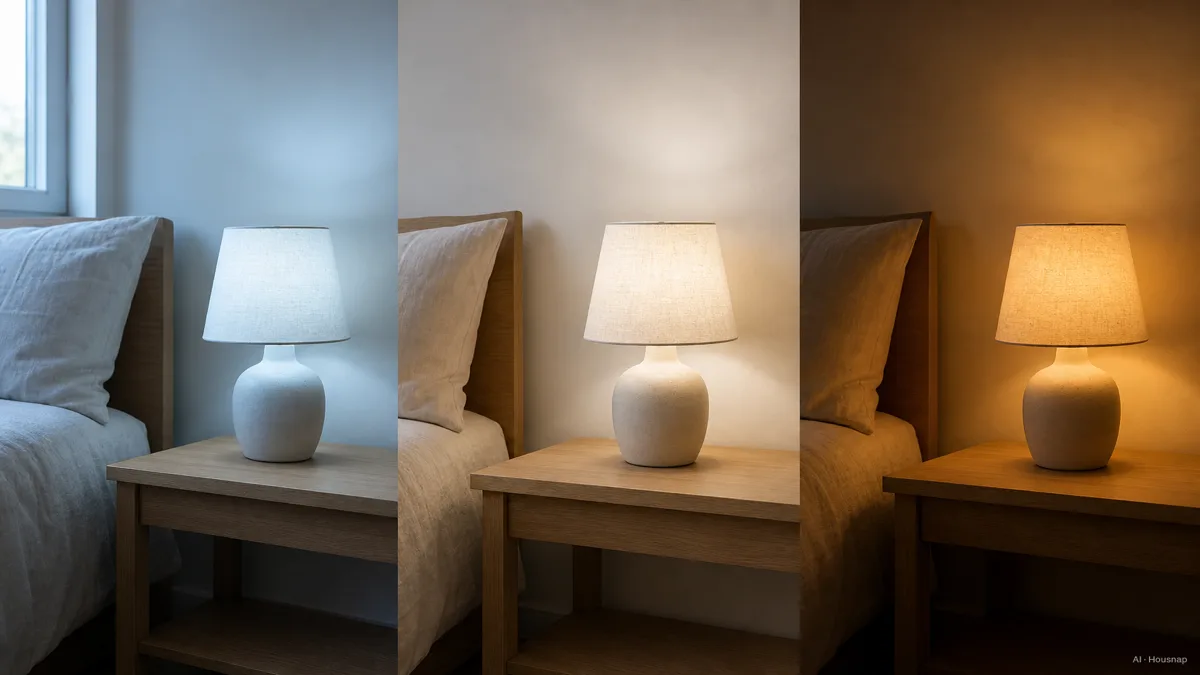
Here is the feature that turns a smart bulb from a gadget into something that quietly changes your day. A tunable-white bulb can shift its color temperature automatically as the hours pass, cool and bright in the morning, warm and dim by evening. This is called circadian lighting, and it mimics how natural daylight moves.
The reasoning is biological. Cool, blue-rich light in the morning signals your body to be alert, while warm, low light in the evening lets melatonin, the sleep hormone, rise on schedule. A practical day runs from around 5000K to 6500K in the morning down to roughly 2200K to 2700K at night, as guides like SmartHomeExplorer's circadian lighting walkthrough describe.
This is not just wellness folklore. A peer-reviewed study published in the National Library of Medicine found that tunable lighting shifting from 6500K in the morning to 2700K in the evening improved both sleep quality and cognitive performance in older adults. The light was doing measurable work.
One practical default worth remembering: for the hour or two before sleep, keep the bulb in the 2200K to 2700K range so it doesn't suppress melatonin, with about 2500K a comfortable evening setting. This single habit is the most underrated reason to choose a tunable bulb over a fixed one.

Brand and Budget Comparison: Govee, Kasa, LIFX, Philips Hue
Once you know the color temperature you want and whether you need color, the brand choice gets practical. A few names cover almost every first purchase, and they split cleanly by budget and ambition.
Govee and Kasa (TP-Link) are the entry-level picks. A Govee RGBW A19 four-pack tends to run in the high twenties to low thirties, and a Kasa four-pack often lands under thirty dollars, which makes either a low-risk way to light a whole room at once. Govee A19 bulbs reach around 800 lumens, Kasa's KL110 around 850, plenty for most fixtures.
LIFX sits a step up, with single bulbs roughly twenty to thirty-five dollars and a notable brightness edge, the LIFX A19 Color tops out at 1,100 lumens, tied for the brightest among popular smart bulbs and matched only by the Wyze Bulb Color. LIFX also runs without a hub, talking straight to your Wi-Fi.
Philips Hue is the premium, do-everything tier. Its White & Color Ambiance bulbs cover 2200K to 6500K, the widest Kelvin range of any mainstream smart bulb, which makes Hue the most versatile single-bulb choice for the circadian routine above. The trade-off is price and a bridge hub for the full experience.
For a first buyer, the sensible move is to start cheap where it doesn't matter and spend up only where it does. A Kasa or Govee multipack lights the everyday rooms; one Hue or LIFX bulb earns its keep in the spot where you actually want the full range. Engadget's roundup of the best smart bulbs sorts these same brands along that exact value line.
A Short Checklist Before You Buy Your First Smart Bulb
Once the Kelvin scale and the tiers make sense, the whole decision shrinks to a few honest questions.
What room is it for, and how do you use that room? Relax or unwind points to warm white, 2700K to 3000K. Focus or task work points to neutral, 3500K to 4500K. A workshop or reading corner can take daylight.
Do you actually want color, or just adjustable white? Be honest about whether you'll use red and purple more than twice a year. If not, tunable white is cheaper and covers the real job.
Do you care about sleep and energy through the day? If yes, choose a tunable-white bulb so it can run cool in the morning and warm before bed, and remember 2200K to 2700K as the evening zone.
How bright does the fixture need to be? Check the lumen number, not the wattage. Around 800 lumens suits most rooms, and 1,100 is the bright end if you're lighting a large space from one bulb.
What's your budget per room? A multipack from Kasa or Govee lights a whole room cheaply, while a single Hue or LIFX bulb is worth it in the one spot you'll fuss over.
Answer those and you are no longer picking by a number you don't understand. You are matching a specific white, a specific tier, and a specific brand to the room and the routine you already live in.
Sources
- Color temperature — Wikipedia; how Kelvin describes white light and why lower numbers look warmer
- ANSI C78.377-2024 solid-state lighting — ANSI; the 2024 U.S. standard defining the color ranges behind warm white, daylight, and the rest
- How to choose the right color light temperature — Feit Electric; warm, neutral, and daylight zones mapped to room types
- A beginner's guide to smart lighting — TechRadar; tunable white versus full color, and why most rooms need less color
- Smart bulbs, circadian rhythm, and sleep — SmartHomeExplorer; circadian schedules and the 2200K to 2700K evening zone
- Tunable lighting and sleep in older adults — National Library of Medicine; peer-reviewed study on 6500K-to-2700K lighting improving sleep and cognition
- The best smart LED light bulbs — Engadget; brand and budget tiers from Govee and Kasa up to LIFX and Philips Hue