Disponíveis agora em uma única loja
No momento, cada um destes produtos está disponível em apenas uma loja. A comparação de preços abre com mais lojas.
Look for room to move in the construction
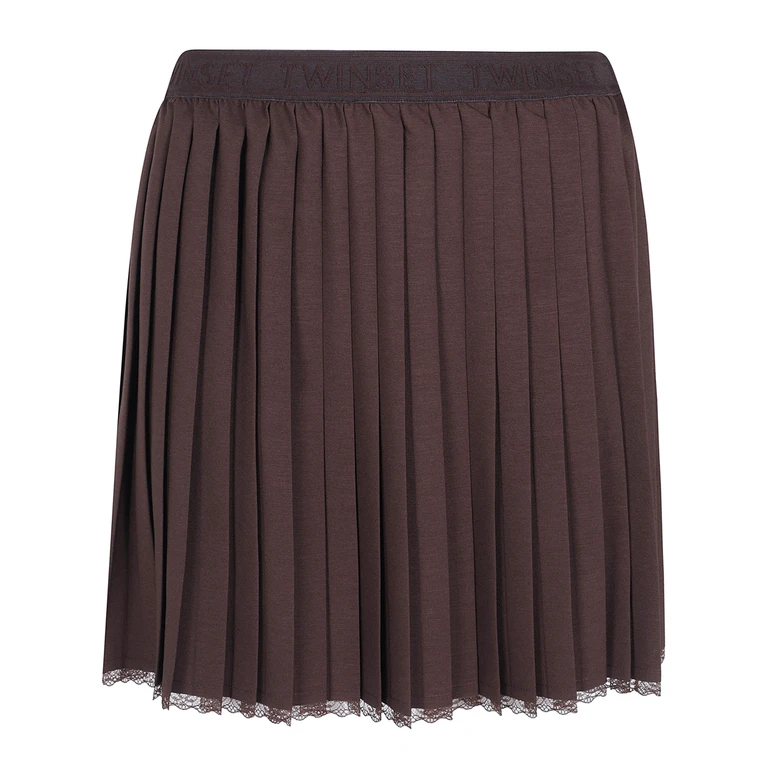
A pleated skirt is a useful starting point, not an automatic comfort winner. Seamwork explains that pleats fold fabric into a narrower width while still allowing movement. It also distinguishes opening pleats from tucks, which are sewn down entirely or nearly entirely. Look closely at where the folds are secured and where they can open.
For a pencil skirt, inspect the lower opening rather than dismissing the whole shape. Seamwork’s Selene design includes a finished vent, but that feature is specific to the design. Check your candidate’s actual slit or vent, its position and the fabric around it.
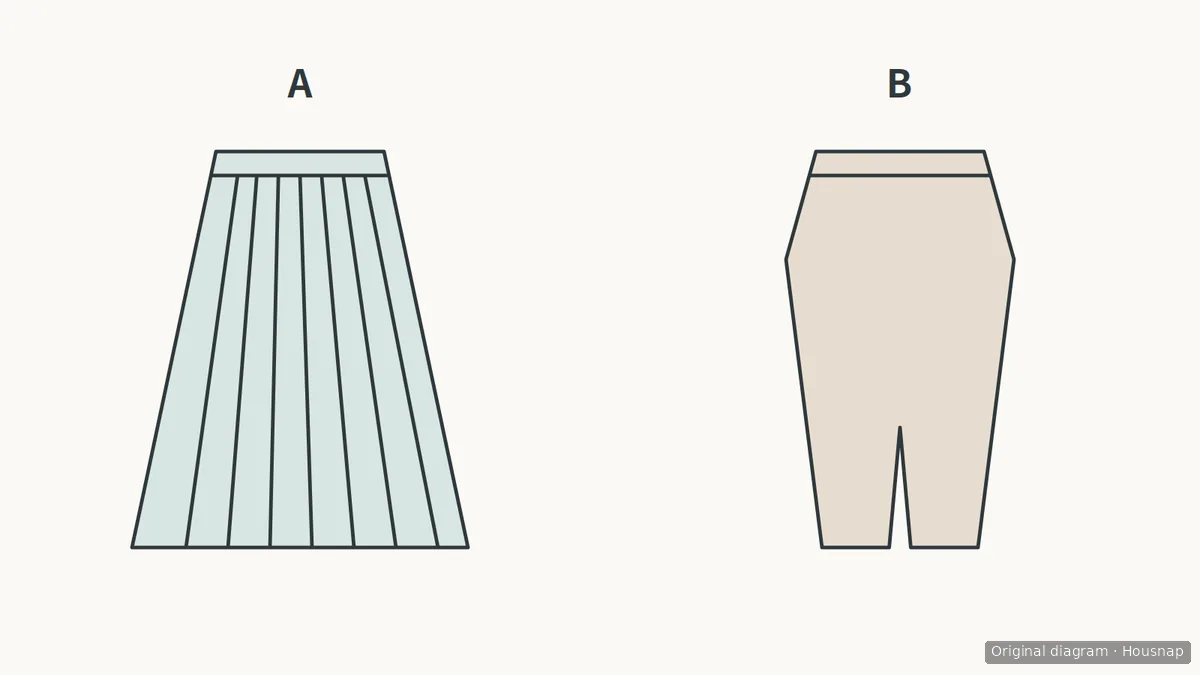
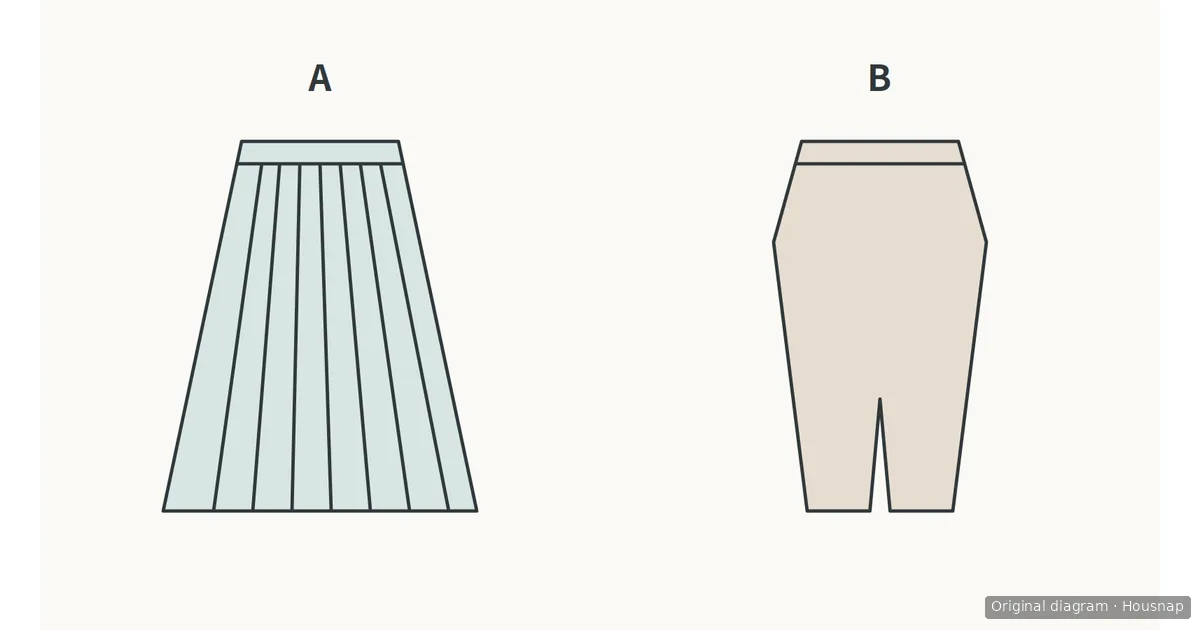
A shows a pleated example; B shows a narrow skirt with a simple slit. These are construction cues, not measured garments or a promise of walking room. B does not reproduce Selene’s vent, and the drawing cannot establish stretch, lining room or seated coverage.
Walk at your usual pace
Try both candidates with the top you intend to wear, including tucking it in if that is your plan. Tilly and the Buttons’ Arielle fitting guide explicitly includes the tucked-in top and checks whether the wearer can walk and sit comfortably. The following comparison adapts those fitting checks for buying ready-made skirts.
Walk normally, turn and walk back. Do you shorten your stride, pull the hem aside or keep moving the waist back into place? Treat those observations as reasons to try another size or construction, rather than assuming the fabric will become comfortable later.
If ordering online, check both waist and hip measurements against the seller’s chart. Tilly’s body-measuring method uses the natural waist and widest hips, with a level tape and normal breathing; use a flexible tape you already own. First establish whether the seller lists body or garment measurements. The same guide notes that matching body measurements do not mean two people have the same shape, so numbers narrow the shortlist rather than settle the choice.
Sit down before deciding
Use an ordinary chair and sit as you normally would. Keep your planned underwear and tucked-in top in the comparison.
- Check whether the waist presses uncomfortably, rolls or shifts to a position you do not want.
- Look at the hem and opening while seated. Are you happy with what remains covered, without repeatedly pulling the skirt down?
- Notice whether the outer skirt or lining pulls across your lap. Stand again and see whether you need to rearrange the garment.
Do not judge a lined skirt only by its outer folds. Tilly’s construction guidance requires corresponding adjustments to the lining when the skirt fit changes. For a ready-made purchase, the useful implication is to assess the complete garment, not assume that roomy pleats establish room underneath.
Let the failed check decide the next candidate
Choose the pleated option when it gives you the stride and seated room you want without an uncomfortable waist. Choose the pencil option when you prefer its shape and it passes the same checks. Neither fabric softness nor the presence of a slit replaces trying the actual skirt.
If both restrict your movement, keep looking. If the hips feel right but the waist does not, compare another cut rather than automatically increasing every measurement. If the only remaining problem is a long hem meeting your shoes or stairs, resolve length separately before buying.
Check return conditions before ordering and before any alteration. Once you have chosen a skirt, an unresolved storage question can continue with how to support skirts and other clothes in your wardrobe.
Como este guia foi construído
This article was written by AI for Housnap using Tilly and the Buttons’ skirt-fitting guidance and Seamwork’s pleat tutorial and pencil-skirt design description. It adapts those sources into a ready-to-wear buying comparison; the movement checks are editorial guidance, not original wear testing or a guarantee about a particular product.