Aktuell bei einem Shop erhältlich
Diese Produkte sind derzeit jeweils nur bei einem Shop erhältlich. Der Preisvergleich öffnet sich mit weiteren Shops.
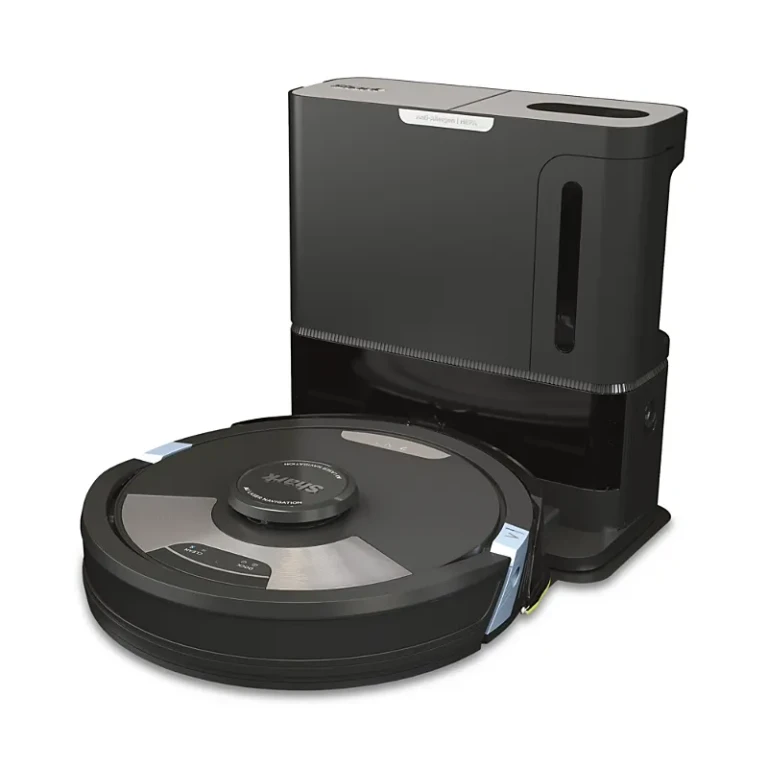
Choose the chore you want to stop doing
Think about your last floor clean: was most of the work picking up loose debris, wiping marks, or doing both? That gives you a more useful shortlist than the number of features on the box.
- Vacuum-only: start here if dry pickup is the priority and you are happy to mop separately. Compare the particular model's suitability for your carpet, rather than assuming every vacuum-only robot cleans it better.
- Mop-only: consider this when your existing vacuuming routine works and wiping suitable hard floors is the chore left over.
- Vacuum-mop combo: shortlist this when you want both jobs in one machine. Judge its vacuuming and mopping separately; the category name does not settle either result.
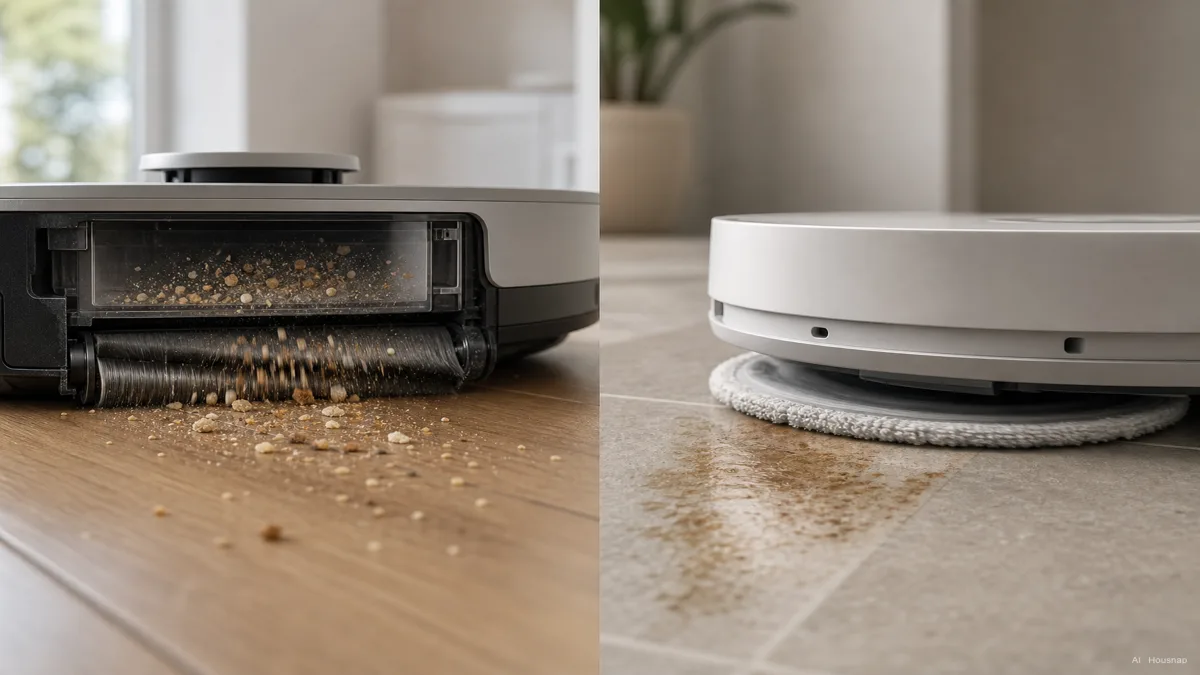
A vacuum's side brushes guide debris inward, while its main brush and suction collect it in a bin. A combo adds mopping to that job. ECOVACS explains the mechanisms.
Mop-only does not necessarily mean wet cleaning only. The Braava jet m6 has dry-sweeping pads too, but iRobot still recommends vacuuming larger debris first. That is why a mop-only robot is not our default first purchase for a home without dry pickup already covered. Braava m6 guide.
If you are still choosing your home's main cleaning tool, revisit cordless stick versus robot vacuum before deciding which robot to buy.
Check the floors and the route between them
Before paying for mopping, identify your flooring and ask its manufacturer whether the intended wet-cleaning method is suitable. Match that answer to the robot's instructions. If you cannot confirm compatibility, leave that area out of the mopping plan.
Then trace the route from the dock to each room. A rug across the doorway matters even if most of the home is hard flooring. Check the candidate's carpet settings and whether its instructions call for avoidance, mop removal or lifting.
Roborock recommends its supported automatic mop-lift mode for short-pile carpet. The Roomba Combo j7 uses a different arrangement, lifting and tucking its pad away. Neither description is a promise about every combo. Roborock carpet guidance; j7 manual.
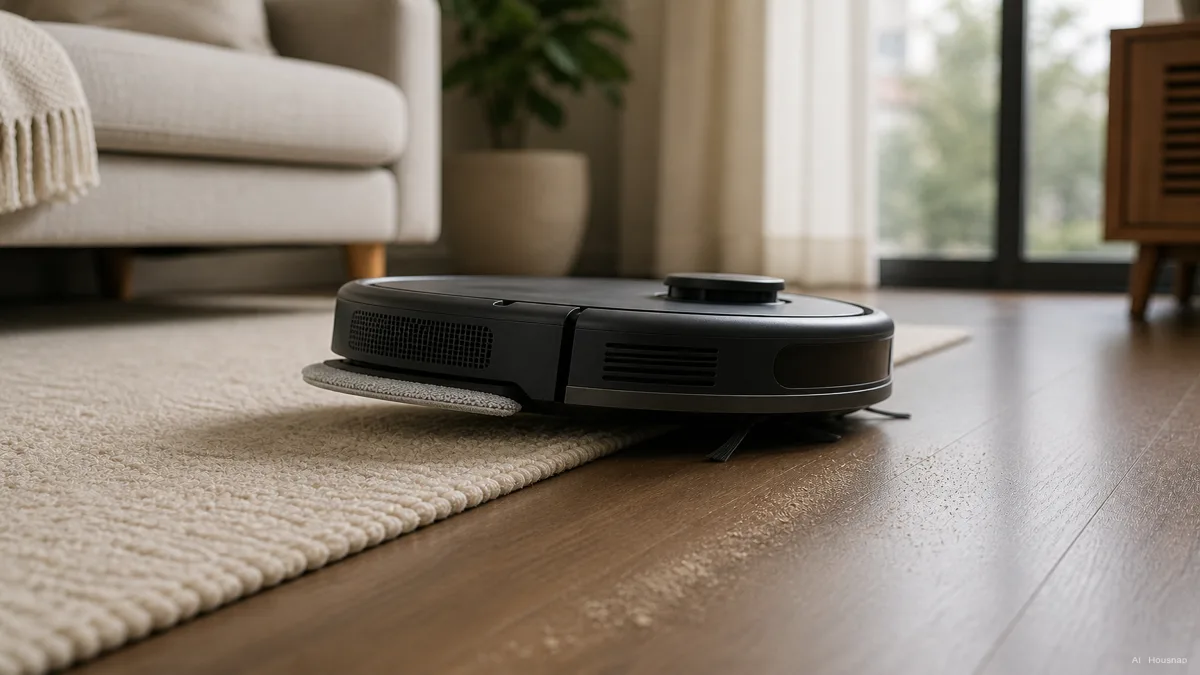
The illustration shows the lift principle, not guaranteed clearance over your rug. If the specified carpet limits do not fit, choose an approved avoidance or pad-removal arrangement, or keep vacuuming and mopping separate.
Also separate mopping from spill pickup. The Qrevo S manual prohibits operation over liquid or sticky substances. Clear those messes yourself unless the exact machine explicitly permits them. Qrevo S manual.
Compare access and controls before headline specs
For each remaining candidate, measure the lowest furniture gap, note doorway thresholds and reserve the dock space stated in its manual. Ask the seller for the exact model's dimensions and limits when the listing leaves them out.
LiDAR uses laser distance measurements and can map in darkness; visual mapping uses images and depends on lighting. Some robots combine technologies. ECOVACS navigation guide. If cleaning in dim rooms or managing a complicated layout is your next deciding factor, compare LiDAR and camera navigation.
For everyday use, check whether you can select rooms, exclude areas and choose vacuum-only cleaning. Treat obstacle recognition as a separate question from mapping: even the j7 manual asks users to remove excess clutter. j7 manual.
Do not let a suction figure settle the purchase. Ask how the candidate handles your carpet and debris, and how its mop works and is cleaned. Prefer evidence for the exact model and relevant surface over a blanket claim that one category always wins.
Choose the maintenance you can live with
Open the maintenance instructions before choosing the dock. Write down the parts you will empty, wash and replace, then check their exact compatibility and cost.
- Dust collection: compare manual bin emptying with the proposed dock's arrangement. If it uses bags, include those in the budget.
- Mopping: check who cleans the pads, refills clean water and empties dirty water. For example, Qrevo S still requires dirty-water tank care despite its automated dock.
- Dock cleaning: Q Revo's removable mop-washing tank needs manual cleaning too. Automatic washing does not eliminate every wet-cleaning chore.
The Qrevo S manual and Q Revo cleaning-tank guidance show why the dock's maintenance page belongs beside its feature list.
Buy cleaning fluid only after checking the robot's approved products and the floor's requirements. Bona also tells buyers to check machine restrictions and warns that overdosing can cause foam and streaks. Bona guidance.
Your final choice should pass three checks: it handles the chore you want to reduce, has a workable plan for every relevant floor and rug, and leaves you with upkeep you will actually do. If mopping fails those checks, start with vacuuming; if dry pickup is already easy, a dedicated mop remains a sensible alternative.
Wie dieser Guide entstand
Written by Housnap's AI editor using manufacturer manuals and guidance from iRobot, Roborock, ECOVACS and Bona. The article turns documented functions and limitations into a first-purchase checklist; the purchase priorities are editorial judgments, not results from hands-on product testing.