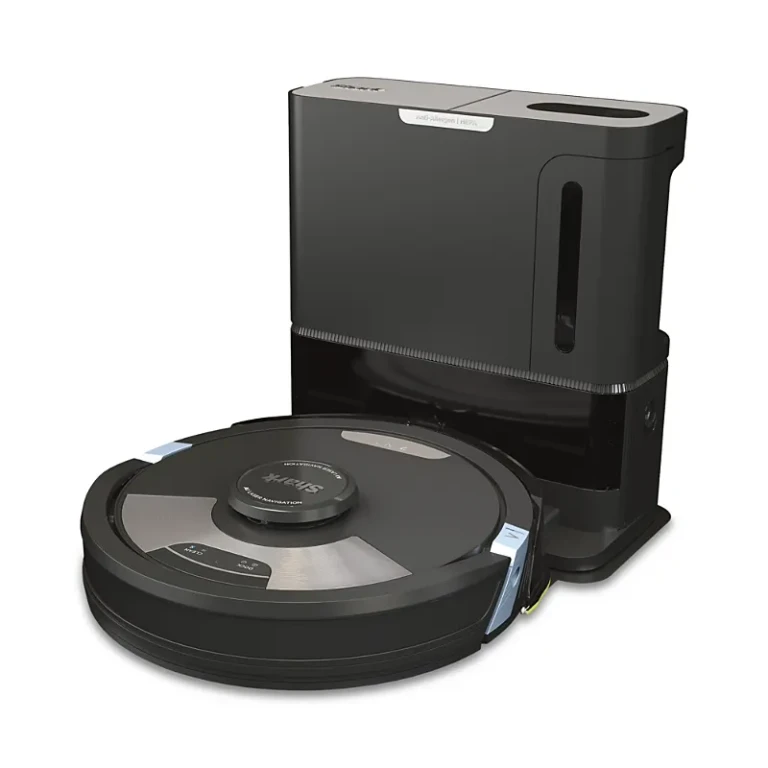
Aktuell bei einem Shop erhältlich
Diese Produkte sind derzeit jeweils nur bei einem Shop erhältlich. Der Preisvergleich öffnet sich mit weiteren Shops.
Separate finding the room from spotting the cable
Before comparing models, write down two requirements: when the robot will clean, and what you usually leave on the floor. These lead to different specification checks.
LiDAR measures distances with reflected laser light. Camera-based vSLAM uses visual features to locate the robot while building a map. Neither description alone tells you which small objects a particular robot can recognize (ECOVACS navigation guide).
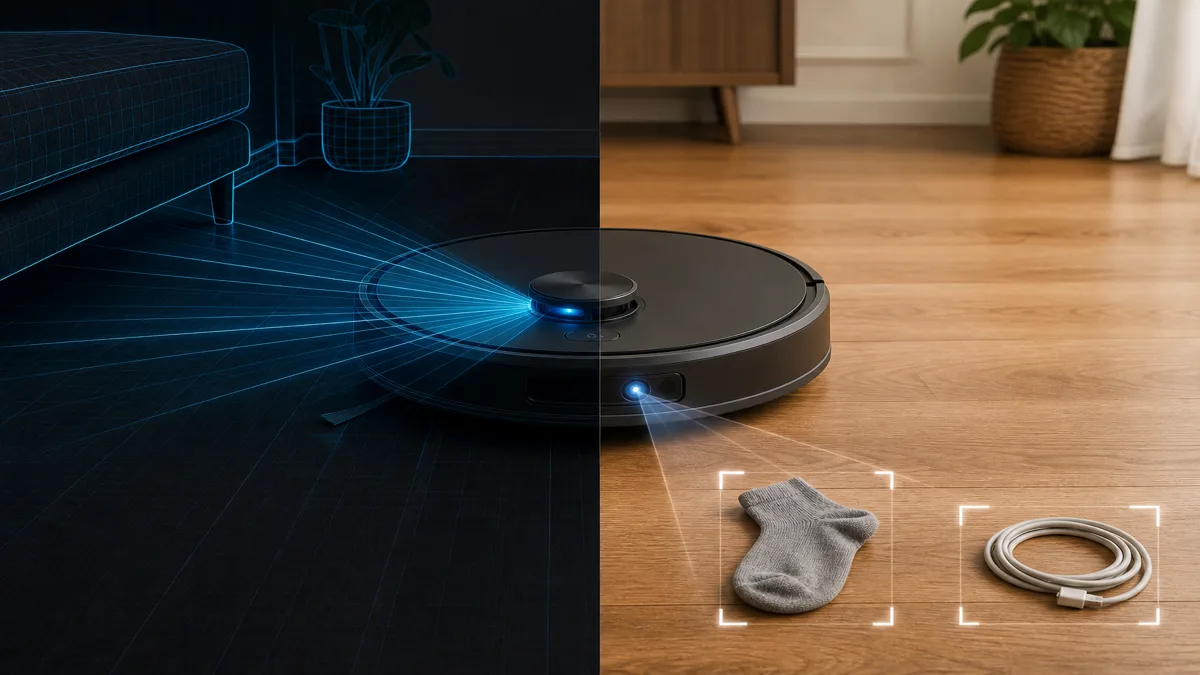
Read this illustration as two jobs to check, rather than two mutually exclusive kinds of robot. On each candidate’s specification page, find both navigation/mapping and obstacle detection/recognition. Leave an unanswered item marked unknown instead of treating “smart navigation” as confirmation.
Still deciding whether automated floor cleaning is the right first purchase? Start with the cordless stick versus robot vacuum comparison.
Choose for the light available when it cleans
Check the rooms at your intended cleaning time, including any hallway or bedroom you leave unlit. LiDAR mapping does not depend on ambient room light, which makes it a sensible starting point for this shortlist (ECOVACS).
Camera requirements need a model-specific answer. In its iAdapt visual-localization guidance, iRobot warns that dark rooms can affect navigation and coverage, while daylight or dim lighting can be sufficient. That is not a rule that every robot with a camera needs bright ceiling lights (iRobot navigation guidance).
- Lights stay off. Prioritize LiDAR mapping, then check the separate obstacle system’s lighting requirements.
- Rooms are lit during cleaning. Keep suitable camera-navigation models in contention. Compare their other features rather than rejecting them on the sensor name.
- Lighting varies between rooms. Ask for the candidate’s documented low-light operating conditions. A daytime demonstration does not answer the overnight-use question.
Check what the robot can actually avoid
For a cluttered floor, look for named objects in the manufacturer’s documentation. For example, iRobot lists cords, socks, shoes and pet waste for the Roomba j7’s PrecisionVision system. This describes that model’s recognition feature, not a capability shared by every camera-equipped robot (Roomba j7).
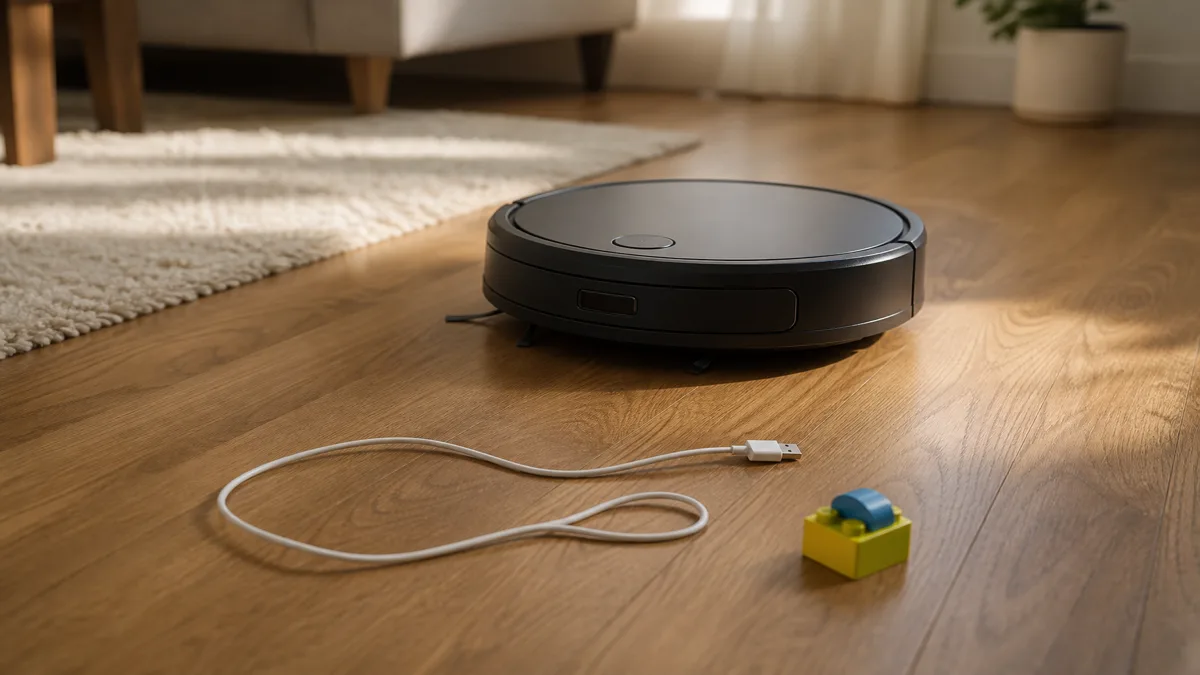
The avoidance scene illustrates the feature to investigate; it is not evidence that every cable or toy will be detected.
You can also choose both technologies. The Roborock S7 MaxV combines LiDAR, an RGB camera and structured light, which projects a pattern to help detect obstacles. Roborock also states that recognition accuracy varies with environmental conditions (S7 MaxV sensor description). These model examples explain configurations, rather than rank products.
Choose a combined system when you need both low-light mapping and documented obstacle recognition. Check each function separately instead of treating “hybrid” as a guarantee. Even the S8 MaxV Ultra manual tells owners to clear cords and loose items and follow the entire first cleaning route (Roborock manual).
Turn the shortlist into a buying decision
Keep the candidates that meet your lighting and obstacle requirements, then make these final checks:
- Furniture access. Measure the lowest gap you want cleaned and compare it with the robot’s complete operating height, including any raised sensor. Do not add an assumed turret height to the published total.
- Dock location. Check installation clearance, not just the dock’s footprint. The S8 MaxV Ultra manual, for example, specifies space around and above its dock; use the instructions for your exact candidate (dock installation instructions).
- Camera preferences. If a camera is a concern, check the complete sensor list and the policy for image storage, sharing and remote viewing. “LiDAR” alone does not establish that the robot has no camera.
- Useful features for the price. Confirm the room-selection and exclusion-zone controls you need. Compare the complete robot-and-dock package instead of assuming camera navigation is always cheaper or LiDAR automatically cleans carpet better.
If the floor is usually clear, do not pay extra for object recognition without identifying what it would help you avoid. If clutter is frequent, give documented recognition more weight, while keeping the floor-preparation instructions in your decision.
Once navigation is settled, decide whether you need vacuuming, mopping or both before choosing the final package.
Wie dieser Guide entstand
This guide was written by AI for Housnap, using ECOVACS navigation explanations, iRobot product and support documentation, and Roborock sensor descriptions and instructions. It separates documented capabilities from editorial buying advice; the model examples illustrate configurations and are not hands-on test results.