Steam Mop vs Regular Mop, Which One to Buy First
Steam mops get pitched as the upgrade every household needs: no chemicals, no bucket to lug around, and steam that supposedly kills germs on contact. Some of that is true. Steam does sanitize, and it does lift grime out of tile grout that a regular mop just smears around. But steam mops also have a hard limit that gets buried in the marketing — they can damage the exact floors many people assume they are buying one for. The decision is not really "steam mop or regular mop, which is better." It is "what floor is under my feet most of the day, and does that floor tolerate heat and moisture." Get that question right first, and the rest of the choice is straightforward.

Aktuell bei einem Shop erhältlich
Diese Produkte sind derzeit jeweils nur bei einem Shop erhältlich. Der Preisvergleich öffnet sich mit weiteren Shops.
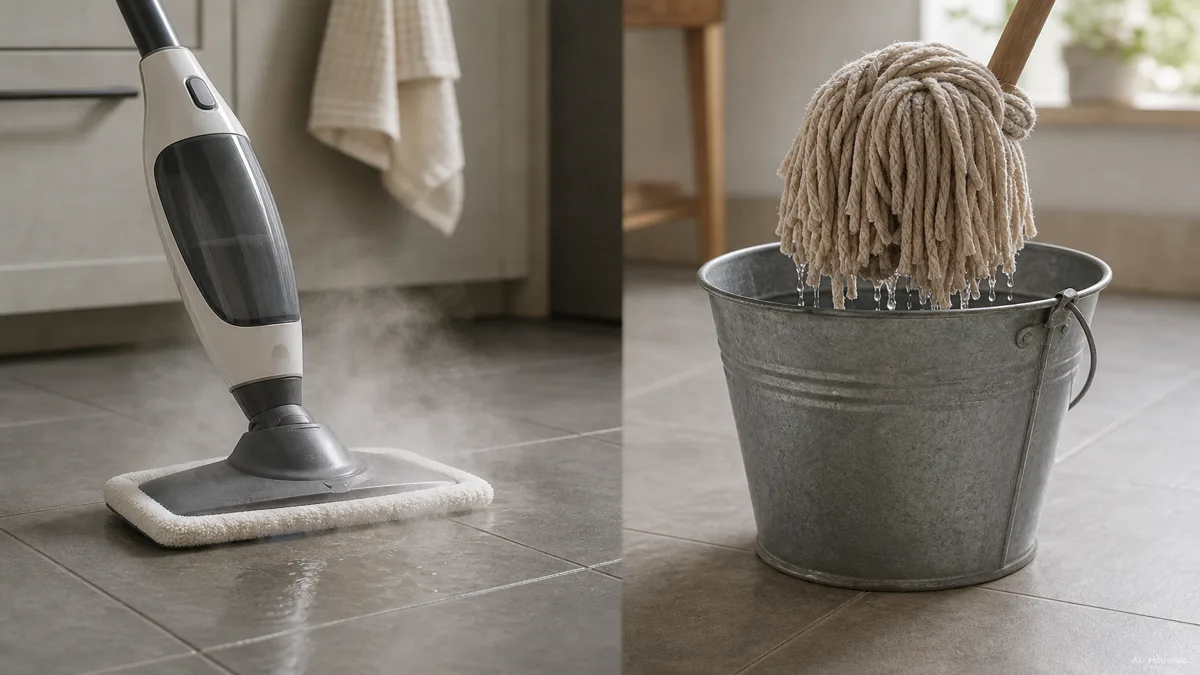
A steam mop and a regular mop solve the same basic problem in completely different ways, and the mechanism behind each one explains almost everything about where it works and where it fails.
What a steam mop actually does (vs a bucket and mop)
A steam mop has a small internal boiler that heats plain tap water into low-pressure steam, which is then released through a cleaning pad pressed against the floor. There is no cleaning solution involved unless you add one yourself. The heat and moisture loosen dirt, and the pad wipes it away (eufy, Steam Mop vs Regular Mop: A Comprehensive Comparison).
A regular mop works the opposite way. You fill a bucket with water and a liquid cleaning solution, dip the mop head, wring it to the right level of dampness, and wipe. When the water gets dirty or cool, you dump it and refill. It is manual labor from start to finish, but that manual control is also its strength. You decide how wet the floor gets, and you can mop up a genuine spill, which a steam mop cannot do at all — steam mops are not designed to absorb standing liquid (Angi, Steam Mop vs Regular Mop).
Steam mops need a warm-up period before the water reaches operating temperature, and the tank has to be refilled once it runs dry. A regular mop is ready the moment the bucket is filled, and it is the only one of the two that handles absorbing a large puddle or a knocked-over drink.

Floors where steam mops win: tile, grout, sealed surfaces
Steam mops are built for hard, sealed, moisture-tolerant floors, and ceramic or porcelain tile with grout is where they perform best. Steam penetrates the porous surface of grout in a way a damp mop cannot, lifting out embedded dirt and mildew instead of just smearing it across the tile face (Abbotts At Home, Can You Use a Steam Mop on Grout?).
This is the single strongest case for owning a steam mop. If your kitchen, bathroom, or entryway is sealed tile with visible grout lines that never seem to come clean with a regular mop, steam is doing something a bucket genuinely cannot. Sealed natural stone can also tolerate steam, though unsealed stone should be treated the same as wood (see below).
Consumer Reports' buying guide for steam mops calls out a few practical features worth prioritizing if tile and grout are your main floor: a ready-to-use indicator light so you are not guessing about warm-up time, adjustable steam levels for lighter jobs, a reasonably long power cord, and a tank large enough that you are not refilling every few minutes (Consumer Reports, Best Steam Mop Buying Guide).
Floors and situations to avoid: hardwood, laminate, vinyl, spills
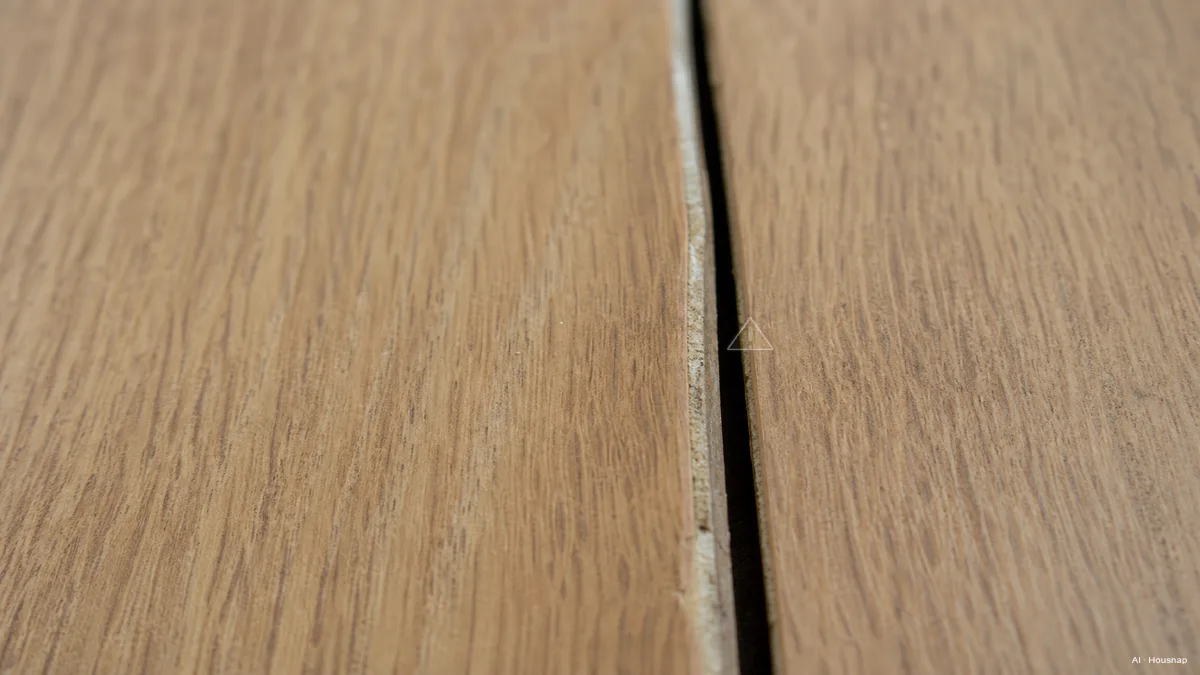
This is the part of the steam mop pitch that gets skipped, and it matters more than the tile advantage. Steam mops should not be used on solid or engineered hardwood, laminate, vinyl (including peel-and-stick and luxury vinyl plank), unsealed natural stone, waxed floors, or painted floors. Most major wood-flooring associations advise against steam cleaners on wood floors specifically, and using one typically voids the flooring manufacturer's warranty outright (capellflooring.com, Can You Use a Steam Mop on Hardwood Floors?).
The damage mechanism is straightforward once you see it. On wood, the combination of heat and moisture forces water into the grain, which causes warping, cupping, or gaps between boards that do not close back up. On laminate, the same heat and moisture gets into the compressed fiberboard core beneath the printed surface layer, causing it to swell and the joint lines to separate. On vinyl and peel-and-stick flooring, the heat can soften or weaken the adhesive underneath, and tiles start to lift and peel at the edges (HGTV, Can You Damage Your Floor With a Steam Mop?).
A steam mop is also the wrong tool the moment there is standing liquid to deal with, a spilled glass of juice, an overflowing bowl, a tracked-in puddle. It has no absorption capacity for that. A regular mop, or even a plain towel, handles it in seconds.
If you check your floor plan and most of your home is hardwood, laminate, or vinyl, a steam mop is very likely the wrong purchase regardless of the reviews it has. This single check is worth doing before you look at any specific model.

How hot is hot enough: steam temperature, dwell time, and germs
Home steam cleaning units typically heat water to somewhere between 150 and 300°F depending on the model. Most common household germs and bacteria start dying above about 160°F, and full-strength steam at 212°F kills germs on contact (US Steam, Steam Cleaning Temperature Guide; ironinglab.com).
The detail that gets lost in the "steam kills 99% of germs" marketing line is dwell time. Steam needs to sit on one spot for a meaningful stretch to actually sanitize it, and most manufacturer manuals specify somewhere in the range of 8 to 20 seconds of contact. A quick gliding pass, which is how most people naturally use a mop, delivers heat and moisture but not necessarily full disinfection (Consumer Reports, Can a Steam Mop Kill Germs?).
In practice, this means a steam mop is genuinely good at loosening grime and reducing surface bacteria in normal daily use, but if the goal is disinfecting a specific spot after, say, a pet accident, you need to pause and hold the pad in place rather than moving through at a normal walking pace.
Cost, convenience, and which one to buy first
A regular mop and bucket setup, a basic microfiber mop, a bucket, and a bottle of floor cleaner, can be assembled for well under $10 to $20 total, and replacement mop heads are cheap. Steam mops run considerably more, typically $50 to $150 depending on features like tank size and steam level control (eufy, Steam Mop vs Regular Mop; today.com).
Day to day, steam mops are generally faster and less physically demanding once the tank is warmed up, since there is no wringing and no bucket to carry around. The tradeoff is the warm-up wait and the floor restriction above. Consumer Reports' 2026 testing of models across a range of prices, including a mid-range unit and a compact budget option, found that stain-removal performance and ease of use varied more between models than the price tag alone would suggest, which is a reason to read reviews on a specific unit rather than assume more expensive means better (Consumer Reports, Best Steam Mops of 2026).
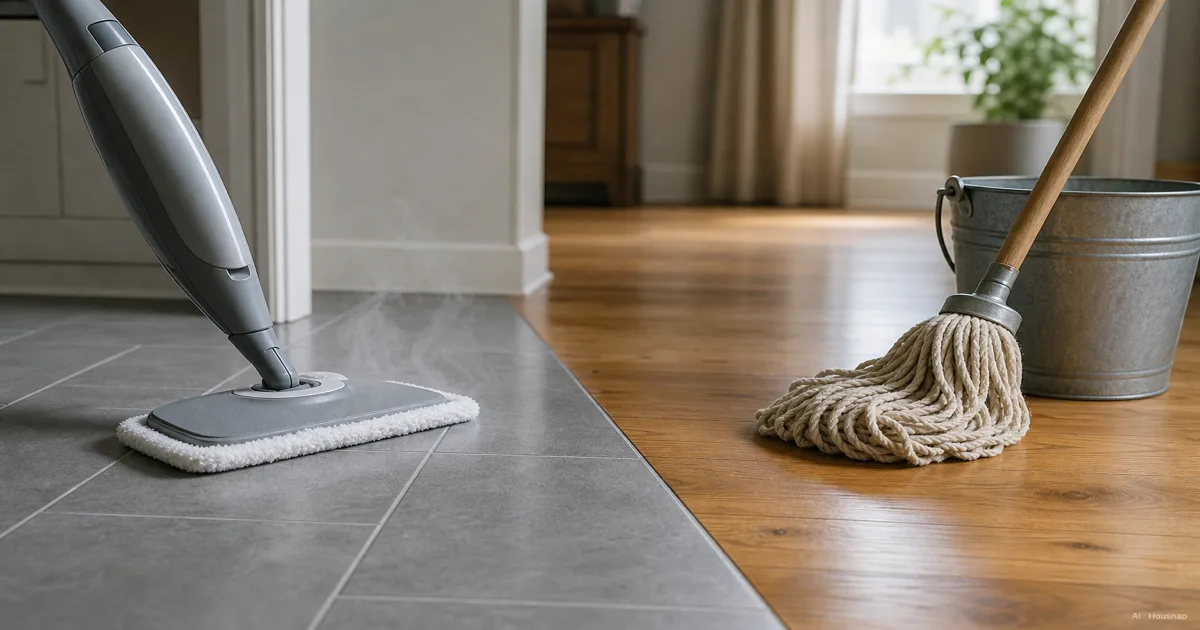
The practical decision comes down to this. If your home is mostly sealed tile with grout that never looks fully clean, a steam mop is a real upgrade and worth the higher price. If your home is mostly hardwood, laminate, or vinyl, or if you regularly need to mop up actual spills, a regular mop and bucket is not just the cheaper choice, it is the correct one. Many households with mixed flooring end up keeping both: a bucket mop for wood and laminate rooms, a steam mop for the tiled kitchen or bathroom.
Sources
- Steam Mop vs Regular Mop: A Comprehensive Comparison, eufy — mechanism, cost comparison, spill absorption limits
- Vapor steam cleaner, Wikipedia — how steam mops generate and apply steam
- 5 Best Steam Mops of 2026, Lab-Tested and Reviewed, Consumer Reports — lab testing across price tiers
- Best Steam Mop Buying Guide, Consumer Reports — feature priorities: indicator light, tank size, steam levels
- Can a Steam Mop Kill Germs?, Consumer Reports — dwell time requirement for disinfection
- Can You Use a Steam Mop on Grout?, Abbotts At Home — grout penetration mechanism
- Can You Use a Steam Mop on Hardwood Floors?, capellflooring.com — wood flooring warranty and damage guidance
- Can You Damage Your Floor With a Steam Mop?, HGTV — damage mechanism on laminate and vinyl
Wie dieser Guide entstand
This topic opens the cleaning-supplies cluster with a first-buy question that keeps surfacing in steam mop reviews: the appliance is marketed as a universal floor upgrade, but manufacturer guidance and flooring-industry sources are explicit that it damages hardwood, laminate, and vinyl. The editorial spine is a floor-type checklist rather than a feature comparison, since the floor a household has determines whether a steam mop is even a candidate. Consumer Reports anchors the buying-guide priorities and the germ-kill dwell-time nuance, while eufy and Angi anchor the mechanism and cost gap, and capellflooring.com and HGTV anchor the hardwood and laminate damage mechanism.