Choose where to start, not which category wins
Designer fragrance generally comes from fashion or cosmetics brands (Buchart Colbert). Niche traditionally describes more selective distribution and a narrower audience, although corporate acquisitions have blurred that distinction (category background).
For a first purchase, use that background to plan your search:
- Start at a designer counter if it gives you an easy way to try several affordable candidates nearby. You are choosing convenient access, not accepting a lower grade of perfume.
- Explore niche first if a particular scent idea interests you and you can sample it before buying. You do not need to own a designer bottle first.
- Keep both open if you have no clear preference. Set a spending limit and describe when you want to wear the fragrance before choosing brands.
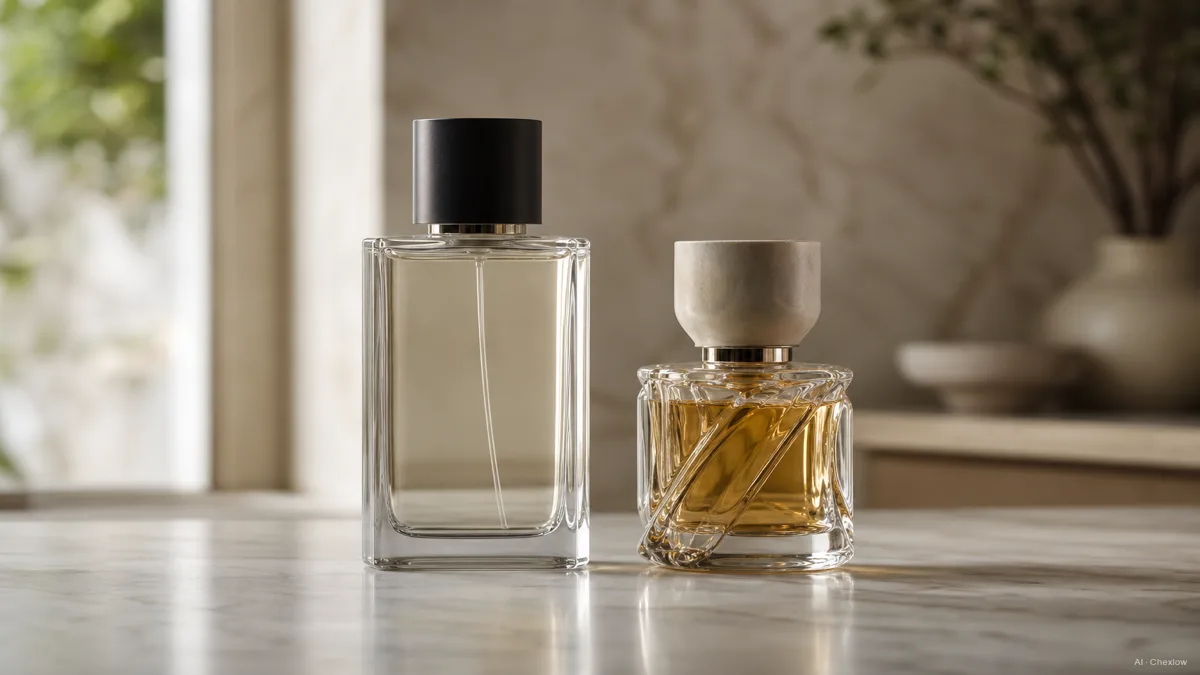
Treat the bottles as a visual comparison, not a ranking by shape or size. If you cannot yet name a scent direction, start with citrus, floral and woody fragrance families.
Compare the exact fragrance and concentration
Designer does not mean eau de toilette, and niche does not mean extrait. CHANEL ALLURE comes as an eau de parfum, while Maison Francis Kurkdjian lists Aqua Universalis as an eau de toilette.
EDT and EDP abbreviate those two concentration names. Check them on both the sample and the bottle you intend to buy. Naming also needs context: Jo Malone London uses “cologne” regardless of strength or trail. Do not turn a category or label into a promised number of hours.
Use notes to identify something worth trying. For example, Byredo lists bergamot, violet, cedarwood and vetiver in Bal d'Afrique EDP. If those appeal, put it on your sampling list; that description does not establish that it is more complex or better for beginners than a designer fragrance.
Already choosing between versions of one scent? Read about EDT, EDP and parfum, then compare the actual versions on your shortlist.
Use samples to make the comparison personal
Diptyque recommends trying fragrance on skin to understand how it develops. A discovery set is one way to do that: Le Labo's set, for example, contains filled 1.5 ml samples.
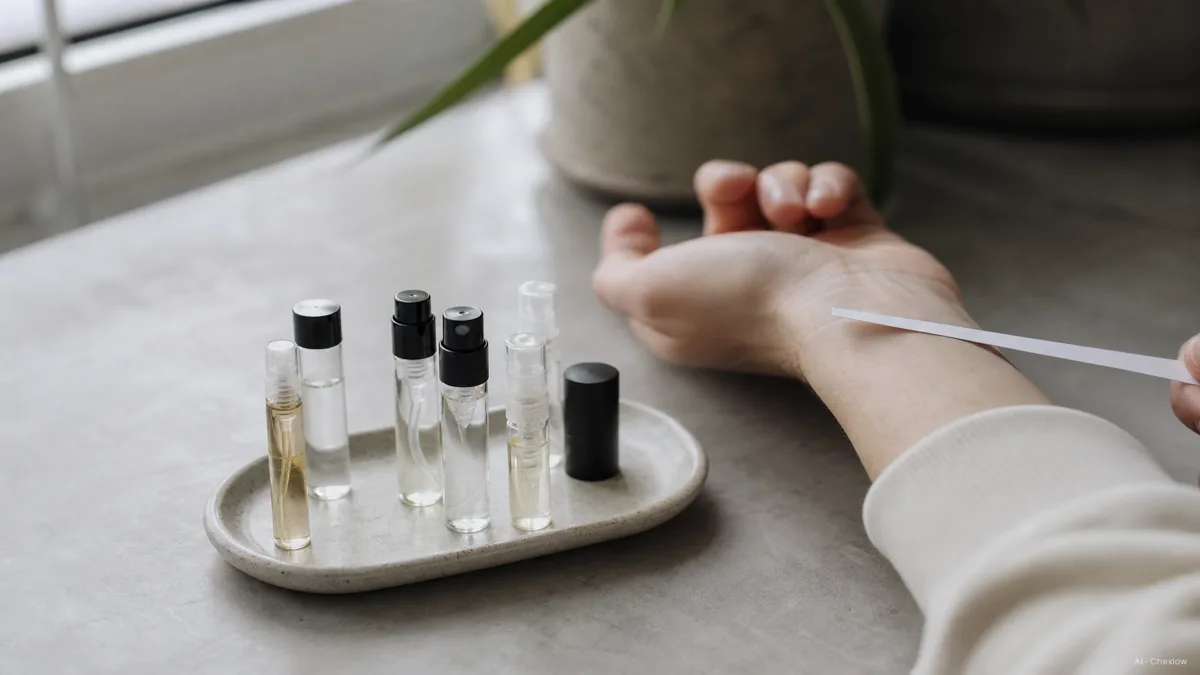
Choose a set for the scents it contains, not the number of vials. If buying decants, meaning fragrance transferred into smaller containers, check the seller, fragrance name, concentration and volume. Empty atomizers are not samples.
For a useful personal comparison, try this routine:
- Narrow the field. Use labeled paper strips to decide which scents deserve a skin trial.
- Wear one candidate at a time. Follow its directions and use it in the setting you are buying it for.
- Write down three things. Do you like it at first, later in the day, and at the distance you normally notice it? Record the amount used too.
- Revisit the favorite. Try it on another ordinary day before committing. This is a practical buying check, not a laboratory performance test.
Decide whether to buy, go smaller or wait
Choose the designer bottle if it meets your needs and the niche candidate adds nothing you value. Choose the niche bottle if you prefer wearing it and its full cost fits your budget. Neither decision needs a prestige argument.
- Buy a bottle when you still want to wear the tested version after the first excitement has passed.
- Choose a smaller size, if offered, when you like the scent but expect to use it occasionally.
- Keep sampling when you like only the opening, dislike wearing it through your day, or cannot justify the total cost.
Compare total price and price per millilitre separately. A larger bottle can cost less per millilitre while requiring more money upfront. Include sample and delivery costs in your budget, and check the seller's conditions before assuming an opened bottle can be returned.
Como este guia foi construído
Written by Housnap's AI editor using official fragrance descriptions from CHANEL, Maison Francis Kurkdjian, Byredo, Jo Malone London, Le Labo and Diptyque, with category background from Wikipedia and Buchart Colbert. The sampling routine and purchase criteria are editorial guidance, not product testing or a ranking of fragrance quality.