Decide what the new bottle would replace
Start with one practical question: which wash would you use it for? A product that cleanses and exfoliates is not automatically an extra step after your usual cleanser.
- Consider replacement when the candidate is intended for facial cleansing, its directions fit the washes you want it to cover, and your skin tolerates it. Do not discard a comfortable existing cleanser before establishing that fit.
- Keep it as a separate option if you intend to use it only on selected occasions within its directions. Your usual cleanser still covers the other washes; this does not prescribe consecutive use of both.
- Skip the purchase for now if you cannot identify a reason to add exfoliation. The American Academy of Dermatology says exfoliation is not for everyone.
If the missing job is makeup removal, check that separately. The guide to choosing a makeup remover and everyday cleanser addresses that decision; an exfoliating label alone does not answer it.
Read the exact application and removal instructions
Before paying, find four details: whether application starts on wet or dry skin, how the product is removed, its stated frequency, and any eye-area restrictions. If the listing omits them, consult the package or ask the maker.
For a concrete example, Marini SkinSolutions’ Bioglycolic Face Cleanser lists glycolic acid and directs application to dry skin morning and evening. Its instructions call for thorough rinsing with a washcloth in lukewarm water, then blotting dry, and explicitly exclude use as an eye makeup remover. Those are directions for that formula, not a schedule for every exfoliating cleanser or every new user.
There is a useful distinction here: AAD’s general face-washing guidance starts with wet skin and fingertips, and cautions that washcloths can irritate. Do not combine fragments of these two methods into an improvised routine. If the candidate’s method conflicts with what your skin tolerates, ask for product-specific advice or choose another cleanser rather than adding friction.
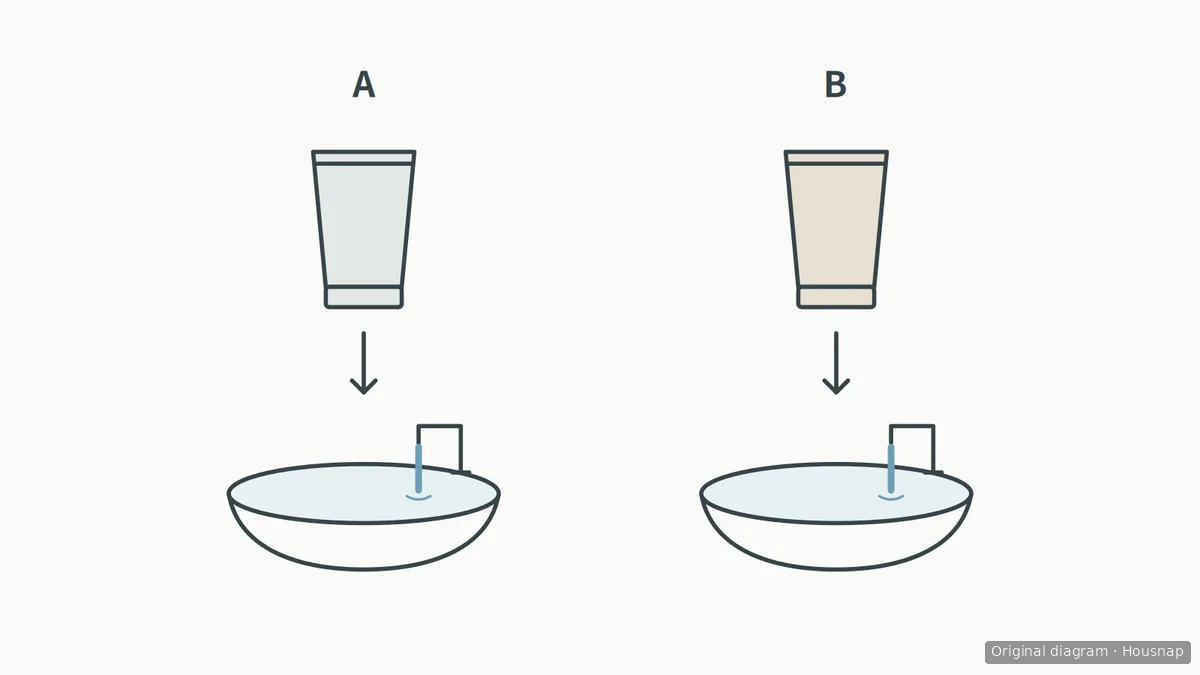
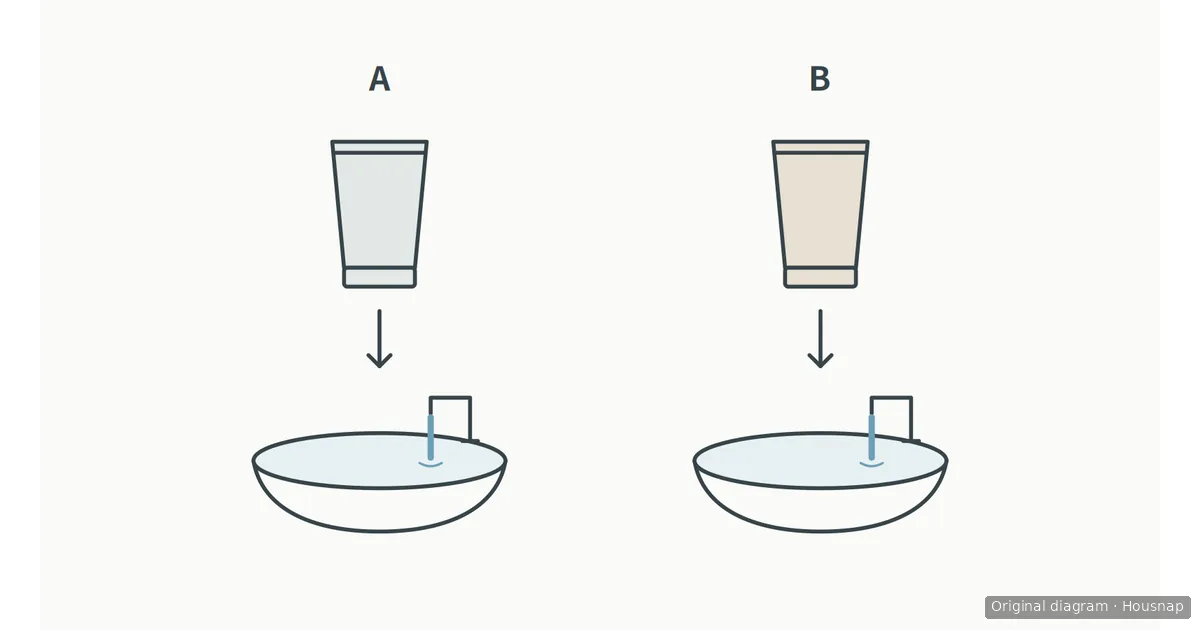
A represents your current rinse-off cleanser; B represents the proposed exfoliating cleanser. The panels show separate rinsing routes, not two consecutive washes or permission to mix products. They do not establish that the formulas are interchangeable.
Check the products that stay on your skin
Put the candidate’s directions beside those of your leave-on exfoliant, retinol or prescribed treatment. “Rinse off” is a removal instruction, not proof that another exfoliating product adds nothing to the routine.
The AAD warns that adding exfoliation alongside retinoids, retinol or benzoyl peroxide can worsen dryness or cause breakouts. If you already use one, resolve that overlap before buying. For prescribed treatment, ask the prescriber about the proposed cleanser.
Already introducing retinol? Read the retinol starting guide before making another change. Do not buy an exfoliating wash simply to remove flakes from an unsettled routine.
Nor can an acid percentage settle the comparison: the FDA explains that AHA exfoliation also depends on pH and the rest of the formulation. These sources do not establish that a rinse-off cleanser matches, replaces or is always milder than a particular leave-on product.
Make the first purchase conditional on a workable routine
There is no universal daily or twice-weekly schedule to apply across this category. Follow the exact product’s directions and account for your skin’s response; AAD guidance makes frequency dependent on skin type and exfoliation method. It also says not to exfoliate open wounds or sunburned skin and to moisturize afterwards. Use a suitable moisturizer you already own.
For an AHA cleanser, include sun precautions in the decision. The FDA’s recommended warning calls for sunscreen, protective clothing and limiting sun exposure during use and for a week afterwards. Rinsing is not a reason to dismiss the warning.
For this purchase, keep other new exfoliating products out of the trial so you have fewer changes to assess. If the new wash leaves your skin irritated, stop the trial rather than adding another wash or increasing use; seek dermatologist advice if you are unsure whether exfoliation suits you.
Buy again only when you can answer both questions: does this cleanser have a clear place in the routine, and is that use comfortable? Keeping the original face wash, using the new one selectively, or deciding against exfoliation can each be a valid outcome.
Como este guia foi construído
This article was written by AI for Housnap using American Academy of Dermatology guidance, FDA information and the manufacturer’s Bioglycolic Face Cleanser directions. It focuses on replacement versus a separate purchase, distinguishes general advice from formula-specific instructions, and does not report original product testing or treatment results.