Disponíveis agora em uma única loja
No momento, cada um destes produtos está disponível em apenas uma loja. A comparação de preços abre com mais lojas.


Compare bust and hip room before choosing a size
Start with the bra you intend to wear with the dress. Cashmerette’s fitting guidance explains why bra choice matters to bust measurements. Use an existing flexible tape to measure your fullest bust and hips, keeping it level, as described in Tilly and the Buttons’ Seren fitting guide.
Keep both measurements in the decision. A size that accommodates your waist may still leave the bust or hips short of room. Tilly’s guide explicitly allows for measurements that fall into different sizes; that is a reason to compare garment shapes, not to force every measurement into one size label.
Check the exact dress’s chart. Seasalt recommends looking at each product’s specific measurements, rather than treating its general guide as definitive. Ask for finished-garment bust and hip dimensions and their measuring positions if these are missing. Compare them with a similar dress you already find comfortable while seated, using the same method and units.
If body measurements, flat widths and circumferences are getting mixed together, the guide to reading shirt measurements explains that distinction. It supplies a measuring principle, not a size chart for this dress.
Sit down before you settle on the fit
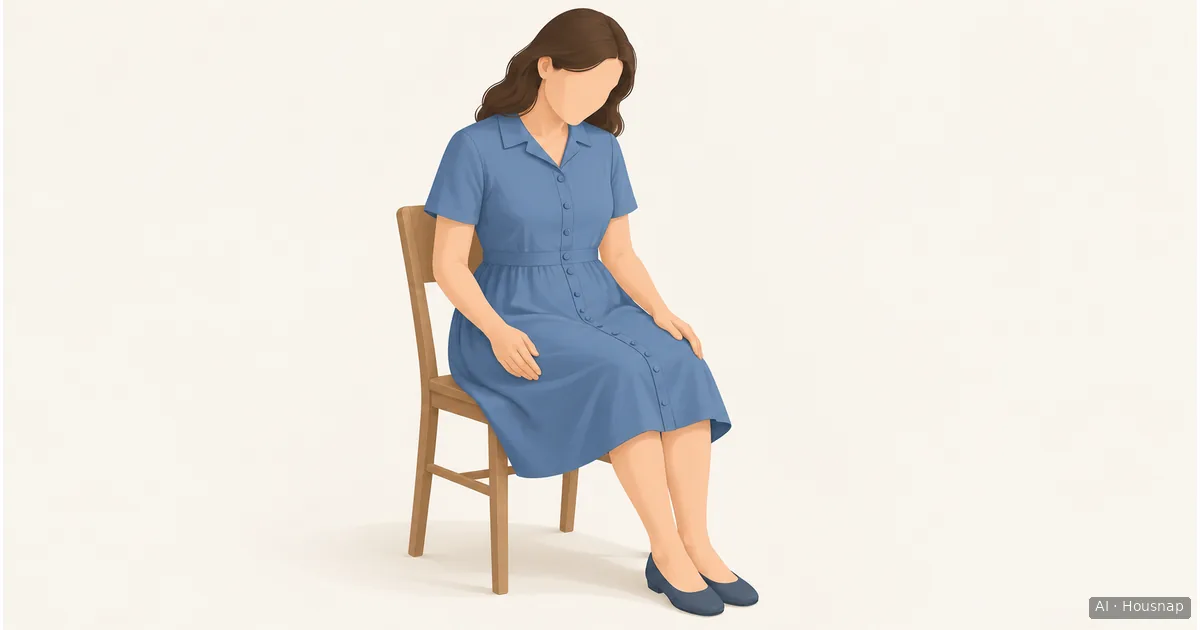
Fasten the dress as you would wear it. First leave a removable waist belt loose, then sit normally and reach forward gently. Look at the bust and the front over your hips: do the edges separate between buttons, do folds pull outward, or does the dress feel restrictive? Repeat with the belt comfortably fastened if you intend to use it.
Cashmerette recommends keeping both standing and seated waist and hip measurements. To check yours, place the tape around the waist or hips while standing, hold it without tightening, and let it expand as you sit while keeping it at the same body position. Record the two readings separately; use them to discuss room with the seller, rather than substituting them into an unexplained size chart.
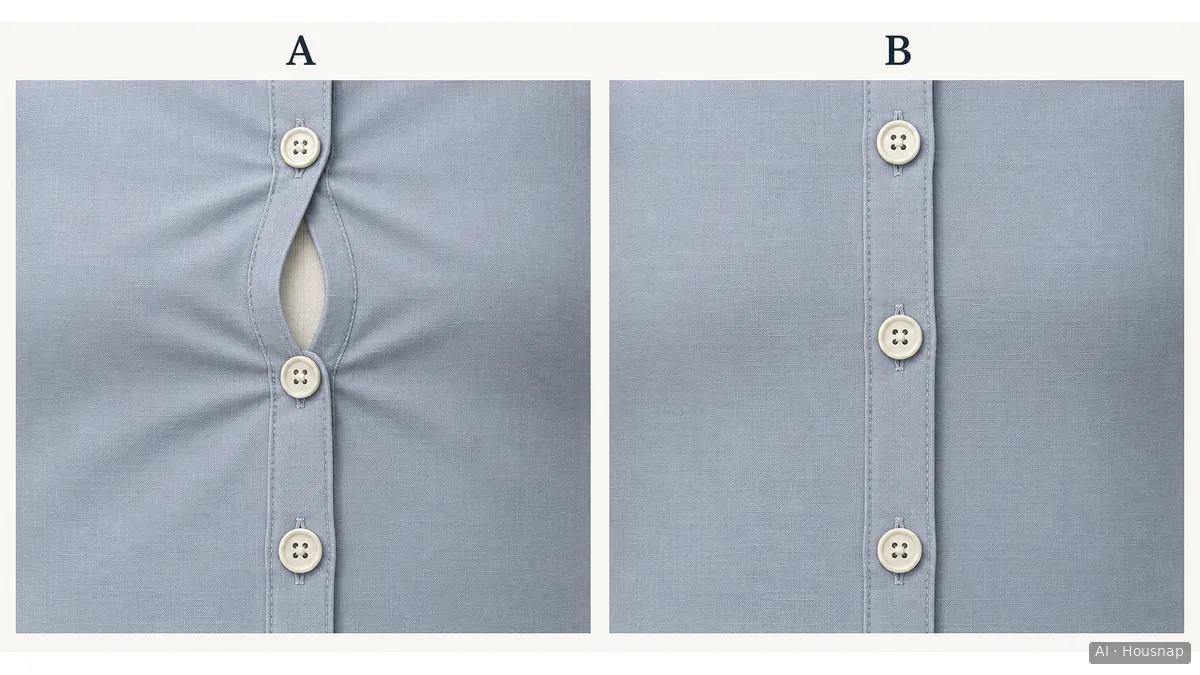
A shows a gap worth checking during your seated fitting; B shows edges remaining overlapped. These are illustrative appearances, not a diagnosis of the cause or proof that a particular dress will fit.
This check matters especially for close-fitting woven dresses with little extra room. Cashmerette distinguishes these from roomier woven garments and also cautions that stretch fabric can still pull uncomfortably when seated. Do not treat “stretch” as a reason to skip the fitting.
Choose another size, another cut or a closure check
Use what you observed to choose the next comparison:
- If the dress feels tight across the bust or hips and the front pulls, try a size with more room, then repeat the seated check.
- If that size solves one area but leaves the neckline or upper body loose, compare another cut. For hip restriction, look for more room through the skirt; for bust restriction, compare the bodice shape. Tilly’s guide specifically describes a bodice that fits the bust but remains loose at the neckline.
- If the dress feels roomy but a small gap remains between buttons, inspect button placement before assuming the whole dress is too small. For Seren, Tilly discusses positioning a button level with the fullest bust and notes that moving buttons can disrupt their spacing. That is a detail to compare or discuss with an alterations specialist, not a guaranteed fix for every dress.
For this purchase, treat the belt as a styling adjustment after the dress passes the fit check. Tightening it does not add fabric where the bust or hips need room.
Before ordering, ask: “What are the finished bust and hip measurements for this size, how were they measured, and are the front buttons functional?” Confirm return conditions before washing or altering the dress. Keep the candidate only if you are comfortable with both its seated fit and how the front behaves.
Como este guia foi construído
Written by AI for Housnap, using Seasalt’s size guidance and fitting explanations from Tilly and the Buttons and Cashmerette. The shopping sequence applies those principles to ready-to-wear selection; sewing-pattern advice is identified as such, and no original wear testing was performed.