Nu verkrijgbaar bij één winkel
Deze producten zijn momenteel elk bij één winkel verkrijgbaar. Prijsvergelijking opent zodra meer winkels zijn toegevoegd.
Start with the space you can actually use
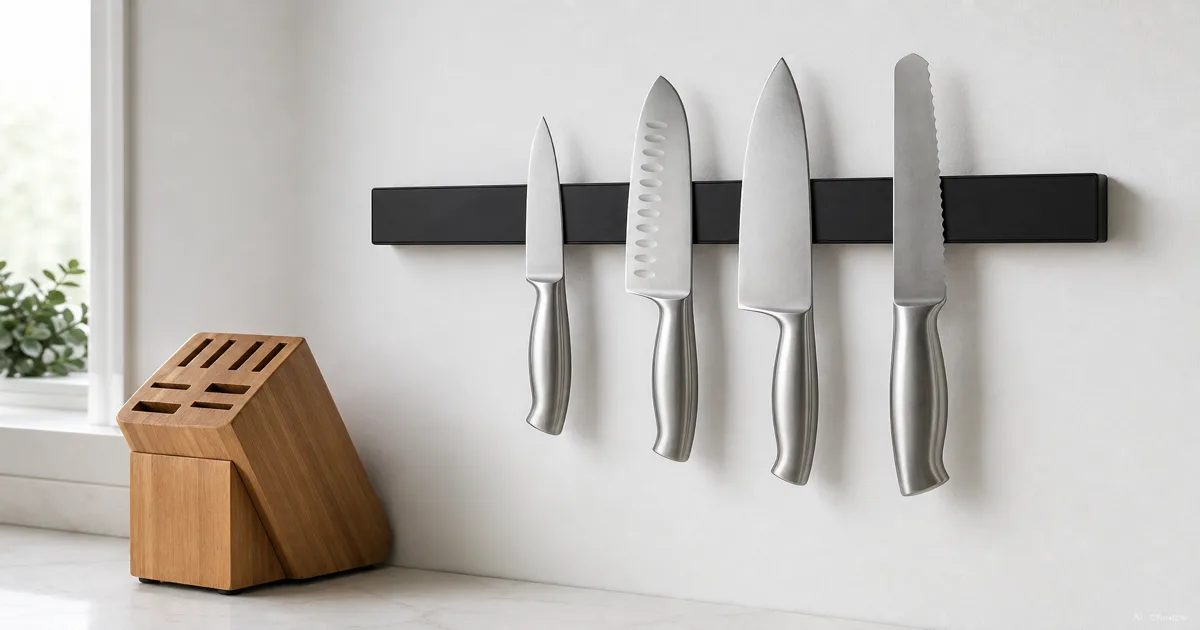
Choose a location before a storage style. WÜSTHOF lists both blocks and magnetic holders as options; that is not evidence that one always preserves an edge better. WÜSTHOF storage guidance.
- Counter space, no wall installation: shortlist a standalone block. Leave room to withdraw your longest knife beneath any wall cabinet.
- Clear worktop, suitable wall: consider a magnetic strip if you can follow its mounting instructions and comfortably reach each handle.
- Clear worktop, no suitable wall: prioritize a dedicated drawer holder. Measure the drawer's usable interior, including clearance above loaded handles.
If your present holder fits the knives and passes the checks below, changing its format need not be your next purchase.
Check capacity against your knives, not the headline number
Write down the knives you need to store, especially the longest blade, widest blade and largest handle. Compare those with the holder's specifications.
Block: count usable knife slots
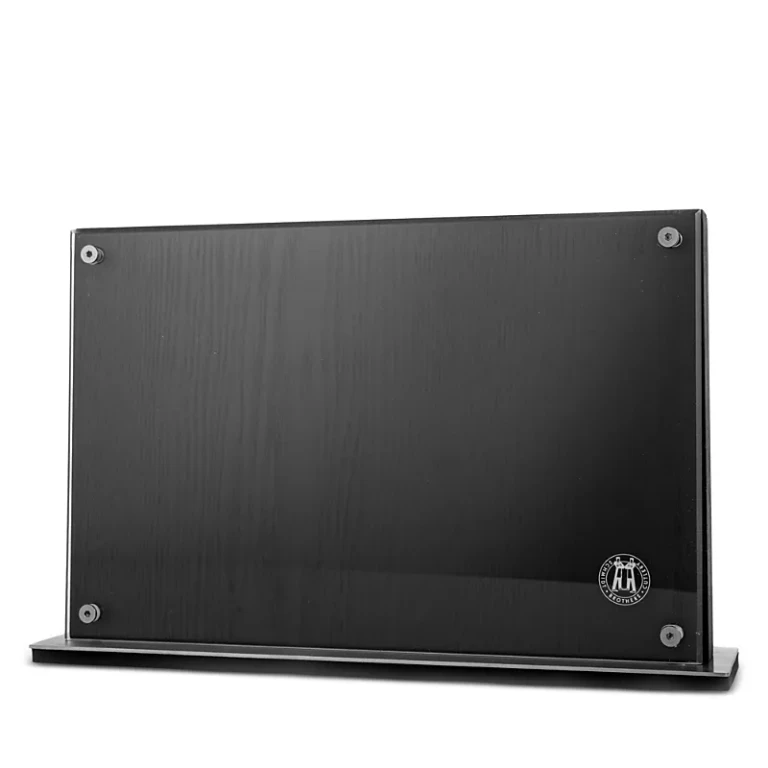
Nine slots need not mean nine knives. WÜSTHOF's 9-Slot block has places for seven knives, a honing steel and shears. Check the slot layout and accepted blade dimensions before choosing an empty block for a mixed collection. Product specification.
Magnetic strip: check the intended knives and spacing
Ask the maker whether the holder suits your blade material, dimensions and weight. Plan enough separation to grasp a handle without touching its neighbour. A wood-faced strip still needs a suitable mounting system and secure retention; its finish alone does not settle the choice.
Drawer holder: count large-knife positions separately
ZWILLING's eight-knife acacia tray divides capacity into four small knives up to 5 inches and four large ones up to 10 inches. It is not eight interchangeable large-knife positions. Check the loaded height as well as the empty tray's footprint. Tray specification.
Make access and installation part of the decision
For a wall strip, read the installation instructions before buying. IKEA's KUNGSFORS requires secure anchoring with suitable screws and plugs; it advises professional help if you are unsure. If that installation is unsuitable for your home, return to the block or drawer options. IKEA installation warning.
For a block, choose a flat, stable position, as WÜSTHOF advises. For a drawer holder, check that opening the drawer does not shift the holder and that each handle remains accessible. WÜSTHOF placement guidance.
A hidden blade is not an access barrier. With young children, consider a drawer holder in a drawer fitted with a compatible safety latch or lock. CPSC recommends these devices to help restrict access to knives, while warning that no device is completely childproof. Follow the fitting instructions and reengage it after use. CPSC guidance.
Choose a holder you can keep clean
Read the holder's own care instructions before buying. WÜSTHOF's general block guidance describes cleaning the slots and letting them dry completely before replacing knives. Check the instructions for your particular model rather than applying one washing method to every wooden holder. Block cleaning guidance.
After use, handwash and dry the knives before returning them to storage. WÜSTHOF advises against dishwashers; Shun also warns against leaving unsheathed knives loose in a drawer. A dedicated holder and a loose utensil drawer are different arrangements. WÜSTHOF knife care, Shun storage guidance.
Buy once you can answer three questions: does every knife fit, can you take it out safely, and can you clean the holder as instructed? If the remaining problem is a dull knife, the next question is whether you need a honing rod or a whetstone.
Hoe deze gids is opgebouwd
This guide was written by AI for Housnap using manufacturer storage, product and care instructions from WÜSTHOF, ZWILLING, IKEA and Shun, plus CPSC child-safety guidance. The comparison prioritizes space, fit and access; product specifications illustrate checks rather than hands-on testing or a universal performance ranking.