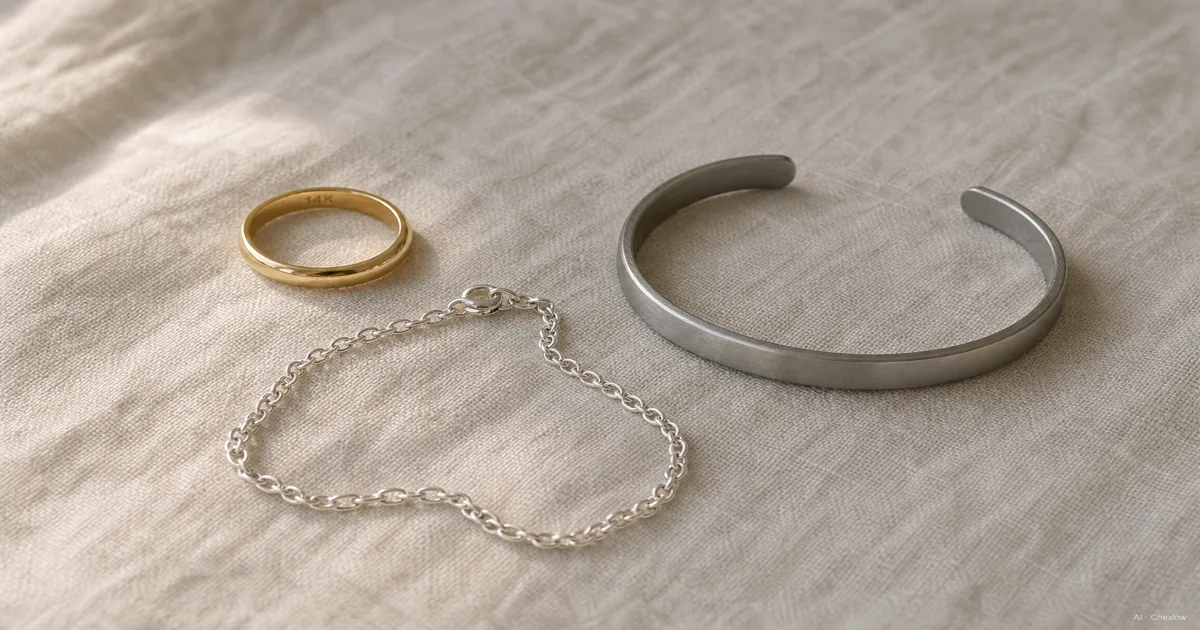
Nu verkrijgbaar bij één winkel
Deze producten zijn momenteel elk bij één winkel verkrijgbaar. Prijsvergelijking opent zodra meer winkels zijn toegevoegd.

Read the material, then the finish
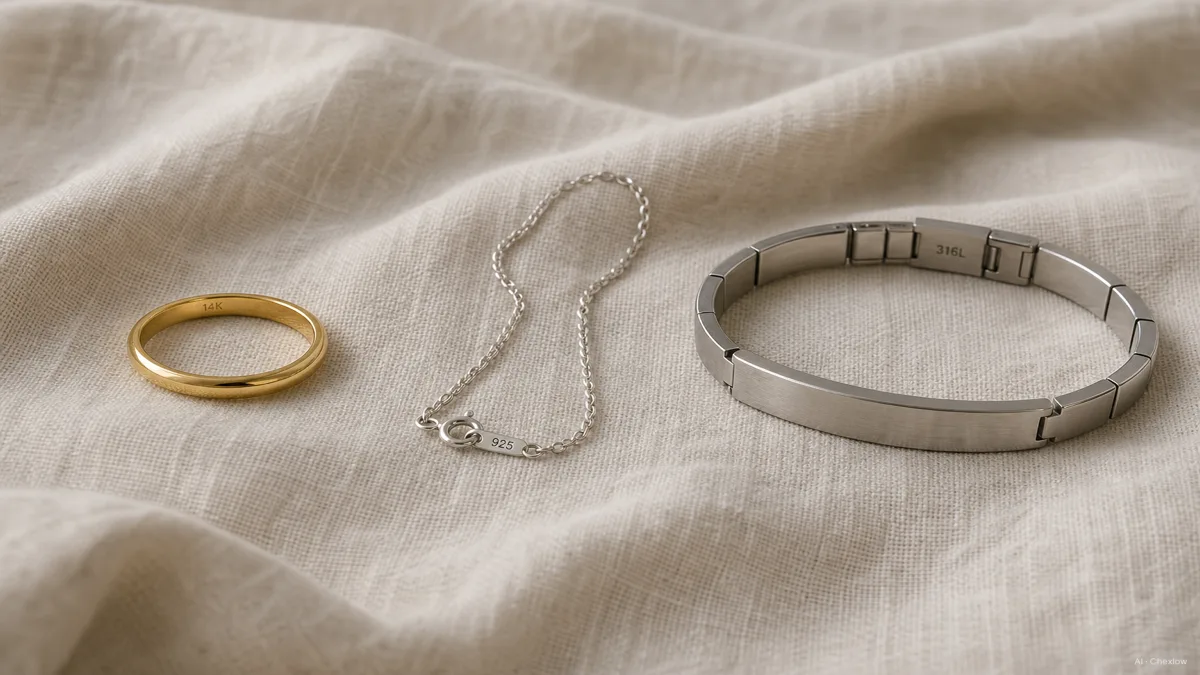
A useful listing answers two separate questions: what is the piece made from, and what covers its surface? Ask for both before comparing prices.
- 14K or 18K gold. Karats describe gold content: 14K is approximately 58.3% gold; 18K is 75%. Neither means pure gold. Brilliant Earth’s karat guide explains the difference.
- 925 or sterling silver. This means 92.5% silver, with other metals making up the rest. It does not tell you whether the surface is plated. GIA’s metal guide covers both composition and finishes.
- 316L stainless steel. This is an alloy grade, not a precious-metal purity score. It contains chromium, nickel and molybdenum; low carbon helps resist corrosion after welding. It is not a skin-safety certificate. Outokumpu’s grade information makes that distinction useful.
Gold-plated pieces have gold over another metal; vermeil has a sterling-silver base. These are different purchases from solid gold, and the coating can wear. Borsheims explains the constructions. If you want gold color on a smaller budget, compare vermeil with other gold plating before deciding which specification to pay for.
If jewelry has irritated your skin, check that first
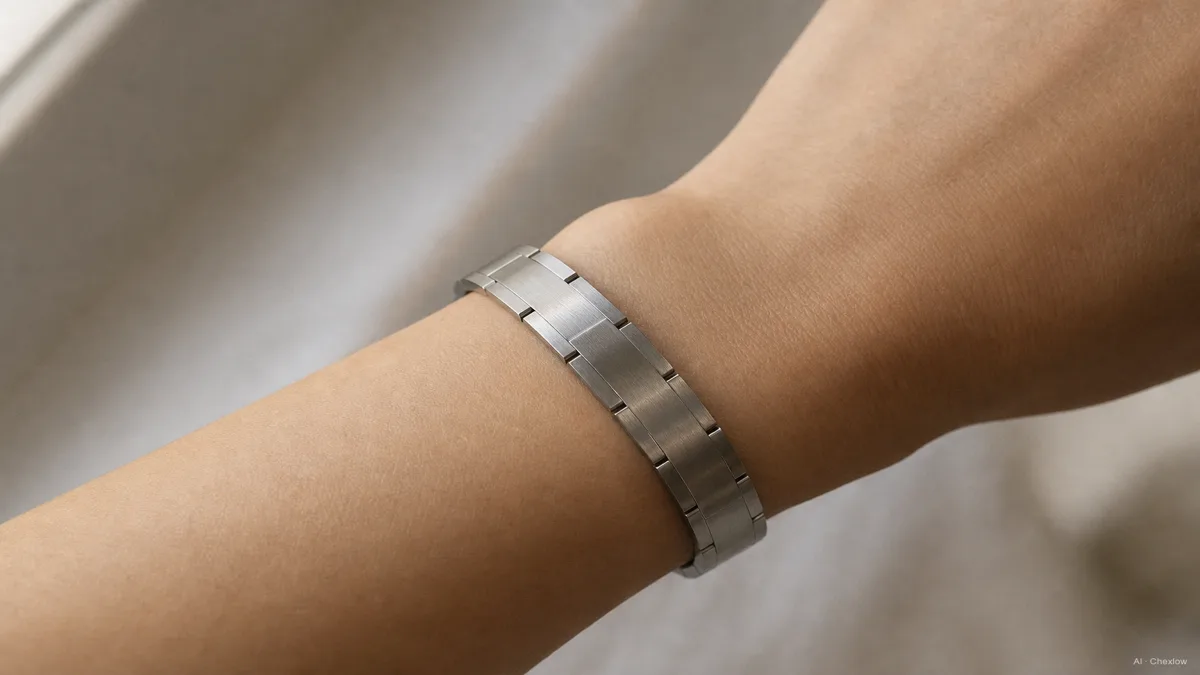
The wrist illustration shows where a bracelet touches skin; it cannot demonstrate that a metal suits you. Nickel in jewelry, including earring backs, can trigger allergic contact dermatitis. For a known nickel allergy, ask for nickel-free specifications covering the parts that touch you, rather than choosing by color or price. The American Academy of Dermatology explains nickel exposure.
316L contains nickel. “18K” and “925” also leave part of the alloy unspecified. Treat those labels as material information, not personal clearance; ask the seller what else is present.
If a piece causes a rash, stop wearing it. Soap and moisture under a ring can also irritate skin, so a rash does not identify the metal responsible. AAD’s contact-dermatitis guidance explains this distinction. Get a dermatologist’s assessment if the rash recurs, blisters or appears infected.
Choose the upkeep you will actually do
For gold, decide how much gold content matters to you. 14K is a practical starting point for daily wear; 18K yellow gold gives more gold content and generally needs more care against scratches. Compare similar designs, then choose the color and price you prefer. Brilliant Earth
White gold adds another question: is it rhodium-plated, and what does renewing that finish involve? GIA notes that the coating may need replacing. Include that service in your buying decision.
For silver, accept occasional tarnish care before buying. Sulfur, humidity and perspiration can darken sterling silver. Tiffany advises removing its silver jewelry before swimming and showering. Tiffany’s tarnish guidance
For ordinary uncoated sterling, a compatible silver jewelry cleaner is a useful supporting purchase when tarnish appears. Follow the piece’s instructions; Tiffany describes its cleaner used gently with a soft cloth, followed by rinsing and drying. Silver care. Do not apply that routine automatically to plated or stone-set pieces. Deliberately blackened silver needs different treatment: polish can remove the intended finish. Oxidized silver care
For steel, favor a clearly specified piece over a “wear it everywhere” promise. Corrosion resistance makes uncoated stainless steel worth shortlisting when upkeep is your priority. But chloride exposure can still cause corrosion; a grade name does not guarantee the whole bracelet, coating or clasp. Outokumpu explains the limits. Our practical choice is to remove jewelry before swimming unless its maker expressly permits that use.
Turn your preferred metal into a buying shortlist
Choose a priority before opening more product pages.
- Gold throughout the metal matters most. Compare solid-gold pieces with a stated karat. Ask for metal weight, construction and any repair or resizing options for the exact design.
- You want silver and are willing to maintain it. Compare clearly specified sterling-silver pieces. GIA describes silver as generally more affordable than white gold, but compare the complete pieces rather than expecting a fixed price ratio. GIA
- You want fewer maintenance decisions. Start with uncoated stainless steel, then check the grade, skin-contact components and maker’s care limits. If the seller cannot explain the finish, keep looking.
Before paying, get the material and finish in writing, confirm the size and return terms, and ask about aftercare. Compare the purchase price together with any quoted servicing costs. For this everyday-wear decision, choose something you can afford to keep and wear without relying on a future resale price.
Sources
Hoe deze gids is opgebouwd
Written by AI for Housnap, using GIA and jeweler guidance on metals and finishes, Outokumpu’s technical material information, and American Academy of Dermatology guidance on skin reactions. The comparisons turn those sources into everyday buying questions; they are not product tests or a diagnosis of individual metal allergies.