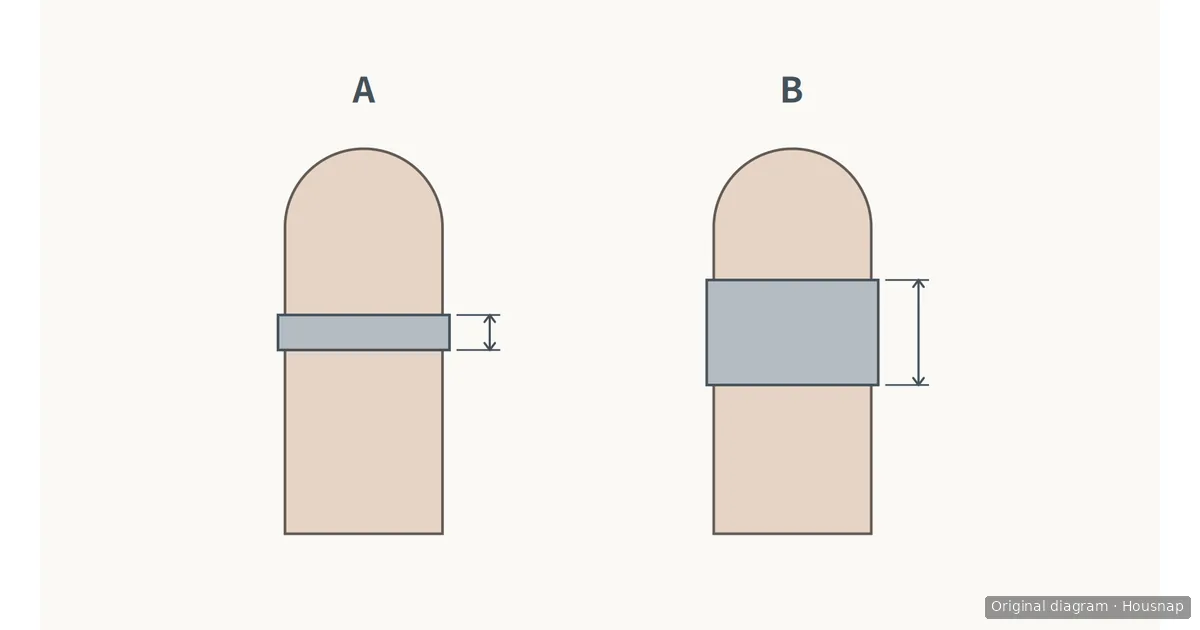
Compare width before changing size
Your thin ring fits, so ordering a wider one in the same size seems straightforward. The missing measurement is how much of your finger the new band covers. Brilliant Earth explains that wider bands apply pressure across the finger and can feel tighter than narrower bands in the same size.
Ask for band width in millimeters, not just the ring size. Width runs from one edge of the band to the other along your finger. Thickness, also called profile depth, describes how far the ring stands out from the finger. A wide band and a thick band are not necessarily the same thing.
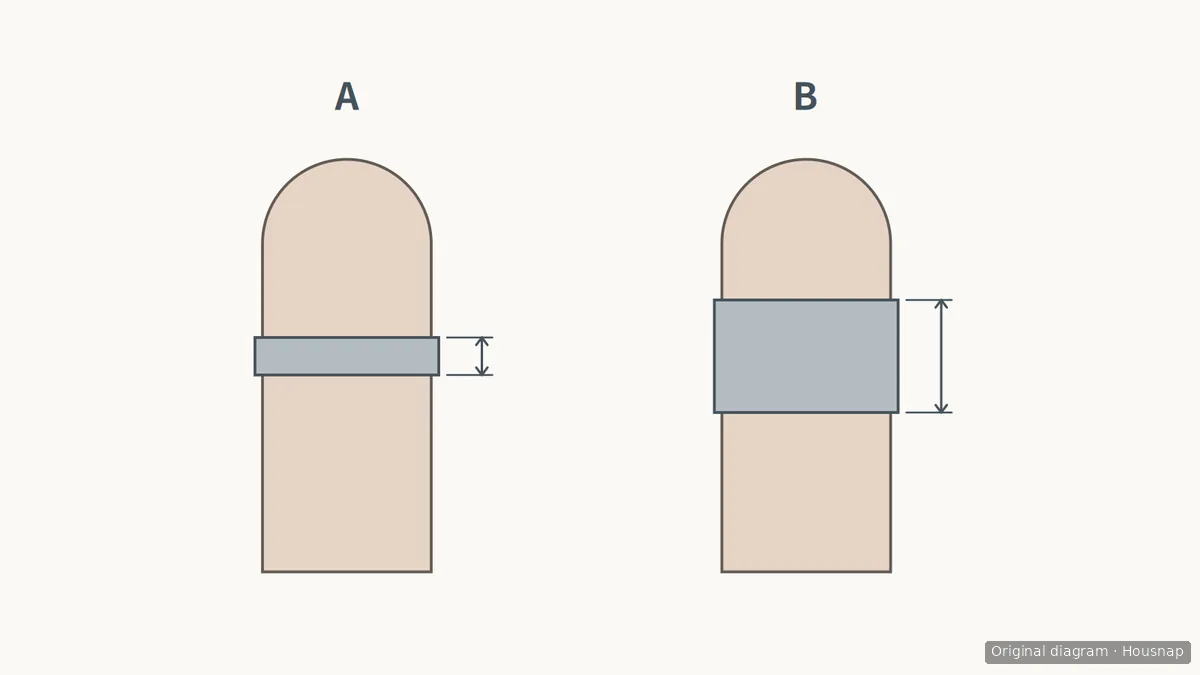
A shows a narrow band; B shows a wider one covering more of the finger. This diagram explains width only. It is not drawn to actual size and cannot tell you which ring size or fit will suit you.
Shortlist a narrow and a wider design you genuinely like, then record each width. If a listing gives only an overall decorative dimension, ask the seller for the width of the part that wraps around the finger.
Measure the finger you will actually use
Treat your existing ring as a reference, not a final answer. Tiffany’s measurement guide starts with the intended finger; for a stack, it also asks you to consider where the ring will sit.
- Measuring your finger: Follow the chosen maker’s method. Tiffany permits a flexible measuring tape or string; if using string, mark the meeting point and measure its length with a measuring ruler.
- Using an existing ring: Choose one that fits that finger, measure its interior diameter in millimeters, and compare that measurement with the maker’s chart.
- Recording the result: Keep the measurement, unit and sizing system together. An inside diameter in millimeters is not the same thing as a US ring-size number.
Finger size also changes with time of day and season. Tom Wood recommends measuring when your fingers feel normal. If your hand feels unusually swollen or cold, choose another time for the comparison.
Try the design with your intended stack
Bring the rings you plan to wear on the same finger. Try the new band alone, then in the intended order with those rings. Open and close your hand and check whether the combination feels restrictive, presses against neighboring fingers or makes removal awkward. These are practical comparison checks, not a formula for adding a fixed number of sizes.
Ask whether a sizing sample has a similar width and interior shape to the ring you want. Brilliant Earth notes that comfort-fit profiles and smooth, rounded edges can influence comfort at any width. A narrow sizing loop alone leaves those differences unresolved.
The maker’s design-specific advice matters. Tom Wood’s guide recommends sizing up for wider-surface signets such as its Cushion rings, but sizing down for more generously fitting bands such as its Infinity Band. Those are instructions for the named designs, not rules for every signet or band ring.
If the wider candidate feels tight, compare another size of that design with the narrower candidate. Keep the whole stack in the comparison. Do not increase the size until the ring slips on easily and assume the purchase is settled; also check how it sits and comes off.
Choose the band, then confirm the order
- Keep the wider band if you prefer its coverage and the actual design feels comfortable both alone and in your intended combination.
- Keep the narrower band if you prefer its smaller footprint or it works better with the rings you already wear.
- Pause the order if neither candidate feels right, the width is missing or the seller cannot explain how the sizing advice applies to that design.
Before paying, have the seller confirm the exact design, band width, size and sizing system, plus exchange and resizing conditions. Brilliant Earth specifically recommends trying the width before buying, particularly for materials such as tungsten that cannot be resized. Do not assume an uncomfortable ring can simply be adjusted later.
Buying remotely? Send the seller your measurements and the widths of the rings you intend to stack, then ask for advice on the exact candidate and written exchange terms. An unanswered fit question is a reason to delay the order.
Once width and fit are settled, a remaining metal decision belongs in the guide to gold, silver and stainless steel for everyday jewelry. Use it to compare material and upkeep before choosing the final specification.
Hoe deze gids is opgebouwd
This article was written by AI for Housnap, using the official ring guides from Tom Wood, Tiffany and Brilliant Earth. It focuses on comparing band width, measurement and intended combinations before purchase; the try-on checklist is editorial guidance, not a report of product testing.