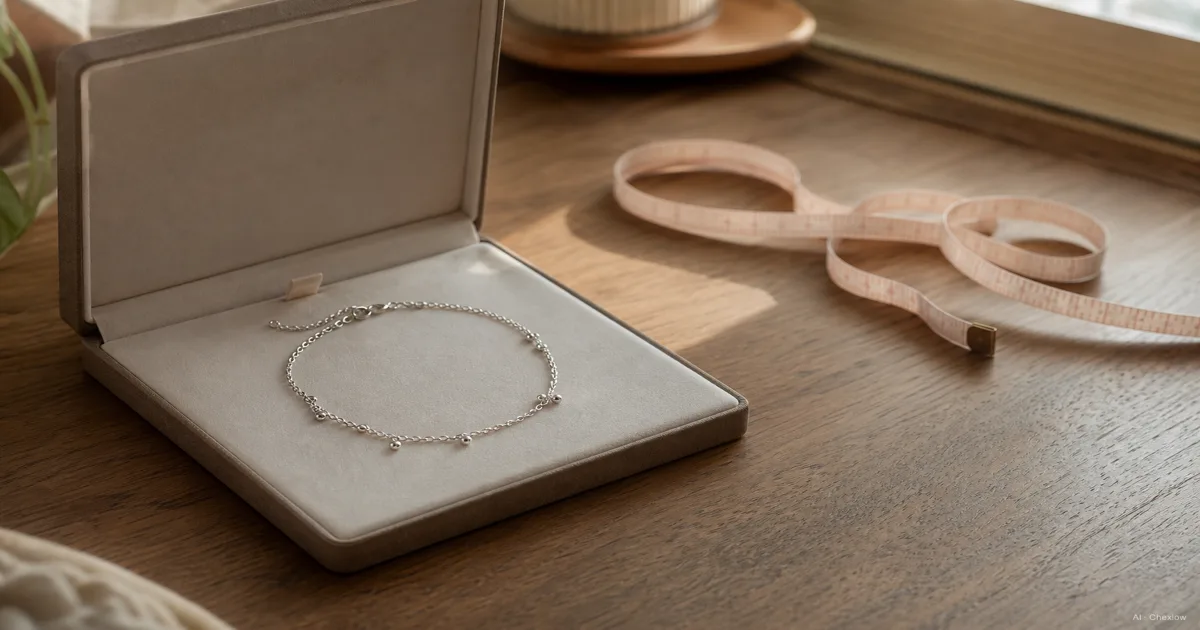
Before comparing designs, set aside listings that omit the finished length or base metal until the seller clarifies them.
Find your length before choosing a chain
Use a soft tape to measure around your ankle without pulling it tight. No tape? Mark the overlap on a strip of paper, then measure it with a ruler. AJLuxe’s sizing guide explains both methods and distinguishes ankle circumference from the extra room needed for the fit you want.
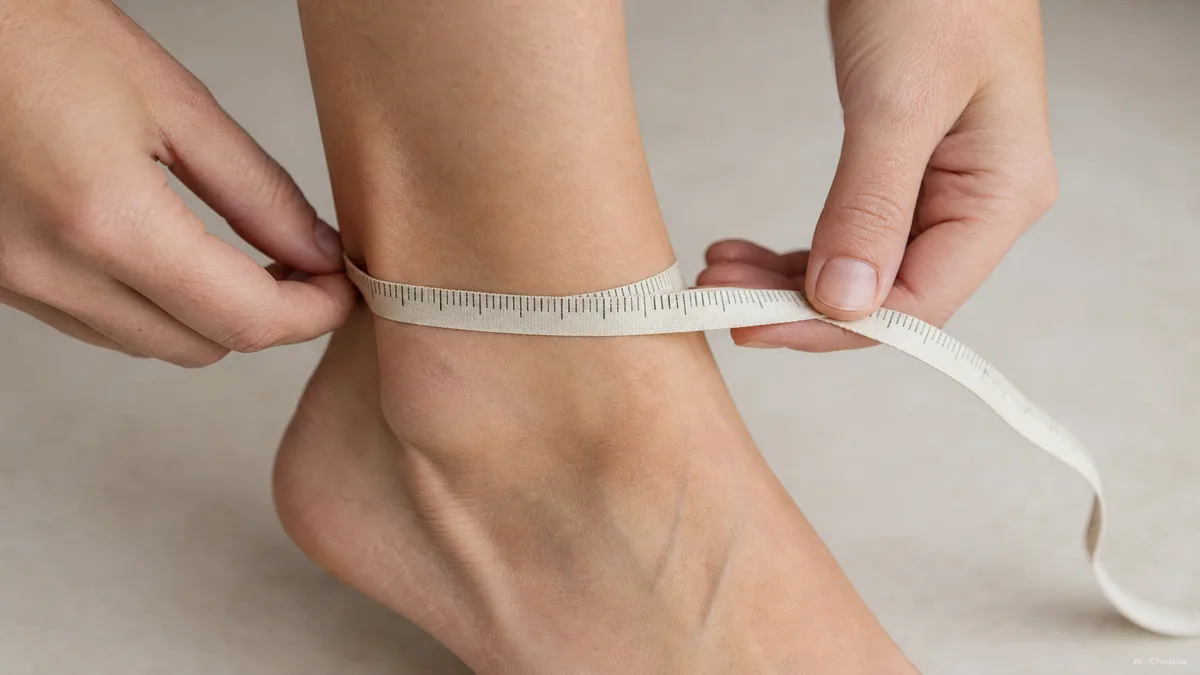
Next, decide where you want the chain to sit. Use a loose loop of string to preview a close fit or a lower drape, then measure that loop separately. This is a planning aid, not a guarantee that a heavier chain or beads will feel identical.
Compare that preferred length with the seller’s shortest and longest wearable lengths, including the clasp. For example, if you prefer 24 cm, a 22–25 cm adjustment range includes it; a fixed 22 cm chain does not. Ask whether an advertised length includes the extender before ordering. Avoid adding extra room twice if the seller’s chart already converts ankle circumference into an order size.
Choose the metal behind the colour
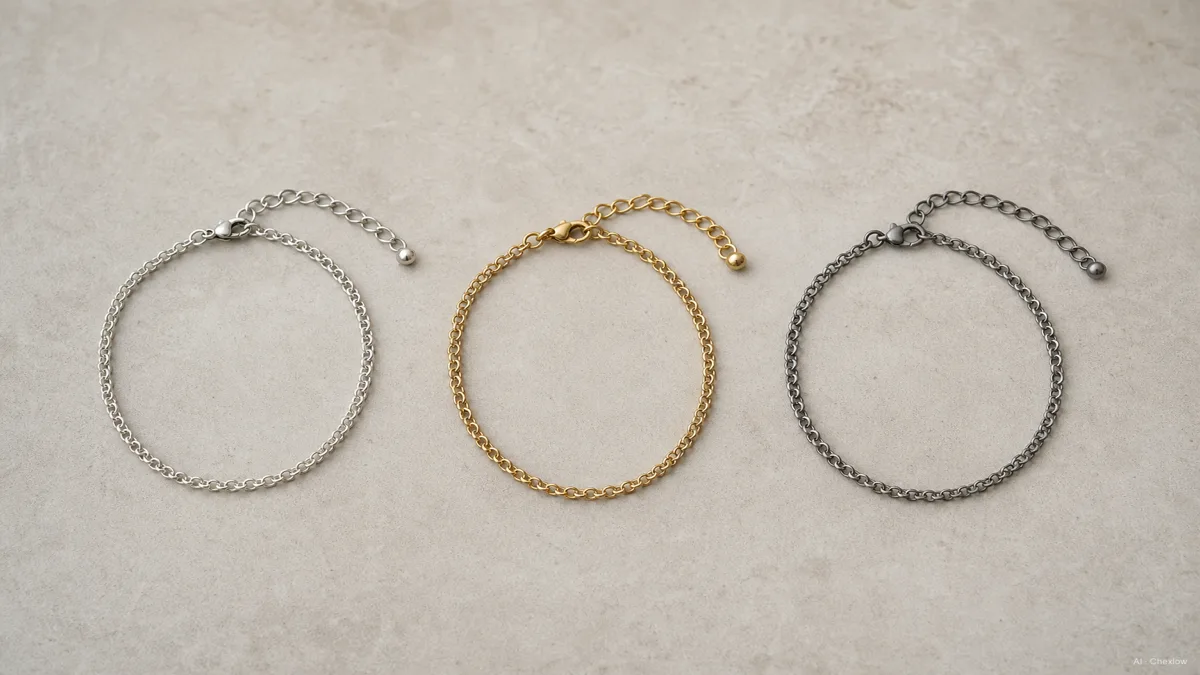
Use the three finishes as a visual comparison, then read the material description. A gold colour alone does not tell you what you are buying.
- Gold alloy. 14K means 14 parts gold out of 24. Confirm whether that describes the piece or only its plating.
- Sterling silver. 925 means 92.5% silver.
- Gold-plated. The surface layer wears with use. Choose it if you accept that trade-off, and ask what metal is underneath. These distinctions follow the FTC’s jewelry guide.
- Stainless steel. Consider an uncoated version if you want a steel finish without a coloured coating to maintain. However, 316L contains nickel, as Outokumpu’s composition data shows; it is not another name for nickel-free.
If you already have a nickel allergy, confirm the materials of the clasp as well as the chain. The American Academy of Dermatology recommends avoiding nickel exposure; a grade name alone cannot tell you how your skin will respond.
Still comparing metal descriptions? The everyday jewelry metal guide explains the terminology beyond anklets.
Match water claims to how you will wear it
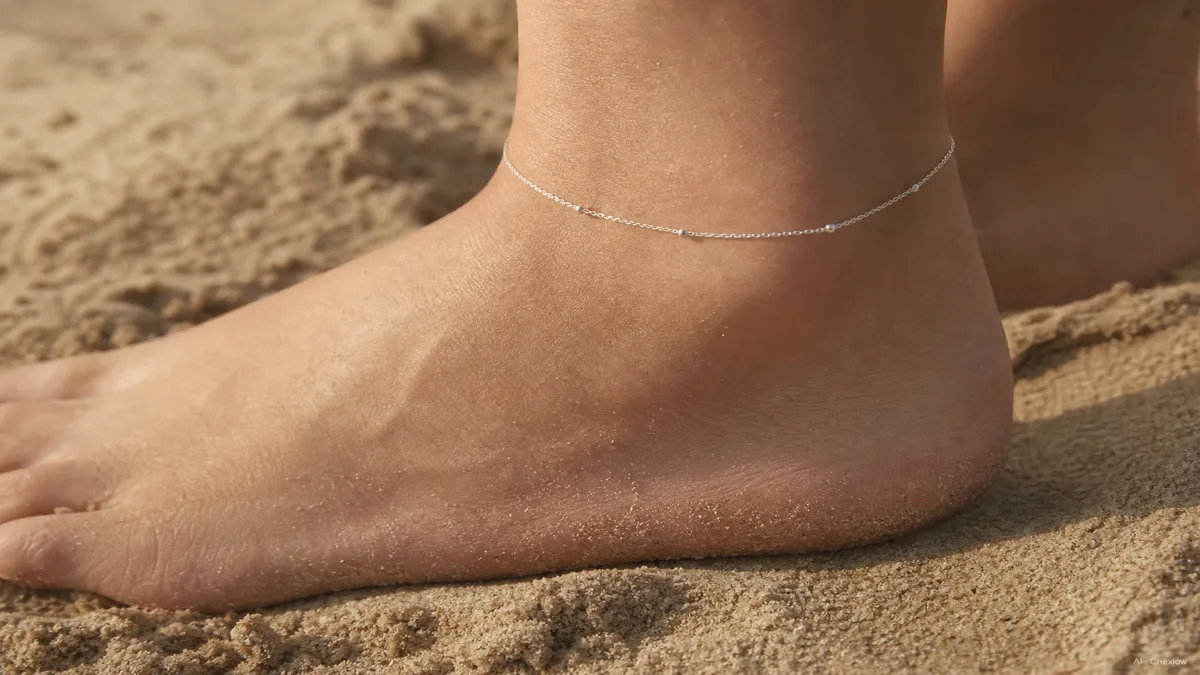
A beach styling image is not a swimming specification. Before paying extra for “waterproof,” look for written guidance covering showers, pools and seawater separately, plus the finish and any stones.
Silver is not maintenance-free: Tiffany identifies moisture, perspiration and chlorine among causes of tarnish. Stainless steel also has limits; Outokumpu documents corrosion in chloride-containing environments. Neither source establishes how a particular anklet will perform.
For a first purchase, the practical default here is to remove it before bathing or swimming unless the maker explicitly permits your intended use. This is a cautious buying recommendation. Pandora’s own guidance, for example, calls for removal and gives different cleaning instructions for different materials.
If you want to leave it on in water but the seller only supplies a slogan, leave that candidate off your shortlist.
Compare candidates, then check the fit at home
Start with one chain whose adjustment range includes your preferred length and whose material is clearly stated. Compare these details before decorative extras:
- Can you operate the clasp yourself, and is the adjustment range actually usable?
- Will the chain, dangling end or charm sit clear of the shoes you plan to wear?
- Do the care instructions match your routine, and can you return it after a permitted indoor try-on?
Keep the written return terms. When it arrives, follow those terms while checking it seated, standing and taking a few steps in your usual shoes. Tightness calls for more room; slipping or catching calls for less length or a different design. If adjustment cannot solve it, exchange it before arranging alterations.
A rash is a different problem from fit. Stop wearing the piece if one develops, and seek a dermatologist’s advice if it persists or returns, as the AAD advises. Buying a longer chain does not resolve a reaction to its material.
Hoe deze gids is opgebouwd
AI wrote this guide for Housnap using AJLuxe’s measuring instructions, FTC material definitions, manufacturer care and alloy documentation, and American Academy of Dermatology guidance. The selection checklist is an editorial synthesis for first-time anklet buyers, not a product test or a guarantee about an individual piece.