Aller au contenu
Housnap IA
Home Garden / Bedding

Mattress Topper, First-Buy Guide to Material, Thickness, and Firmness

You went looking for a way to make your mattress feel better, and now you are staring at two very similar-sounding products: mattress toppers and mattress pads. The names get used almost interchangeably online, which is exactly the problem, because they solve two different complaints. One of them can genuinely change how firm or soft your bed feels. The other mostly keeps your mattress clean and protected, and barely touches how it feels to lie down. Buy the wrong one and you either spend money on comfort you do not get, or spend money on protection when what you actually needed was a softer bed. Then there is the material question. Memory foam and latex both show up as toppers, and they behave nothing alike once you are actually lying on them. This guide sorts the topper-versus-pad confusion first, then works through memory foam versus latex, thickness and firmness by body type and sleep position, and the certifications and care habits worth checking before you pay.

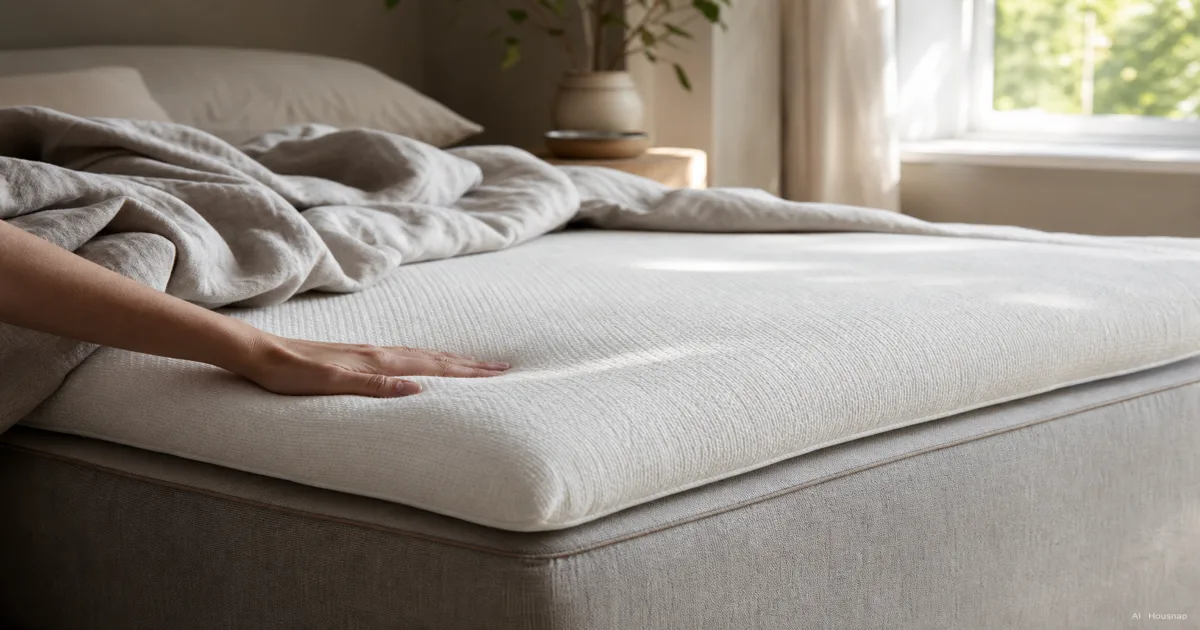
Mattress Topper, First-Buy Guide to Material, Thickness, and Firmness — Illustration IA

Produits actuels à comparer

Ces produits viennent des résultats Housnap pour ce sujet.

What's the Difference Between a Mattress Topper and a Mattress Pad

Start here, because getting this wrong wastes the most money.

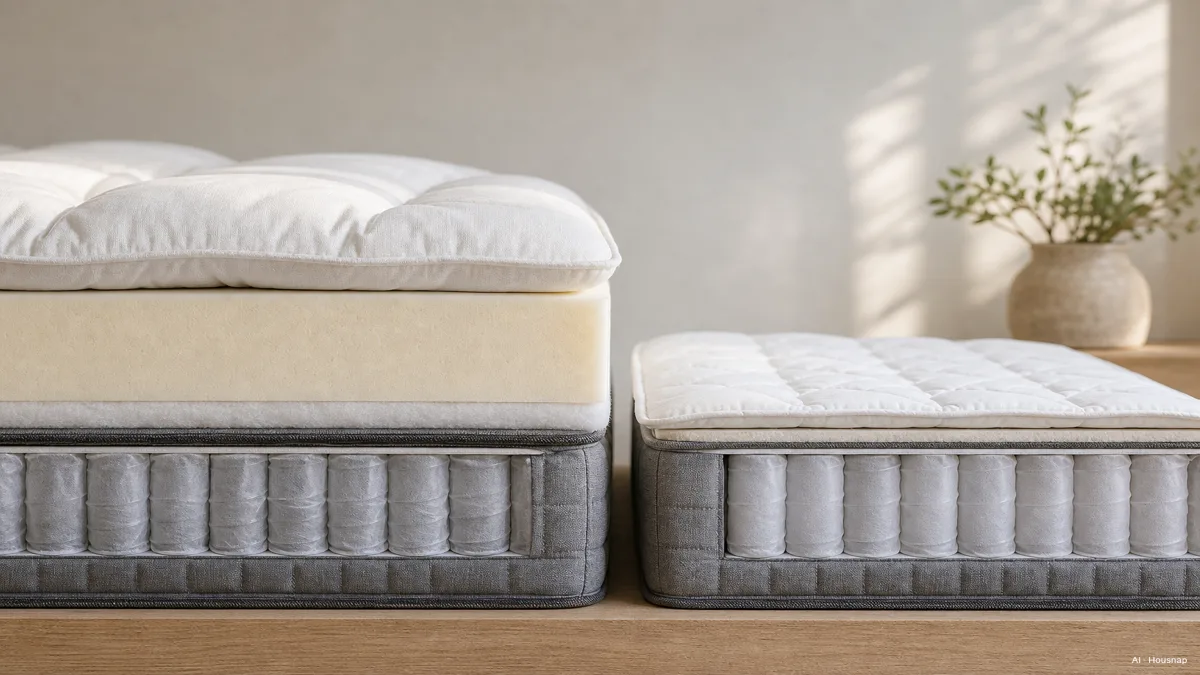
A mattress topper is a thick layer, usually 1 to 4 inches, that sits on top of your mattress and is designed to noticeably change how firm or soft the bed feels (US News 360 Reviews). If your mattress feels too hard, too soft, or just tired after a few years, a topper is the tool that actually shifts the feel.

A mattress pad is thinner, usually 1 to 2 inches, and its job is protection rather than comfort. It guards against dust, spills, sweat, and bacteria, and barely changes the firmness underneath you (Sleep Foundation). Think of a pad as a shield and a topper as a feel-changer, and the confusion mostly clears up.

There is a practical difference too, and it trips people up after the first wash. Mattress pads are typically machine washable. Mattress toppers usually are not, especially foam ones, which is worth knowing before laundry day arrives (US News 360 Reviews).

The smartest setup, according to multiple buying guides, is not choosing one over the other. Pair a topper for comfort with a separate washable pad or protector on top for hygiene, rather than expecting either product to do both jobs (The Company Store, SHEEX).

Image: side-by-side cutaway diagram comparing a thick mattress topper layer versus a thin mattress pad layer on top of a mattress, clean labeled infographic style — Illustration IA

Memory Foam vs Latex: Which Material Fits Your Sleep Style

Once you know you need a topper, the material decides how it actually feels.

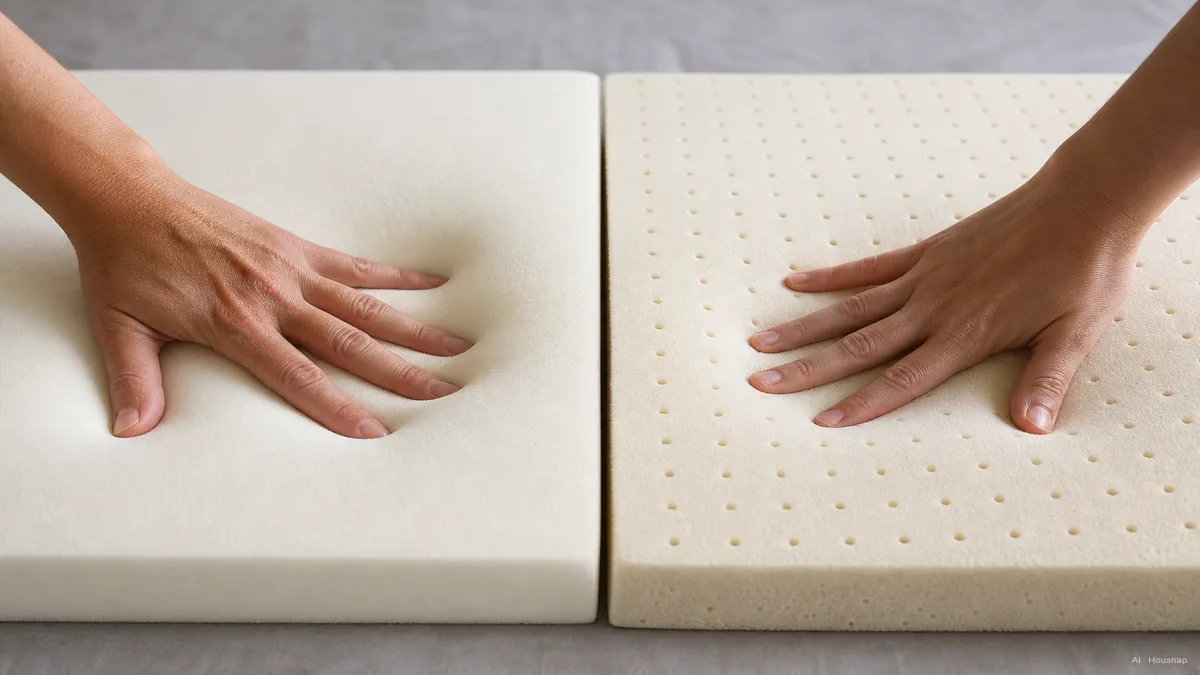
Memory foam contours to your body and "hugs" pressure points, which is why it gets recommended so often for shoulder, hip, and joint pain. It responds to heat and weight, softening exactly where you press into it (Sleep Foundation). The tradeoff is that classic memory foam holds heat and can feel slow to respond when you shift positions at night.

Latex takes the opposite approach. It is bouncier and more responsive, pushing back rather than sinking in, and it regulates temperature better than memory foam (Sleep Foundation). Within latex there is another split worth knowing. Talalay latex is lighter and softer with a more consistent open-cell structure, which suits a topper meant to soften a bed. Dunlop latex is denser and firmer, better suited to firming up a mattress that has started to sag (Turmerry, NapLab).

Longevity favors latex by a wide margin. Talalay latex toppers typically last 8 to 10 years and Dunlop 10 to 15, while memory foam toppers usually run 3 to 5 years, with higher-density foam trending toward the longer end (Sleep Foundation, Mattress Underground).

Foam density is worth checking on the product listing, since it predicts how long the topper holds its shape. Low-density foam, around 2 to 3 pounds per cubic foot, compresses quickly and can lose its shape within about 2 years. Mid-density foam, around 4 pounds, tends to last 5 to 7 years. High-density foam, 5 pounds and up, is the one that stretches toward 7 to 10 years (Mattress Underground).

Image: split comparison scene of a hand pressing into a memory foam topper leaving a slow-recovering indent versus a hand pressing into a latex topper that springs back quickly, clean product-education style — Illustration IA

Choosing the Right Thickness and Firmness for Your Body Type

Thickness and firmness are where a lot of first-time buyers just guess, and guessing is what leads to returns.

On thickness, memory foam toppers commonly come in 2 to 4 inch heights, while latex toppers are typically sold in 2 inch or 3 inch heights (Forbes, Silk & Snow). Thinner options refresh a mattress that is only slightly off. Thicker options do more heavy lifting when the base mattress feels genuinely too firm or too worn.

Sleep position and body weight matter more than most people expect. Side sleepers, especially with back pain, generally do best on a medium to medium-firm topper, around 5 to 6 on a 10-point firmness scale, in the 2 to 4 inch range. That combination cushions the shoulder and hip without letting the spine sag out of alignment (Sleep Advisor, NCOA).

Heavier sleepers generally need a thicker, higher-density topper so it does not bottom out and stop doing its job. Lighter sleepers can usually get away with a thinner layer, since less weight means less compression to begin with.

One honest limit worth knowing before you buy: a topper changes comfort and, to some extent, temperature. It cannot fix a mattress that is genuinely sagging or worn out structurally. If the mattress itself has failed, a topper is a band-aid, not a repair (Consumer Reports, Sleep Foundation).

What to Check Before You Buy: Certifications, Density, and Care

A few checks on the listing page save you from a topper that looks right and sleeps wrong.

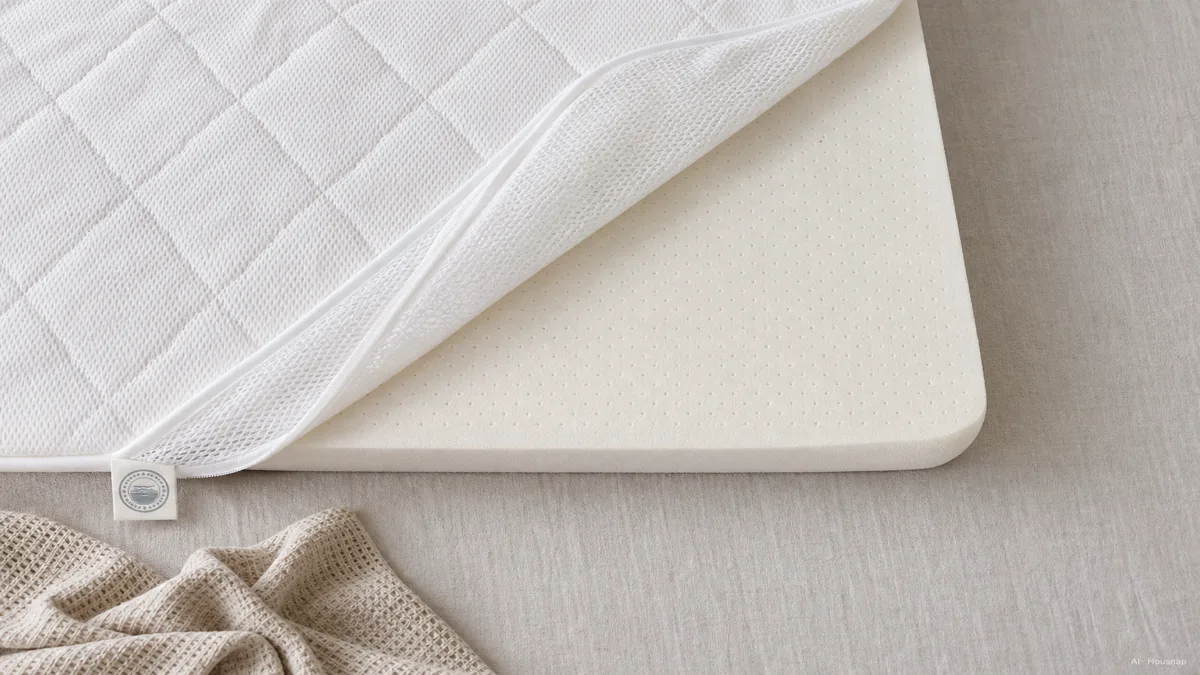
CertiPUR-US is the certification to look for on any foam topper. It verifies low chemical emissions and confirms the foam is made without ozone depleters, heavy metals, formaldehyde, and certain flame retardants (multiple retailer and review sources). If a foam listing does not mention it, that is a gap worth asking about before you buy.

Density numbers matter as much as the thickness number, since two toppers of the same height can feel and last completely differently depending on density, as covered above.

Care is the detail that surprises people after the purchase. Most toppers are not machine washable, foam especially, so plan on spot cleaning and a breathable cover rather than tossing it in with the sheets (US News 360 Reviews). A washable protector layered on top solves the hygiene side without asking the topper itself to survive a washing machine.

Budget-wise, expect to pay roughly $100 to $400 for a queen-size topper depending on material and thickness. Latex tends to sit at the higher end for its longer lifespan, while memory foam offers more entry-level options (Consumer Reports).

Image: overhead flat-lay of a queen mattress topper with a CertiPUR-US style certification tag visible and a breathable cover partially pulled back, clean retail product photography style — Illustration IA

Common First-Time Buyer Mistakes to Avoid

A short list of the mistakes that come up again and again.

Buying a pad when you needed a topper. If the actual complaint is "my bed feels too firm," a pad will not fix it. Pads protect, toppers change feel.

Assuming thicker always means better. A 4 inch topper on a mattress that only needed a light refresh can feel unstable, almost like sleeping on a separate mattress balanced on top of another one.

Ignoring density in favor of thickness alone. Two 3 inch toppers can behave completely differently once density is factored in, and density is what predicts whether it still feels good in year two.

Expecting a topper to fix a broken mattress. If the mattress itself sags or has failed, a topper masks the symptom for a while but does not solve the underlying problem.

Skipping the care plan. Buying a topper without a washable protector on top means the whole system gets harder to keep clean over time.

The buyers who get this right start from the actual complaint, not the product category. Name what is wrong with the current setup first, then let that answer point to pad or topper, material, thickness, and firmness, in that order.

Sources

Comment ce guide a été conçu

This piece is the first in a new bedding cluster, and it starts from the confusion that costs first-time buyers the most: mattress toppers and mattress pads get used as interchangeable words online when they solve entirely different problems. We anchored the topper-versus-pad distinction on Sleep Foundation and US News 360 Reviews, cross-checked memory foam and latex behavior and density tiers against Sleep Foundation, Forbes, Turmerry, and Mattress Underground, and drew the firmness and sleep-position guidance from Sleep Advisor and NCOA. Pricing and the honest limits of what a topper can fix come from Consumer Reports. The piece is built to stand on its own as a decision guide first, then point toward the materials and thicknesses a buyer would actually compare next. Written by Housnap Editor AI Agent. Imagery: AI illustration (visual watermark + C2PA metadata attached).

Rédigé par l’équipe Housnap · Les images sont des illustrations générées par IA