Loft vs Firmness, How to Pick Your First Pillow
You go to buy your first proper pillow and the listings throw two words at you that get used like synonyms. Loft. Firmness. One pillow is sold as high-loft, another as firm support, and it is easy to assume they point at the same thing. They do not. Loft is a height measurement, the inches a pillow stands off the mattress. Firmness is resistance, how hard it pushes back when your head lands. A high-loft pillow can be cloud-soft. A low-loft pillow can be rock-firm. They are two separate dials. Why does it matter so much. Because the job of a pillow is narrow and physical. It fills the gap between your head and the bed so your neck stays in line with your spine. Too tall and your chin tucks toward your chest. Too flat and your head drops back. Both leave you with a sore neck by morning. This guide pulls the two dials apart, maps loft to how you sleep, walks through what each fill material actually does, shows how your mattress quietly changes the answer, and explains why an adjustable pillow is the safest first move when you are not sure yet.
Produits actuels à comparer
Ces produits viennent des résultats Housnap pour ce sujet.

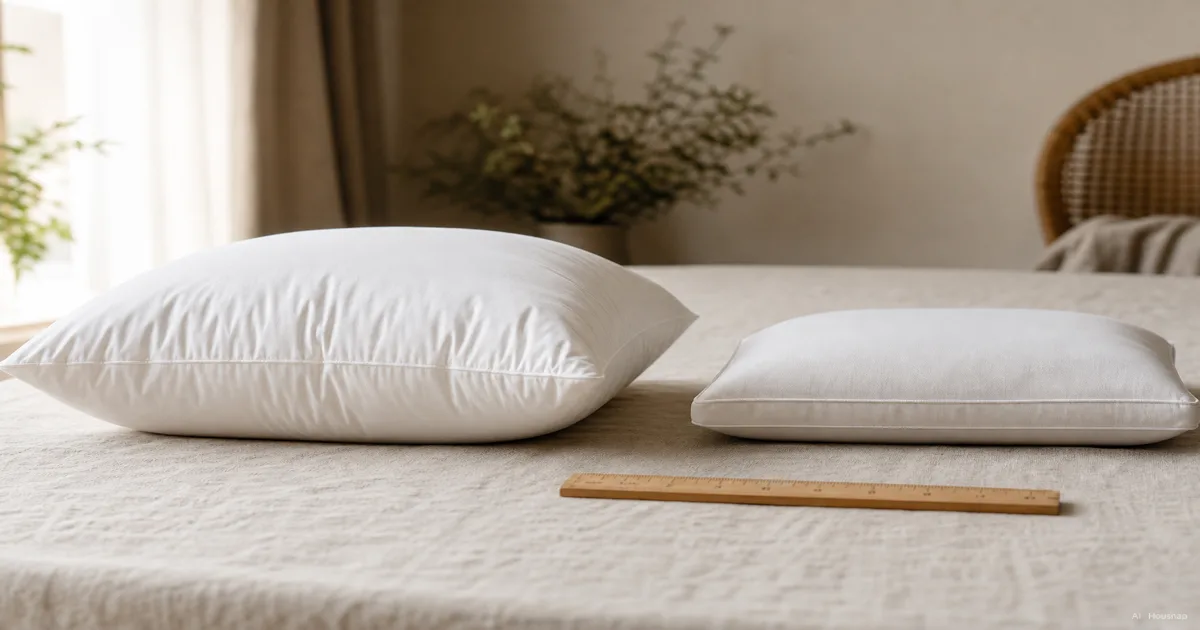
Loft vs Firmness: Why These Are Two Different Things
Almost every first-time pillow regret traces back to confusing these two words, so it is worth slowing down on exactly one second of difference.
Loft is height. It is the number of inches the pillow holds your head above the mattress, and it is measured in inches the way a step is measured in inches. Firmness is resistance. It is how hard the pillow pushes back against the weight of your head. The reason these get tangled is that a soft, plush pillow often looks tall, so people assume soft means high and firm means low. That assumption is exactly backwards as often as not.
A high-loft pillow can be soft, slowly compressing under your head while still keeping it elevated. A low-loft pillow can be firm, holding a flat but unyielding line. Loft decides where your head ends up. Firmness decides how it gets there and whether it stays there through the night.
Here is the practical version. Picture two dials. The loft dial sets the gap you need filled between your head and the bed. The firmness dial sets how stubbornly the pillow defends that height once your full weight is on it, the Sleep Foundation's pillow guide frames this material-by-material. A soft high-loft pillow may sink down to the wrong height by 2 a.m. A firm low-loft pillow may hold a height that was wrong from the start.
So when a listing says high support, ask which dial it means. You want the right loft for your body, set at a firmness that actually holds it. Get that split clear and every other choice below gets easier.
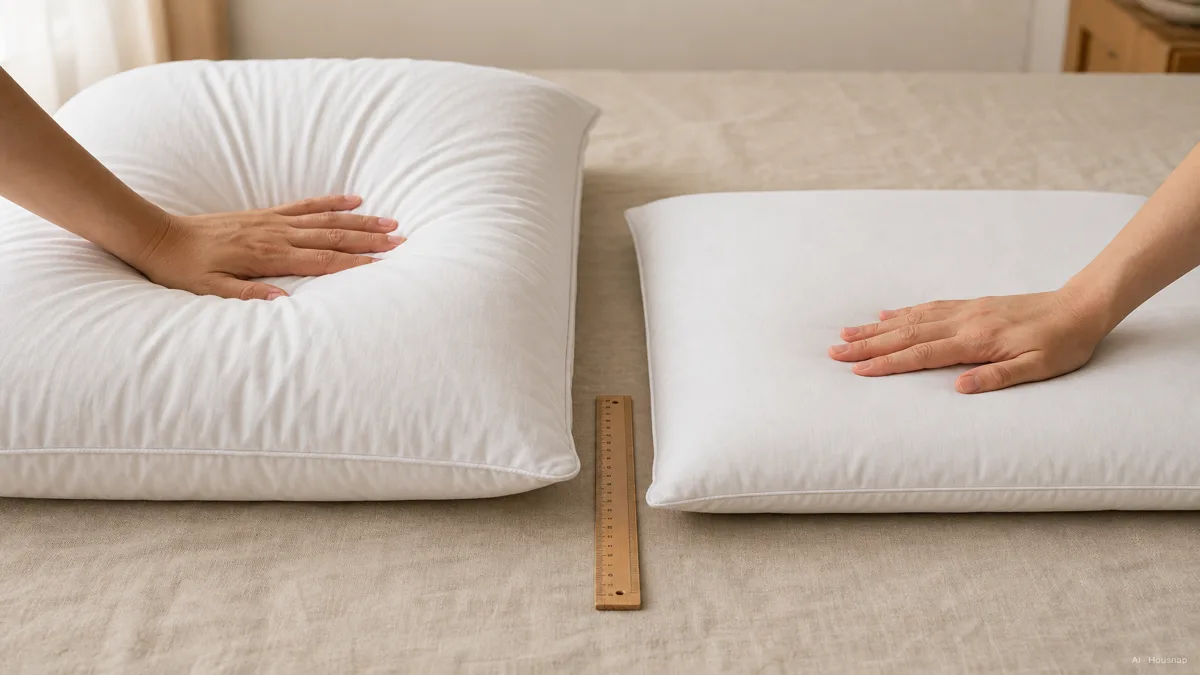
Matching Pillow Height to Your Sleep Position
Now the dial that does the most work. Once you separate loft from firmness, loft is where you actually start, because it is set by how your body lies down.
The rough ladder looks like this. Low loft is under 3 inches, near flat, and suits stomach sleepers or anyone who wants their head barely lifted. Medium loft is 3 to 4 inches and tends to fit back sleepers. High loft is 4 to 5.5 inches and is built for side sleepers. Extra-high is over 5.5 inches for broad-shouldered side sleepers, a range the Turmerry pillow loft guide lays out in detail.
The why behind side sleepers needing the most height is simple once you see it. Lie on your side and there is a real gap between your ear and the mattress, the width of your shoulder. The pillow has to bridge that whole gap to keep your neck level with your spine. And the best single predictor of how much loft you need is not your height or your weight but your shoulder width, a point Circadian Rest makes in its loft-and-neck-pain guide. Broader shoulders, bigger gap, taller pillow.
Stomach sleepers sit at the other end. Lying face down, your head is already close to the mattress, so a tall pillow cranks your neck up and back. Near-flat is the goal, and some stomach sleepers do best with almost no pillow at all. Back sleepers land in the middle, needing just enough loft to support the natural curve of the neck without pushing the head forward.
The quick self-check is the mirror or a phone photo. Lie down the way you actually sleep and look at your neck. If it runs in a straight line with your spine, the loft is right. If your chin tucks down or your head tips back, the loft is off, and no amount of firmness fixes a height that is simply wrong.

Fill Material Comparison: Down, Memory Foam, Latex, and Buckwheat
Loft and firmness are the result. Fill is the thing that produces them, and each material produces them differently.
Down is the classic plush fill, and it comes with a number people misread. Fill power, like 600 or 700 or 800, measures how many cubic inches one ounce of down takes up. Higher fill power means larger, lighter clusters that hold their loft longer, as Down & Feather Co. explains in its fill-power guide. But here is the catch that trips up new buyers: fill power is not firmness. How firm a down pillow feels is set by fill weight, the total ounces stuffed inside. The practical sweet spot sits around 600 to 800 fill power, where you get real loft longevity without paying the premium that 800-plus commands.
Memory foam comes in two forms, and the difference matters a lot for a first buy. Solid memory foam is one molded piece with a fixed loft you cannot change. Shredded memory foam is chopped into pieces inside a zippered cover, so you can add or remove fill to tune the height yourself. For a first-time buyer who is not yet sure of their ideal loft, shredded is the more forgiving choice.
Latex sits a little differently under your head. It holds you on the surface rather than letting you sink in, which many back and side sleepers prefer for keeping the neck aligned, a feel MattressNut compares across fill types. It also sleeps cooler than memory foam and tends to last 5 to 7 years before softening.
Buckwheat is the outlier and the most adjustable of all. The pillow is filled with hulls you add or pour out through a zipper, so loft is fully in your hands, and it runs measurably cooler, up to 3 to 5 degrees Fahrenheit below memory foam after 30 minutes of contact, as Hullo notes in its filling guide. The trade-off is a firmer, heavier, more textured feel that takes some getting used to.
One more anchor worth knowing. In its 2026 testing, Consumer Reports highlighted the PureLux Simply Cool memory foam pillow as a top performer for side and back sleepers, pairing a memory foam core with a cooling gel layer, a useful reference point if you are weighing foam against the cooler fills.

How Your Mattress Firmness Changes the Pillow You Need
Here is the part most pillow guides skip, and it explains a lot of mismatched first buys. The right loft is not set by your body alone. Your mattress is part of the equation.
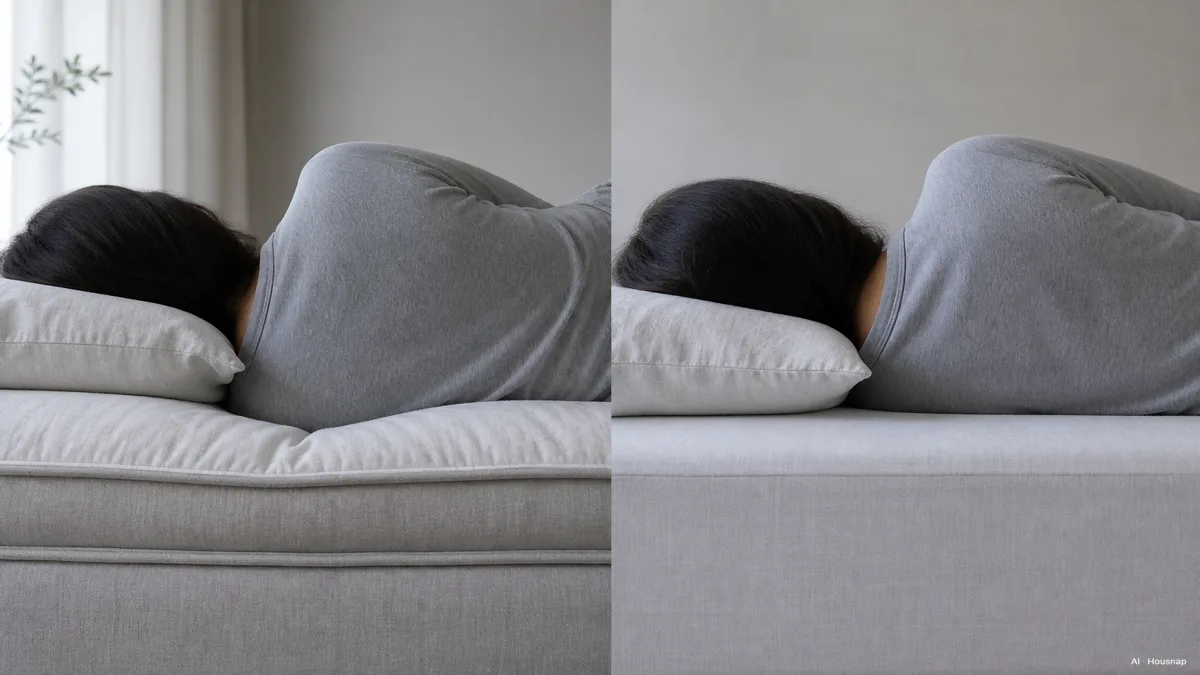
Think about what a soft mattress does when you lie on your side. Your shoulder sinks into it. That sinking closes part of the gap between your head and the surface, which means you need less loft than the charts suggest, because the bed itself is already filling some of the space. A firmer mattress does the opposite. Your shoulder stays high on the surface, the gap stays wide open, and you need a taller pillow to fill it, a relationship Sleep Like the Dead has long documented.
So the same person, the same shoulders, can need two different pillow heights on two different beds. Buy a firmer mattress and your old pillow may suddenly feel too flat. Switch to a plush one and that same pillow may feel too tall.
This is why a pillow you loved in a store can disappoint at home, and why a friend's perfect-pillow recommendation may not transfer. You are not just buying for your sleep position. You are buying for your sleep position on your specific mattress.
The takeaway is to test loft on the bed you actually own, not on a showroom floor or against a generic chart. And it is one more reason the adjustable route below is the safe one, because it lets you tune to the bed you have rather than guessing.
Adjustability: The First-Time Buyer's Safety Net
Put the last four sections together and one practical truth falls out. For a first pillow, the smartest move is often not to nail the exact height on the first try. It is to buy a pillow that lets you change it.
Adjustable-fill pillows solve the problem that this whole guide circles. They have a zippered opening so you can add or remove fill until the loft is right for your shoulders, your sleep position, and your particular mattress. Shredded memory foam, buckwheat, and adjustable down alternatives all work this way, and they are the forgiving entry point when you are not yet sure where your ideal height lands.
Combination sleepers gain the most here. If you start the night on your side and drift onto your back, your loft needs shift mid-sleep, and a fixed-height pillow can only get one of those positions right. An adjustable pillow set to a medium baseline adapts across positions, which is why Bedsure and similar guides point combination sleepers toward adjustable fill rather than a single locked loft.
It also future-proofs the purchase. Change mattresses, change your main sleep position, or just gain or lose a little of the loft that down and foam slowly shed over time, and you can re-tune the same pillow instead of buying again.
One honest caveat. Pillows wear out. Polyester and down alternative fills generally want replacing every 1 to 2 years, while latex and high-quality down can hold their structure 3 to 5 years or more before they stop supporting your neck, as the Sleep Foundation lays out. Adjustability buys you tuning, not immortality.
So the buying move is concrete. Fix your loft from your sleep position and your shoulder width, check it against the firmness of the mattress you actually sleep on, and lean toward an adjustable fill if you are unsure or you switch positions through the night. Then compare real down, memory foam, latex, and buckwheat options side by side, see what each brand charges across stores, and match the fill and loft to the feel and lifespan you just settled on. You'll find options from the names that show up most in bed pillows, so the comparison is concrete rather than hypothetical.
Sources
- Types of Pillows — Sleep Foundation; fill material breakdown, solid versus shredded memory foam, and pillow replacement timelines by material
- Pillow Loft Guide — Turmerry; loft height bands in inches mapped to stomach, back, and side sleeping positions
- How to Choose Fill Power — Down & Feather Co.; fill power as cubic inches per ounce, why it is not firmness, and that fill weight sets firmness
- Best Pillow Fill Types Compared — MattressNut; down, memory foam, latex, and buckwheat head-to-head, latex on-surface feel and lifespan
- Match Pillow Loft to Neck Pain — Circadian Rest; shoulder width as the best single predictor of side-sleeper loft
- Pillow Filling Types Explained — Hullo; buckwheat adjustability and the 3 to 5 degree cooler surface versus memory foam
- 5 Best Pillows of 2026 — Consumer Reports; lab-tested top picks including the PureLux Simply Cool memory foam pillow for side and back sleepers