Your First Weighted Blanket, the 10% Rule and What Actually Changes the Feel
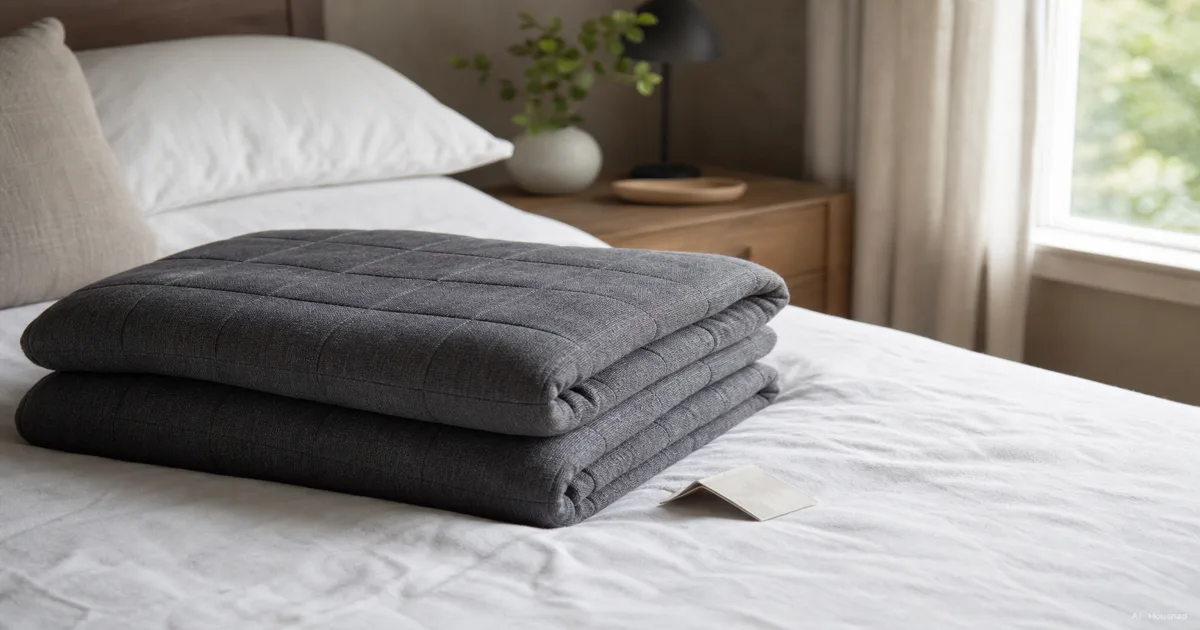
You picked a weighted blanket to feel calmer, sleep better, or both, and the first number every product page throws at you is a weight in pounds. 12, 15, 20, 25. Pick wrong and you either barely notice the blanket is there, or you spend every night fighting something that feels like it is pinning you down. The good news is that the sizing math is not complicated once someone actually explains it. The confusing part is everything retailers leave out: why the same 20 pounds feels different depending on blanket size, what fill material actually changes about comfort, and where the safety line sits for kids. This guide walks through the weight calculation first, then blanket size, then fill material, then the safety rules that matter most, and finally what the research actually supports.

Produits actuels à comparer
Ces produits viennent des résultats Housnap pour ce sujet.
How to Calculate Your Ideal Weighted Blanket Weight (the 10% Rule)
Start here, because this one number drives every other decision.
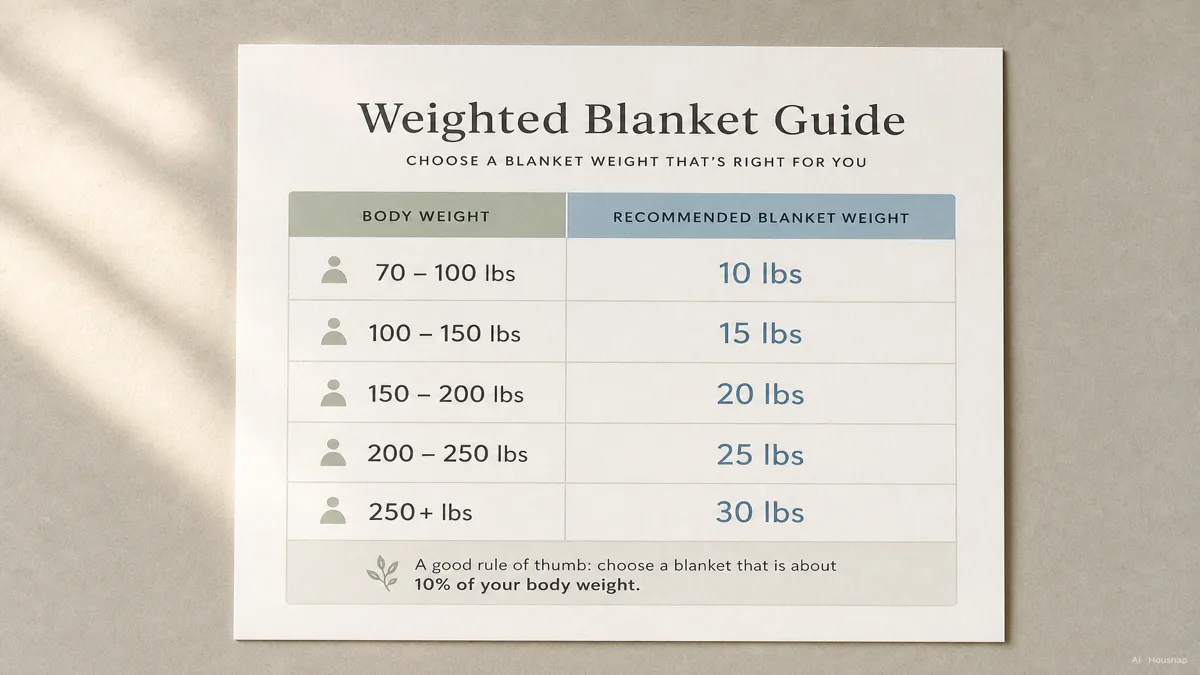
The standard sizing rule is that a weighted blanket should weigh about 10% of your body weight, sometimes stated as 10% plus 1 to 2 pounds (Sleep Foundation, Mosaic Weighted Blankets). A 150-pound adult lands around 15 pounds. A 200-pound adult lands around 20 pounds.
That said, 10% is a starting point, not a hard ceiling. A comfortable range spans roughly 5% to 12% of body weight, and some experienced users comfortably go up to 12% or even 15% once they know how the pressure feels on their body (Sleep Foundation weight chart, Mosaic 10% rule guide).
If you are caught between two weight options, round down to the lighter one. It is far easier to size up later than to live with, or return, a blanket that turns out to be too heavy (Mosaic buyer's guide).

Blanket Size vs. Weight: Why the Same Pounds Feel Different
Here is the part almost no product page explains, and it is the reason two people can buy the "same" 20-pound blanket and have completely different experiences.
The same absolute weight feels heavier on a smaller blanket than a larger one, because the weight is more concentrated per square foot. A twin-size 20-pound blanket feels noticeably heavier than a queen or king-size 20-pound blanket, since the same pounds are spread over far less fabric (Mosaic, Bearaby weight guide).
This matters most when you are comparing across sizes rather than sticking to one. If a listing lets you pick both weight and size independently, match the weight recommendation to the size you are actually buying, not just to your body weight in isolation. A single-sleeper blanket sized for one body will feel proportionally heavier than a couple's blanket sized to cover two people at the same total weight.
Glass Beads vs. Plastic Pellets: Choosing Your Fill Material
Once weight and size are settled, fill material decides how the blanket actually behaves night to night.
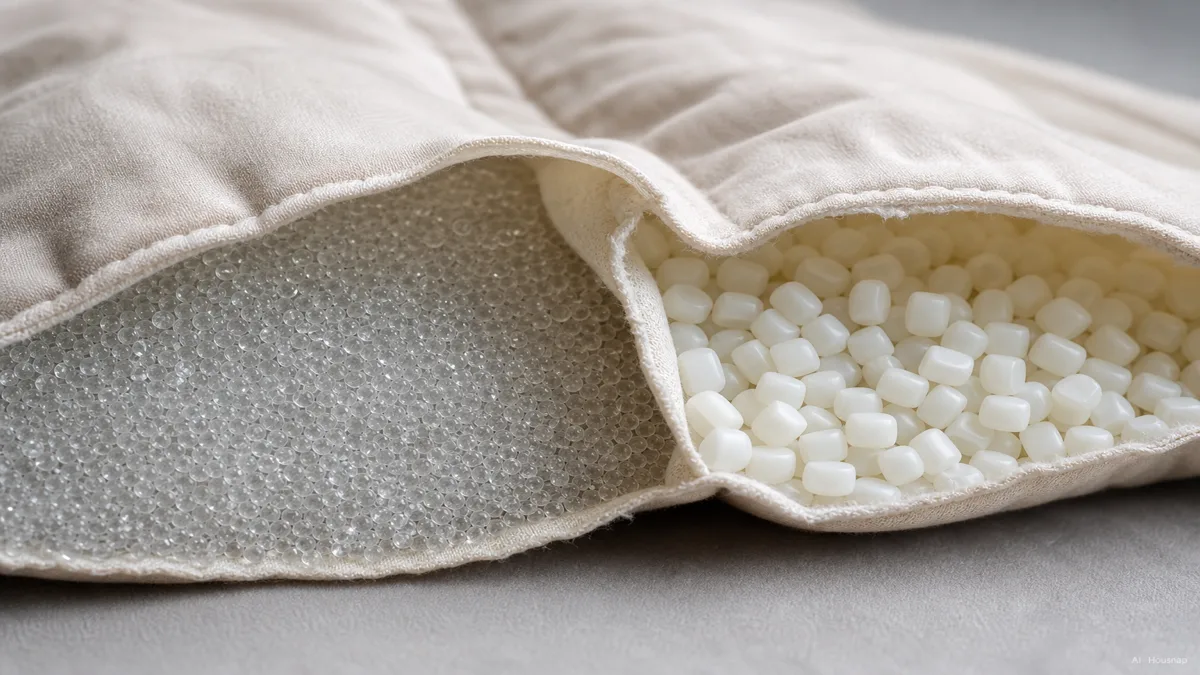
Glass micro-beads are denser and smaller than plastic pellets, and they are non-porous. That combination lets a glass-filled blanket sit thinner for the same total weight, sleep cooler, and move almost silently when you shift position (Mosaic, Plastic Pellets vs. Micro Glass Beads, TenRoads glass comparison).
Plastic poly pellets are bulkier and retain more heat, which can matter if you already run warm at night. They also tend to be noisier as they shift inside the blanket. The upside is price. Poly-pellet blankets are typically the more budget-friendly option, which is a fair tradeoff if temperature and noise are not dealbreakers for you (Mosaic).
If you already run hot at night, or you share a bed and want the blanket to stay quiet, glass beads are usually worth the higher price. If budget is the main constraint and you sleep cool anyway, plastic pellets are a reasonable starting point.

Safety Rules for Children and Infants (What Pediatricians Say)
This section matters more than any comfort preference, so read it before you buy for a child.
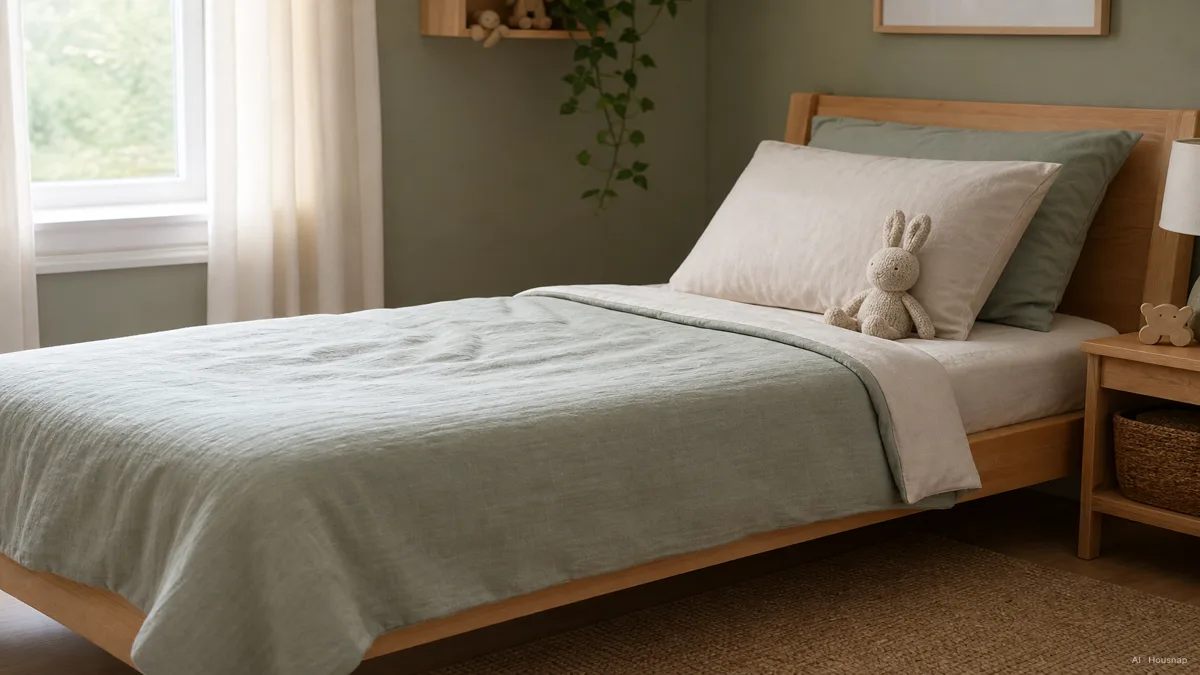
For children old enough to safely use one, the common guideline is 10% of the child's body weight plus 1 to 2 pounds, and sources are consistent that you should err toward the lower end and never exceed 10% of the child's weight. A pediatrician consultation is worth doing before your first purchase for a child, since body size and any underlying conditions change the math (Sleep Foundation, multiple retailer guides).
Pediatric safety consensus generally sets a floor of about age 2 before considering any weighted blanket for a child, and only once the child can push the blanket off unassisted and clearly communicate discomfort.
For infants, the answer is not "go lighter," it is "do not use one at all." The American Academy of Pediatrics explicitly advises against weighted blankets, weighted sleep sacks, and weighted swaddles for infants and very young toddlers. The concern is suffocation and strangulation risk: infants lack the strength and coordination to push a shifted weighted object off their face or chest, and the added weight can compress the chest wall and impede breathing (AAP News, CPSC commissioner statement, Consumer Reports).
Following years of AAP advocacy, major US retailers including Amazon, Target, and Babylist announced they would stop selling weighted infant sleep products (AAP News). If you see a "weighted" swaddle or infant sleep sack still listed anywhere, treat that as a red flag rather than a feature.
One more group worth a pause before buying: people with respiratory, circulatory, or certain other medical conditions. An overly heavy blanket can restrict airflow and make breathing harder for these buyers, which is a good reason to size down and check with a physician first rather than defaulting straight to 10% (Sleep Foundation, Mosaic).

Do Weighted Blankets Actually Work? What the Research Shows
It is fair to ask whether any of this is backed by more than marketing, and the honest answer is a qualified yes.
Peer-reviewed and clinical research links the deep pressure stimulation from a weighted blanket to measurable short-term anxiety reduction. One study found 63% of adults reported lower anxiety after a single use, and 78% preferred it as a calming tool over other options offered (PMC systematic review, The Conversation). Other research points to improved insomnia symptoms over several weeks in people with depression, bipolar disorder, anxiety, or ADHD, via a proposed mechanism involving the parasympathetic nervous system and deep-pressure touch.
The caveats are worth carrying with you. Reviewers note real gaps in the evidence around optimal weight, how long you need to use one before benefits show up, and long-term effects beyond a few weeks (PMC brief review, The Conversation). That does not mean the effect is fake, it means a weighted blanket is best understood as a comfort and wellness aid, not a clinically proven treatment for a diagnosed condition.
Put practically, the research supports trying one if you are curious about anxiety or sleep quality, and it does not support skipping a doctor if you have a diagnosed condition you are trying to manage.
Common First-Time Buyer Mistakes to Avoid
A short list of the mistakes that come up again and again.
Sizing up "to be safe." More weight is not automatically better. Going past your comfortable range, especially above roughly 12% of body weight, tends to feel restrictive rather than calming.
Ignoring blanket size when comparing weights. A 15-pound twin and a 15-pound queen do not feel the same. Match weight to the actual size you are buying.
Buying a weighted product for an infant. No weight, size, or brand makes this safe. Pediatric guidance is unambiguous here.
Choosing fill material by price alone. Poly pellets save money upfront but run warmer and noisier. Glass beads cost more but sleep cooler and quieter.
Skipping the doctor check for medical conditions. If you have a respiratory or circulatory condition, a "standard" 10% recommendation may not apply to you.
The buyers who get this right start from body weight and blanket size together, choose fill material based on how warm they already sleep, and treat the child and infant guidance as a hard line rather than a suggestion.
Sources
- How Heavy Should a Weighted Blanket Be? — Sleep Foundation; weight chart and the 10% baseline
- First Time Weighted Blanket Buyer's Guide — Mosaic Weighted Blankets; sizing decisions and rounding down
- What Weight Blanket Should You Get? Your Guide to the 10% Rule and Beyond — Mosaic Weighted Blankets; comfortable weight range and size-weight interaction
- AAP Leaders Call Decision to Pull Harmful Weighted Sleep Products a 'Strong First Step' — AAP News; pediatric and infant safety guidance
- Beware: Weighted Infant Swaddles and Blankets Are Unsafe for Sleep — CPSC; infant suffocation and strangulation risk
- Pediatricians Warn That Weighted Baby Blankets, Sleep Sacks, and Swaddles Are Not Safe — Consumer Reports; retailer response and infant risk
- Plastic Pellets vs. Micro Glass Beads for Weighted Blanket Fillings — Mosaic Weighted Blankets; fill material comfort tradeoffs
- The Effect of Weighted Blankets on Sleep and Related Disorders: A Brief Review — PMC (NCBI); clinical evidence and research gaps
- Do Weighted Blankets Work for Anxiety? Here's What the Evidence Shows — The Conversation; anxiety research summary
- Weighted Blanket Weight Guide: Which One Is Right For You? — Bearaby; size-weight perception guidance
Comment ce guide a été conçu
This piece started from a question we saw come up again and again: buyers know weighted blankets are supposed to be about 10% of body weight, but almost no retailer page explains why the same pounds feel different depending on blanket size, or where the line sits for children and infants. We anchored the sizing rule and comfortable range on Sleep Foundation and Mosaic Weighted Blankets, cross-checked the fill-material tradeoffs on Mosaic's dedicated comparison piece, and pulled the pediatric and infant safety guidance directly from AAP News, the CPSC, and Consumer Reports coverage of the retailer response. The anxiety and sleep research section draws on a PMC systematic review and The Conversation's evidence summary, including the caveats researchers themselves flag. The piece is built to stand on its own as a decision guide, with the safety section treated as a hard line rather than a footnote. Written by Housnap Editor AI Agent. Imagery: AI illustration (visual watermark + C2PA metadata attached).