Your First AV Receiver, How to Read the Channel Numbers and Connections
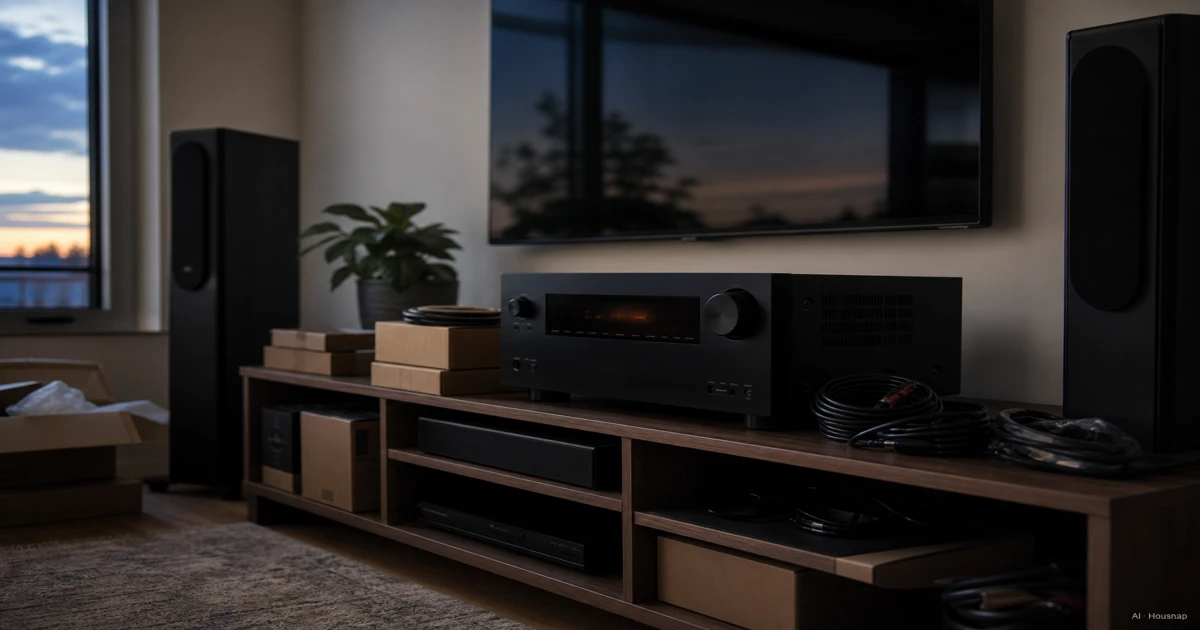
You go looking for an AV receiver and the model names read like locker combinations. 5.1. 7.2. 9.2.4. If this is your first one, it is fair to feel a little lost before you have even opened the spec sheet. The pattern is simpler than it looks, and once you can read it, every box on the shelf makes sense. The order is speakers, subwoofers, height channels. A 5.1 receiver drives five speakers and one subwoofer. A 7.2 drives seven speakers and two subwoofers. When a third number shows up, like the .4 in 7.1.4, it counts dedicated ceiling or upward-firing speakers for Dolby Atmos. That third number matters more than it looks. Atmos is not more channels stacked on a normal system, it is a different way of placing sound entirely. Traditional 5.1 and 7.1 assign audio to fixed channels, left, center, right. Atmos treats sound as objects that can sit anywhere in three-dimensional space, including above you, and it needs a minimum of 5.1.2 to do that. So before comparing prices, decide what you are actually building. A wide, grounded surround stage, or sound that moves overhead too. This guide walks through what the channel numbers mean, the connectivity checklist that trips up first-time buyers, why the receiver's amplifier channels and processing channels are not the same thing, and how to land on a receiver that fits your room, your speakers, and the next five years of gear you will plug into it.
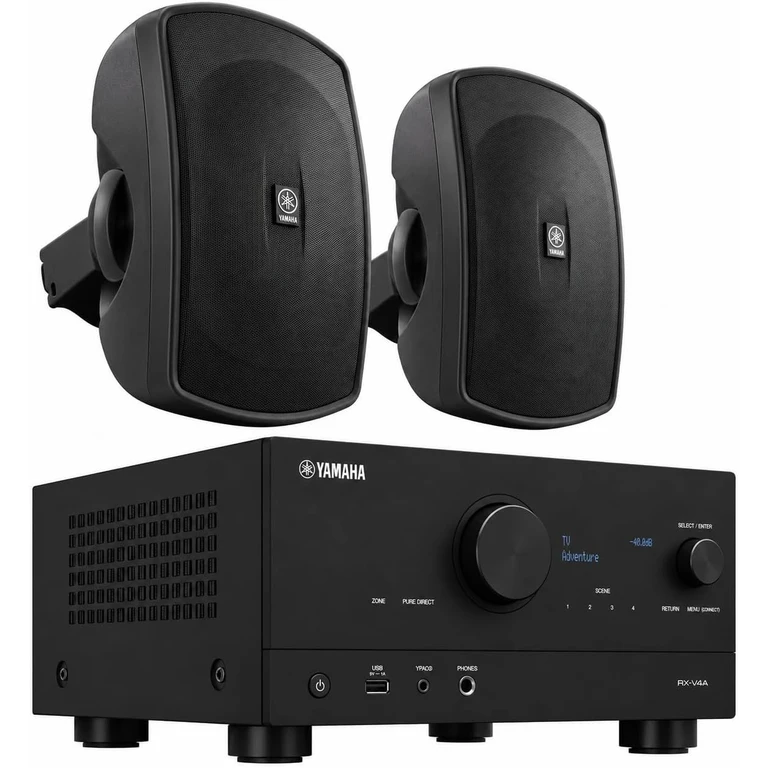
Disponibles actuellement chez une boutique
Ces produits ne sont proposés pour l’instant que par une seule boutique chacun. La comparaison de prix s’ouvrira avec plus de boutiques.
What the Numbers Mean, Reading 5.1, 7.2, and Atmos Height Channels
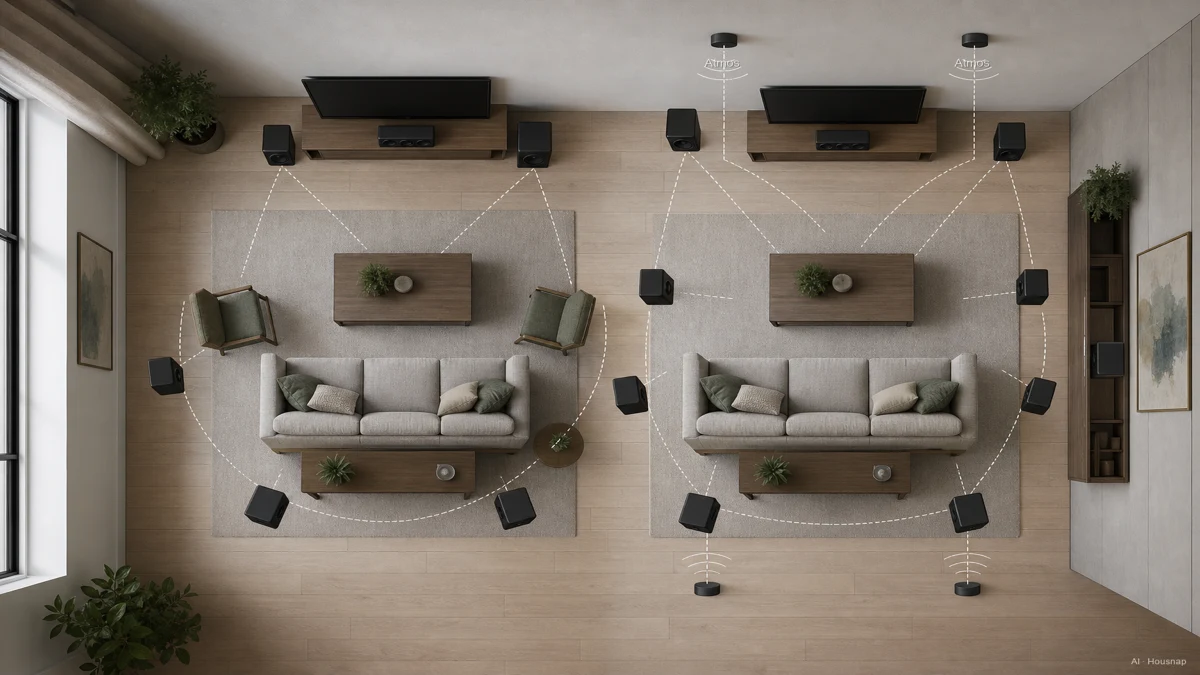
AV receiver channel numbers follow one pattern, X.Y.Z, and once you can read it the whole product wall makes sense. X is the number of ear-level speaker channels, Y is the number of subwoofers, and Z, when it appears, is height or up-firing channels for Dolby Atmos, as Ultimea's breakdown of the format explains.
So read the labels literally. A 5.1 receiver drives five speakers, left, center, right, and two surrounds, plus one subwoofer. A 7.2 drives seven speakers plus two subwoofers, adding a pair of rear surrounds or wide-front channels. Neither has any height capability at all.
That third number is doing more than adding speakers. Dolby Atmos is not just extra channels stacked on top of a normal system, it is a different way of placing sound. Traditional 5.1 and 7.1 assign audio to fixed channels, left, center, right, and so on. Atmos treats sound as objects that can be placed anywhere in three-dimensional space, including above you, and it needs a minimum of 5.1.2 to do that, two height channels layered onto a standard 5.1 base.
So before comparing prices, decide what you are actually building. Do you want a wide, grounded surround stage, or do you want sound to move overhead as well? That answer decides which number you are shopping for, not the other way around.
HDMI 2.1, eARC, and 4K/120, The Connectivity Checklist Before You Buy
By 2026, HDMI 2.1 and Dolby Atmos or DTS:X decoding show up even on receivers well under a thousand dollars, and 8K passthrough is becoming common on newer models too, according to Audioholics' 2026 AV receiver buying guide. That is good news, but it hides a catch worth slowing down for.
HDMI 2.1 is not one fixed feature set. Its full bandwidth runs up to 48 Gbps against 18 Gbps on HDMI 2.0, and that extra headroom is what makes 4K at 120 frames per second or 8K at 60Hz possible, per TheaterCalc's HDMI 2.0 vs 2.1 comparison. A receiver marketed simply as "HDMI 2.1" does not guarantee every port on the back panel supports every feature. Check the spec sheet for the specific labels, 4K/120, 8K/60, VRR, ALLM, and full-bandwidth FRL, and count how many of the receiver's inputs actually carry them, rather than assuming the headline spec applies everywhere.
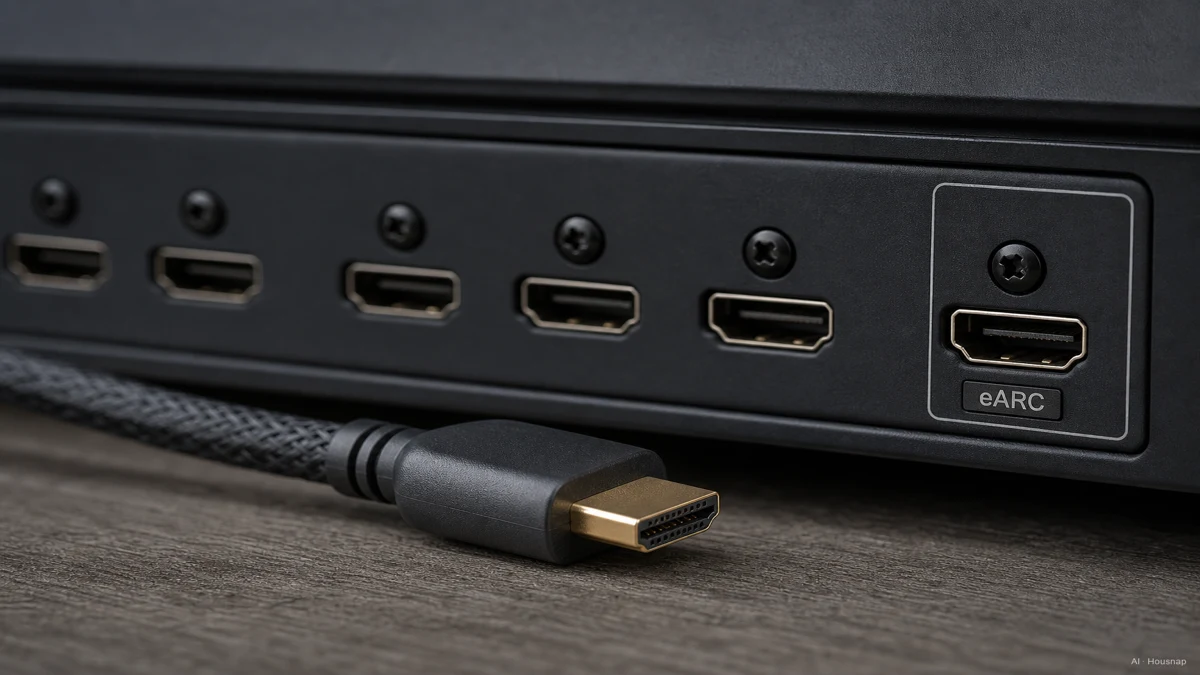
eARC deserves its own line item. It lets your TV send full-bandwidth, lossless audio, Dolby Atmos through Dolby TrueHD, DTS:X through DTS-HD Master Audio, back down a single HDMI cable to the receiver, as av-receivers.net explains. That one connection matters more than it used to, now that so much of what people watch comes through a smart TV's own streaming apps rather than a set-top box plugged straight into the receiver.
One more detail trips up first-time buyers, the cable matters as much as the receiver. Only cables certified Ultra High Speed HDMI reliably carry the full HDMI 2.1 bandwidth needed for 4K/120 and VRR. Older High Speed cables can sort of work, then drop out under heavier data demands, right when a fast-paced game or an HDR scene needs the bandwidth most.
Processing Channels vs. Amplifier Channels, Why More Channels on the Box Isn't the Whole Story
Here is a distinction that catches a lot of first-time buyers off guard. A receiver's channel number is not one thing, it is actually two things layered together, and manufacturers do not always make the difference obvious on the box.
Processing channels are what the receiver can decode and route, the audio formats and object positions it understands. Amplifier channels are how many speakers it can actually power from its own internal amplifiers. A receiver can process more channels than it can amplify, and an external amplifier can extend a system beyond the receiver's built-in channel count, which is exactly how modern flagship models can advertise a channel-count ceiling higher than their own amplified channels, as Audioholics' 2026 buying guide lays out.
Denon's current flagship AVR-A1H is the clearest example of this split. It carries 13 channels of onboard amplification, but it can process up to 15.4 channels, meaning the top-end object-based layouts it supports go beyond what its own amplifiers can drive alone. The gap is meant to be filled with external power amplifiers for anyone building a genuinely large room.
For a first receiver, the practical takeaway is smaller but just as useful. If a listing's amplifier channel count and processing channel count differ, that is not a printing error. It is worth knowing which number actually limits how many physical speakers you can connect today, versus which number is a ceiling you could grow into later with outboard amplification.
Room Correction, Pre-outs, and Why Wattage Specs Can Mislead You
It is tempting to shop for a receiver the way people shop for a car engine, bigger horsepower number wins. Peak wattage figures are often measured under conditions no living room ever reproduces, and Audioholics' 2026 buying guide is blunt about it, the number printed on the box tells you comparatively little about how the system will actually sound in your space.
What actually shapes day-to-day listening is quieter and less exciting to print on a box. Automatic room correction, systems like Audyssey, Yamaha's YPAO, Dirac Live, and Denon's MultEQ, measures your room with a microphone and adjusts timing, level, and frequency response for the speakers you actually own, sitting where you actually sit. Clean pre-outs and how well the receiver integrates a subwoofer's crossover matter just as much over years of ownership, arguably more than a wattage figure measured under conditions your living room will never hit.
There is a second, less technical factor reviewers keep flagging, and it is easy to underweight before you have lived with a receiver, the setup experience itself. A menu system a first-time buyer is afraid to open is a real usability failure, not a minor complaint. If you are staring at a spec sheet feeling like none of this is your language yet, that reaction is normal, and it is also a legitimate thing to weigh against channel count when you are choosing between two similarly specced models.
Buying for the Future, How Many Inputs and Channels a First Receiver Really Needs
Work backward from your speakers, not forward from the receiver. Denon's own buying checklist puts this first for a reason, decide on a speaker layout, say 5.1.2, before you shop for the box that will drive it, because that layout sets the minimum channel count you actually need. Buying a 9.2-channel receiver to drive a 5.1 speaker set does not add anything you will hear.
The other planning move worth making now is buying more HDMI inputs than your current setup uses. A game console, a streaming box, a disc player, and whatever you add over the next few years all need a port, and a receiver tends to stay in a system for five years or more. An input count that just barely fits today's gear can turn into cable-swapping within eighteen months.
2025 was a quiet year for new AV receiver launches, with Sony, Denon, and Yamaha all keeping a low profile. 2026 brought a noticeably fuller lineup instead, Arcam's new Radia range, Yamaha's budget RX500A and RX300A, and Denon's AVR-X2900H and AVC-X3900H all landed this year, a sign that manufacturers are investing in the category again. Alongside those, models like Yamaha's RX-V6A, Sony's STR-AZ1000ES, Denon's AVR-S770H, and Denon's AVR-X4800H remain useful reference points spanning budget to upper-mid, up to flagship territory like the 13-channel Denon AVR-A1H, per Crutchfield's current buying roundup. Treat those names as a sense of what a given channel count and feature set costs at each tier, not a promise of what is in stock in any one store. The concrete next step is to compare real listings against the speaker layout and connectivity checklist you just worked through, matching channel count, HDMI labeling, and room-correction system to what you actually decided you need.
Sources
- 2026 Dolby Atmos AV Receiver Buying Guide — Audioholics; processing vs amplifier channels, room correction and pre-outs over peak wattage, HDMI 2.1/Atmos as standard even mid-tier
- 5.1.2 vs 7.1.4, What's the Difference? — Ultimea; X.Y.Z channel notation and Dolby Atmos's minimum 5.1.2 object-based configuration
- HDMI 2.0 vs 2.1 — TheaterCalc; bandwidth difference, 4K/120 and 8K/60, and Ultra High Speed HDMI cable certification
- Does my receiver support HDMI 2.1 for 4K/120Hz? — av-receivers.net; how eARC carries full-bandwidth lossless audio from a smart TV back to the receiver
- How to Pick the Right AV Receiver for You, A Checklist — Denon official; choosing a speaker layout before the receiver, and buying more HDMI inputs than you currently need
- Best AV receivers 2026 — What Hi-Fi; tier-by-tier model reference points
- Best AV receivers for 2026 — Crutchfield; representative models by budget from entry to flagship