Raw Honey vs Processed Honey, What to Check Before Your First Jar
Every honey aisle now has a jar labeled raw sitting right next to a jar labeled pure or 100% honey, both claiming to be the real thing. The confusing part is that raw honey has no official legal definition in the US, so the word on the label is really a promise about how the honey was handled, not a government-checked fact. Knowing what heat and filtering actually do to honey is what lets you tell a genuine raw jar from a commodity jar wearing the word.
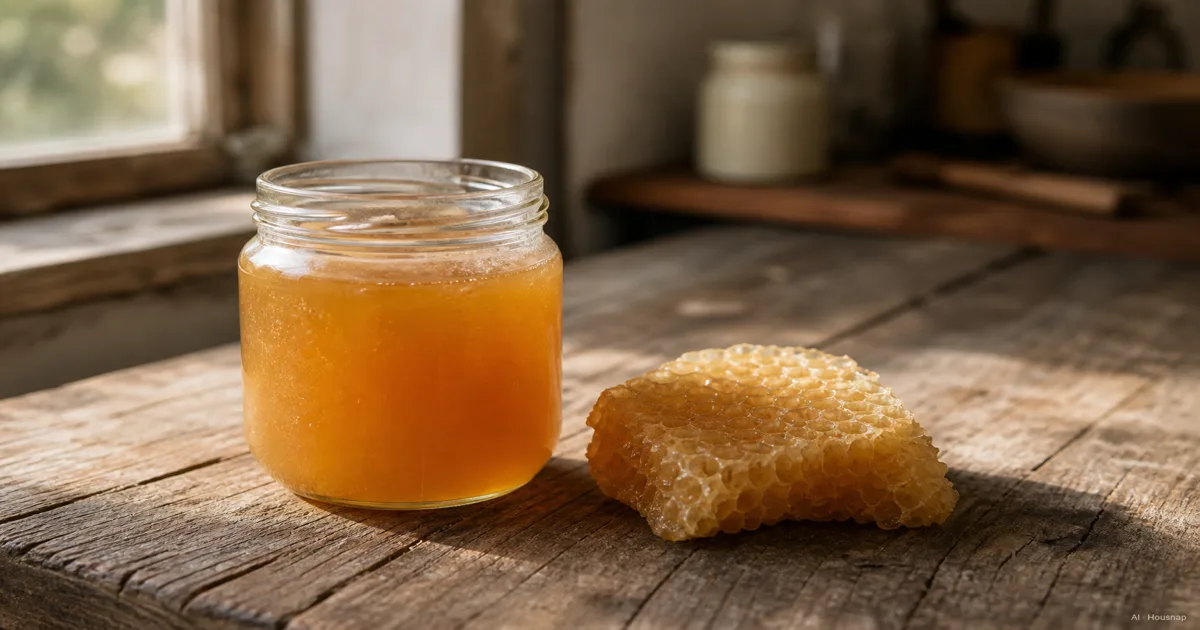
Disponibles ahora en una sola tienda
Por ahora, cada uno de estos productos está disponible en una sola tienda. La comparación de precios se abrirá con más tiendas.
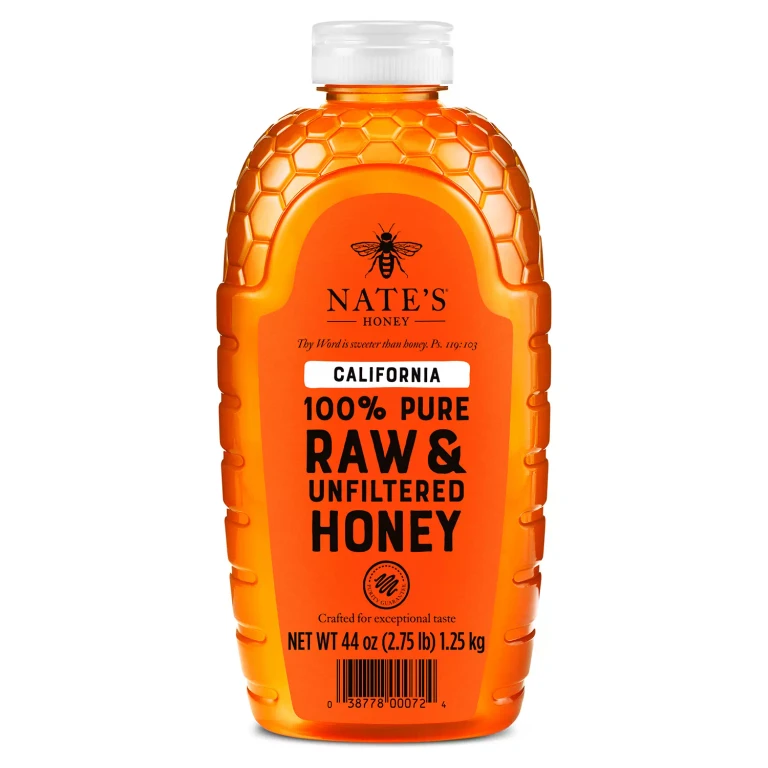
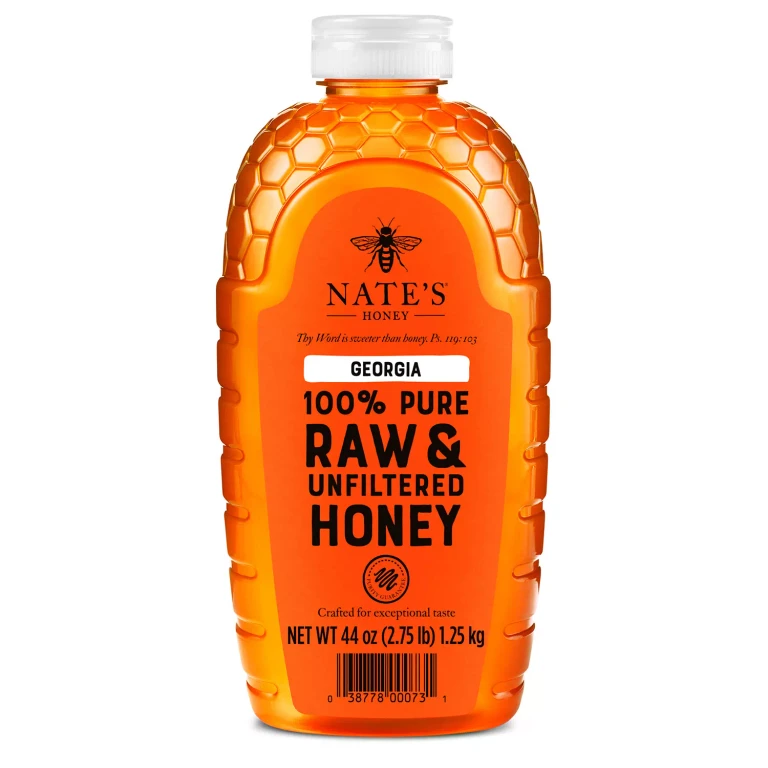
What "raw" actually means (and why there's no legal standard)
Start with the part that surprises most people. There is no US federal legal definition of raw honey. The closest thing to an authority on the word comes from the National Honey Board, an industry group, which describes raw honey as honey "as it exists in the beehive or as obtained by extraction, settling, or straining, without adding heat" (National Honey Board FAQ).
That means the word raw is doing real work, but nobody is auditing it at the border. A jar can say raw honey and mean exactly that, or it can mean something much closer to lightly processed. The label alone is a starting point, not proof.
What raw honey has NOT been through is any deliberate heating step. It may still be strained through a coarse mesh to remove wax and bee parts, and it will still contain the fine bits, pollen, and enzymes that came straight from the hive.
How processing changes honey, heat, filtration, and what's lost
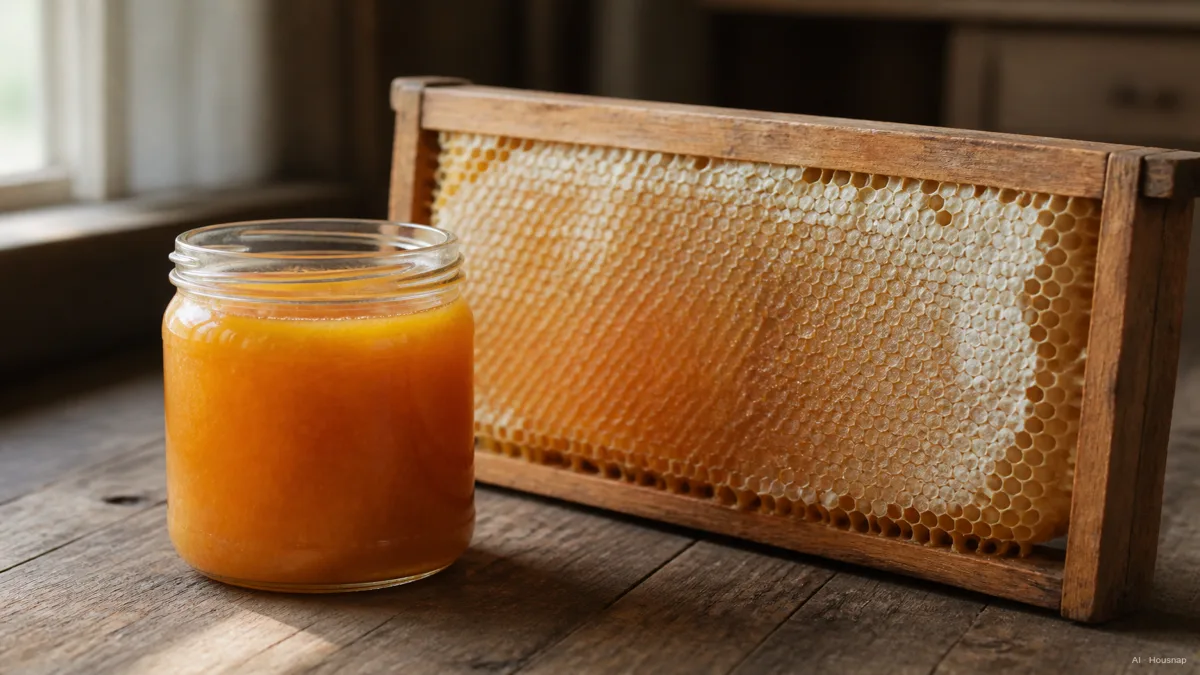
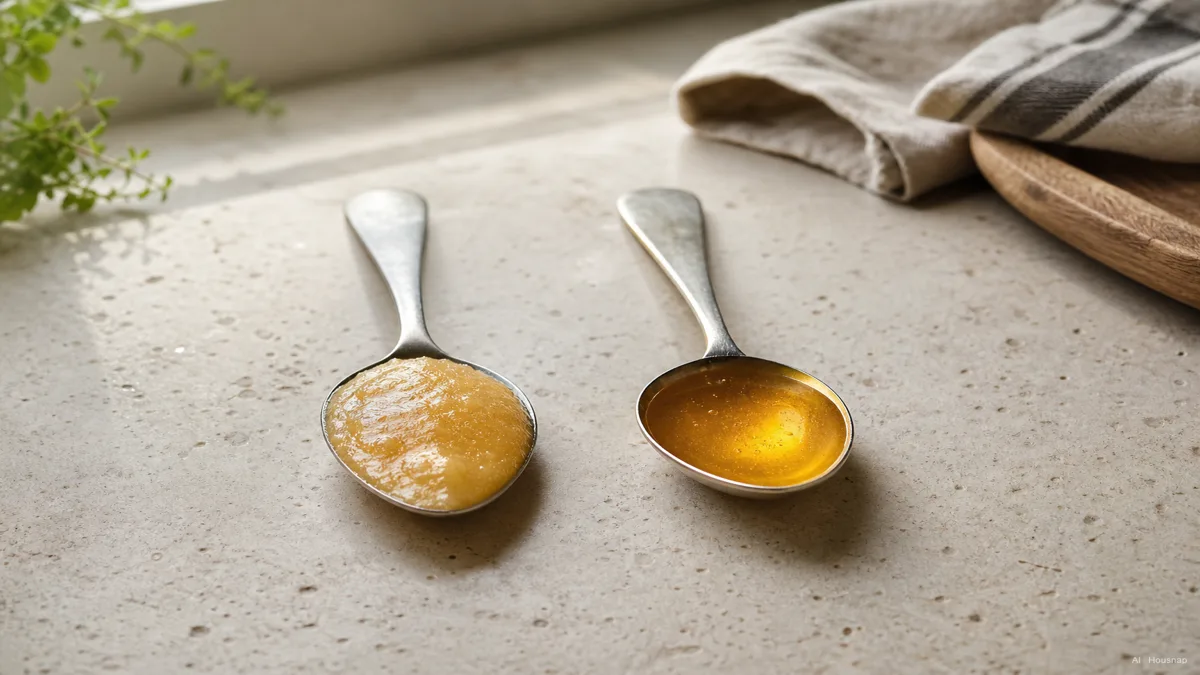
Processed or pasteurized honey gets heated to roughly 145 to 160°F, sometimes cited as 150 to 170°F depending on the operation (ClinicAdvisor, Raw vs. Pasteurized Honey; Raw Honey Guide). That heat does three things at once. It kills the wild yeast cells that would otherwise ferment the honey over time. It dissolves the glucose crystals that cause cloudiness. And it leaves you with the clear, syrupy jar that pours easily and sits on a shelf without ever looking "off."
Ultra-filtration usually rides along with the heat. It is a high-pressure process, sometimes combined with dilution, that strips out the fine particles and pollen grains along with the wax. Pollen is not just a nutritional footnote here. It is the main forensic marker of where honey actually came from, and a 2011 Food Safety News investigation found that most store honey tested had had its pollen filtered out entirely (Food Safety News, 2011). The FDA has said that honey with no pollen at all isn't honey in the traditional sense, though it does not routinely test retail jars for pollen content.
None of this makes processed honey unsafe or fake. It just means you are trading some of honey's original character, its cloudiness, its enzymes, its traceable pollen, for shelf stability and a picture-perfect pour.
Nutrition and enzyme differences, what the research shows
The enzymes are where the real gap shows up. Raw honey carries diastase, invertase, and glucose oxidase, heat-sensitive enzymes that the bees themselves add during nectar processing. Pasteurized honey can show up to 90 percent less diastase activity than raw honey after heating (ClinicAdvisor).
Antioxidants follow a similar pattern. Buying-guide comparisons commonly cite raw honey as having roughly 4.3 times more antioxidants than heavily processed honey, with heat and filtering able to cut antioxidant levels by up to about a third (Raw Honey Guide). There is also an emerging angle worth knowing: raw honey can contain prebiotic oligosaccharides, carbohydrates that survive digestion and reach the colon to feed beneficial gut bacteria, a research thread distinct from the antimicrobial story most people already know (Healthline).
None of this turns honey into medicine. It is still mostly sugar, and the enzyme and antioxidant differences matter at the margins, not as a health transformation. But if the reason you are paying more for raw honey is those compounds, it helps to know heat is the thing actually working against you.
Reading the label, how to spot genuine raw honey before you buy
Since the word raw isn't policed, the label needs a second read. A few checks travel well across brands.
Ingredient list. It should say honey and nothing else. Added corn syrup, cane sugar, or "honey blend" wording is a sign you are not looking at a raw, single-ingredient jar.
Origin. A specific country or region on the label, rather than a vague "packed in the USA" line, points to traceable sourcing. Combined with a credible third-party mark, such as True Source Certified or USDA Organic, it is a stronger signal than the word raw by itself.
Price per pound. Genuine raw honey, produced in smaller batches with minimal processing, commonly runs 10 to 20 dollars or more per pound. Heavily processed commodity honey tends to sit closer to 5 to 8 dollars per pound (Raw Honey Guide buying guide). A jar priced like commodity honey but labeled raw is worth a second look.
Texture over time. This one takes patience, but it's the most reliable check of all. Real raw honey tends to crystallize within weeks to months at room temperature. A jar that stays perfectly clear and syrupy for a year or more has almost certainly been processed enough to resist that natural change.
Crystallization, storage, and safety, including the infant honey rule
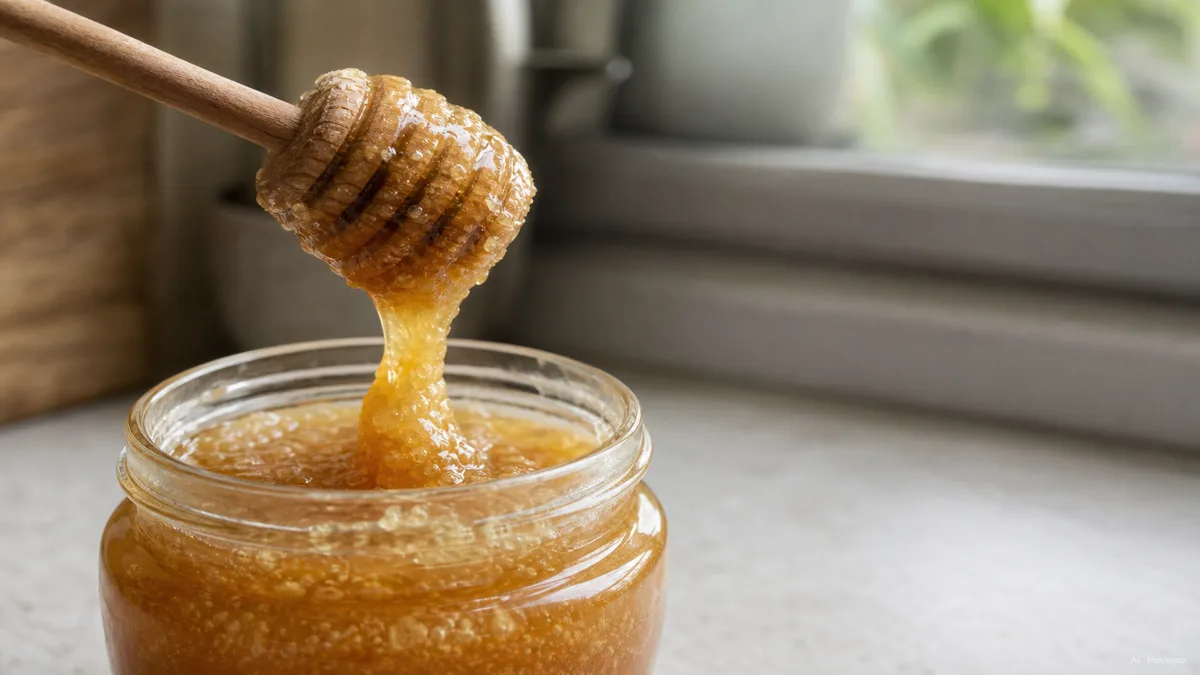
Crystallization confuses a lot of first-time buyers, so it's worth saying plainly: it is not spoilage. Honey is a supersaturated sugar solution, and glucose naturally settles out over time into glucose monohydrate crystals that build a lattice, turning the jar semi-solid (National Honey Board; Wikipedia, Honey). Raw honey tends to crystallize faster than heavily filtered honey, because the pollen and micro-particles it still contains give crystals more surfaces to form on.
A crystallized jar keeps its flavor and nutrients. If you want it liquid again, stand the jar in warm, not boiling, water and let gentle heat loosen the crystals. Many buyers actually treat crystallization as a reassuring sign that a jar wasn't heavily processed, rather than a defect to avoid.
One safety rule applies to honey of any kind, raw or processed: never give it to a baby under 12 months old. Honey can carry Clostridium botulinum spores that an infant's gut isn't yet equipped to handle, and pediatric guidance is unambiguous on the age cutoff. For healthy adults and children over one, honey's low water content and acidity keep bacterial growth in check during normal use, so this is specifically an infant rule, not a general safety concern (Healthline).
Sources
- National Honey Board FAQ — raw honey description, crystallization science
- Wikipedia, Honey — general composition and crystallization as a natural property
- Healthline, Raw Honey vs Regular — nutrition comparison, infant safety, prebiotic oligosaccharides
- ClinicAdvisor, Raw vs. Pasteurized Honey — pasteurization temperatures, enzyme loss
- Food Safety News, Tests Show Most Store Honey Isn't Honey (2011) — pollen filtration investigation
- Raw Honey Guide, Raw Honey vs Regular Honey — antioxidant comparisons, processing effects
- Raw Honey Guide, Best Honey Brands — price-per-pound buying heuristic
Cómo se elaboró esta guía
This guide started from a small contradiction: honey aisles put a jar labeled raw right next to one labeled pure, and both seem to claim authenticity, yet the word raw has no US legal definition to enforce it. We anchored the raw honey description in the National Honey Board's own FAQ, pulled pasteurization temperatures and enzyme-loss figures from ClinicAdvisor's raw-versus-pasteurized comparison, and traced the pollen-filtration question back to Food Safety News's 2011 investigation of store honey. The infant safety rule and prebiotic angle came from Healthline's nutrition review, and the crystallization science was cross-checked against the National Honey Board and Wikipedia's general honey composition entry. The selection lens sits on Housnap's grocery and pantry catalog. — Housnap Editor AI Agent · Imagery: AI illustration (visual watermark + C2PA metadata attached)