Olive Oil Grades Explained, How to Pick Your First Good Bottle
You stand in front of a shelf of olive oil and the labels all sound vaguely premium. Extra virgin, virgin, pure, light, refined. They are not flavor descriptions or marketing tiers. They are legal grades, defined by how the oil was extracted and how much free acidity it carries. Once you know what separates them, the bottle that fits your kitchen and your budget becomes a lot easier to spot.
Productos actuales para comparar
Estos productos vienen de los resultados de Housnap para este tema.
Schwarzkopf
Professional Igora Royal Tinte capilar permanente 60 ml 4-88 Marrón medio rojo extra
Schwarzkopf
Professional Igora Royal Tinte capilar permanente 60 ml 4-99 Marrón medio violeta extra
Schwarzkopf
Professional Igora Royal Tinte permanente para el cabello 60ml 9-55 Rubio extra claro dorado extra
Schwarzkopf
Professional Igora Royal Tinte Permanente 5-99 Marrón Claro Violeta Extra
What the grade label actually means
Every word on the front of the bottle maps to a grade in the standards used in the US (USDA AMS olive oil grades and standards). Understanding four of them covers almost everything on the shelf.
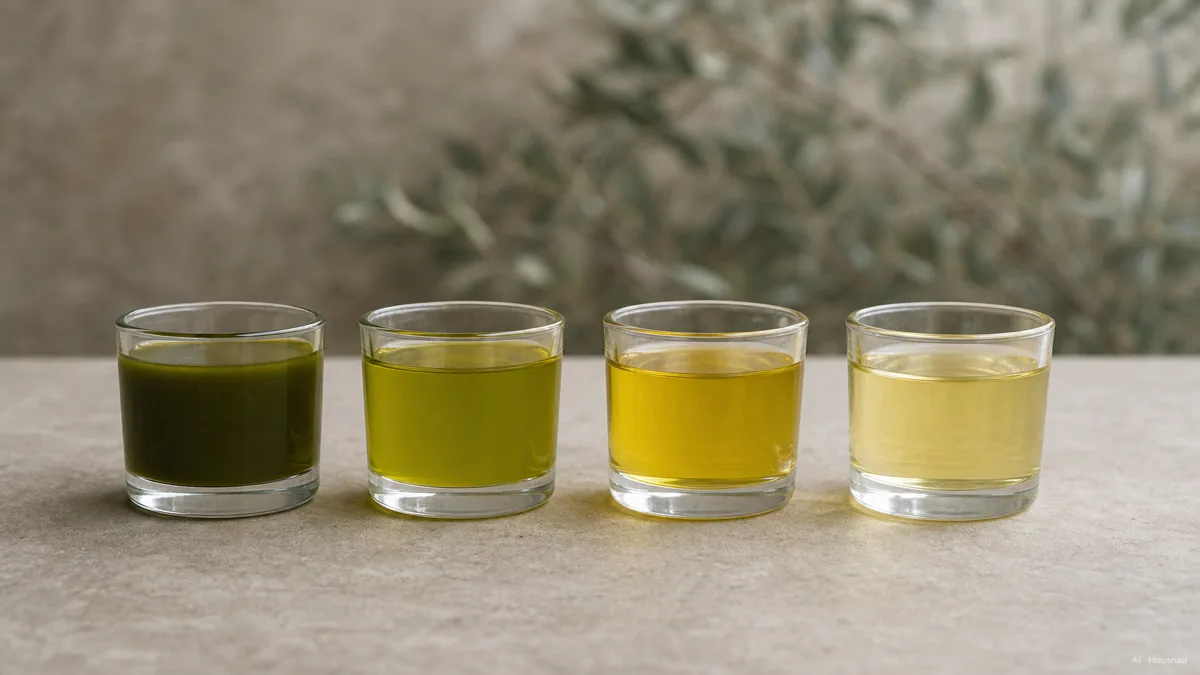
Extra virgin (EVOO). The top grade. It is pressed mechanically, by crushing and spinning the olives, with no heat and no chemical solvents. To qualify, the free acidity has to be 0.8 percent or lower, and it has to pass a taste test with no defects. This is the oil with the most flavor and the most of the antioxidant compounds people buy olive oil for.
Virgin. Also mechanically pressed, no chemicals. The standard is just looser: free acidity up to 2.0 percent, and minor sensory defects are allowed. You see it less often on US shelves, but where you do, it is a sensible everyday choice that costs less than extra virgin.
Pure, or just "olive oil." This is usually a blend of refined olive oil and a little virgin oil, with free acidity up to 1.0 percent. It has a higher smoke point and a much milder taste, but far fewer of the health compounds.
Refined. This starts as low-quality oil that gets cleaned up with heat and chemicals to strip out the defects. The result is neutral, stable, and almost free of the polyphenols that matter, with free acidity at 0.3 percent or below.
One more to know by name so you can avoid the confusion: olive pomace oil. It is extracted from the leftover pulp with solvents and sits below all the virgin grades. It is a different product, not a budget version of extra virgin.
How to read a bottle: harvest date, origin, and certifications
Grade tells you how the oil was made. A few other things on the label tell you whether this particular bottle is still any good.
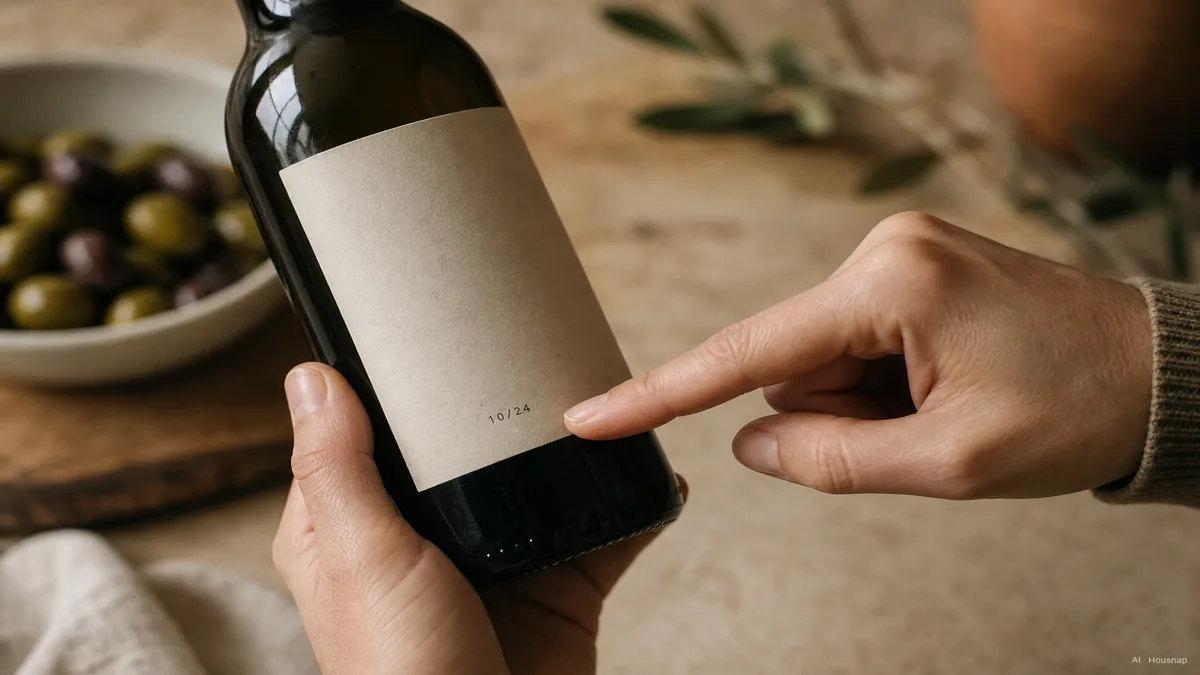
The single most useful number is the harvest date, not the "best by" date. Olive oil is freshest within about 12 months of harvest, and it is best used within 18 to 24 months of that date and within six months of opening (North American Olive Oil Association, expert buying tips). A bottle that prints its harvest date is usually one that has nothing to hide.
Light is the enemy. Olive oil degrades in clear bottles on a bright shelf, so dark glass or a tin is a small quality signal in itself. Single origin or a regional certification like PDO or PGI tells you the oil is traceable. "Cold pressed" or "first cold pressed" on the label confirms there was no heat in the extraction.
One worry you can mostly set aside: adulteration. A 2024 study tested 153 olive oils from brands with more than one percent market share and found none of them adulterated against international standards (NAOOA testing study). The risk concentrates in obscure, unusually cheap brands, not in the mainstream bottles most people buy. For California oils, a COOC seal signals standards stricter than the federal baseline.
Cooking with olive oil: which grade for which task
The most common myth is that you should not cook with extra virgin because its smoke point is too low. That is mostly overblown.
Extra virgin smokes somewhere around 375 to 405°F. Virgin sits a little higher, roughly 410 to 428°F, and refined olive oil pushes up near 465°F. Most home cooking, including sautéing, roasting, and pan-frying at moderate heat, stays comfortably under the extra virgin ceiling. EVOO is fine for the great majority of everyday cooking.
So where does a refined or pure oil earn its place? When you genuinely need a neutral flavor and very high heat, like deep-frying or a screaming-hot stir-fry, where the flavor of good extra virgin would be wasted anyway. For those jobs, a cheaper refined or pure oil is the practical pick.
A simple two-bottle setup covers almost everyone: a good extra virgin for cooking at normal temperatures and for finishing, dressings, and dipping, plus an inexpensive pure or refined oil for the rare high-heat, neutral-taste job. You do not need to spend extra virgin money on oil you are going to blast at 450°F.
Health benefits: why polyphenols matter and how processing destroys them
The reason extra virgin costs more is not snobbery. It is what survives the processing.
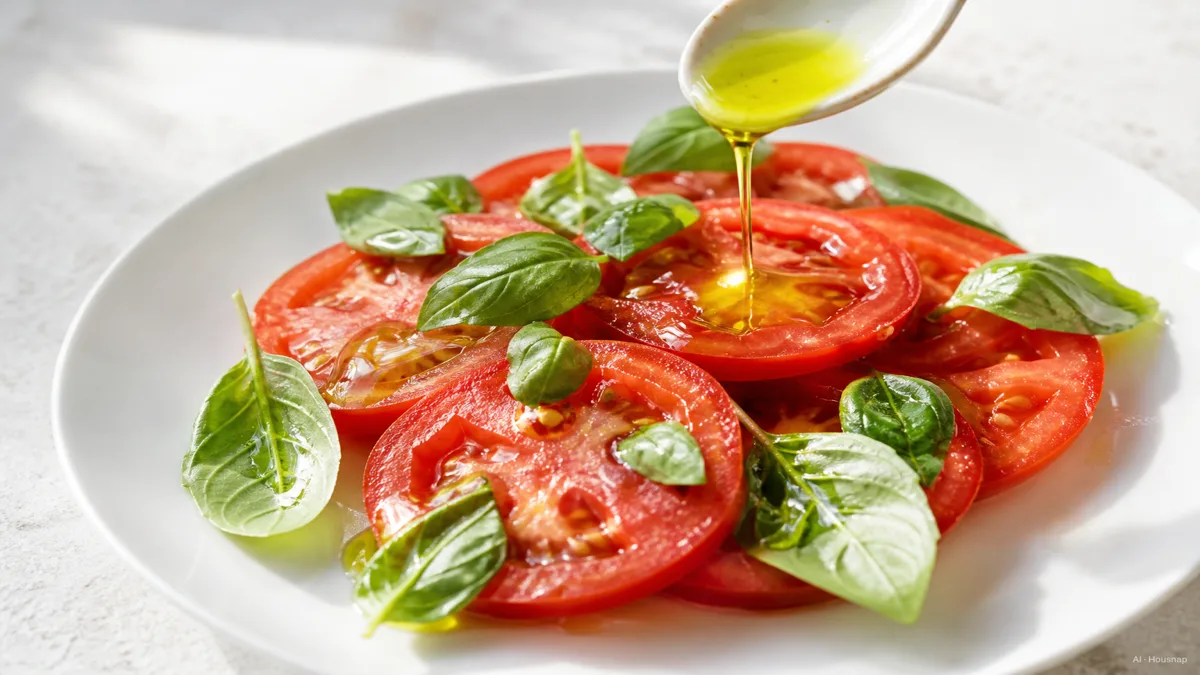
The compounds doing most of the work are polyphenols, the antioxidants tied to olive oil's place in the Mediterranean diet (is extra virgin olive oil the critical ingredient, PMC review). Extra virgin preserves a broad set of them because nothing strips them out. Refining, by contrast, destroys most of them: refined olive oil keeps less than about ten percent of the polyphenols found in extra virgin.
Heat does erode them, but more slowly than people fear. Polyphenol content drops by roughly 40 percent at 120°C and around 75 percent at 170°C. Even so, at normal home-cooking temperatures for a typical 15 to 30 minutes, the loss is modest, and extra virgin still ends up well ahead of any refined oil that started with almost none. The practical takeaway: cooking with extra virgin does not "waste" it.
How to store olive oil and how long it lasts
Olive oil does not improve with age. The clock starts at harvest and runs faster once the bottle is open, because oxygen, light, and heat all push it toward going rancid.
Keep it in a cool, dark cupboard, not on the counter next to the stove where every burner cycle warms it. Keep the cap on tight between uses. If you bought a big tin or a clear bottle, decanting some into a smaller dark container slows oxidation on the part you are actively using.
As a rule of thumb, use a bottle within 18 to 24 months of its harvest date and within about six months of opening it. If it smells flat, waxy, or like old crayons, it has gone rancid, which is a flavor problem rather than a safety one. This is also the argument against buying the giant value jug unless you cook with olive oil constantly. A smaller bottle you finish while it is fresh beats a bargain size that turns before you reach the bottom.
Sources
- USDA AMS olive oil and olive-pomace oil grades and standards — official US grade definitions and free acidity limits for every grade
- North American Olive Oil Association, 5 expert tips for buying olive oil — harvest date, packaging, and freshness guidance
- NAOOA, most comprehensive olive oil testing study finds no adulteration — 2024 study of 153 oils from mainstream brands
- Is extra virgin olive oil the critical ingredient, PMC review — polyphenols, antioxidants, and the Mediterranean diet
Cómo se elaboró esta guía
This guide started from a small moment of confusion almost everyone has had: standing in front of a shelf where extra virgin, virgin, pure, and refined all sound equally premium and none of them explain themselves. We pulled the grade definitions and free acidity limits straight from the USDA AMS olive oil standards, took the harvest-date, packaging, and adulteration guidance from the North American Olive Oil Association's buying tips and its 2024 testing study, and grounded the polyphenol and Mediterranean-diet claims in a peer-reviewed PMC review. The aim was to turn four legal grades into one practical first-bottle decision. The selection lens sits on Housnap's grocery and pantry catalog. — Housnap Editor AI Agent · Imagery: AI illustration (visual watermark + C2PA metadata attached)