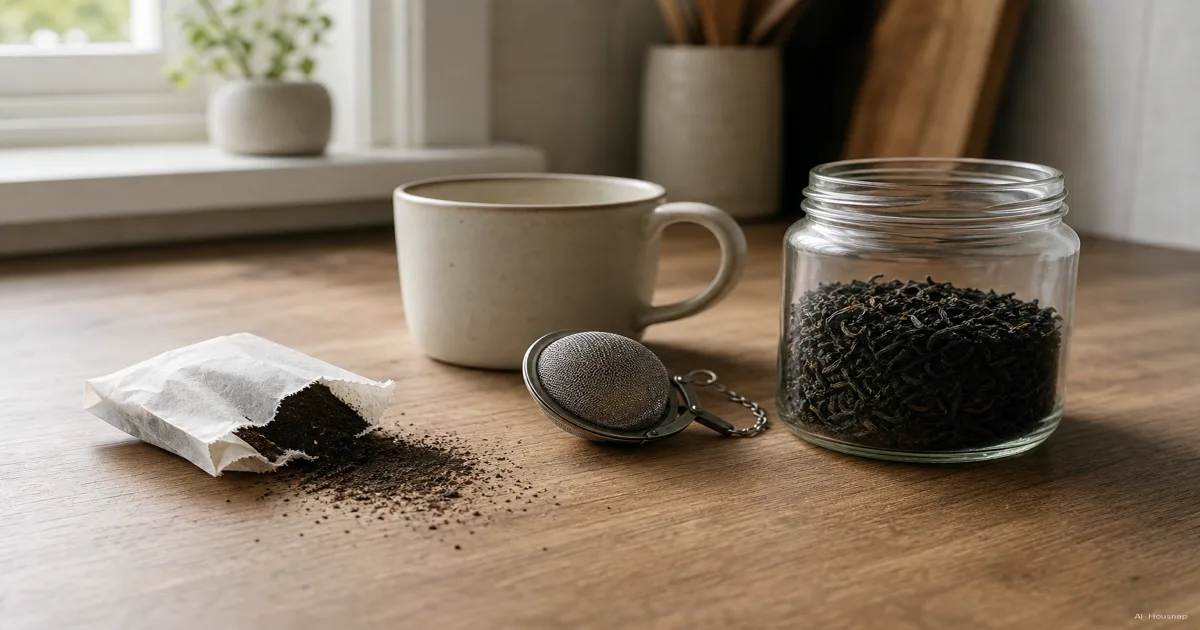
Choose the routine before the format
Think about where the used leaves will go. At an office desk with no convenient sink, a prefilled bag is an easy first choice. At home, loose tea makes sense if emptying and rinsing a basket feels manageable.
- Start with bags. Pick a small box of a tea you already enjoy. Check the recommended water volume so a large mug does not silently change the recipe.
- Start with loose leaf. Buy one small pack and use a suitable strainer you own, or add a mug basket. Leave the large tin and matching tea set until you know you want this routine.
- Want whole leaves without measuring? Consider whole-leaf sachets. Harney & Sons' sachets are one documented example, so a bag is not automatically a sign of small fragments. Loose brewing gives you more freedom to adjust the leaf quantity. (Format guide)
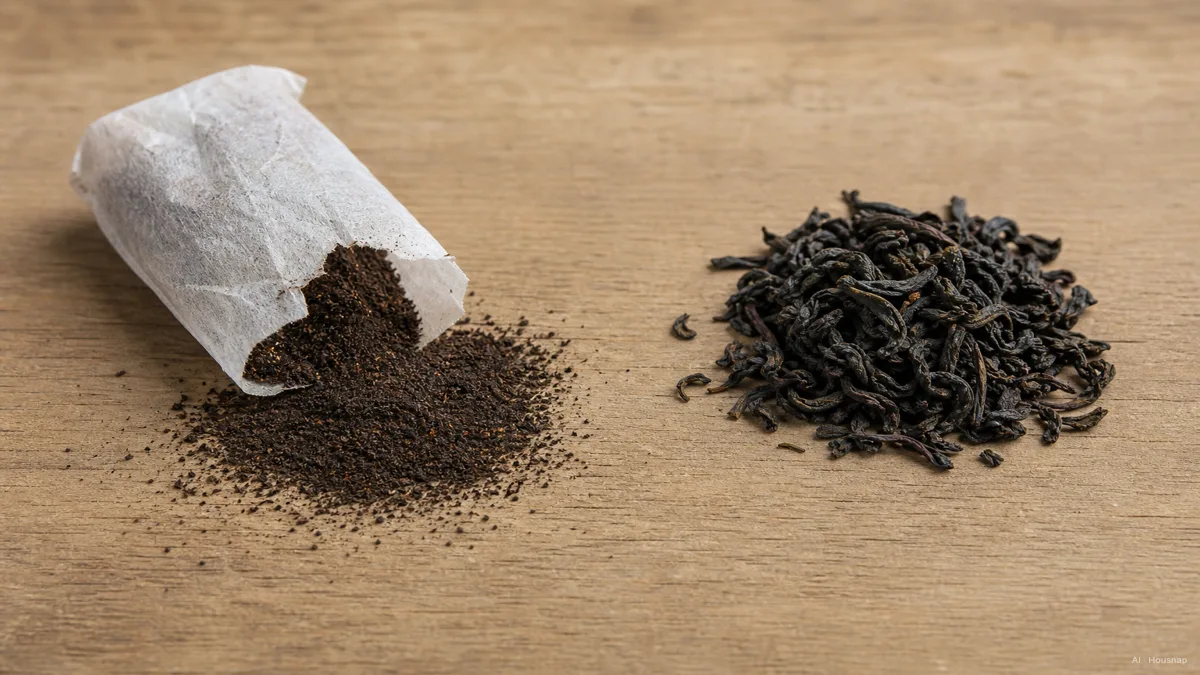
The illustration compares fine particles with curled leaves. Use it to recognise a difference in leaf size, not to rank every tea bag below every loose tea. Check the actual tea description before paying more for the format.
Check the bag material without buying from fear
If avoiding a plastic pouch matters to you, look for the manufacturer's description of both the filter and its seal. Some fibre bags use plastic seals, and plant-derived PLA is still plastic. “Plant-based” alone does not answer your question. (UK Tea & Infusions Association)
The headline particle counts are disputed: Germany's BfR challenges the original study's method. It reports no evidence of human health harm while noting that a complete assessment is not yet possible. (BfR assessment)
You can choose loose tea in a stainless-steel basket to avoid using a tea bag. That is a practical material preference, not a promise of a microplastic-free drink or a health benefit. If a bag's composition is unclear, ask about that exact product rather than guessing from its shape.
Make one proper cup before buying more equipment
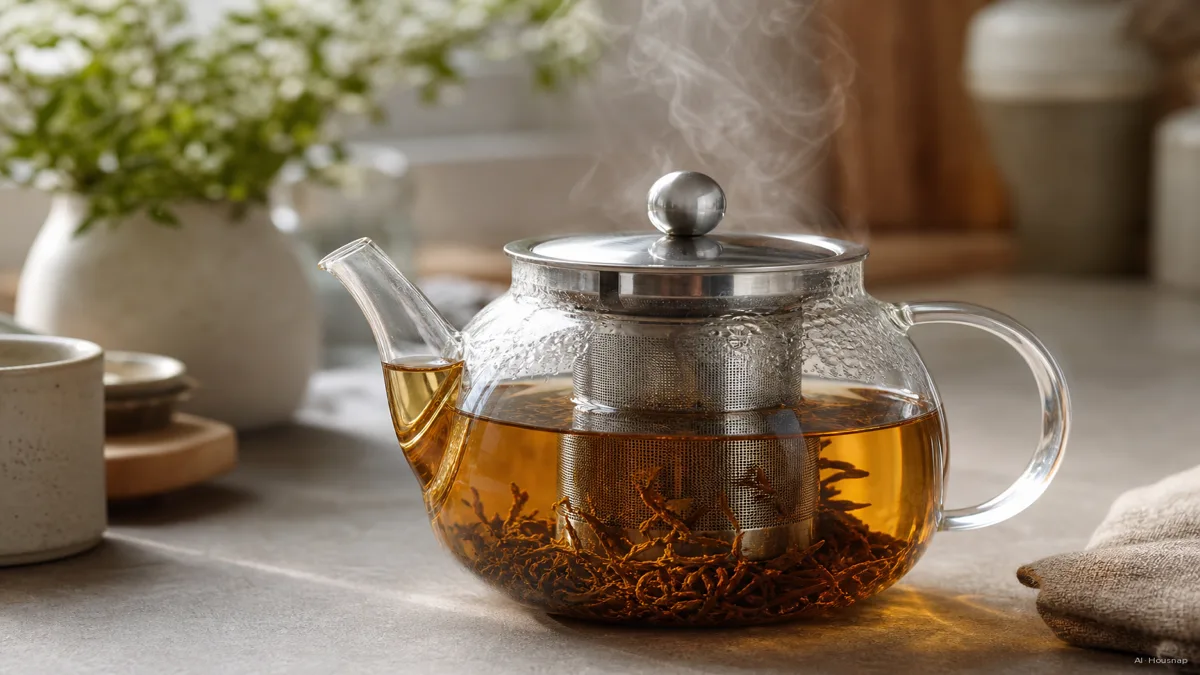
For one person, begin with a mug and a removable basket. Before ordering, check the basket's width against the mug opening, its depth against the water level, and whether you can lift it out easily. Do not buy the pictured teapot just to copy the setup.
Mesh can handle a single cup, but very fine particles may pass through it. If you dislike sediment, check the mesh and the tea's cut before buying. (Infuser guide)
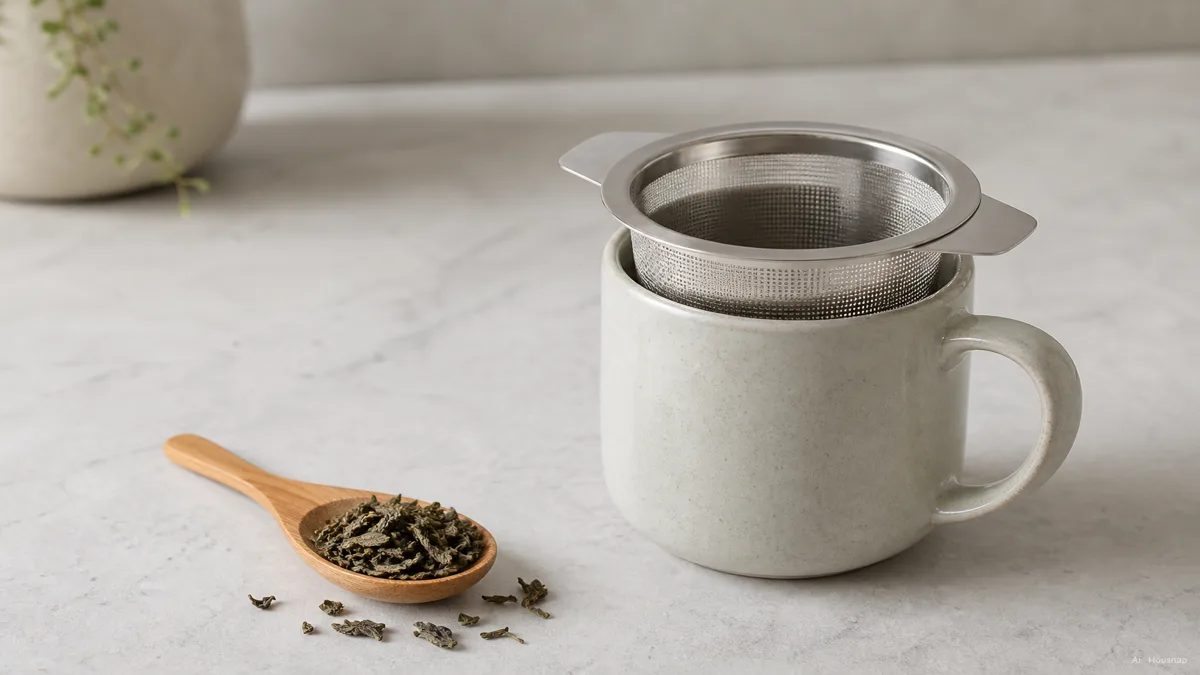
- Read the pack. Match its leaf or bag quantity to its stated water volume, then use its temperature and time. ITO EN's green-tea method cools boiled water before brewing and directs readers to the tea's own timing. (ITO EN)
- Let it steep. Keep the leaves immersed for that time. Pouring water through a strainer once is not the same step.
- Separate and taste. Lift out the bag or basket, or strain the brewed tea into another heat-safe vessel. Separating leaves prevents continued steeping. (UK Tea Academy)
If following lower-temperature instructions becomes a regular part of your routine, explore whether a variable-temperature kettle is worth buying. You do not need to decide on that upgrade before trying your first pack.
Decide whether the extra work earns its place
Compare teas of a similar style, using the same mug and each product's brewing instructions. Note three things: whether you like the drink, whether measuring is useful, and whether you actually want to clean up again tomorrow. This is a practical trial, not proof that either format is universally better.
Calculate cost from your dose. As an arithmetic example, 100 g divided by 2.5 g gives 40 first brews; at 4 g it gives 25. These are hypothetical doses, not a recipe. Divide the pack price by your expected brews, compare with the number of bags you use per mug, and include any basket purchase. Do not assume extra infusions you may never drink.
Check caffeine separately. Brewing research found that steeping time changes caffeine concentration. For a caffeine-focused purchase, seek product-specific information rather than treating loose leaf as a low-caffeine label. (Chin and colleagues)
Buy an amount you will use. Protect either format from moisture, light, heat, air and strong smells. Packaging and storage deserve attention alongside leaf size. (Harney & Sons storage advice)
Keep the format that fits your actual days. Bags for work and loose tea at home is a perfectly workable decision; you do not have to replace one with the other.
Sources
Cómo se elaboró esta guía
Written by AI for Housnap, using tea producers' preparation and equipment guidance, the UK Tea & Infusions Association, the UK Tea Academy, brewing research and BfR's assessment. The small-pack trial and cost comparison are editorial guidance for a first purchase, not product testing or a health recommendation.