Aktuell bei einem Shop erhältlich
Diese Produkte sind derzeit jeweils nur bei einem Shop erhältlich. Der Preisvergleich öffnet sich mit weiteren Shops.

Match the opening to where you tie your hair
Tie your hair first, then try the headwear. Otherwise, you may buy a cap that only works after moving your ponytail to a position you do not actually like.
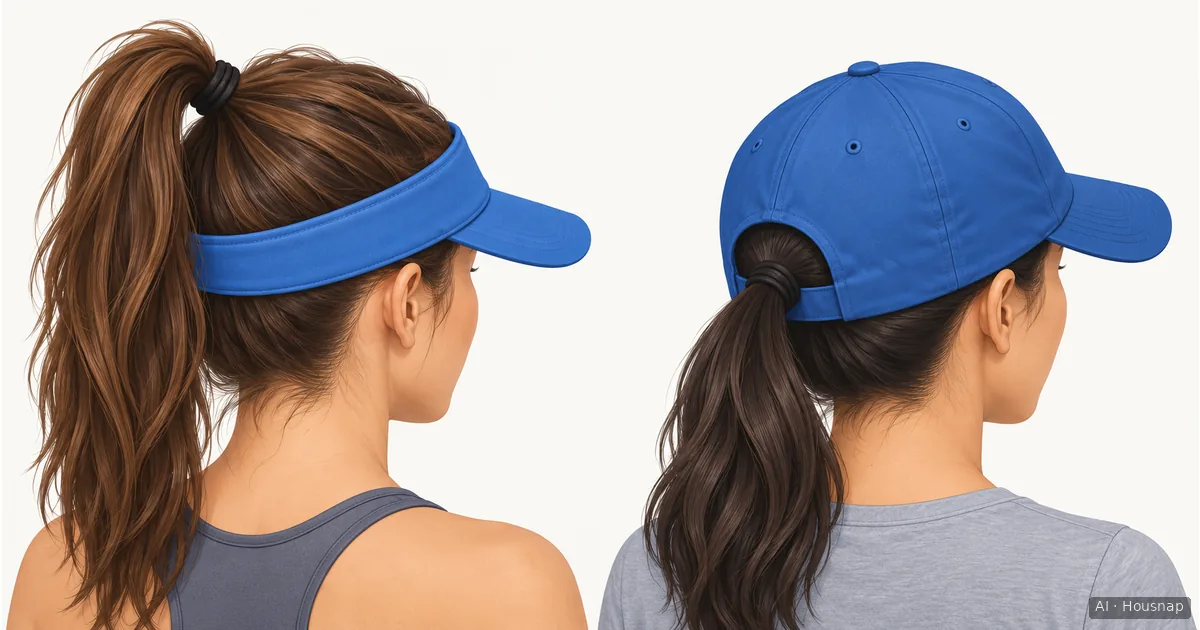
- High ponytail or bun: start with an open-top visor, or a cap specifically designed with an opening at the height you need.
- Low ponytail: compare a visor with a cap whose rear opening accommodates the hair and tie without lifting the cap.
- Different hairstyles on different days: try each one. A comfortable low-ponytail fitting does not settle whether your high bun will work.
Ponyback’s hairstyle guidance distinguishes high, middle and low opening positions and identifies visors as another option for high ponytails. Use those distinctions to inspect the actual back and top of a candidate, rather than relying on “ponytail friendly” alone.
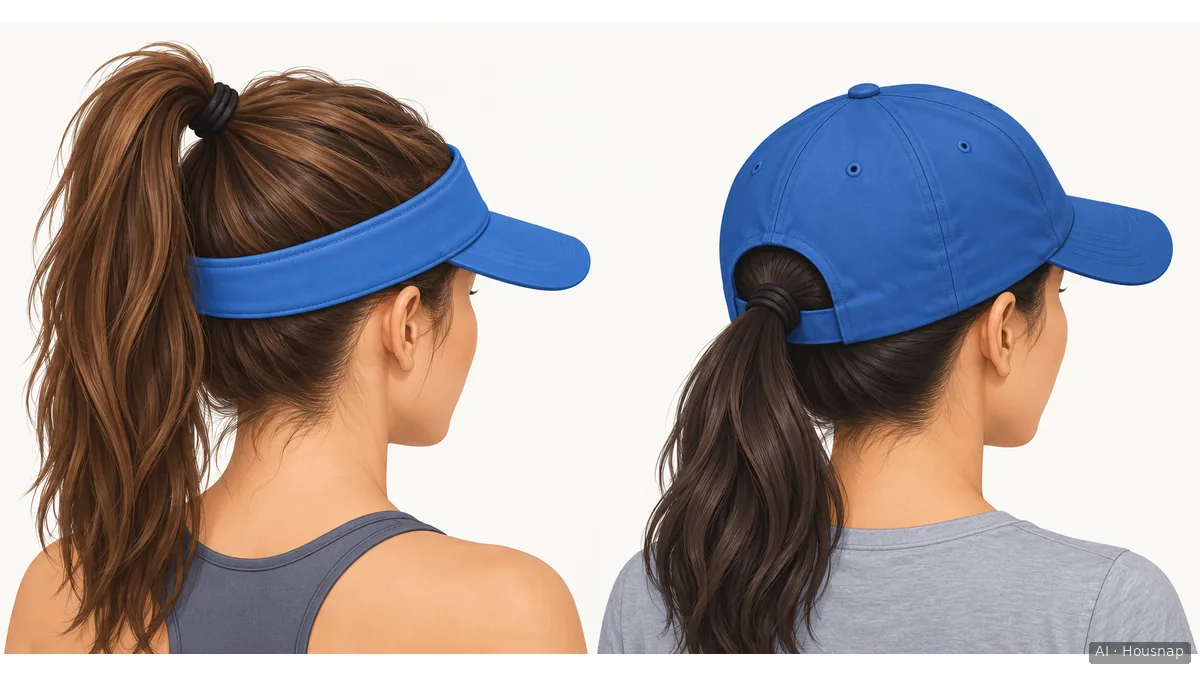
The illustration compares two arrangements, not the only hairstyles each type can accommodate. It does not establish fit or sun protection for a particular product. For a cap, check whether the opening accepts your gathered hair and whether you can put it on and remove it without an awkward workaround.
Adjust the band, then check what moves
Measure according to the candidate’s own sizing instructions. For example, Ponyback’s size guide asks you to make a high ponytail and use a flexible measuring tape, but also warns that its chart does not account for hair thickness, head shape or personal preference. A measurement narrows the size choice; it does not replace trying your hairstyle with the hat.
Use a tape measure you already have. Then make these practical fitting checks:
- Adjust the band with the hair tie clear of the fastening. Check that the fastening is usable in the position you need.
- Look ahead, turn your head and look down. Notice whether the band rides up, the brim drops into your view or the cap shifts around the ponytail.
- Take it off and put it back on. Check whether hair catches in the closure or the opening requires more rearranging than you want.
Ponyback describes a suitable fit as snug without tightness or discomfort. Do not keep tightening a candidate to compensate for an opening that pulls it out of position. Try a different opening, depth or size range instead. These are fitting checks to perform yourself, not results from a product test.
Separate hairstyle space from sun coverage
A visor leaves the top of the head uncovered by the hat. A cap covers the crown, but a front brim alone does not provide all-around coverage. Neither a comfortable fit nor a large-looking brim establishes a UV rating.
CDC’s sun-safety guidance recommends a brim all the way around to shade the face, ears and back of the neck. For baseball-cap wearers, it advises addressing the ears and back of the neck with covering clothing, sunscreen or shade. It also cautions against straw hats with holes that let sunlight through.
If broad coverage is your main requirement, reconsider whether either shortlisted shape meets it. Ask for the exact product’s documented UV information rather than treating “straw,” “sport” or “sun visor” as a protection specification.
If you also need sunglasses, continue with choosing polarized or non-polarized lenses. That resolves a separate lens decision; choosing a hat does not settle it.
Buy the one that works without a workaround
Keep a visor and a suitable cap on your shortlist until you have checked the same hairstyle in both. Choose the visor when its open top gives you the space you want and its band stays comfortable; choose the cap when you want crown coverage and its opening works without pulling the hat out of position.
Before ordering online, request a rear view, the opening’s position and dimensions, the adjustment range and the return conditions. If the seller cannot clarify a detail that determines whether your hairstyle fits, leave that candidate undecided.
Check packing instructions too. The Sunday Afternoons Sport Visor lists a 4-inch crescent brim and says to pack it flat without folding or creasing the brim. That is a restriction for the linked model, not a rule for every visor. If you need something that folds into a small bag, require explicit permission for the candidate you buy.
Neither option passes if it only stays put when uncomfortably tight or requires a hairstyle you will not wear. Change the candidate rather than buying around that unresolved fit.
Wie dieser Guide entstand
This guide was written by AI for Housnap, using manufacturer guidance on hairstyle openings, sizing and packing, alongside CDC guidance on hat coverage. The comparison and fitting checklist are editorial guidance, not original wear testing or verification of any catalog item’s UV performance.