Fix the recipe before turning the dial
This guide is for an existing espresso setup with adjustable grinding and a recipe suited to its basket. Check the machine's basket instructions first; the example below is not permission to put the same dose in every basket.
Dose means the weight of dry coffee grounds. Yield here means the weight of espresso collected in the cup, not the water put into the machine. A scale lets you compare those two quantities, as explained in Breville's dialing-in guide.
Baratza's starting recipe uses 18 g of grounds, 36 g of espresso and 25–32 seconds. Use that example only if an 18 g dose suits your basket; otherwise, keep your documented recipe's dose and yield. The example's 1:2 ratio describes dry coffee to finished drink by weight.
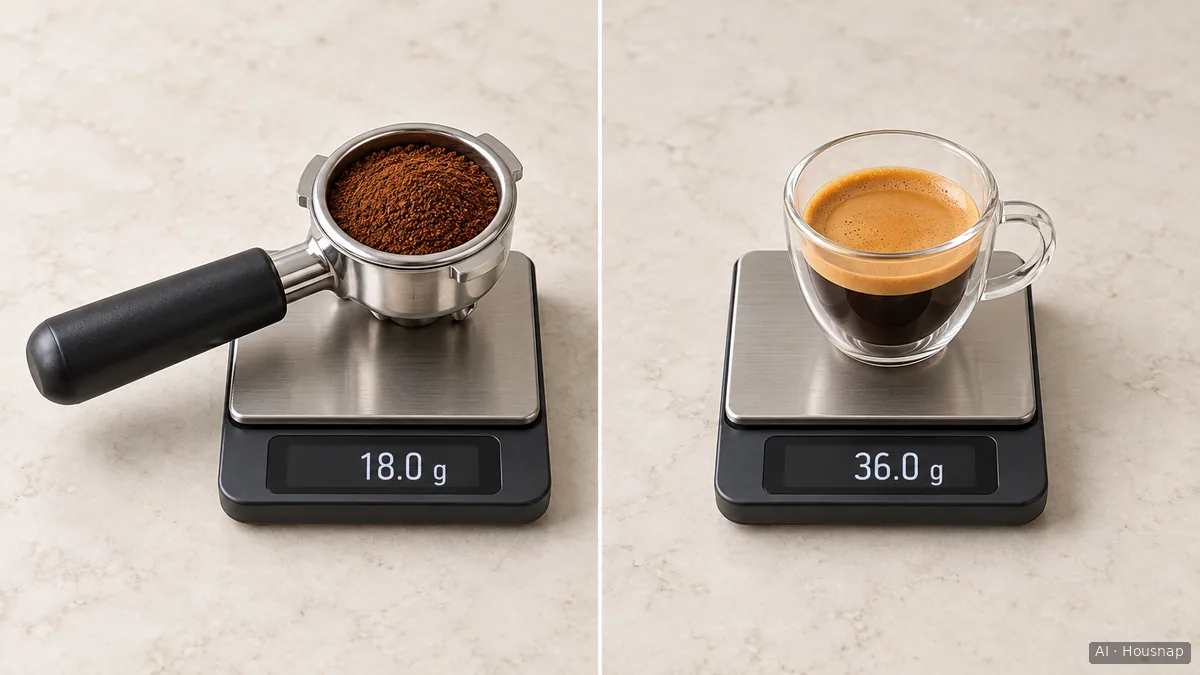
Weigh the grounds separately, then zero the scale with the empty cup before brewing. Stop at the target drink weight and record the elapsed time. For the comparisons in this guide, start timing when you activate brewing, following Breville's convention; do not switch between timing from the button press and timing from the first drip.
Reuse a suitable scale and an existing timer. If you cannot measure the quantities reliably or fit the scale beneath the cup, the kitchen and coffee scale guide covers the measurement and fit checks before buying.
Change the grind, then repeat the same shot
Keep the beans, basket, dry dose, target drink weight and preparation routine the same. In this comparison, elapsed time is something you observe, not a second target that makes you change the drink weight.
- Target weight reached too quickly, with sour, thin coffee: move slightly finer.
- Target weight reached too slowly, with bitter, harsh coffee: move slightly coarser.
- After either change: weigh the next dose again, brew to the same target weight, and compare the time and taste.
These directions follow Baratza's troubleshooting guidance. Do not change dose at the same time to force the shot into the time range. You would lose the comparison you set up.
Use the adjustment method in your grinder's manual. There is no universal “two clicks” instruction here: Baratza describes different controls for different models, including macro adjustment followed by micro adjustment on the Sette 270 and 270Wi. Make a small permitted change and record the actual setting.
When the results disagree, check preparation and water flow
If shots alternate between fast and slow without a deliberate setting change, pause the grind adjustments. Recheck the measured dose and how evenly you distribute and tamp the grounds. Baratza treats puck preparation as a separate check for channeling.
Channeling means water takes weaker paths through the compressed coffee instead of extracting it evenly. Breville explains this distinction, so a fast shot alone is not enough to conclude that the grind is too coarse.
No water or abnormally weak water flow calls for the machine's troubleshooting instructions, not repeated grind changes. Check that the reservoir contains water and is properly seated. Follow the exact model's instructions for any cleaning or descaling; this guide does not prescribe backflushing, chemicals or internal repairs. Stop using damaged equipment and contact its manufacturer.
If the obstacle is that your grinder cannot make or repeat a suitable adjustment, read the burr versus blade grinder guide. It explains what control to look for before considering replacement; an unsuccessful shot does not itself justify a new grinder or machine.
Keep the setting that improves the coffee
Record the bean, basket, dose, drink weight, grind setting, timing convention, elapsed time and taste. Add one short note about the next change. That gives you a usable comparison instead of a list of unexplained dial numbers.
Treat the time range as a starting reference. Breville notes that good-tasting espresso can take 20–40 seconds, despite giving a narrower typical target. Do not keep adjusting an enjoyable, repeatable shot merely to reach one number.
If you later choose to experiment with dose or yield, make that a separate comparison: record the new target and hold the other settings steady. First establish what one grind change does in your own setup.
Wie dieser Guide entstand
AI authored this guide for Housnap using official Breville and Baratza guidance. It organizes their recipe, measurement and troubleshooting advice into a controlled comparison for equipment you already own; it does not report original product testing or provide model-specific repair instructions.