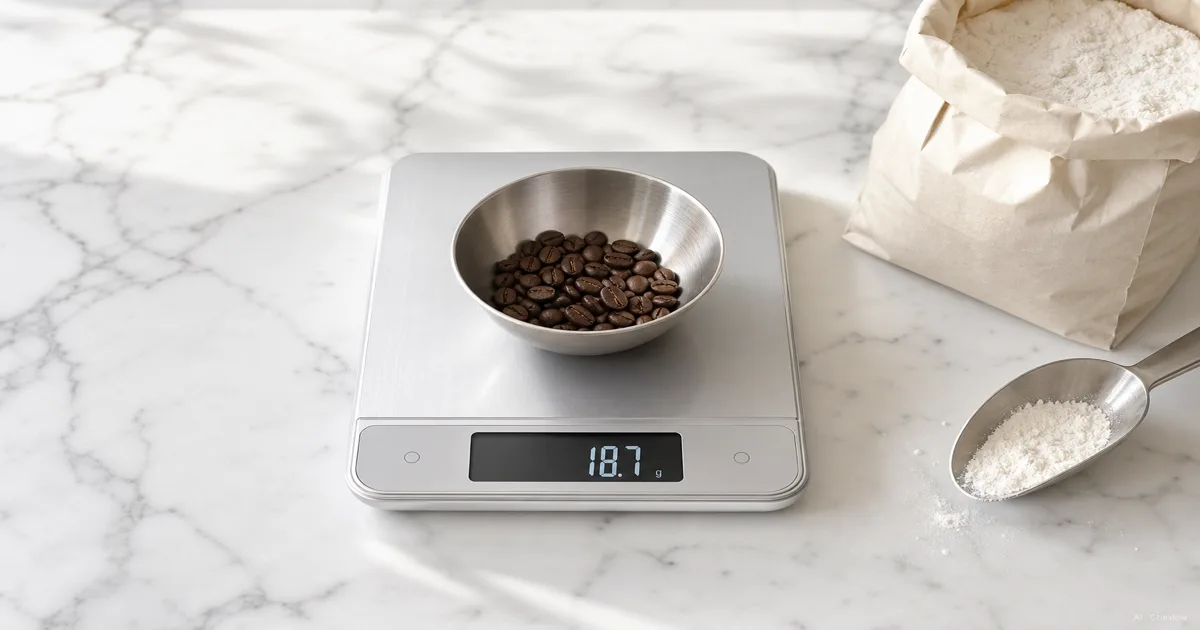
Aktuell bei einem Shop erhältlich
Diese Produkte sind derzeit jeweils nur bei einem Shop erhältlich. Der Preisvergleich öffnet sich mit weiteren Shops.
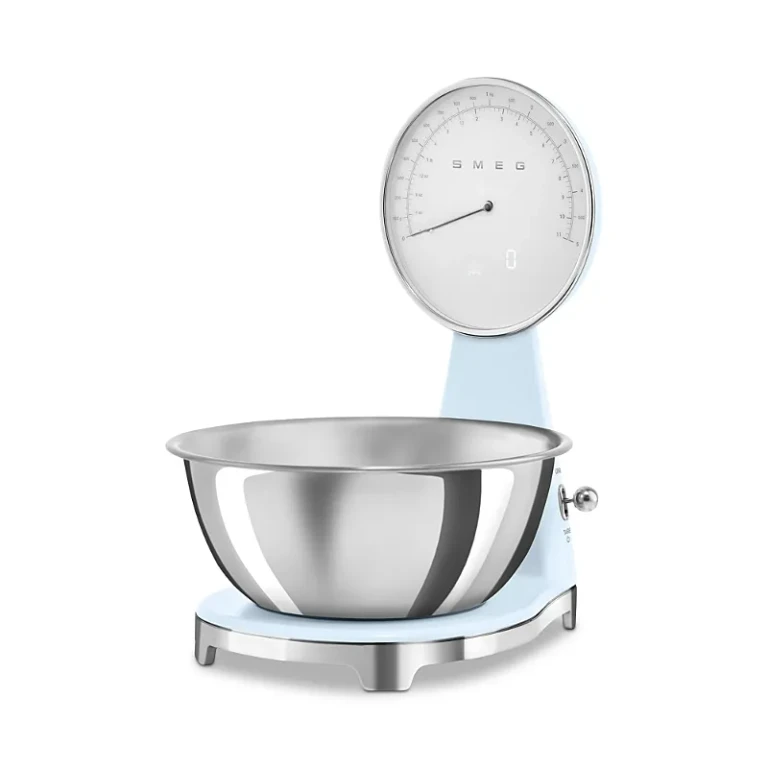
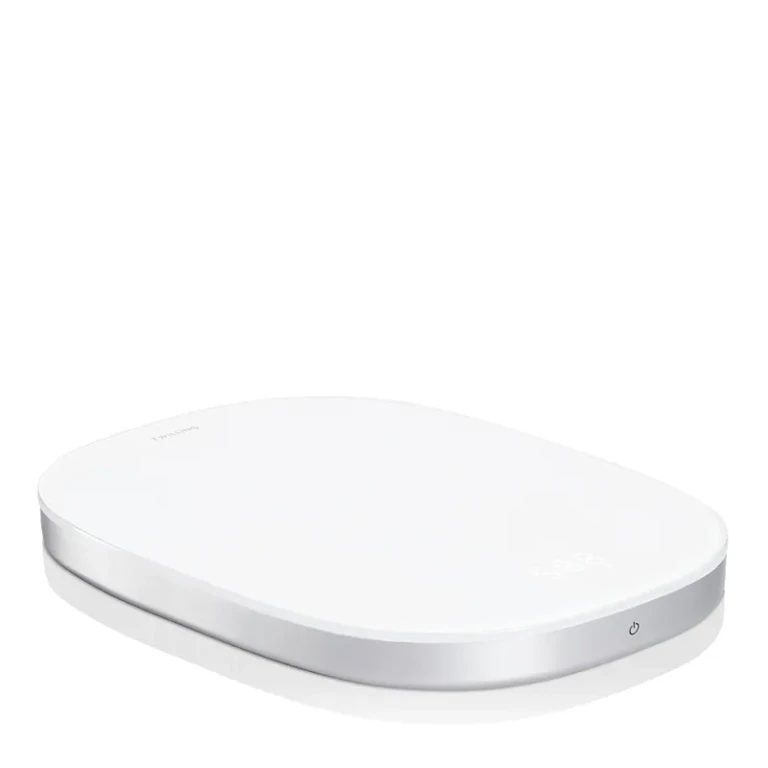
Choose the job you want one scale to do
Before comparing models, write down your smallest ingredient quantity and your largest batch. Those two numbers are more useful than a “baking” or “coffee” label.
- Baking first. Start with a general kitchen scale. King Arthur Baking considers 1 g increments sufficient for most bakers, while noting that small quantities may need finer measurement. A fractional-gram ingredient in your recipe is a reason to check further, not round it to a convenient whole gram. Baking scale guidance
- Coffee first. If you want to adjust doses in tenths of a gram, shortlist scales that actually display those increments in your working range. Decide whether you want a timer on the same screen or are happy using a separate one.
- Both. Keep a single-scale option only if it passes the small-quantity, total-load, and fit checks below. If it fails one, buy for your main task first rather than assuming a higher capacity fixes everything.
Read beyond the “0.1 g” label
Resolution means the smallest displayed step. It is not a promise that every reading is within that amount of the true weight. Check the manufacturer's stated accuracy separately. Acaia's explanation of resolution
Also look for changes across the weighing range. Hario's V60 Drip Scale VSTN-INT-2000B lists 0.1 g steps at 2–200 g, 0.5 g at 200–500 g, and 1 g at 500–2,000 g. Those specifications are for that model, not all coffee scales. Hario specifications
If your recipe calls for 0.5 g of an ingredient, a 1 g display cannot show that target. Check the minimum measurable load as well as the increment; an extra decimal place alone does not establish suitability.
Count the bowl before choosing capacity
Tare resets the display so you can weigh what you add. It does not remove the container from the load. OXO's add-and-weigh instructions allow repeated zeroing only until maximum capacity is reached. OXO glass scale manual
Here is a hypothetical capacity check, not a recipe: an 800 g bowl plus 1,400 g of ingredients totals 2,200 g. That exceeds a 2 kg scale by 200 g. A 5 kg scale leaves 2,800 g of unused capacity for this load; it does not guarantee that every larger batch will fit.
Add everything that will sit on the scale at once. For coffee, include the vessel, any dripper resting on it, coffee, and water added during brewing. If you have not chosen the bowl yet, compare mixing bowl materials and sizes before settling on the scale's capacity.
Check the space around the container
Use your own bowl or cup dimensions when checking the product drawing. The useful question is whether you can see the display and reach the buttons with your container in place.
OXO's 11 lb stainless steel scale is one example of a pull-out display designed to avoid obstruction by bowls or plates; it reads in 1 g increments. Treat that as a feature example, not a requirement to buy this model. OXO product details
For espresso, compare the scale's width and depth with the drip tray, then check the height available for the scale and cup beneath the spouts. For pour-over, plan the server and dripper together. If that setup is still undecided, the dripper and filter selection guide helps you choose what will sit above the scale.
Make a short purchase checklist
Keep a candidate only when you can answer these points from its specifications or manual:
- Smallest quantity. Does its minimum load and displayed increment cover your recipe?
- Largest load. Does its capacity exceed your complete bowl or brewing setup?
- Usable controls. Can you read, tare, and time the measurement with the container in place?
- Pauses and cleanup. What does standby preserve, when does shutoff erase the reading, and how may the scale be cleaned?
Do not infer water protection from the word “coffee”: Hario explicitly says the model above is not water resistant. Check the exact model's instructions. Hario product information
Once you have chosen, start with a recipe that gives weights. Place the container on the scale, select grams, tare, then add the first ingredient. For separate ingredient amounts, tare again before each addition while keeping track of the total load. OXO add-and-weigh instructions
Sources
Wie dieser Guide entstand
Written by AI for Housnap, using King Arthur Baking's weighing guidance and manufacturer information from Acaia, Hario, and OXO. The guide turns those sources into checks for a first purchase; the load calculation is illustrative, and no hands-on product testing is claimed.