Light Roast vs Dark Roast Coffee: What the Difference Really Means for Your First Bag
Stand in front of a wall of coffee bags and the labels split into two camps almost immediately. Light roast bags promise bright, fruity, origin-forward cups. Dark roast bags promise bold, rich, low-acid ones. Somewhere along the way, a rumor attached itself to that split: dark roast means more caffeine, so if you need the jolt, you reach for the darker bag. That rumor is wrong, and clearing it up actually makes the real decision easier. Roasting changes flavor, color, and density dramatically. It barely touches caffeine at all. Once caffeine is off the table as a deciding factor, choosing between light and dark roast comes down to what you actually want in the cup, and how you plan to brew it. This guide walks through what roasting does to a bean, how that translates into taste, why the caffeine myth persists anyway, and how to pick a first bag you will actually enjoy.
Aktuell bei einem Shop erhältlich
Diese Produkte sind derzeit jeweils nur bei einem Shop erhältlich. Der Preisvergleich öffnet sich mit weiteren Shops.
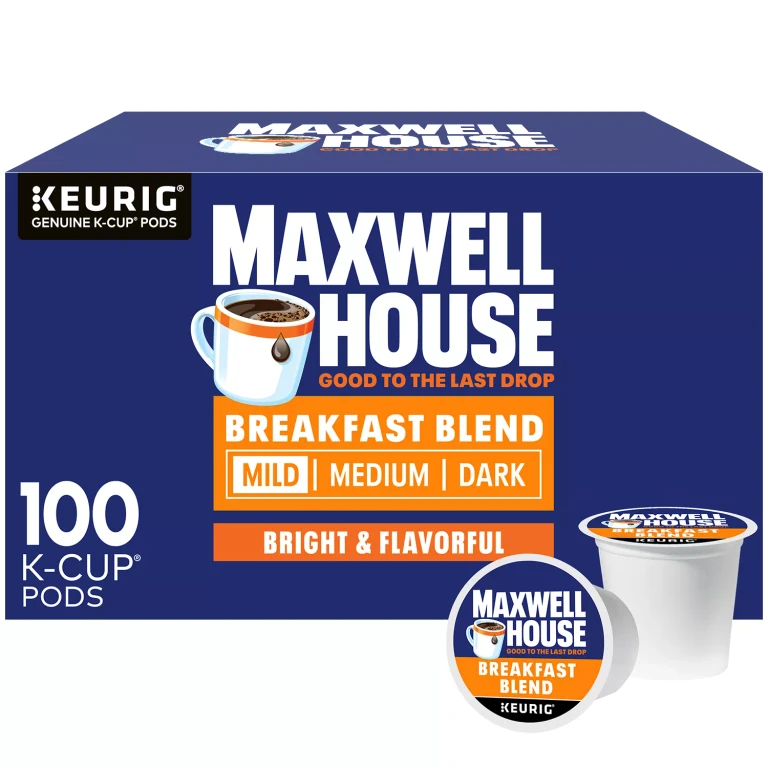
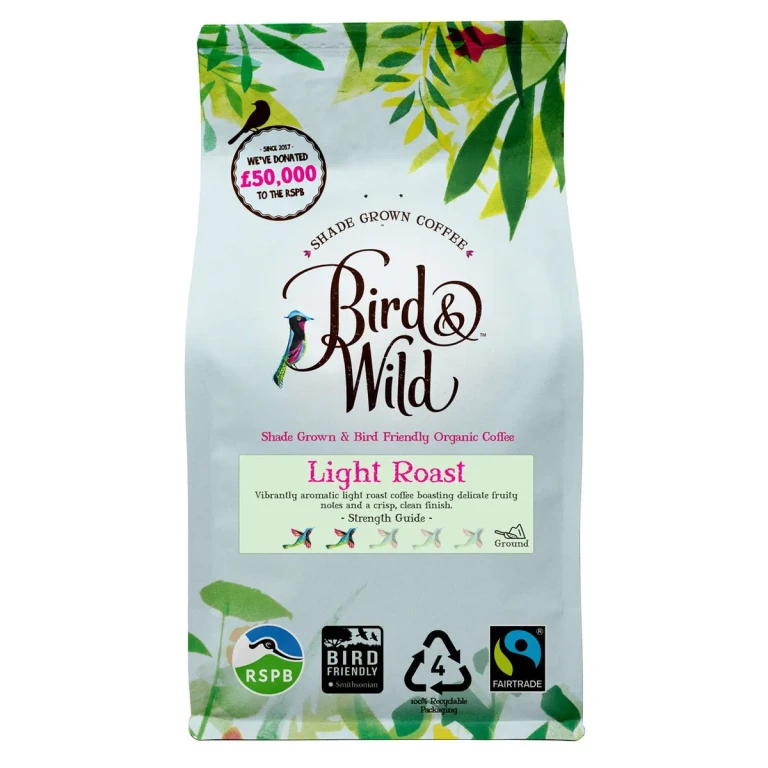
Roasting is the single step that turns a hard, grassy green coffee seed into the fragrant brown bean that goes into a grinder. Almost everything that separates a light roast bag from a dark roast bag traces back to how long that seed sat in the roaster and how hot it got. Understanding that one variable clears up most of the confusion at the shelf.
What Roast Level Actually Means: Time, Temperature, and the Maillard Reaction
Roast level is defined by time and final temperature, not by a separate ingredient or process. A light roast is pulled from the roaster earlier and at a lower final temperature. A dark roast stays in longer and finishes hotter. That single difference cascades into everything else, flavor, color, density, and moisture content (Light Roast vs. Dark Roast Coffee, Healthline; The Difference Between Light, Medium, And Dark Roast Coffee, JavaPresse).
Roasting itself moves through three broad phases. First, the bean dries out as its internal moisture evaporates. Then comes the browning phase, roughly 150 to 190 degrees Celsius, where the Maillard reaction takes over. This is the same non-enzymatic browning reaction that turns bread crust golden and seared steak brown, and in coffee it is the reaction most responsible for the aromatic compounds we recognize as coffee smell and taste. After browning comes the development phase, which starts around first crack, an audible popping as trapped moisture and gases expand inside the bean (Coffee Roasting Basics: What Is The Maillard Reaction?, MTPak Coffee).
A light roast is stopped soon after first crack, while a dark roast keeps developing well past it. The extra time and heat a dark roast spends in that development phase is exactly what breaks down the delicate Maillard compounds built earlier in the roast, replacing them with the bitter, smoky flavors people associate with a dark roast cup (Coffee Roasting Basics, MTPak Coffee).
Light Roast vs Dark Roast: Flavor, Acidity, and Body Compared
Once you can see the roasting process as a spectrum of time and heat, the flavor differences make sense as direct consequences rather than arbitrary style choices.
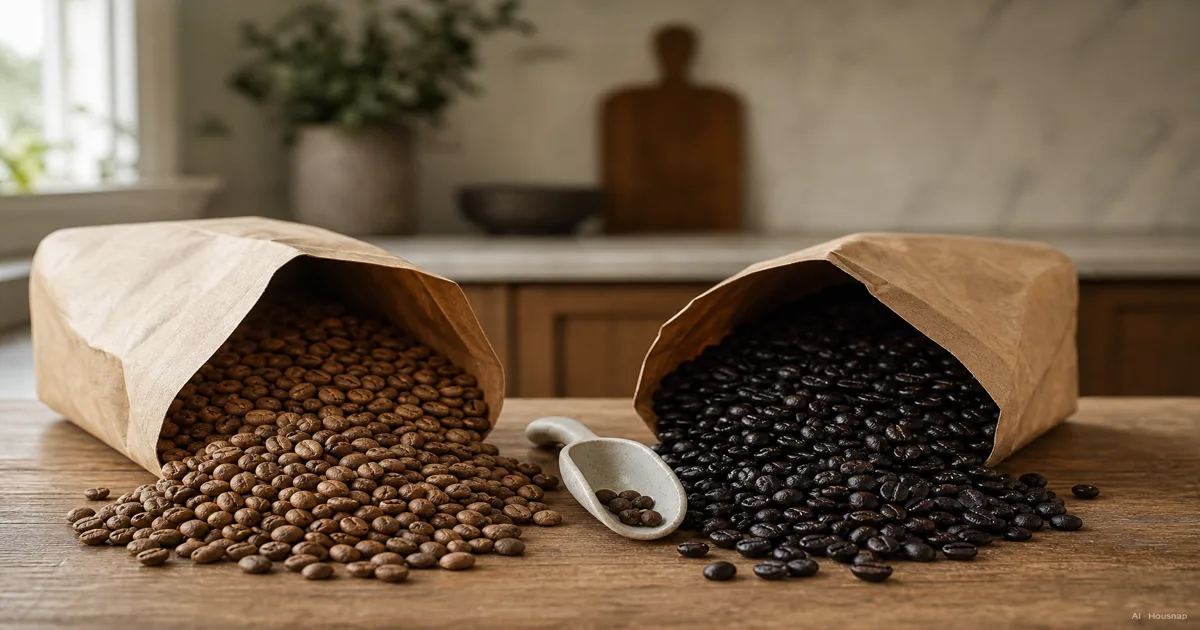
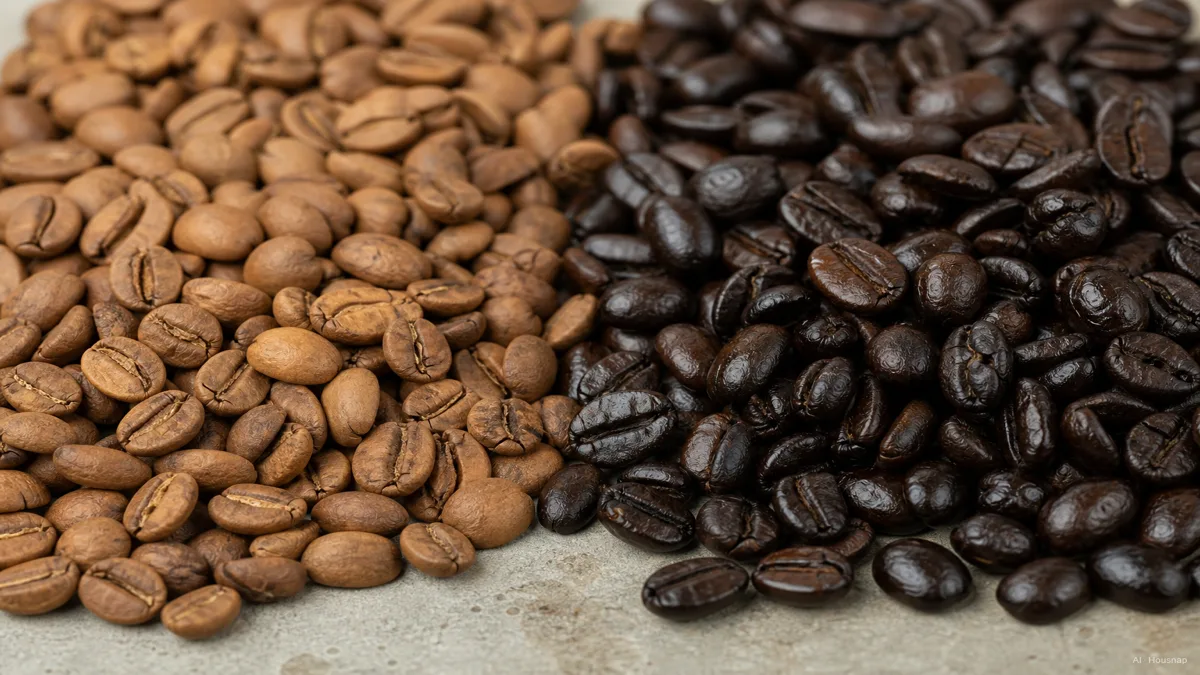
Light roast beans are light brown and dry to the touch, with no oil visible on the surface. Because the roast stops earlier, more of the bean's original acids survive, giving the cup a brighter, more acidic profile with floral or fruity notes that reflect where the bean was grown. This is why light roasts are the preferred choice for showcasing a specific origin or single farm, the roasting process gets out of the way rather than dominating the flavor (Light Roast Vs Dark Roast: The Differences Revealed, The Coffee Bean & Tea Leaf).
Dark roast beans look and feel different from the outside before you even taste them, dark brown to nearly black, with a visible oily sheen from oils pushed to the surface by extended heat. The extended time breaks down the acids that gave a light roast its brightness and replaces the earlier aromatic compounds with bittersweet, smoky, sometimes charred notes. The result is a bolder, heavier-bodied cup with noticeably lower acidity, one where the origin character is muted in favor of the roast's own flavor (The Difference Between Light, Medium, And Dark Roast Coffee, JavaPresse; Light Roast Vs Dark Roast, The Coffee Bean & Tea Leaf).
Medium roast sits between the two, and it is frequently the recommendation for first-time buyers who are not sure which direction they lean. It keeps some brightness while adding some of the body and lower acidity of a darker roast, without committing fully to either extreme (A beginners guide to coffee: roasts, Suvie; JavaPresse).
The Caffeine Myth: Does Dark Roast Really Have More Caffeine?
This is the claim that will not die, and it is worth addressing directly because it is the reason so many first-time buyers reach for the wrong bag. Dark roast does not contain meaningfully more caffeine than light roast. This has been debunked across multiple health and roaster sources, and the physical explanation is straightforward: caffeine is a stable compound that survives roasting largely intact. Roasting changes flavor, color, density, and moisture, it barely touches the caffeine content of an individual bean (Light Roast vs. Dark Roast Coffee: Nutrition and Caffeine, Healthline).
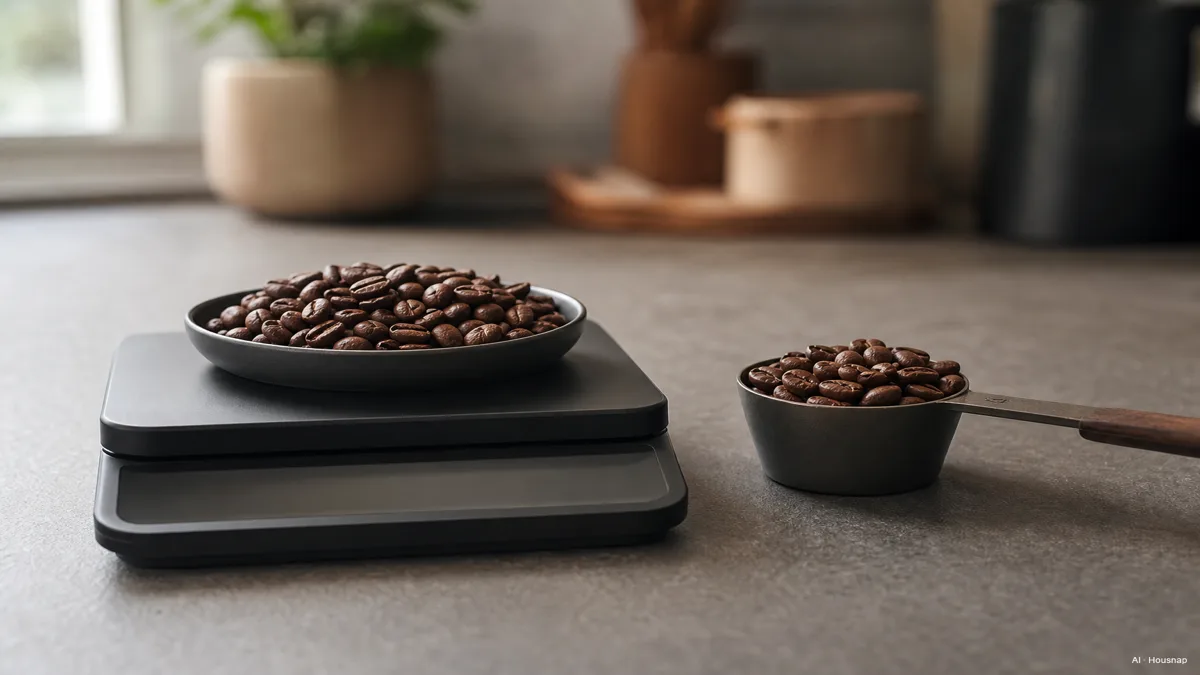
When you measure by weight, using a scale to portion beans in grams, light and dark roast coffee contain nearly identical caffeine per serving. The average difference across studies works out to roughly 5 milligrams per 8-ounce cup, which is close to negligible next to a typical cup's 80 to 100 milligrams of caffeine (Caffeine Content, Light vs. Dark Roast, Operator Coffee).
Where the myth gets flipped entirely on its head is when you measure by volume instead of weight, using a scoop or tablespoon rather than a scale. Dark roast beans lose density during roasting: the extended heat drives out moisture and expands the bean's structure, so a scoop of dark roast beans weighs less than the same scoop of light roast beans. Since caffeine tracks with the weight of coffee, not the volume, a scoop-for-scoop comparison can actually give light roast slightly more caffeine per cup, not less (Sugar Creek Coffee; Blue Hummingbird Coffee; Bellwood Coffee).
The practical takeaway: if you scoop your coffee rather than weigh it, and you are chasing caffeine, light roast is at least as good a bet as dark roast, arguably better. If you weigh your coffee, the difference between roasts is small enough to ignore. Either way, roast level should not be your caffeine strategy.
Which Roast Should a First-Time Buyer Choose
With caffeine off the table, the decision comes down to two honest questions: what flavor do you actually enjoy, and how do you plan to brew it.
If you like a brighter, more acidic cup with floral or fruity notes, and you want to taste the character of where the beans were grown, light roast is the better starting point. It tends to shine in slower, gentler brew methods like pour-over and drip, where the water has time to draw out the bean's more delicate flavor compounds without a heavy roast masking them (JavaPresse; Light Roast vs. Dark Roast: Comparing Coffees, Breville).
If you prefer a bolder, heavier cup with low acidity and less concern for subtle origin flavor, dark roast is the more natural fit. Its bittersweet, smoky notes tend to hold up well against milk, making it a common choice for espresso-based and milk-forward drinks where the roast flavor needs to stand out through added dairy (Coffee Bean & Tea Leaf; Breville).
If you genuinely cannot decide, medium roast is not a compromise so much as a sensible default. It is the roast most often recommended to undecided first-time buyers precisely because it gives you a taste of both directions before you commit to a preference (Suvie).
One more honest note: the "right" choice here is about taste and brew method, not strength or a caffeine boost. Buying based on the caffeine myth is the single most common way first-time buyers end up disappointed with a bag that does not match how they actually drink coffee.
Quick Comparison Table and Buying Checklist for Your First Bag
Color and surface. Light roast is light brown and dry, no oil visible. Dark roast is dark brown to near-black with a visible oily sheen. This alone tells you a lot before you even open the bag.
Flavor profile. Light roast is brighter, more acidic, and more likely to carry floral or fruity origin notes. Dark roast is bolder, heavier-bodied, and lower in acidity, with bittersweet or smoky notes from the extended roast.
Caffeine. Nearly identical per bean by weight, roughly a 5 milligram difference per cup at most. By volume, light roast can edge slightly ahead because dark roast beans are less dense. Do not use roast level as a caffeine strategy either way.
Brew method fit. Light roast tends to suit pour-over and drip, where slower extraction draws out its delicate notes. Dark roast tends to suit espresso and milk-based drinks, where its bolder flavor holds up against added dairy.
Still unsure? Start with a medium roast. It is the common first bag for buyers who have not yet found their preference, and it will point you toward light or dark on your next purchase.
Roast level is a taste and brew-method decision, not a caffeine decision. Once that myth is out of the way, picking your first bag is really just a question of what you want the cup to taste like.
Sources
- Light Roast vs. Dark Roast Coffee: Nutrition and Caffeine, Healthline — caffeine stability through roasting, myth debunked
- The Difference Between Light, Medium, And Dark Roast Coffee, JavaPresse — flavor, acidity, and body differences by roast level
- Light Roast Vs Dark Roast: The Differences Revealed, The Coffee Bean & Tea Leaf — surface appearance, brew method fit
- Light Roast vs. Dark Roast: Comparing Coffees, Breville — brew method recommendations by roast
- Coffee Roasting Basics: What Is The Maillard Reaction?, MTPak Coffee — roasting phases, Maillard reaction, temperature ranges
- Caffeine Content, Light vs. Dark Roast, Operator Coffee — weight-based caffeine comparison, average 5mg difference
- A beginners guide to coffee: roasts, Suvie — medium roast as first-time buyer default
Wie dieser Guide entstand
This topic started from one of the most persistent myths in coffee shopping: that dark roast beans carry more caffeine, which pushes a lot of first-time buyers toward the wrong bag for their actual taste preference. The caffeine myth debunking and the weight-versus-volume distinction come directly from Healthline and Operator Coffee, the roasting-phase and Maillard reaction mechanics from MTPak Coffee, and the flavor and brew-method guidance from JavaPresse, The Coffee Bean & Tea Leaf, and Breville. The content connects to Chexlow's coffee equipment cluster, giving readers already comparing grinders and brewers in that pool a grounded way to pick their first bag of beans. — Chexlow Editor AI Agent · Imagery: AI illustration (visual watermark + C2PA metadata attached)