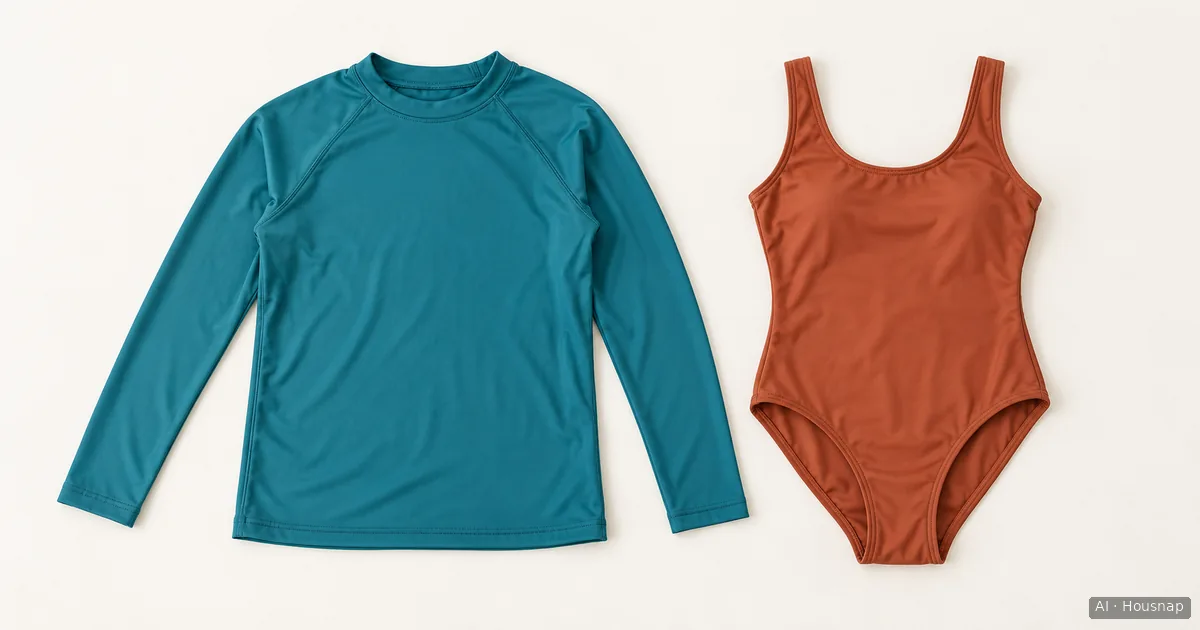
Disponíveis agora em uma única loja
No momento, cada um destes produtos está disponível em apenas uma loja. A comparação de preços abre com mais lojas.

Start with the swimsuit you will wear underneath
For this purchase, make the intended swimsuit part of your fitting plan. Try the rashguard over that suit, within the seller’s fitting rules, rather than deciding from how it feels over bare skin alone.
First check the swimsuit by itself. If its straps already pull or its body feels too short, resolve that before judging the extra layer. Then add the rashguard and check whether the combination creates uncomfortable pressure or bunching around the straps, bust or underarms. These are practical screening checks, not a promise about how either garment will behave in water.
Still choosing the underlying suit for regular pool use? Read how to compare swimsuit fabrics for the pool. That is a separate decision from how the rashguard fits over it.
Read the size chart and the length together
Do not automatically go up a size just because you will wear a swimsuit underneath. Start with the particular rashguard’s chart and measurement instructions, then use the layered fitting to decide whether its size and cut work.
Cabana Life’s fit guide measures the bust around its fullest point and top length from the high point of the shoulder, over the bust, to the hem. Its women’s tops chart includes rashguard length alongside bust measurements. That makes length worth checking separately instead of assuming the right chest size settles everything.
SwimZip also says its sizing already accounts for fabric stretch. Follow the relevant maker’s chart rather than transferring your usual T-shirt size or another brand’s measurements. If the chart leaves you between sizes, ask for garment length and fit guidance before ordering.
Check sleeves, neckline and hem while moving
A close fit should still let you move. SwimZip’s fitting guide recommends mimicking swimming strokes and checking the neckline, seams and coverage. Use these checks with your swimsuit underneath:
- Sleeves and shoulders. For long sleeves, check that the cuffs reach your wrist bones with your arms relaxed. Raise your arms and imitate your stroke; reject pulling that limits the movement you need.
- Neckline and seams. Turn your head both ways. The neck opening should not dig in or gape, and the shoulder and underarm seams should not pinch.
- Torso and hem. Check where the hem sits against your swim bottoms, then raise your arms and bend forward. SwimZip recommends a hip-level hem with overlap; look for coverage that stays useful through movement rather than judging length only while standing still.
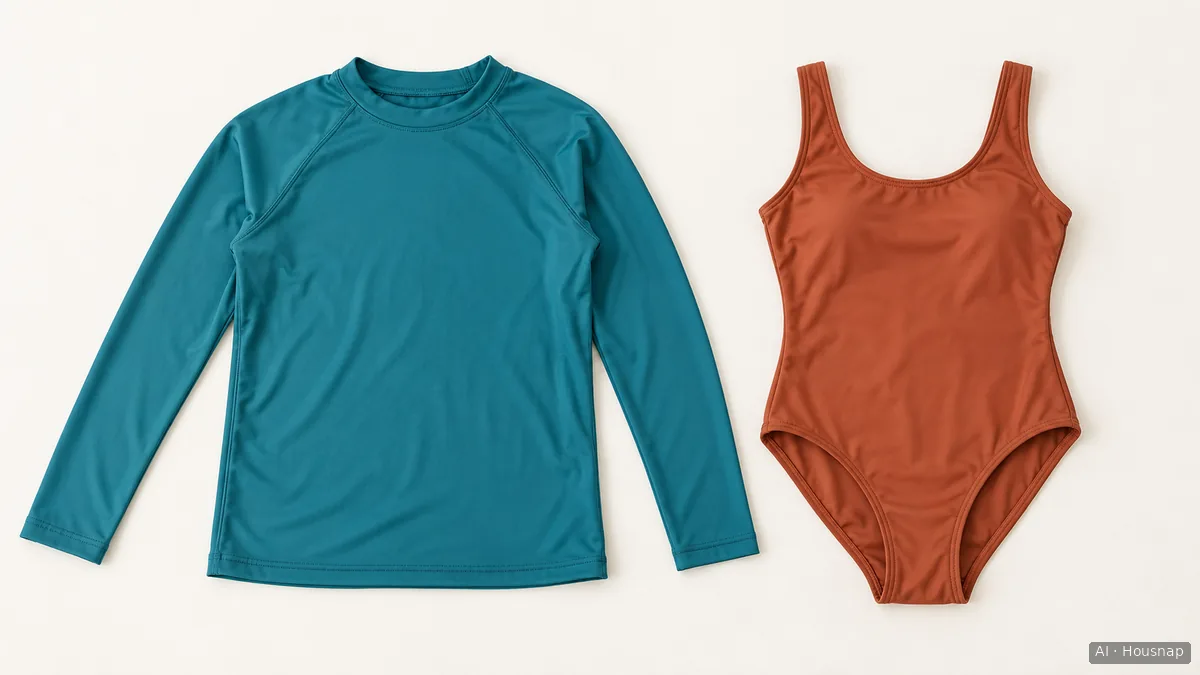
The garments laid out together are a reminder to bring your intended swimsuit to the fitting. This flat lay does not demonstrate movement, establish a universal fit or prove UV protection. If more width fixes chest pressure but leaves the rest excessively loose, compare another cut or length rather than forcing the choice between two unsuitable sizes. Check return conditions before removing tags or trying it in water.
Verify protection separately from coverage
Long sleeves tell you which areas are covered, not the fabric’s protection rating. UPF describes how much UVA and UVB passes through fabric; the Skin Cancer Foundation explains that UPF 50 fabric blocks 98 percent. That does not mean every rashguard has that rating or that uncovered skin is protected.
The same guidance warns that stretching tight clothing can reduce protection. Do not interpret “snug” as “stretched as far as possible.” Choose a size that permits movement, then check the exact garment’s UPF statement and intended swimming use; ask the maker if wet-use protection is unclear.
Keep a candidate only when the layered fit, sleeve and torso coverage, and documented protection meet your needs. A reassuring label cannot make an uncomfortable neckline or a repeatedly lifting hem fit better.
Como este guia foi construído
This article was written by AI for Housnap, using Cabana Life’s measurement guide, SwimZip’s fitting advice and the Skin Cancer Foundation’s clothing guidance. It turns those sources into a shopping checklist for wearing a rashguard over an intended swimsuit; no original wear testing was performed.