Separate a surface mark from damaged coating
Let the pan cool before examining it. Look at the cooking surface without scraping the mark or pulling at a loose edge. If coating is already lifting or flaking, set the pan aside rather than trying another cooking or cleaning experiment.
Made In’s replacement guidance says to stop using pans with peeling, chipping, burnt coating, warping or deep scratches. This is a condition-based decision; counting scratches alone does not answer it.
A faint line needs a more specific check. The Tefal Ingenio Essential FAQ says slight surface marks or abrasions do not affect performance, while warning against gouging. That statement belongs to this product’s guidance, not every nonstick pan.
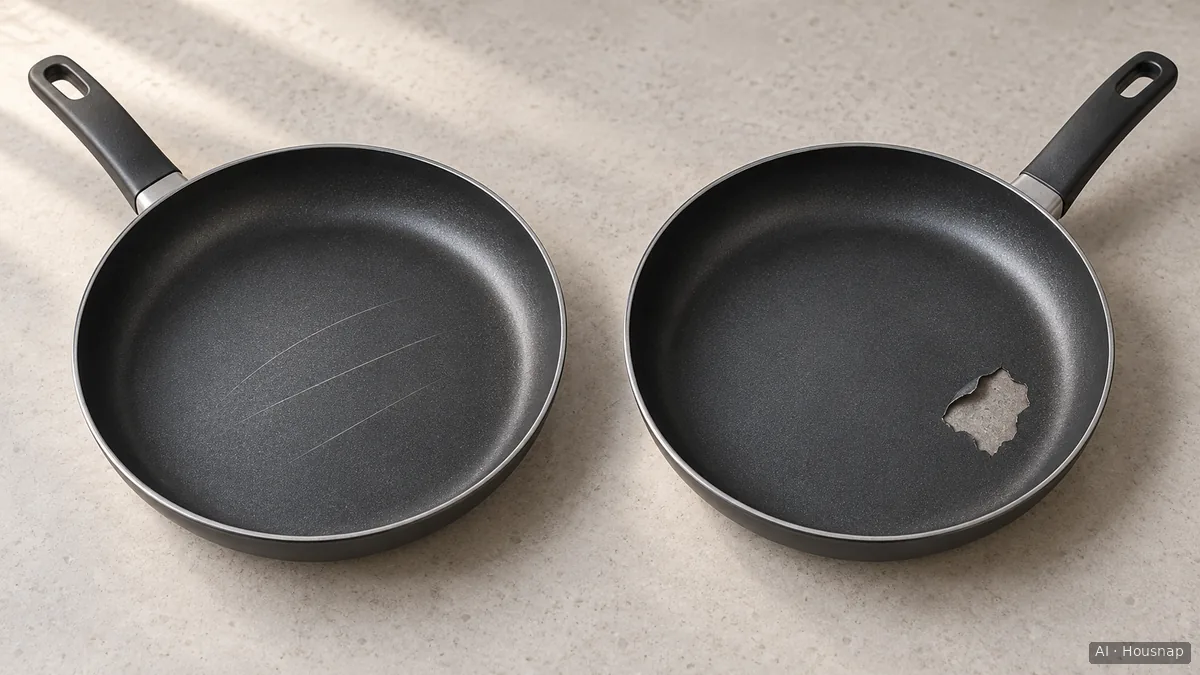
The illustration shows what to look for, not a calibrated boundary between usable and unusable coating. If you cannot tell whether a mark is superficial or the coating is breaking away, pause use and ask the maker about your model.
Clean residue only when the coating appears intact
Food sticking does not, by itself, identify a damaged coating. Made In explains that grease and food residue left by incomplete cleaning can build up between the surface and your food. Its cleaning suggestion is for pans without other obvious signs of wear, not a way to rescue peeling coating.
For an intact surface, use the cleaning method in the pan’s instructions. ZWILLING’s care guide recommends cooling cookware first, then removing food residue with warm water, detergent and a soft cloth; coated surfaces need non-scratch cloths or sponges.
Use a suitable cloth or sponge you already own. If you need a replacement, choose a non-abrasive dishwashing sponge explicitly suitable for nonstick cookware. Tefal’s nonstick guidance rules out scouring powders and scouring pads. Do not transfer a cleaning recipe intended for bare stainless steel to a coated interior.
After washing and drying, examine the same area again. Residue that washes away and a mark that remains call for different next steps; a remaining mark is not a reason to scrub harder. Stop if you discover lifting or chipped coating.
Change the contact and heat habits that matter
For a pan you can continue using under its instructions, check what touches the surface. The Ingenio Essential FAQ recommends plastic or wooden utensils instead of metal to extend pan life, even though some ranges permit certain metal tools.
A smooth wooden cooking spatula is one option if your current utensil is unsuitable. Keep an appropriate tool you already own, and check both the pan’s permitted utensil materials and the tool’s care instructions before buying anything.
The same Tefal FAQ advises against heating an empty pan and says medium-to-low heat is sufficient. Follow your own model’s directions rather than borrowing an uncoated pan’s heating routine. Let the pan cool before washing, as ZWILLING also directs.
These habits protect a serviceable surface. They do not reverse peeling or deep scratches.
Decide whether to ask, replace or keep using
Use the condition you found to choose the next action:
- Peeling, chips, deep scratches, burnt coating or warping: stop using the pan and arrange replacement or ask the manufacturer to assess it. Made In identifies these as stop-use conditions.
- A faint mark that remains after permitted cleaning: compare it with the exact model’s guidance. If the guidance does not resolve it, send the maker the model name, a whole-pan photo and a close-up, and ask specifically whether continued use is appropriate.
- An intact surface that still sticks after suitable care: consider replacement on performance grounds. Made In says persistent sticking can mean it is time to replace the pan; sticking alone is not a diagnosis of peeling.
Do not try to sand or recoat the cooking surface at home. Tefal’s Ingenio Essential FAQ says scratched nonstick cannot be recoated and that the coating is applied during manufacture. Cleaning off residue or adding cooking oil does not replace missing coating.
Nor is there a universal replacement birthday: that FAQ says coating life varies with use conditions and frequency. Keep a serviceable pan according to its instructions rather than replacing it solely because of its age.
Once replacement is justified, the next question is which surface suits your meals. Use the nonstick and stainless-steel pan comparison to make that separate choice.
Como este guia foi construído
AI wrote this Housnap guide from Made In and ZWILLING care guidance and the Tefal Ingenio Essential FAQ. It distinguishes manufacturer statements from editorial inspection and contact steps, without presenting a home inspection as a safety certification. No pan was tested for this article, and medical toxicology is outside its scope.