Start with the result you want
Think of the last few recipes you made, then pick the task you most want to make easier.
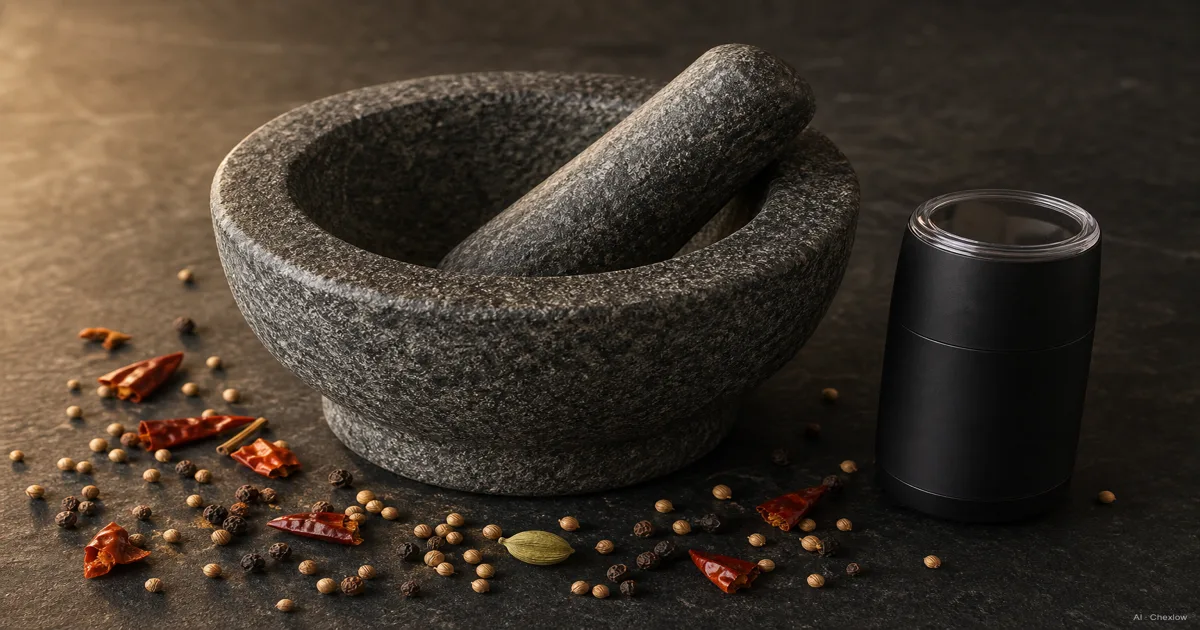
- Cracked spices or a small paste. Start with a mortar if you want to work the ingredients by hand and inspect the texture as you go. A granite set such as the Clavering is designed for both dry spices and wet pastes.
- Fine spice blends with less hand work. Start with an electric grinder. Check that its instructions cover your ingredients, rather than assuming every hard spice is suitable.
- Both jobs. Buy for the task you repeat most. Add the second tool only when you can name a job the first makes inconvenient.
Texture and effort are more useful buying criteria here than a blanket promise that hand grinding always tastes better.
Choose a mortar you can comfortably use
Look inside the bowl, not just at the polished exterior. A textured grinding surface is useful; granite is not the only way to get one. Le Creuset’s stoneware mortar has an unglazed interior for grinding.
Check the usable bowl space, pestle grip and weight you will lift to clean it. Leave room to move the pestle around your usual batch. If you cannot inspect it, ask for internal dimensions or capacity rather than guessing from a product photograph.
There is no universal 15 cm minimum. The Dorchester is a compact spice mortar listed at 100 × 100 × 75 mm overall. That specification does not tell you its internal diameter. A small tool can be worth considering for small quantities; a multi-ingredient paste needs more working space.
Check a grinder’s limits before choosing it
Wet use is a model-specific feature. Cuisinart lists pastes and marinades for the SG21U; that does not authorize putting wet ingredients into a different grinder.
Nor does electric grinding have to mean powder. The SG21U booklet uses short pulses for coarse chai spices. Choose pulse control if you want to stop and check the result; wait for the motor to stop before opening the lid.
Compare ingredient-specific capacity, not just bowl size. The SG-10C manual sets a 125 ml spice limit and warns about overheating from overloading. A recipe’s whole batch may need several loads. Use your own model’s limits and operating instructions, including any required pauses.
Make cleaning part of the purchase
For a mortar, check first-use preparation and the allowed cleaning method before buying. The Clavering guidance warns against soap residues in porous granite, while Le Creuset permits a dishwasher for its stoneware set. Neither instruction applies to every mortar.
For an electric model, a removable washable bowl is worth looking for. The SG-10C allows its removable parts on the dishwasher’s top rack; its motor base must stay out of water. Unplug before cleaning and follow the manual instead of treating rice grinding as a universal cleaning method.
Buy one tool, or reconsider the job
If hand work is the part you want to avoid, choose an electric model that explicitly supports your intended ingredients. If working a small paste by hand is the point, choose the mortar you can comfortably handle. There is no need to buy both just to cover an occasional recipe.
If your real goal is a larger batch of pesto, dip or sauce, widen the comparison. KitchenAid describes food processors for pesto and tapenade, and blenders for smooth liquid salsa. The next useful question is whether a food processor or blender fits those recipes.
Como este guia foi construído
This guide was written by AI for Housnap, using manufacturer product information and instructions from Cole & Mason, Le Creuset, Cuisinart and KitchenAid. It compares cooking tasks and ownership requirements; the buying judgments are editorial guidance, not results from hands-on product testing.