Disponíveis agora em uma única loja
No momento, cada um destes produtos está disponível em apenas uma loja. A comparação de preços abre com mais lojas.
First decide whether a topper solves your problem
Strip back the bedding and describe the complaint before shopping.
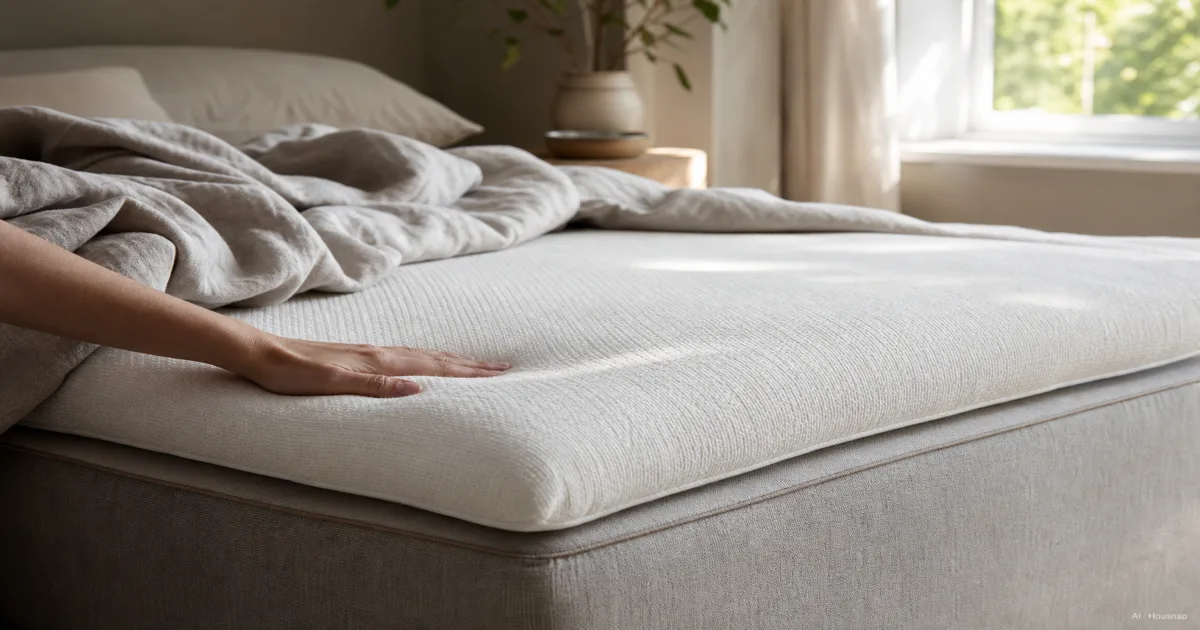
- A small comfort adjustment. A pad adds modest cushioning.
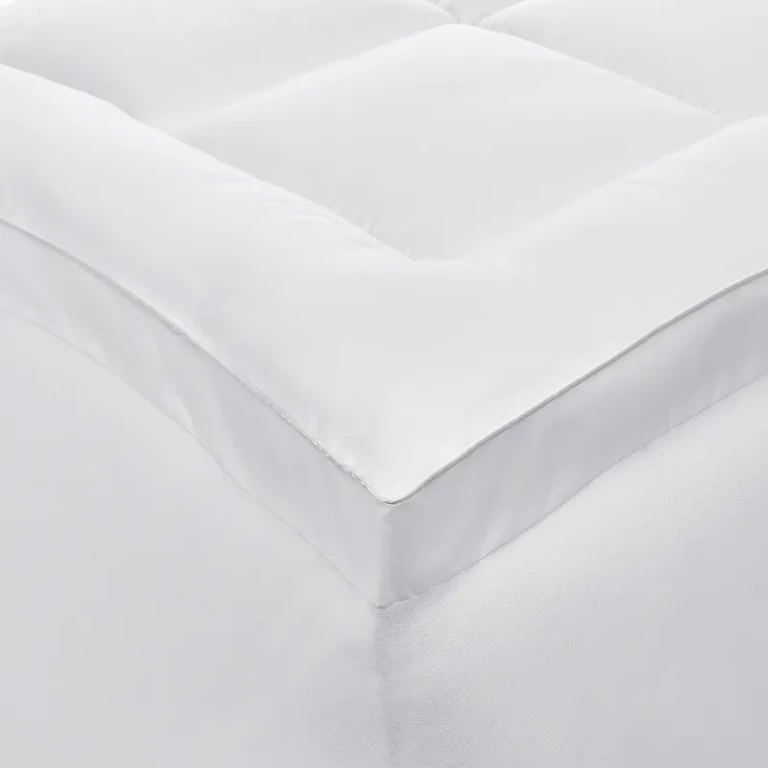
- A bigger change in feel. Compare toppers.
- Spill protection. Look for an explicitly waterproof protector; a pad is not automatically waterproof. Pad and topper differences.
If the mattress has a persistent hollow, inspect its base and check the mattress warranty first. A topper cannot repair sagging. Why sagging needs a different response. If replacement is the next step, read the latex and memory foam mattress guide.
Choose the feel you want to sleep on
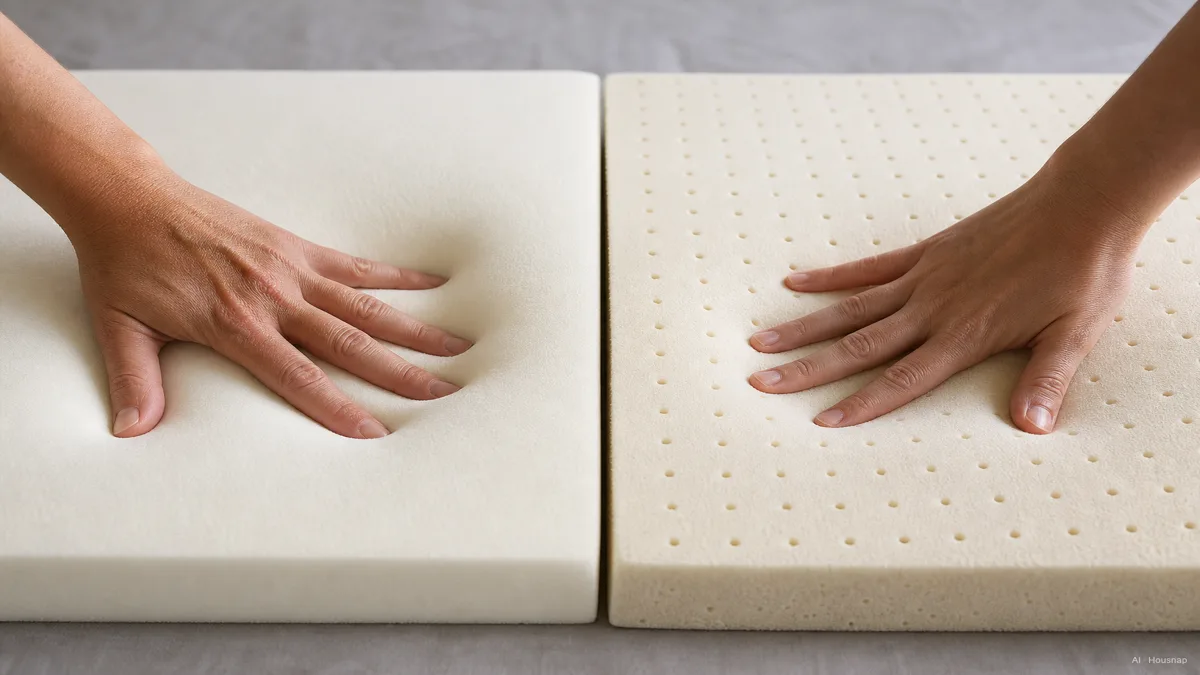
- Memory foam. Consider it for a close, slowly responding hug.
- Latex. Consider it for quicker rebound and generally less heat retention. Material comparison.
Use those differences to shortlist, then try turning over as well as lying still. Which bothers you more: feeling held in place or feeling too much bounce? The hand-press illustration explains rebound; it cannot tell you which finished topper will suit you.
Compare thickness and firmness separately
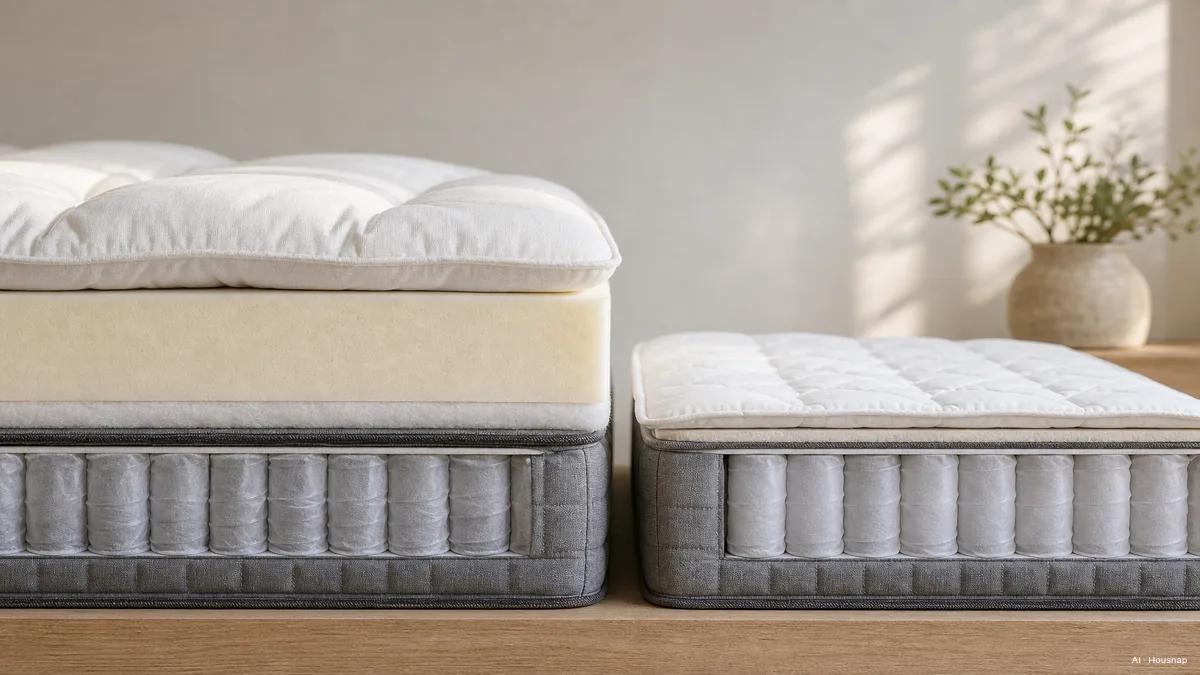
As a starting comparison, consider 2 inches for a smaller adjustment and 3 inches for a more noticeable change. These are candidates to compare, not a body-weight prescription. Turmerry's thickness guide.
Your mattress still influences the result. Side sleepers generally need more shoulder and hip cushioning; back and stomach sleepers usually need less cushioning and more midsection support. Sleep Foundation's fitting approach.
On your shortlist, record thickness and the stated firmness in separate columns in your own notes. During a trial, check shoulder pressure, hip sinking, and whether you can turn comfortably. Do not accept a thicker option solely because it sounds more substantial.
Density means mass per volume, not firmness. Ask for both specifications rather than treating “high density” as “hard.” Polyurethane Foam Association.
Check the whole purchase before paying
Fit and care
Measure mattress width and length, then add the topper's height to the mattress height when checking fitted-sheet and protector depth. Compare actual dimensions, not just a size name.
Check care instructions for the cover and core separately. For example, Tempur-Pedic allows washing its topper covers, while its Canadian topper instructions prohibit washing the foam. Follow the instructions for the exact product you choose.
If spills are a concern, compare washable waterproof protectors that fit over the combined height. This is a supporting purchase for protection, not another comfort layer. Using a topper and protector together.
Certification and returns
CertiPUR-US covers polyurethane foam, not latex or the entire finished topper. Verify the specific product with its manufacturer. Certification scope.
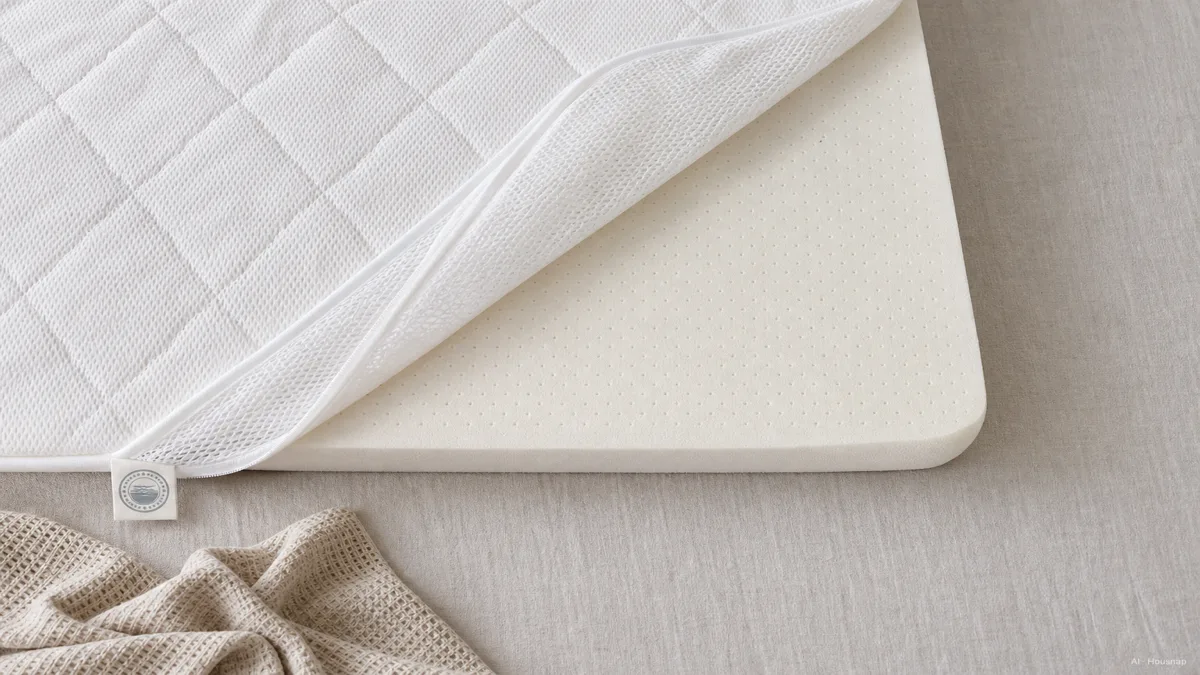
The illustrated tag is explanatory, not proof that any offered product is certified.
Before ordering, ask whether an opened topper can be returned for comfort, what the deadline is, and who pays collection costs. A warranty is not a comfort trial: Tempur-Pedic's US guidance is one example of restricted topper returns. Check your seller's terms.
Keep a candidate only when its intended feel, dimensions, care requirements, and return conditions all work for you.
Como este guia foi construído
Written by Housnap's AI editor using Sleep Foundation guidance, Polyurethane Foam Association material definitions, CertiPUR-US documentation, and manufacturer care and return information. The comparison order and shopping checks are editorial guidance for a first topper purchase; this article does not report hands-on product testing.