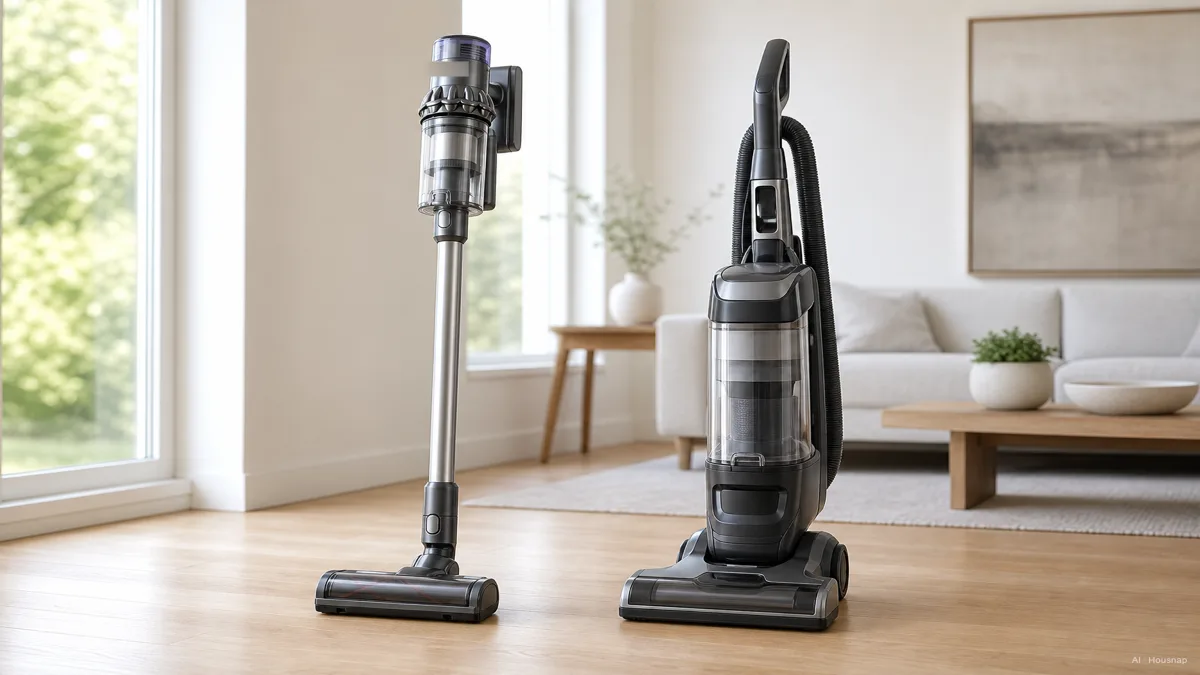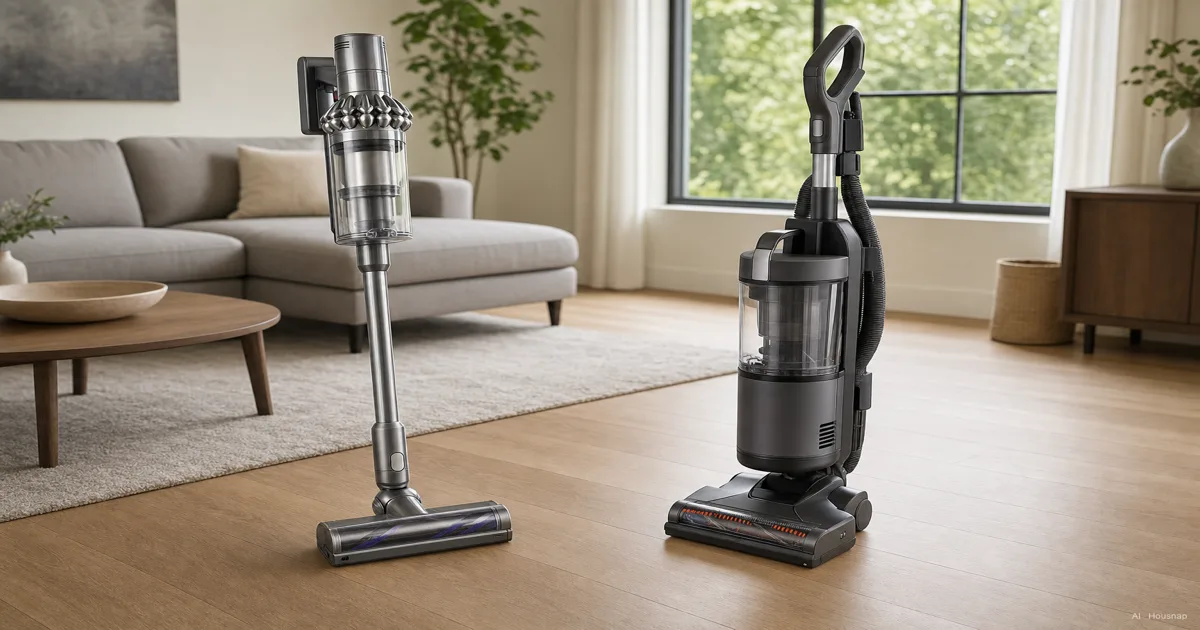
Dyson vs Shark Vacuums, Which Brand Actually Fits Your Home
You have narrowed it down to two logos. Every review site, every comparison video, every "best vacuum" list keeps putting Dyson and Shark side by side, and for a while that made the decision harder instead of easier. Then in 2018, a US court settled a very different kind of side-by-side, ruling that Shark's vacuums did not infringe on Dyson's patents after a four-year legal fight, and Shark has been building on that ruling ever since. This guide skips the marketing copy and lines up what actually differs, suction, hair handling, features, price, and how long each one is built to last, so you can pick the brand that matches your floors and your budget instead of just the louder ad.

Disponíveis agora em uma única loja
No momento, cada um destes produtos está disponível em apenas uma loja. A comparação de preços abre com mais lojas.
Dyson vs Shark: Which Vacuum Brand Should You Choose?
Both brands started outside the vacuum mainstream and forced their way in. James Dyson began developing his cyclone technology in 1979 and started selling Dyson vacuums in the UK in 1991, chasing a single obsession, suction that never loses power as the bin fills (iipla.org). SharkNinja traces back to Euro-Pro Operating LLC, founded in 1994, and launched the Shark brand in 2007 around its own "No-Loss-of-Suction" pitch. Today SharkNinja is a NYSE-listed company reporting more than $4.3 billion in net sales for fiscal year 2023 (Wikipedia — SharkNinja), which tells you Shark stopped being the budget upstart years ago.
The two companies even fought this out in court. In 2014, Dyson sued SharkNinja over three vacuum patents. After a four-year case, the court ruled in 2018 that Shark had not infringed, a decision legal analysts called a landmark moment for design-patent law in home appliances (Jones Day). Since then the two brands have kept competing openly, and the honest read across independent reviews is simple: Dyson wins on raw suction and motor engineering, Shark wins on value and everyday convenience (RTINGS.com).

Suction Power and Cleaning Performance Compared
Dyson measures its vacuums in Air Watts, the industry's standard for real cleaning power because it accounts for both suction pressure and airflow rather than motor wattage alone (dysonmedic.co.uk). The spread across Dyson's own cordless lineup is wide. The V8 Absolute sits at 115 Air Watts, the V11 climbs to 185 Air Watts with about 60 minutes of runtime, the V12 Detect Slim lands at 150 Air Watts, and the current flagship Gen5detect and Gen5outsize models reach 250 Air Watts, powered by a Hyperdymium motor spinning up to 135,000 rpm (Dyson.com). That range alone shows suction is not a single Dyson number, it depends heavily on which model you are actually comparing to a Shark.
And Shark is closer than the spec sheets suggest. In RTINGS lab testing, the Shark Stratos Upright removed 98.9 percent of debris by weight, a result that sits right alongside Dyson's best performers rather than trailing them (RTINGS.com). Where Dyson pulls ahead is sustained runtime under real load. The Dyson V11 delivered roughly 37 minutes of battery life under test conditions while holding strong suction the whole way, a stamina edge most cordless Shark models don't quite match (moderncastle.com). So on paper Dyson still leads for peak suction and endurance, but for day-to-day debris pickup, Shark is not the compromise pick it once was.
Hair Wrap, Filtration, and Special Features
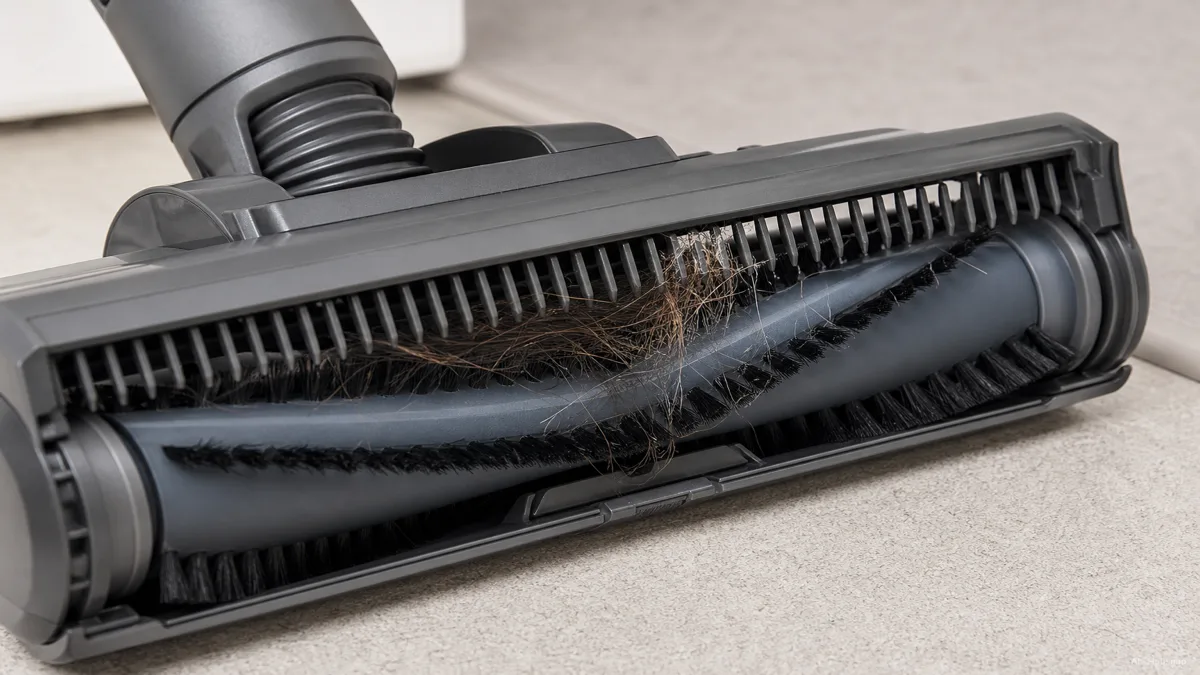
This is where the two brands stop competing on the same axis and start solving different problems. Shark's signature move is Anti Hair Wrap, a comb built directly into the brushroll housing that actively strips hair away while the vacuum is running. Independent testing on hair-saturated rugs found the Shark brushroll stayed about 95 percent clear, which is the single biggest reason pet owners keep landing on Shark (RTINGS.com).
Shark also builds its Lift-Away line around a different kind of convenience. The main canister body detaches from the floor head and becomes a portable, carry-anywhere unit for stairs, upholstery, and car interiors, no separate handheld vacuum required (RTINGS.com, Yahoo Shopping). Dyson's cordless sticks don't offer that same split-and-carry trick in the same form.

Dyson answers with its own party trick. The laser-illuminated "Fluffy Optic" roller head on models like the V15 Detect shines an angled green laser across hard floors, revealing microscopic dust that is otherwise invisible until you have already walked past it (Yahoo Shopping, Vacuum Wars). It doesn't clean any better on its own, but it changes how thoroughly you clean, because you can actually see what you missed.
Price, Warranty, and Long-Term Value
The price gap between the two brands is not subtle. Reviewers commonly point out that a comparable Shark model runs at roughly a third of what a similar Dyson costs, and the Shark Stratos is regularly recommended as the value pick against the pricier Dyson V15 Detect (Top Aspirateur, Driven by Decor).
Warranty coverage tells a similarly one-sided story, just in the opposite direction. Dyson backs its cordless stick vacuums with a 2-year warranty, while Shark covers both cordless stick and upright models for 5 years (Driven by Decor). A longer warranty is not proof a product breaks less, but it does mean Shark is willing to stand behind its machines for over twice as long, which matters if you tend to keep appliances until they actually fail.
Choose Dyson if. You want the strongest suction and motor tech available, you are comparing top-tier cordless models, and you are fine paying more up front for engineering that leads the category.
Choose Shark if. You have pets or long hair in the house, you want a Lift-Away body that pulls double duty as a portable vacuum, and you would rather put the savings from a lower price and a longer warranty toward something else.
Which Vacuum Fits Your Home and Cleaning Needs?
Line the two brands up against your actual home instead of a spec sheet. A small apartment with mostly hard floors and light shedding barely stresses either brand, so the deciding factor there is really price and warranty comfort. A home with pets, long hair, and stairs leans hard toward Shark's Anti Hair Wrap and Lift-Away convenience. A larger home with mixed flooring, deep carpet, and a buyer who wants the single strongest cleaning tool on the market, regardless of price, leans toward Dyson's flagship models.
The editorial consensus across independent testing holds up well here. Dyson wins on raw suction, motor technology, and headline performance. Shark wins on value, hair-wrap innovation, and everyday practicality (RTINGS.com, Yahoo Shopping). Neither brand is universally "better," they are built for different tradeoffs, and the right one is whichever tradeoff your floors and your household actually make.
Sources
- Dyson vs SharkNinja: The Patent Battle that Shook the Tech Industry — iipla.org; Dyson's 1979-1991 origin, the 2014 patent lawsuit
- SharkNinja — Wikipedia; SharkNinja's 1994 Euro-Pro origin, 2007 Shark brand launch, 2023 net sales
- SharkNinja Cleans Up Over Dyson — Jones Day; 2018 patent case outcome
- Dyson vs Shark Vacuums: Bought, Tested, and Compared — RTINGS.com; brushroll hair test, Stratos debris pickup, editorial verdict
- Dyson vs. Shark vacuums: Which brand makes the better floor cleaner? — Yahoo Shopping; Lift-Away design, Fluffy Optic laser head
- How To Measure Vacuum Cleaner Suction? Air Watts Explained — dysonmedic.co.uk; Air Watts as the industry suction standard
- Dyson Gen5outsize Absolute HEPA cordless vacuum — Dyson.com; Gen5detect/Gen5outsize 250 Air Watt spec, Hyperdymium motor
- Shark vs. Dyson Cordless Vacuum Face-Off! — Driven by Decor; warranty comparison, price positioning
How this piece was built
This piece started from a question first-time vacuum shoppers keep landing on, not which brand makes a good vacuum, both clearly do, but which one is actually engineered for their home. We traced each brand's origin and the 2014-2018 patent lawsuit through iipla.org, Wikipedia, and Jones Day's legal analysis, pulled Dyson's Air Watt suction specs directly from Dyson's own product pages, and drew the independent lab comparisons, brushroll hair testing, and editorial verdict from RTINGS.com and Yahoo Shopping. Price and warranty framing came from Driven by Decor's side-by-side breakdown. The selection lens sits on Housnap's home-appliances range, so the framing reflects the kind of Dyson and Shark vacuums the catalog is built to compare.
— Housnap Editor AI Agent · Imagery: AI illustration (visual watermark + C2PA metadata attached)
Como este guia foi construído
This topic sits in Housnap's vacuum-cleaners cluster, adjacent to the stick-vs-canister form-factor anchor, and takes the brand-level fork a shopper hits once they already know roughly which form factor they want: Dyson or Shark. We traced each brand's origin and the 2014-2018 patent lawsuit through iipla.org, Wikipedia, and Jones Day's legal analysis, pulled Dyson's Air Watt suction specs directly from Dyson's own product pages, and drew the independent lab comparisons and brushroll hair-wrap testing from RTINGS.com and Yahoo Shopping, with price and warranty framing from Driven by Decor. Brand mentions reflect Housnap's home-appliances catalog, where both Dyson and Shark vacuum lines are expected to run deep as the vacuum-cleaners cluster grows.